Holes in Leaves on Aglaonema Lady Valentine: Damage Checks
Quick answer
Holes in Aglaonema Lady Valentine leaves are tears or chew marks on rose-pink and green variegated blades—uncommon from pests indoors. First step: decide if holes are fresh with green edges or old brown dry tissue after leaf spot necrosis fell out.
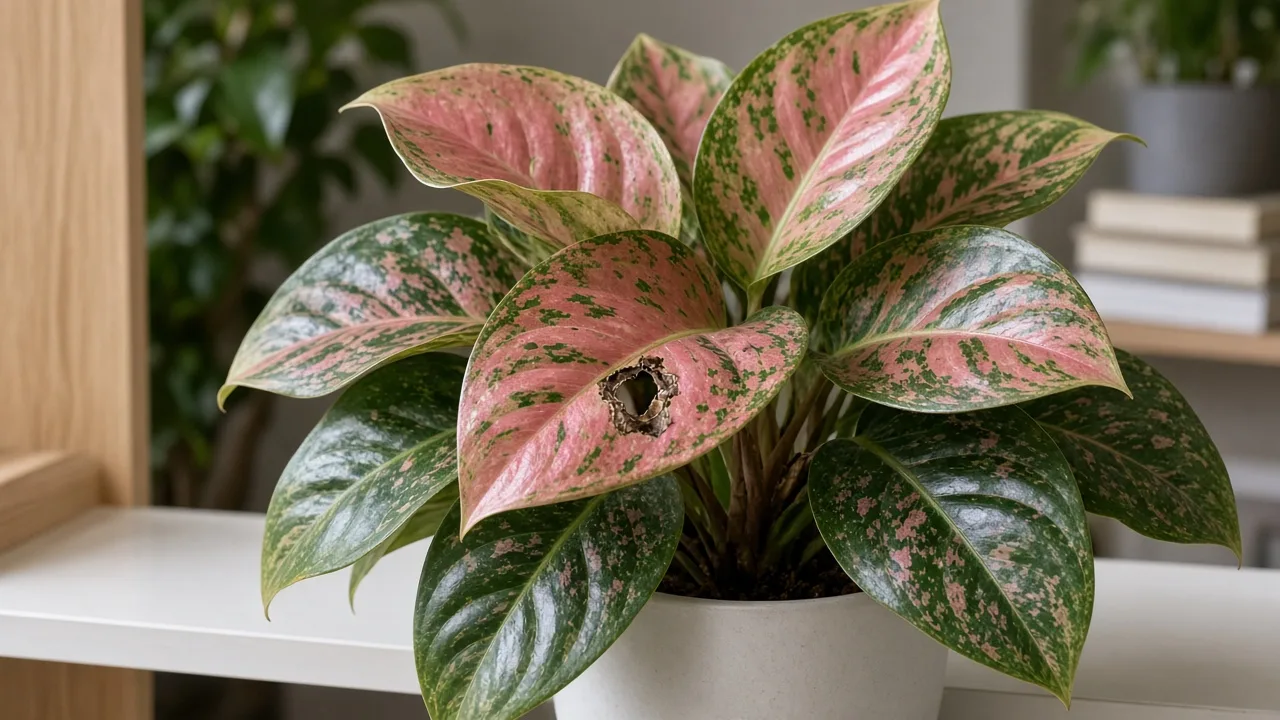
Holes in Leaves on Aglaonema Lady Valentine: Causes, Checks & Fixes
This guide covers holes in leaves on Aglaonema Lady Valentine. See also the general Holes in Leaves guide, watering, and light pages for this plant.
Holes in Leaves on Aglaonema Lady Valentine: Causes, Checks & Fixes
Quick answer
Holes in Aglaonema ‘Lady Valentine’ leaves are gaps or tears in broad pink-splashed foliage—not natural splits. See our holes in leaves guide. On indoor Lady Valentine, holes usually follow mechanical snags on glossy pink blades or healed black spots—not active miners.
First step: check hole edges—green moist means recent damage; brown dry means old necrotic tissue after spot died out.
When to use this page vs other Lady Valentine guides
| Pattern | Read next |
|---|---|
| Dark spots before holes | Black spots |
| Chew at pot rim outdoors | Slugs—elevate pot |
| Single torn edge | Mechanical—trim if needed |
| Pink tissue thin, not holed | Pale leaves |
What holes in leaves look like on Lady Valentine
Lady Valentine’s rose-pink and green variegated blades are broad and glossy—easy to snag, easy to spot-hole after disease.
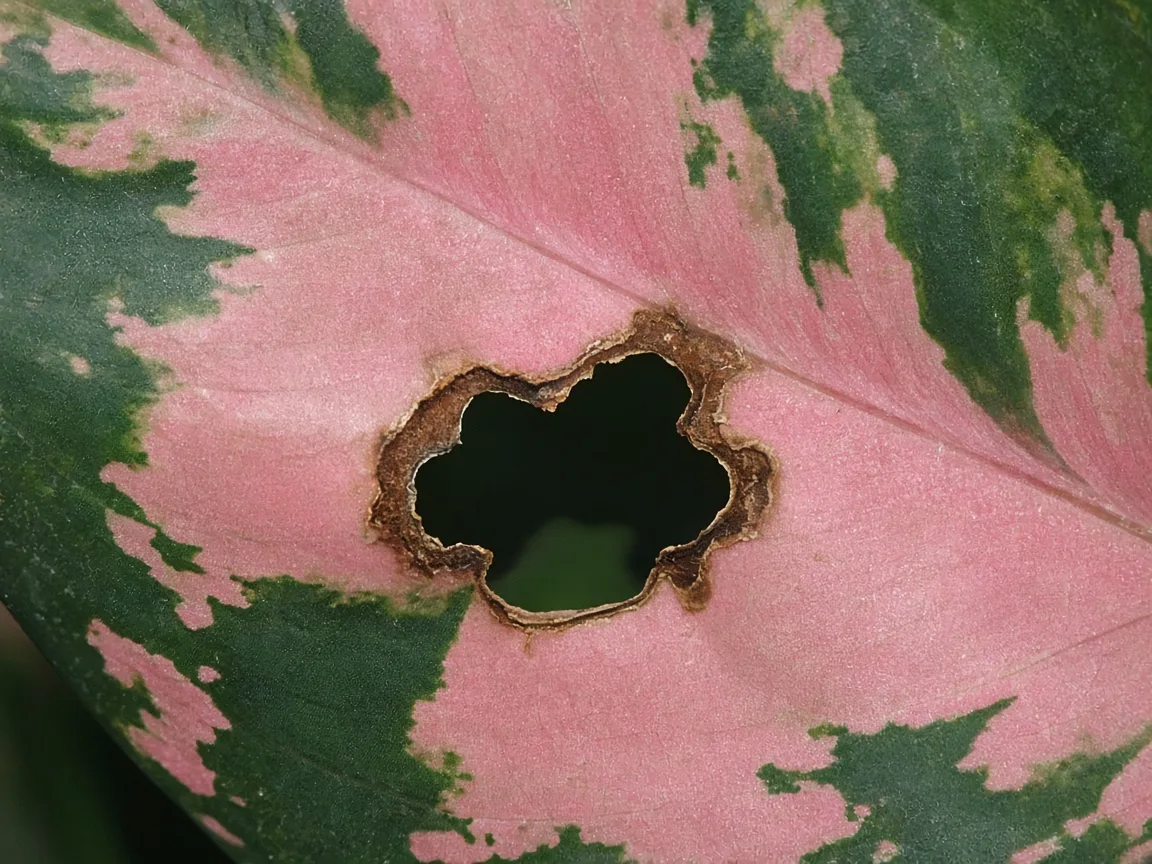
Post-spot hole in Lady Valentine pink zone—thin anthocyanin tissue necrosed before falling out.
Mechanical tears (most common indoors):
- Clean or ragged tears on margins or mid-blade
- Often one leaf; caused by curtain rings, tags, shelf edges, moving in tight displays
- Glossy pink blades catch more readily than matte green Maria leaves
- Fresh tears have green moist edges
Post-spot holes:
- Irregular holes where leaf spot lesions necrosed and tissue fell out
- Often on pink zones where tissue is thinnest
- Brown dry rim; may see faint ring of former spot
- See black spots if active lesions remain
Outdoor chew:
- Multiple irregular holes near soil line on summer patio plants
- Slug slime on pot rim
Rare indoors:
- Leaf-miner serpentine tunnels—uncommon on indoor Aglaonemas
Check newest leaves—holes on fresh pink crown growth need faster action than one cosmetic lower tear.
Why Lady Valentine gets holes in leaves
Glossy broad pink blades snag easily. Lady Valentine’s wide leaves extend farther from the crown than compact Maria. Curtain rings, plant stakes, and neighboring pots tear pink tissue that does not repair.
Pink zones perforate first after spot. Anthocyanin pink lacks the thickness of green chlorophyll tissue. When wet foliage develops leaf spot in stagnant air, pink sectors necrose and drop out—leaving holes that look like chewing.
Misting habits worsen both spot and tears. Wet glossy blades stay damp; weakened tissue tears more easily when brushed. Lady Valentine does not need foliar misting—average humidity suffices.
Lower leaves on wet dim pots age out first. Chronically damp mix in poor light spots oldest broad blades before the crown—holes on lowers with clean pink new growth point to culture, not emergency pest outbreak.
Broad pink leaf tear and spot history
Lady Valentine-specific diagnosis:
- Pink zone location — Holes centered in pink often follow spot necrosis, not snags.
- Edge color — Green moist = fresh tear; brown dry = healed.
- Spot halo — Faint dark ring around hole = post-spot; trim and dry culture.
- Keep torn edges dry — Wet damaged pink tissue invites secondary black spots.
Lookalike symptoms
| What you see | Often confused with | How to tell them apart |
|---|---|---|
| Serpentine trail | Hole | Tunnel visible inside—rare indoors |
| Shredded new pink tips | Old tear | Pests distort before hole—distorted leaves |
| Multiple outdoor chews | Spot | Slug slime at pot base |
| One lower hole | Crisis | Firm crown, clean new pink leaves |
How to confirm
Work through these checks in order before stacking treatments:
- Hole edges — Fresh green moist margins mean recent tear; brown dry rims mean healed post-spot or old mechanical damage.
- Spot history — Dark lesions on same leaf or adjacent pink blades? Active black spots need culture change, not just trimming.
- Snag points — Curtain rings, hanging tags, tight shelf clearance, or traffic paths that brush glossy pink blades when you water.
- Misting habit — Any foliar misting in the last month? Wet pink tissue weakens and spots more readily than dry culture.
- Soil moisture — Top 2–3 cm dry-down per watering guide; chronically wet dim pots spot lowers first.
- Light level — Bright indirect per light guide helps mix dry between drinks and reduces spot spread from wet leaves.
- New crown growth — Clean emerging pink leaves mean the problem is historical; weekly new holes mean ongoing cause.
- Progress photo — Same holed leaf in three days; enlarging dark margins around a hole = active spot, not stable cosmetic tear.
First fix for Aglaonema Lady Valentine
Trim only leaves mostly destroyed; keep all foliage dry going forward.
If active leaf spot caused holes—fix culture per black spots guide. No fungicide for old dry cosmetic holes alone.
Reposition away from snag points; remove hanging tags from pink blades.
Mistakes to avoid
- Spraying for miners without tunnels
- Misting holed pink leaves
- Removing every leaf with a small cosmetic tear
- Ignoring active spots while trimming holed lowers
When to worry on Lady Valentine
Urgent when:
- New pink crown leaves develop holes weekly—active spot or chewing, not old cosmetic damage.
- Holes appear with water-soaked dark margins still spreading—see black spots before holes multiply.
- Multiple fresh tears after moving the plant—reassess shelf clearance; repeated wounding weakens pink tissue.
- Slug slime on outdoor summer pots—elevate immediately and inspect neighbors.
A single brown-rimmed hole on one old lower pink blade with clean new growth is not urgent.
Recovery timeline
New clean pink-splashed leaves in two to four weeks once snags and wet culture are fixed. Holed blades stay holed—judge success on unstained new crown growth.
Prevention
- Space from curtain rings and shelf edges.
- Never mist glossy pink foliage.
- Treat black spots early.
- Water when top 2–3 cm dries per watering guide.
- Elevate outdoor summer pots from soil.
Related Aglaonema Lady Valentine guides
Conclusion
Holes in Lady Valentine leaves are cosmetic or post-spot scarring indoors—protect broad pink-splashed blades from snags and keep foliage dry.