Slow Growth on Aglaonema Super White: White-Flush Checks
Quick answer
Slow growth on Aglaonema Super White is often normal—this tissue-cultured variegated Chinese evergreen adds only one or two broad leaves per crown per warm season. Worry when no white flush appears through a bright warm season, rosy-white zones fade to plain green on new blades, or the top 2–3 cm of mix stays wet for weeks in a dim room. First step: inspect every crown for a fresh white-splashed leaf in the past six to eight weeks, then check whether the top 2–3 cm of mix has dried.
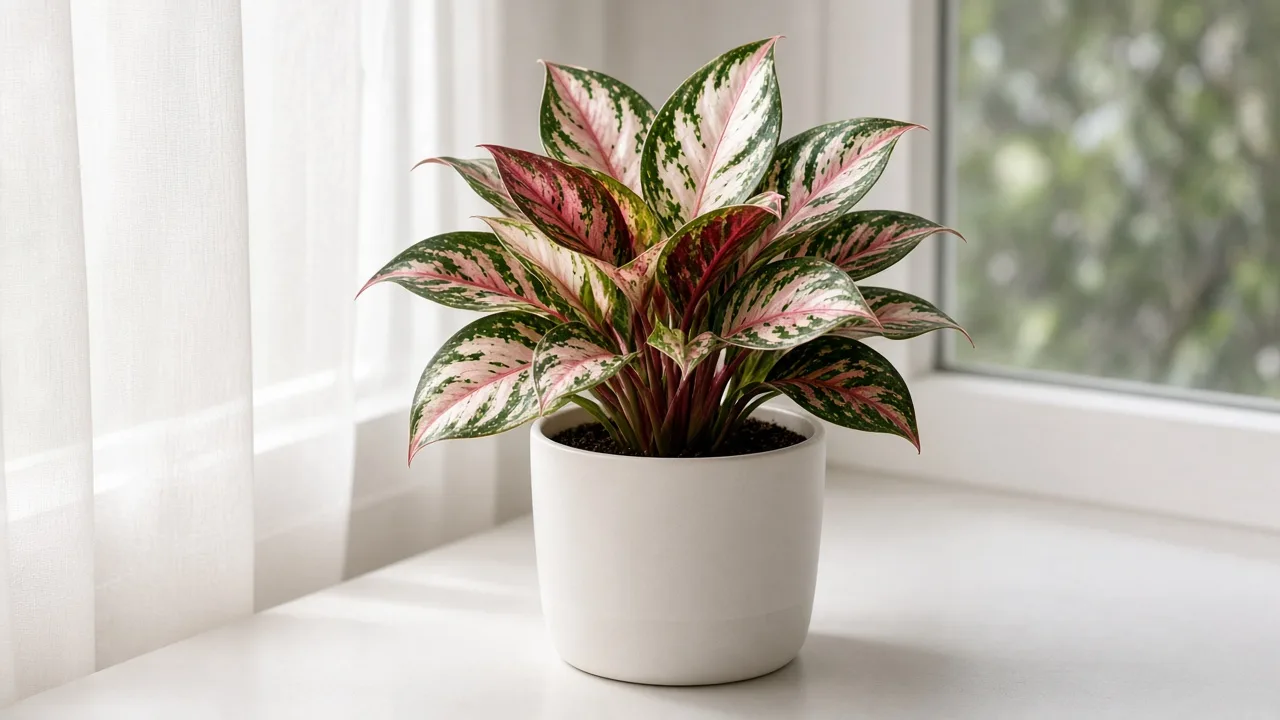
Slow Growth on Aglaonema Super White: Causes, Checks & Fixes
This guide covers slow growth on Aglaonema Super White. See also the general Slow Growth guide, watering, and light pages for this plant.
Slow Growth on Aglaonema Super White: Causes, Checks & Fixes
Quick answer
Slow growth on Aglaonema ‘Super White’ is often normal, not neglect. This tissue-cultured Thai hybrid carries broad glossy leaves splashed rosy-white, cherry-red, and green—and the white zones lack chlorophyll, so the cultivar needs brighter indirect light than solid-green Chinese evergreens while still growing at a deliberately compact pace. One to two new broad leaves per crown per warm season in filtered brightness is realistic success.
For how chronic stagnation works across houseplants in general, see our slow growth hub. On Super White, the decisive check is whether each crown center pushed a fresh white-splashed blade while stems stayed firm—not whether the whole clump looks short from across the room.
First step: gently lift the innermost crown leaves on every stem and look for a soft emerging broad leaf with rosy-white variegation in the past six to eight weeks; then check whether the top 2–3 cm of mix has dried before you change water, fertilizer, or pot size.
When to use this page vs other Super White guides
This page is the stall-without-collapse entry—firm compact clump, little new height, no obvious pest damage—when you are unsure whether to wait or intervene.
| Pattern | Read next |
|---|---|
| Long bare petioles, lean toward window | Leggy growth or not enough light |
| Washed-out white fading to plain green on new blades | Pale leaves |
| Uniform pale oldest lower leaves | Nitrogen deficiency |
| Heavy wet pot, yellow lower leaves, soft crown | Overwatering or root rot |
| Light dry pot, limp broad leaves | Underwatering or wilting |
| Sticky crown, distorted new tips | Mealybugs or aphids |
| Ready to shorten stems after growth resumes | Pruning guide |
| Full problem index | All Super White problems |
What slow growth looks like on Aglaonema Super White
Healthy Super White in active growth extends broad upright leaves splashed rosy-white, cherry-red, and dark green from a compact multi-crown clump. NC State notes Chinese evergreen has lance-shaped variegated foliage on an erect bushy habit—Super White keeps that silhouette but on a slow variegated scale with heavier white tissue. Slow growth is about the rhythm of new crown flushes stopping, not the plant turning brown:
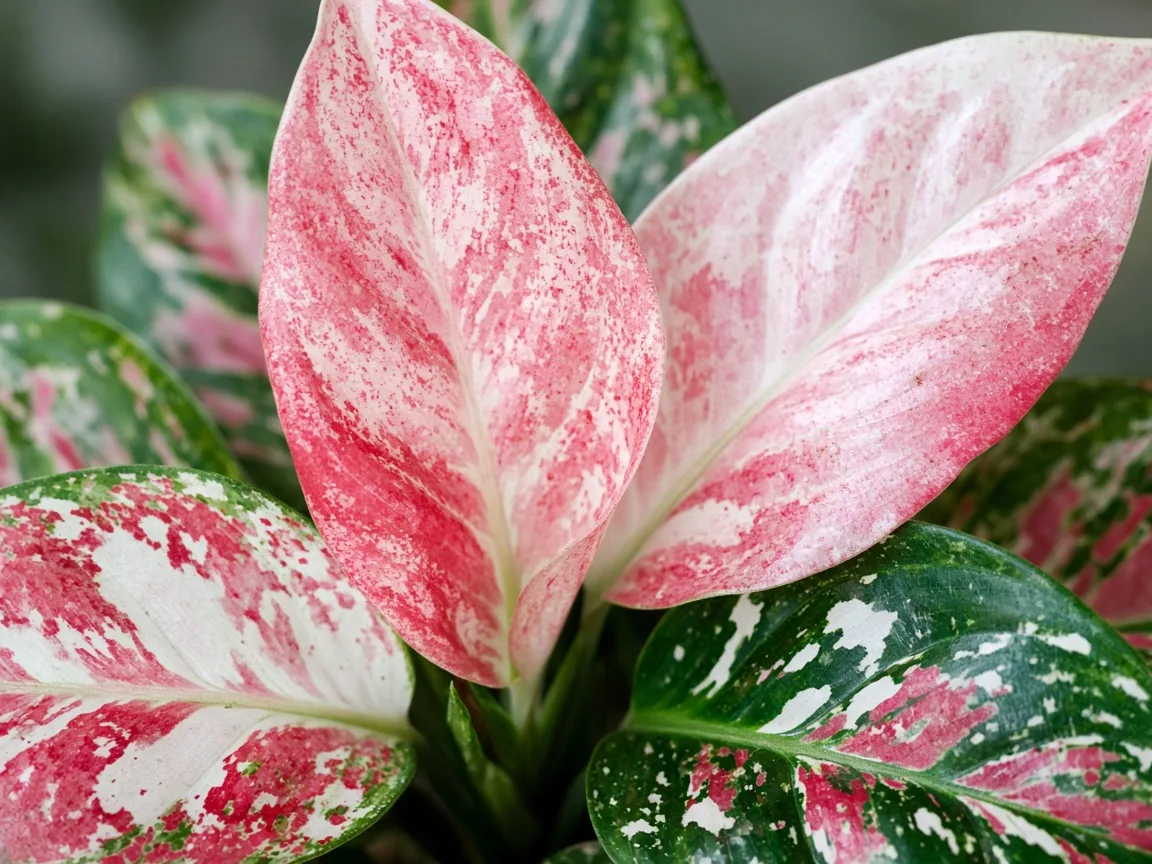
Stalled crown flush: firm mature broad leaves packed at the center with no soft new blade unfurling—compare with a warm-season crown that recently added one crisp white-splashed leaf.
- No new broad leaf per crown for six to twelve weeks despite firm green-and-white foliage
- Same clump height month to month — the plant neither stretches dramatically nor adds visible crown tips
- Tiny new leaves only — when flushes resume, blades open smaller with less white splashing than earlier leaves
- Pot stays heavy long after you expected the top 2–3 cm of mix to dry in a dim room
- Winter quiet — growth flatlines October through March while leaves stay firm, not limp
- Warm-season flatline — no crown flush June through August despite filtered window light (different problem)
This differs from leggy growth, where petioles lengthen and spacing opens between broad leaves, and from not enough light, where stretch and green reversion develop even as weak new tissue keeps appearing. Overwatering stalls growth with yellow dropping lower leaves and a soft dull crown on wet mix—not a firm clump on properly dried soil.
Why Aglaonema Super White grows slowly
Super White is bred for bold variegation in home interiors, not speed. Clemson HGIC notes variegated Chinese evergreen types need low to moderate indirect light—but Super White’s heavy white tissue pushes that requirement toward the brighter end (150–300 fc) while still photosynthesizing at a slow upright habit. Indoor stalls usually mean a bottleneck, not a species that should race like pothos.
Super White-specific triggers:
- Normal variegated-aglaonema pace — tissue-cultured pink-and-white hybrids often grow slowly; a compact plant with clean crowns and stable white color beats a tall soft plant pushed in low light.
- Chlorophyll-poor white zones — rosy-white tissue has less photosynthetic capacity than the dark green base, so each new leaf costs more energy and arrives less frequently than on ‘Maria’ or ‘Silver Bay’.
- Winter metabolic dip — NC State recommends reduced watering in winter when light hours shrink. Crown flushes often pause October through March in cool rooms while foliage stays firm.
- Wet mix in dim light — Super White tolerates brief drought but root rot follows overwatering when a heavy pot sits in a dark hallway. Roots idle while leaves still look green from a distance.
- Borderline brightness without stretch — Very low light can flatline flushes before petioles obviously lengthen. White splashing may fade on tiny new blades—cross-check the light guide.
- Post-repot or post-move pause — disturbed roots and lower light during acclimation can skip one crown cycle even in summer. Firm stems with appropriate dry-down often resume without feeding.
- Depleted peat-perlite mix — years in the same pot without refresh can stall warm-season flushes while leaves stay firm. See repotting timing.
- Low-level pest drain — spider mites or mealybugs on crown axils can flatten vigor before obvious webbing. Scout innermost leaf undersides if flushes stop mid-season on otherwise good care.
Crown white-flush clock: a Super White-only timing check
Each stem in a Super White clump grows from its crown center. New height arrives as one broad leaf at a time unfurling from the innermost tip—not as random foliage along old petioles. Use that flush rhythm before assuming the plant is lazy.
| What you see at each crown | Likely meaning | First adjustment |
|---|---|---|
| No flush 8–12 weeks; firm leaves; cool room; mix dry on winter schedule | Seasonal rest | Reduce watering further; wait for longer days—do not feed |
| No flush through warm months; pot heavy days after watering | Wet root zone in low light | Extend dry interval; confirm drainage—see watering |
| Tiny flush then stall; dim room; no lean yet | Borderline light | Move to filtered brightness per light guide |
| Flush resumes smaller each cycle; same pot 2+ years | Depleted mix | Plan spring repotting into fresh peat-perlite blend |
| No flush + soft crown on wet mix | Root stress | Overwatering dry-down; escalate to root rot if crown is mushy |
| Pale lower leaves + stall in warm season | Nitrogen gap | Rule out wet roots first; then nitrogen deficiency |
Mark one crown per stem with tape at the base of the tallest leaf and photograph tip height monthly. A firm clump with a flat tape reading through winter is often healthy rest; a flat reading through June on a filtered windowsill deserves a care audit.
Top 2–3 cm dry-down map for variegated Super White
Super White telegraphs root activity through how fast the top 2–3 cm of mix dries, not through dramatic wilt. Broad leaves stay firm while roots idle—so check depth, not leaf drama alone. Clemson recommends allowing the top 1–2 inches to dry before watering again; Super White in bright filtered light often follows that rhythm, while the same plant in a dim corner needs longer intervals.
Summer active baseline (warm room, 150–300 fc filtered light):
- Top 2–3 cm dry in 7–12 days is typical per the overview rhythm
- Dry pot feels noticeably lighter; crown tips may flush every few weeks
Winter rest baseline (cooler room, shorter days):
- Same volume of mix may take three to four weeks to dry through the top 2–3 cm
- Heavy pots that never lighten suggest overwatering for the season
If your winter pot never reaches summer dry weight, growth will stall even when white-splashed leaves look fine. Correct the calendar before repotting or feeding.
White splashing scoreboard on new crown leaves
Super White health is judged on the newest broad blade, not the outer canopy. Firm mature leaves can look perfect while the crown has stalled for months—and white tissue is the first signal that energy is available for the next flush.
Recovery signal: a fresh leaf opens with bold rosy-white and cherry-red splashes on a dark green base, petiole firm, blade length similar to or slightly longer than the prior leaf.
Stall signal: no new blade for a full warm season, or new blades open short with washed-out white fading to plain green—often light-related before height stops entirely.
Photograph the innermost crown flush monthly. Compare white contrast against a healthy reference, not against green cultivars that thrive in dim offices. Faded variegation with a heavy wet pot points to roots first; faded variegation in a windowless corner points to light—see pale leaves when color wash is the lead symptom.
How to confirm the cause
Work through checks in order—one variable at a time.
- Crown flush history — did any stem show a new broad leaf at the center in the last 30–45 days? Photograph innermost tips if unsure.
- Top 2–3 cm moisture — finger to that depth. Soggy mix in low light overlaps overwatering before slow growth feels obvious.
- Firmness scan — press petiole bases at each crown. Firm green tissue throughout points away from active rot; soft crown on damp mix points to root stress.
- Light at crown height — hand-shadow test at the top of the clump, not at floor level. Weak shadow through a warm month overlaps not enough light.
- Room temperature trend — nights below about 65°F (18°C) for weeks explain winter pause better than nutrient guesses. NC State prefers daytime temperatures in the 70–80°F range for active growth.
- Pot age and mix — when did you last refresh peat-perlite blend? Years of plain water leach nutrients in slow-growing clumps.
- Pest spot check — fine webbing on leaf undersides, cottony axil patches, or sticky crown flush.
Confirmed winter dormancy: firm leaves, appropriate dry-down, no pest signs, cool short-day room. Suspected care stall: firm leaves, warm room, no flush for ten or more weeks, or heavy wet pot.
The first fix to try
Do not fertilize or repot on day one. Run the crown flush and top 2–3 cm dry-down check above.
- If winter rest fits: withhold feed, extend dry interval to match shorter days, and keep the brightest stable filtered spot you have. Resume normal watering gradually as light improves.
- If the pot stays heavy on a winter schedule: stop watering until the top 2–3 cm of mix is fully dry and the pot lightens—often two to four weeks in a cool dim room.
- If warm-season stall with adequate dry-down: improve filtered brightness first (move within a few feet of sheer south or east glass, or add supplemental light at 12–18 inches above the crown), then evaluate one measured half-strength feed during active growth per the fertilizer guide—not before.
Secondary steps, only after the first path shows no improvement for six weeks in warm conditions:
- Refresh mix in spring if roots filled the pot and flushes stay undersized
- Scout and treat pests if crown axils show residue
- Prune to remove bare lower petioles once light and water are stable—not as a substitute for fixing dim wet culture
Recovery timeline
- Winter dormancy: crown flushes often resume within four to eight weeks after consistent warmth above ~70°F (21°C) and longer daylight. Old bare petiole sections do not backfill; new growth appears at crown tips.
- Corrected overwatering: first tiny broad flush may take four to eight weeks after the top 2–3 cm of mix truly dries and stays on a season-appropriate schedule.
- Light correction: the next flush after improved placement should show tighter crown spacing and bolder white splashing within one growth cycle—judge the innermost two leaves per stem.
- Nutrient correction: after one proper feed in warm growth, new blades often look fuller within six to ten weeks; oldest pale leaves rarely re-green.
Signs you are winning: new broad leaves with bold rosy-white splashes, measurable height gain on taped crowns, lighter pot cycling on schedule, firm petioles throughout.
Signs to escalate: softening crown, sour smell at drainage holes, several stems limp at once, or no flush through an entire warm season after light and water fixes—inspect roots per root rot guidance.
Lookalike symptoms
| What you notice | Often confused with | How to tell them apart |
|---|---|---|
| Firm clump, no height, winter | ”Dead” plant | Leaves plump and green-white; mix dries slowly; resumes in spring |
| No flush, heavy pot | Dormancy | Top 2–3 cm stays wet weeks; may smell sour at drainage holes |
| Slow + long bare petioles | Slow growth only | Petioles stretched toward window—see leggy growth |
| Slow + pale oldest leaves | Light only | Lower blades evenly dull—nitrogen deficiency |
| Slow after repot | Root failure | Only two to four week pause is normal; mushy crown is not |
Mistakes to avoid
- Feeding a winter-dormant clump—weak soft shoots and rot risk in cool wet mix
- Repotting into a much larger pot “to encourage growth”—extra wet peat stalls roots on slow-growing variegated aglaonemas
- Watering on a summer calendar in a cool dim room
- Assuming slow growth means more water because leaves look “thirsty” while the pot is heavy
- Pruning every crown before fixing light or dry-down—removes photosynthetic tissue without solving the bottleneck
- Treating Super White like a dark-office ‘Silver Bay’—white tissue needs more filtered brightness to sustain flushes
How to prevent slow growth stalls next time
Log crown flushes and pot dry dates seasonally so winter pause feels expected. Keep the overview routine: bright filtered light at 150–300 fc, top 2–3 cm dry-down watering, airy peat-perlite soil, and light warm-season feeding per Missouri Botanical Garden guidance for growing-season fertilizer. Refresh mix every one to two years. Scout crown axils when indoor heat dries air in winter.
Related Aglaonema Super White guides
- Overview — baseline culture and realistic growth pace
- Light — when stall is brightness-related
- Watering — top 2–3 cm dry-down that unlocks crown flushes
- Fertilizer — after confirming active warm-season growth
- Leggy growth — when slow turns into stretch
- Problems hub — full symptom index
Conclusion
Slow Aglaonema Super White is often normal compact rhythm or a winter watering mismatch, not a plant that needs aggressive intervention. Firm white-splashed leaves with idle crown tips in cool months are frequently healthy. When warm-season flushes stop on heavy wet mix or in windowless corners, fix dry-down and filtered brightness before feed or repot. New rosy-white blades at each crown are the scoreboard—measure those, not guilt.
Related tool
Use the Plant Problem Diagnosis Tool to narrow causes for slow growth on this plant before changing multiple variables at once.