Alocasia Stingray Light Needs: Windows & Grow Lights
Alocasia Stingray Light Needs: Windows & Grow Lights
Alocasia Stingray Light Needs: Windows & Grow Lights
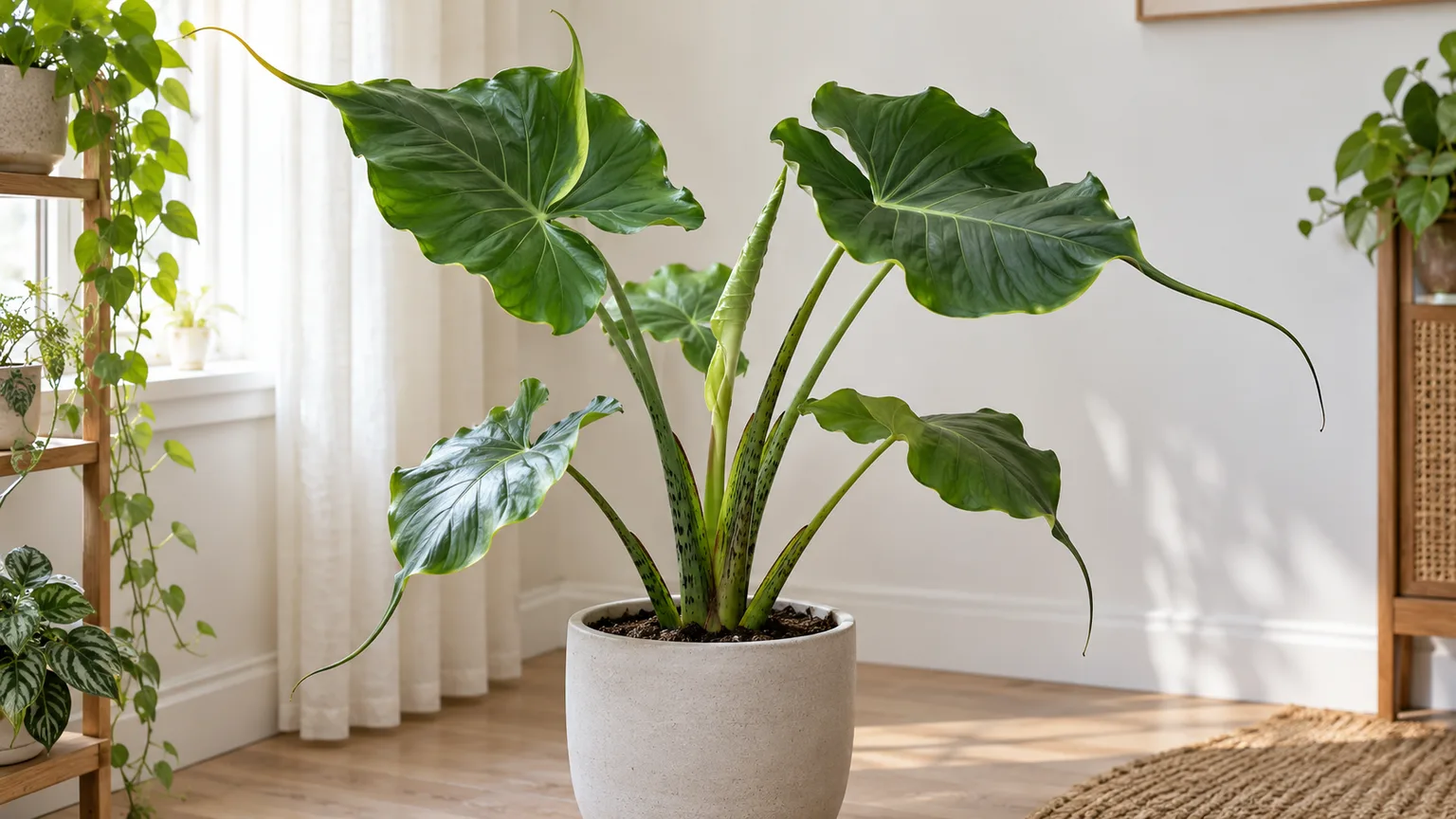
The fastest way to judge light on Alocasia macrorrhizos ‘Stingray’ is not a meter reading — it is the newest leaf. When placement is right, Stingray leaves open dark green and glossy, with a rounded blade and a distinct tail-like tip on upright, red-mottled petioles. When light is too low, those tails shrink, petioles stretch, and the whole plant starts to look like a generic elephant ear rather than the cultivar you bought. This guide covers what bright indirect light means in a real room, which windows work best, how to use grow lights in winter, and how to fix light stress before it cascades into overwatering on Alocasia Stingray or root rot.
Reviewed by the LeafyPixels Review Board. Recommendations are checked against botanical and extension references, LeafyPixels plant-care data, and practical indoor growing constraints before publication.
If you are new to this plant, start with the Alocasia Stingray overview for naming, toxicity, and baseline care. This page is the proactive placement guide. For reactive diagnosis when leaves are already pale or stretched, see not enough light and leggy growth. Light and watering move together on Stingray — brighter placement dries the pot faster and reduces the wet-soil stagnation that kills corms in dim corners.
Why Light Sets the Pace for Stingray Care
Most Stingray problems get blamed on watering first, but light is the variable that sets the plant’s energy budget. The Royal Horticultural Society’s Alocasia growing guide states that alocasias grow best in bright but indirect light, that strong sunlight scorches foliage, and that while they can survive in lower light, growth will be much slower. For a macrorrhizos hybrid that can push leaves up to 60 cm long on red-mottled stalks, that slower growth shows up quickly as smaller blades and weak structure.
Light also controls how fast the chunky aroid mix dries. A Stingray in a bright east window uses water predictably; the same plant in a dim hallway sits wet longer, loses leaves, and invites rot even when you are watering conservatively. Treat light as the foundation, then scale watering, humidity, and fertilizer to match.
What Stingray Leaves Tell You About Light
Stingray is not Alocasia × amazonica ‘Polly’. The selling point is shape — a glossy, dark green, arrow-to-round blade with a pronounced tail — not silver-veined contrast. The RHS plant profile for Alocasia ‘Stingray’ describes glossy, arrow-head leaves tapering to an elongated point on upright, red-mottled stalks. That morphology is your diagnostic tool.
The Stingray Silhouette vs. Generic Alocasia Advice
Read the newest fully opened leaf, not old damage. Good light produces compact petioles, a blade that keeps its rounded “body” and tail proportion, and a deep green surface without wash-out. Low light produces smaller new leaves on visibly longer petioles, softer green color, and a loss of the tight, tail-heavy silhouette. Too much light bleaches or scorches the sun-facing side while the rest of the leaf stays dark — a pattern you will not see from underwatering alone.
This is also how you separate light stress from drooping leaves caused by watering. Low-light droop comes with elongated stems and slow dry-down; overwatering droop comes with wet soil and soft bases. Diagnose with the newest leaf first, then change one condition at a time.
Bright Indirect Light in Real Numbers
“Bright indirect light” is accurate horticultural language and vague room advice at the same time. Stingray owners benefit from numbers because this macrorrhizos cultivar grows faster and larger than compact jewel alocasias and uses more light when it is available — within the filtered, understory range it evolved for.
Foot-Candles, PPFD, and the Shadow Test
The Missouri Botanical Garden indoor light factsheet classifies typical indoor light as low at 25–100 foot-candles, medium at 100–300 foot-candles, and high at 300–1,000+ foot-candles. For Stingray, aim for the upper medium band — roughly 200–400 foot-candles (about 2,150–4,300 lux) at the leaf surface for most of the day. That aligns with genus guidance from the Missouri Botanical Garden Plant Finder: part shade, filtered sun, or bright indirect light indoors; direct sun causes leaf burn and pale foliage.
On the grow-light side, 250–450 µmol/m²/s PPFD at the canopy during the light-on period is a workable home range for active growth — higher than slow jewel alocasias, still well below full outdoor sun. You do not need to chase numbers weekly; a phone light-meter app or the shadow test is enough day to day. At midday, a soft, fuzzy shadow with visible outline means usable brightness; no shadow means too dim; a sharp dark shadow on the leaf surface for hours means too direct.
NC State Extension lists genus-level light as dappled sunlight or partial shade — direct sun only part of the day, roughly two to six hours — which indoors translates to bright ambient light with brief gentle morning sun, not baking afternoon beams.
Best Windows for Alocasia Stingray
Window orientation is the biggest lever in most homes. Stingray tolerates a wider brightness band than tiny baginda types because it is a larger macrorrhizos hybrid, but it still shares the alocasia rule: filtered brightness, not open-field sun.
East-Facing Windows
East windows are the default best choice in most latitudes. They deliver one to three hours of gentle morning direct sun, then bright indirect light for the rest of the day. That pattern matches what the RHS Alocasia guide describes — bright but not direct for most of the day — and keeps Stingray’s dark green blades compact without scorch risk. Place the pot within 0.5–1 m (1.5–3 ft) of the glass, slightly back in winter to avoid cold pane shock.
North-Facing Windows
North windows work only when they are genuinely bright — unobstructed glass, light-colored walls, and no deep overhang. In many Northern Hemisphere homes, north exposures fall to 50–150 foot-candles in winter, below Stingray’s active-growth floor. Summer north light can reach the usable band for months. Measure at the leaf, not the room. If readings stay under 150 foot-candles for most of the day, add a grow light on a 10–12 hour timer rather than hoping the plant will “adapt.”
South and West Windows
South and west glass can deliver 600–1,000+ foot-candles at the pane in summer — far above what Stingray leaves tolerate unfiltered. The RHS growing guide is explicit that strong sunlight scorches alocasia foliage. Manage these exposures by pulling the plant 1–1.5 m (3–5 ft) back, hanging a sheer curtain, or using the window only in winter when intensity drops. Leaf curl during the brightest hours is an early warning to filter or move back before bleaching becomes permanent.
Signs Your Alocasia Stingray Is Getting Too Little Light
Insufficient light rarely kills Stingray overnight, but it steadily degrades the plant and sets up watering failure.
Smaller Leaves and Long Petioles
The clearest low-light signature is etiolation: new leaves arrive smaller than older ones, spaced farther apart, on petioles that visibly lengthen toward the window. The stingray tail may still form, but the whole blade looks proportionally smaller and softer green. NC State Extension notes that yellowing leaves can result from inadequate light as well as watering issues — on Stingray, a pattern of pale, stretched new growth is almost always a light story when soil moisture is reasonable.
Secondary signs include slow growth, leaning toward one light source, and soil that stays wet for two weeks or more because the plant is barely transpiring. Fix placement first; do not compensate with extra water.
Signs Your Alocasia Stingray Is Getting Too Much Light
Over-lit Stingray is less common indoors but more dramatic when it happens — usually after a sudden move to unfiltered south or west glass.
Bleached Patches and Scorched Margins
Direct sun breaks down chlorophyll faster than shade-acclimated tissue can replace it. You will see bleached, papery patches on the window-facing side, sometimes slightly translucent, distinct from fungal spots that spread over time. Advanced stress shows brown or black scorched margins that will not green up again. Leaf curl inward during midday on the brightest days is a warning sign before permanent scorch — move back, sheer the window, or shift to an east exposure and acclimate slowly.
Grow Lights for Dim Rooms and Winter
A full-spectrum white LED in the 4,000–6,500 K range is the simplest supplement for basement rooms, interior shelves, or north-only apartments. The RHS artificial lighting guide for houseplants covers fixture types; for one Stingray, a 20–40 W panel or screw-in bulb on a timer is usually enough.
Mount the fixture 25–45 cm (10–18 in) above the foliage and target the PPFD band above during a 12–14 hour photoperiod in active growth. In winter, 8–10 hours of supplemental light often prevents the light-driven leaf drop many growers misread as plant death. Watch the first week: crispy new edges mean raise the light; stretched petioles mean lower it or extend runtime. Pair supplemental light with reduced watering in dormancy — brighter winter light without overwatering is the combination that keeps the corm alive.
Acclimating Stingray to a New Light Position
Stingray leaves are shade-acclimated when they arrive from a greenhouse or dim shop shelf. Moving abruptly to intense sun can scorch them in a single afternoon. Step up over two to three weeks: intermediate placement for several days, then the target spot, watching the newest leaf for bleach, curl, or sudden limpness at peak hours. Reverse the steps when moving to lower light, watching for softer color and slower emergence instead of scorch.
Do not stack a light move with repotting, fertilizing, and watering changes in the same week. The leaf that opens after the move is your confirmation.
Seasonal Light Shifts and Dormancy
Day length and window intensity drop sharply from summer to winter. The RHS Alocasia guide recommends cooler, drier winter conditions above 10 °C (50 °F) so alocasias can go dormant, often losing foliage — which is normal, not a death sentence if the corm stays firm. Stingray may shed leaves when daily light integral falls below what active growth requires; move it closer to the brightest window or add a grow light, cut watering sharply, stop feeding, and wait for spring.
Anticipate the shift in late autumn rather than reacting to a bare pot in January. A seasonal meter check at the leaf surface takes two minutes and prevents the classic dim-plant-plus-wet-soil rot cycle.
Conclusion
Alocasia Stingray wants bright, filtered light — roughly 200–400 foot-candles at the leaf, an east window as the default, filtered south or west only with management, and a grow light when natural exposure cannot reach that band. Watch the newest leaf’s shape and petiole length, not old scars, and scale watering to match how fast the pot dries in that light. This macrorrhizos hybrid rewards bright, consistent exposure with dark, tail-tipped leaves on compact red-mottled stalks; it punishes dim corners and sudden unfiltered sun in equal measure. Stay in the middle, acclimate slowly, and let new growth be your scoreboard.
When to use this page vs other Alocasia Stingray guides
- Alocasia Stingray overview — Start here for whole-plant context before deep-diving this topic.
- Alocasia Stingray problems hub — Jump to symptom-specific fix guides when placement alone does not resolve the issue.
- Not Enough Light on Alocasia Stingray — Escalate here when light adjustments are not enough.
- Leggy Growth on Alocasia Stingray — Escalate here when petioles keep stretching despite brighter placement.