Slow Growth on Alocasia Stingray: Causes, Checks & Fixes
Quick answer
Slow growth on Alocasia Stingray is often winter corm dormancy or dim-room light—not a hungry plant that needs fertilizer. First step: in warm active months, mark the newest ray-tail spear and check whether the underground corm is still firm while the top 2–3 cm of mix dries on your normal schedule.
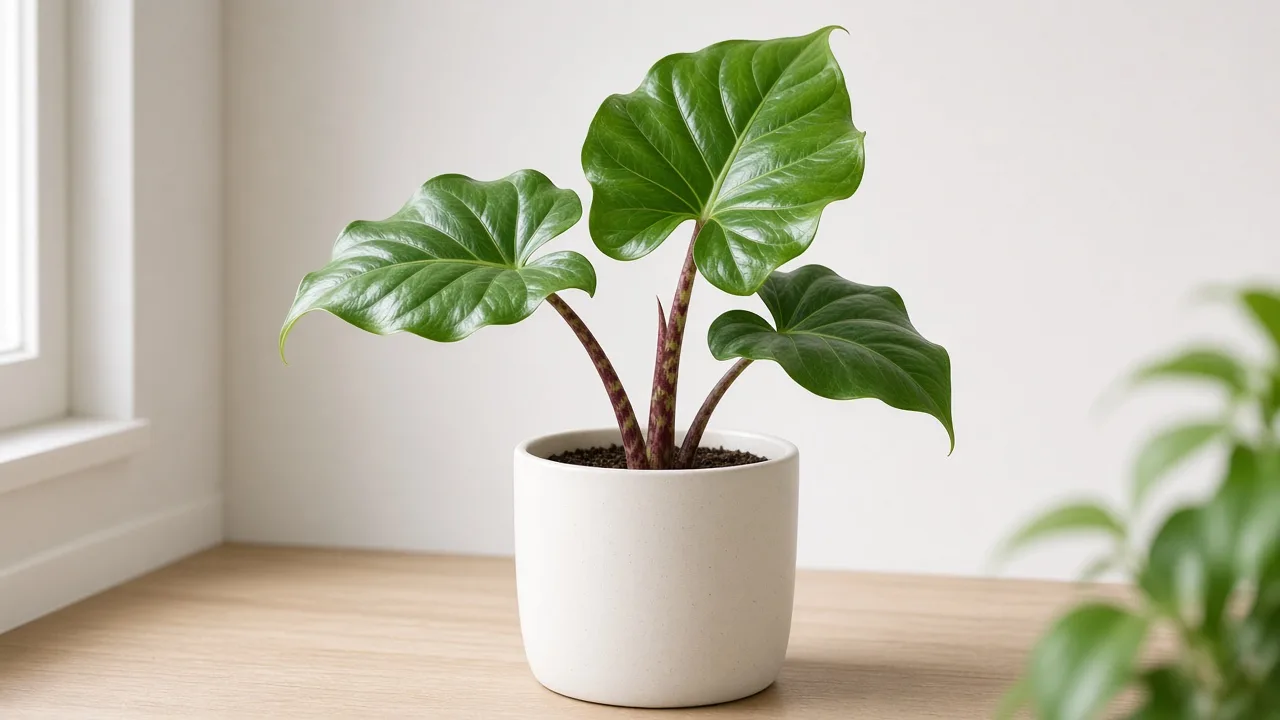
Slow Growth on Alocasia Stingray: Causes, Checks & Fixes
This guide covers slow growth on Alocasia Stingray. See also the general Slow Growth guide, watering, and light pages for this plant.
Slow Growth on Alocasia Stingray: Causes, Checks & Fixes
Quick answer
Slow growth on Alocasia Stingray (Alocasia macrorrhizos ‘Stingray’) is not always a problem. This macrorrhizos cultivar is tagged moderate to fast indoors when light, warmth, and humidity align — yet it often pauses spear production when days shorten, room temperatures dip, or the underground corm enters its natural winter rest.
For how chronic stagnation works across houseplants in general, see our slow growth hub. On Stingray, the decisive check is whether a new ray-tail spear is unfurling from a firm corm — not whether the pot still holds a few glossy blades from last summer.
First step: in warm active months, mark the tip of the newest spear and confirm the corm is firm while the top 2–3 cm of mix dries on your normal schedule. Firm corm with no flush in cool short-day months usually means dormancy; firm corm with no flush through June on a heavy wet pot in dim light needs light or watering correction before fertilizer.
When to use this page vs other Alocasia Stingray guides
This page is the stall-without-collapse entry — same leaf count month to month, tiny winter spears, or an empty-looking pot — when you are unsure whether to wait or intervene.
| Pattern | Read next |
|---|---|
| Long petioles, small blades leaning toward window | Leggy growth or not enough light |
| Washed-out blades without height gain | Pale leaves |
| Uniform yellow oldest lower leaves | Yellow leaves or nitrogen deficiency |
| Heavy wet pot, soft corm, mushy petioles | Overwatering or root rot |
| Light dry pot, drooping ray-tail blades | Underwatering |
| Crispy margins on existing leaves | Brown tips or low humidity |
| Full problem index | All Alocasia Stingray problems |
What slow growth looks like on Alocasia Stingray
Healthy Stingray in active growth extends upright red-mottled petioles carrying round, glossy ray-tail blades — often 30–60 cm across indoors on a floor plant with room to spread. The RHS lists leaves to 60 cm on red-mottled stalks for this cultivar. Slow growth is about the rhythm of new spears and blade size stalling while the corm and existing foliage stay largely intact:
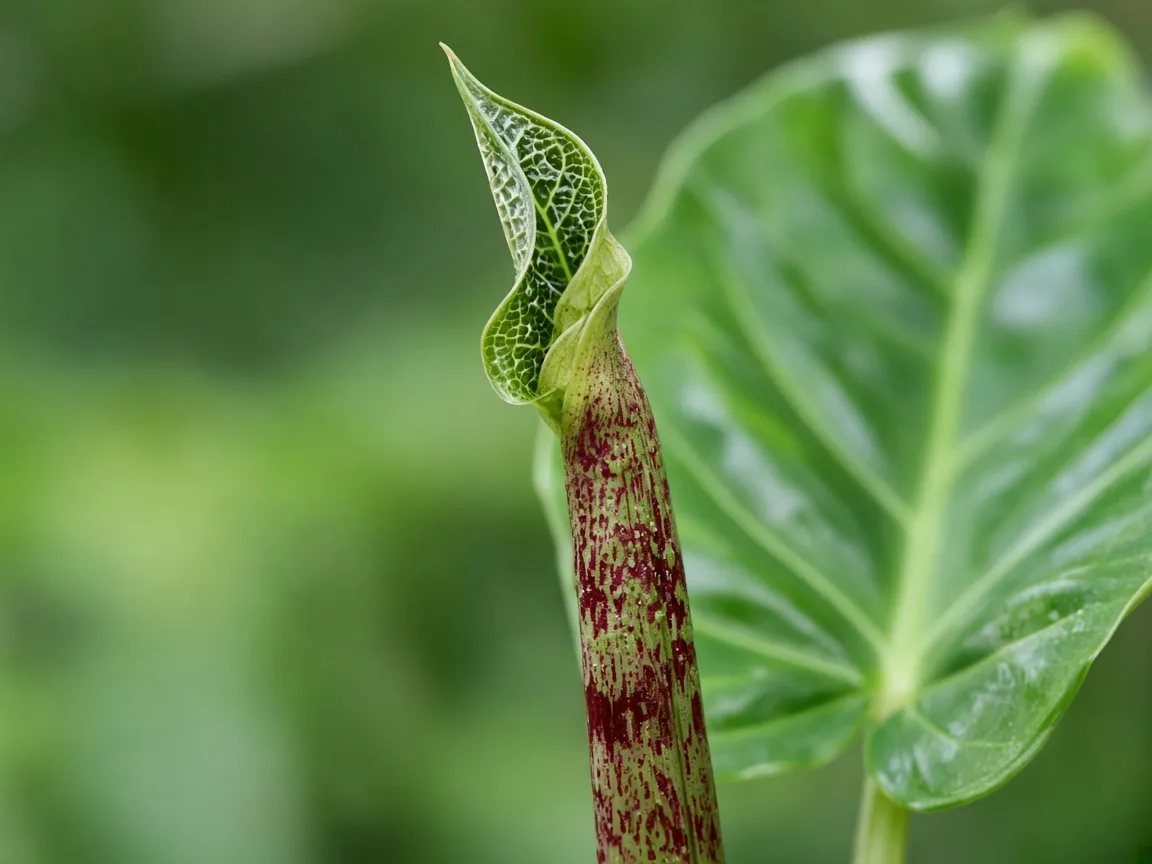
Stalled spear tip: firm upright petiole with a small partially unfurled ray-tail leaf much smaller than mature blades — compare with warm-season growth that opens full-size glossy foliage.
- No new spear for six to eight weeks during spring or summer despite firm petioles and appropriate soil moisture
- Winter micro-leaves — tiny ray-tail blades on short petioles while older summer leaves stay large (seasonal, not failure)
- Same leaf count month to month — no new upright stalk joining the crown while existing blades age out slowly
- Pot stays heavy long after you expected a dry-down cycle in a cool dim room
- Spear stuck halfway — new leaf opens small, wrinkled, or aborts before the ray-tail fully extends
- Empty pot in winter — all foliage dropped but mix level unchanged and corm firm below the surface (dormancy, not death)
This differs from leggy growth, where long thin petioles and small blades stretch toward a window, and from not enough light, where the plant may still push weak new tissue on elongated stalks. Overwatering stalls growth with yellow dropping leaves and a soft dull corm on wet mix — not a firm crown on properly dried soil.
Why Alocasia Stingray grows slowly
Stingray belongs to Alocasia macrorrhizos, a species the RHS growing guide places among faster alocasias that can produce leaves on a weekly basis in summer when conditions are right. Indoor stalls usually mean a bottleneck — not a species that is naturally sluggish year-round.
Stingray-specific triggers:
- Winter corm dormancy — Alocasias need cooler, drier winter conditions and may lose foliage while the underground corm rests. All Alocasia species enter a dormant period in winter with growth that almost stops. On Stingray, that can mean an empty-looking pot with a firm corm — not a dead plant.
- Insufficient light without obvious stretch — Growth is much slower in lower light, and insufficient light causes alocasia growth to slow before leaves yellow en masse. Dim winter sun plus a floor placement far from windows can flatline spears while remaining blades still look green.
- Winter overwatering on a slow metabolism — Reduce watering to a minimum during dormancy; overwatering while dormant can cause roots to rot. Watering on a summer calendar while heat is off keeps mix cool and damp, suppressing root activity without immediately killing the corm.
- Cool room temperatures — Keep above 16°C (60°F) in the growing season and above 10°C (50°F) in winter. The RHS Stingray profile advises keeping above 15°C. Extended chill below those ranges slows metabolism sharply.
- Root-bound or exhausted mix — Fast-drying compost after watering often signals the plant is pot-bound and needs repotting. Years in depleted peat-heavy mix can stall warm-season flushes while the corm stays firm. See repotting timing.
- Oversized pot in low light — A container too large for the root system holds wet mix around a slow-transpiring crown, mimicking overwatering stress and delaying new spears.
- Post-repot or post-move pause — Disturbed roots and lower light during acclimation can skip one or two spear cycles even in summer. Firm corm with appropriate dry-down often resumes without feeding.
- Low humidity drag — Alocasias like medium to high humidity. Dry furnace air in winter slows unfurling on large ray-tail blades even when watering is correct.
- Pest drain at low levels — Alocasia are prone to spider mites and mealybugs. Low-level infestations on glossy leaf undersides can flatten vigor before obvious webbing. Scout new spears if flushes stop mid-season on otherwise good care.
Corm dormancy: the empty pot is not dead
The issue that panics new Stingray owners: in late autumn or winter, a healthy plant can drop every ray-tail leaf, leaving bare mix with a firm corm below the surface. Planet Houseplant describes consequential dormancy — alocasias that get too cold may drop all foliage and sulk until spring — though dormancy is not inevitable if you keep warmth and light steady.
Before assuming slow growth is a care failure, answer three questions:
- Is it October through February in your hemisphere with shorter days and cooler rooms?
- Is the corm firm when you press the pot sides gently — not mushy or hollow?
- Have you already cut watering to every two to four weeks (or less) per the watering guide?
If all three are yes, slow growth is likely normal rest. Stop fertilizing, resist repotting, and keep bright indirect light with minimal moisture. New spears usually appear when daylength and temperatures rise. The RHS notes fresh leaves return once the plant comes back into growth in spring.
If the corm softens, soil smells sour, or you are still soaking weekly through dormancy, that is not rest — see overwatering and root rot.
Spear-unfurl clock: tracking Stingray’s growth rhythm
Each new Stingray leaf arrives as an upright spear wrapped around a central stalk, then unfurls into the round ray-tail blade. Growth rate is best measured by spear frequency and final blade size, not by whether older leaves still look glossy.
| What you see | Likely meaning | First adjustment |
|---|---|---|
| No spear 6–8 weeks; firm corm; cool room; dry mix on winter schedule | Seasonal dormancy | Wait; reduce water further — do not feed |
| No spear through warm months; dim room; soil wet days after watering | Light or wet-root bottleneck | Move closer to bright indirect light; extend dry interval |
| Tiny winter spears; older leaves large | Seasonal micro-growth | Normal in UK/US winter; hold patience if corm is firm |
| Spear aborts half-unfurled; RH below 50% | Humidity stall | Raise humidity toward 60–75%; see low humidity |
| Pot dries in 2–3 days; roots circling drainage holes | Pot-bound | Repot one size up in spring with chunky aroid mix |
| No spear 2 months in bright warmth after recent repot | Acclimation pause | Hold steady care; skip fertilizer for four weeks |
Mark the newest spear tip with tape and log the date each flush opens. A healthy active Stingray in warm bright conditions often adds a leaf every two to four weeks — the RHS notes weekly leaf production is possible in summer when resources are unlimited. Indoor reality is usually slower but should not flatline entirely from April through September.
Floor-plant light trap: why Stingray stalls in bright rooms
Stingray is usually grown as a floor plant with petioles at knee to waist height. A room that feels “bright” at eye level can be too dim at the canopy — especially winter sun that never reaches the pot base, or furniture blocking east-window light.
Alocasias grow best in bright but indirect light; strong direct sun scorches glossy blades, but survival in lower light comes at the cost of much slower growth. On macrorrhizos cultivars with large leaf surface area, that stall shows up as fewer spears and smaller ray-tail blades before obvious yellowing.
Test placement: on a cloudy midday, hold your hand above the pot — a soft diffuse shadow with defined edges suggests adequate indirect light. A faint or absent shadow means escalate toward the window, add a sheer curtain if afternoon sun is harsh, or supplement with a grow light 30–45 cm above the crown during short-day months.
How to confirm the cause
Work through these checks in order. The goal is one primary bottleneck, not five simultaneous fixes.
- Season and temperature — Is it the dormant window with shorter days and rooms below 18°C (65°F)? Firm corm + bare mix in winter strongly favors rest.
- Corm firmness — Press pot sides gently or brush soil from the crown. Firm and plump supports patience; soft or mushy means root stress.
- Spear log — When did the last ray-tail leaf fully open? No flush through a warm month is not dormancy.
- Light at canopy height — Compare to light guide targets; note distance from the brightest window.
- Soil moisture rhythm — Chopstick the top 2–3 cm. Bone-dry for a week then soaked, or wet for ten days in normal light, both stall roots.
- Pot size vs. root mass — Lift the plant out briefly in spring: circling white roots and rapid dry-down suggest binding; sparse roots in an oversized pot suggest wet stress.
- Humidity — Hygrometer beside foliage below 50% during active growth slows unfurling on broad blades.
- Pests on new growth — Magnify undersides of the newest spear for stippling, webbing, or cottony clusters.
If dormancy signs match, do not repot or feed. If warm-season stall matches dim light or wet mix, fix one variable first.
First fix for Alocasia Stingray
Confirm whether you are in dormancy or active-season stall — then act on that answer only.
In cool short-day months with a firm corm: cut watering to every two to four weeks (just enough to keep the corm from desiccating), stop fertilizer, and wait. That single correction prevents the most common mistake — soaking a resting corm.
In warm months with firm corm and no new spear for six-plus weeks: move the pot to the brightest indirect spot available — within a metre of an east or west window, or under a grow light — without direct hot afternoon sun on glossy blades. Hold watering and feeding steady for three weeks and watch for a new spear.
Do not fertilize, repot, or prune heavily on the same day you move light. Stingray responds to one clear signal at a time.
Step-by-step recovery by cause
After the first fix is in place:
Dormancy (firm corm, winter timing):
- Keep above 15°C (59°F) per the RHS Stingray profile
- Water minimally — every three to five weeks is common
- No fertilizer until spring spears appear
- Do not discard an empty-looking pot
Insufficient light (warm months, dim placement):
- Relocate or add grow light; read not enough light if blades are small on long petioles
- Expect first new spear in two to four weeks after light improves
Wet mix / root stress (heavy pot, sour smell):
- Stop watering until top 2–3 cm dries
- Inspect corm; escalate to root rot if soft
- See overwatering before repotting
Pot-bound (fast dry-down, circling roots):
- Repot in spring one size up with chunky aroid mix
- The RHS recommends only about 5 cm larger each repot to avoid overpotting
Nutrient-depleted mix (warm bright stall, old substrate):
- After water and light are correct, apply diluted balanced feed every two to three weeks per the fertilizer guide — the RHS Stingray profile suggests feeding every 2–3 weeks spring to autumn
Low humidity (spears stick half-unfurled):
- Run a humidifier toward 60–75%; see low humidity
Recovery timeline
Judge progress by new spear frequency and blade size, not by old leaves greening up faster.
- Dormancy wake-up — First spring spear often appears within two to four weeks of warming and longer days; full-size summer blades may take another flush or two
- Light correction — New spear within two to four weeks in warm months; blade size catches up over two to three flushes
- Root recovery after wet stress — Four to eight weeks before consistent spear rhythm returns; soft corm cases take longer or may not recover
- Post-repot pause — One skipped flush is normal; worry if no growth after eight weeks in active season
Existing ray-tail blades do not enlarge after opening. Success means the next one or two spears open larger and on schedule.
Lookalike symptoms
| What you see | More likely | Check |
|---|---|---|
| Long thin petioles, small blades toward window | Leggy / low light | Distance to window; compare with leggy growth |
| Yellow lower leaves + wet soil | Overwatering | Corm softness; sour mix |
| Crispy ray-tail tips, spears slow to open | Low humidity | RH at leaf height |
| Pale washed-out blades | Light or nutrients | New vs. old leaf color |
| Fine webbing on undersides | Spider mites | Magnify newest spear |
| Empty pot, firm corm, winter | Dormancy | Season; reduced watering already in place |
Mistakes to avoid
- Feeding a dormant or stressed corm — Fertilizer on wet resting roots adds salt stress without producing spears.
- Repotting into a much larger pot to “encourage growth” — Oversized containers stay wet and stall roots further.
- Soaking weekly through winter because the pot looks empty — overwatering during dormancy rots corms.
- Judging light from across the room — Floor placement needs canopy-level brightness.
- Discarding a bare winter pot — The corm may still be alive below the surface.
- Stacking light move, repot, and fertilizer on one day — Change one variable per week when diagnosing stalls.
Stingray care cross-check
| Factor | Healthy target | Slow-growth warning sign |
|---|---|---|
| Season | Active spears Apr–Sep (temperate climates) | No flush all summer with firm corm |
| Light | Bright indirect at canopy | Faint shadow at pot level; few spears |
| Watering | Top 2–3 cm dry before drink | Weekly soak through winter dormancy |
| Temperature | 18–26°C active; above 15°C minimum | Prolonged below 16°C in growing season |
| Humidity | 60–75% active growth | Spears stick half-unfurled |
| Corm | Firm when pot squeezed | Soft on wet mix |
| Fertilizer | Dilute feed warm months only | Full-strength on dormant plant |
| Soil | Chunky aroid mix | Dense wet peat; or bone-dry for weeks |
How to prevent slow growth next time
- Log spear dates each season so winter pause is expected, not alarming.
- Keep the plant in bright indirect light through short days — supplemental grow light if needed.
- Cut watering 60–70% in autumn as growth slows per the overview.
- Repot every one to two years before roots circle heavily; use chunky mix only one pot size up.
- Feed lightly in active growth only — see fertilizer guide.
- Scout new spears monthly for spider mites and mealybugs when humidity drops.
When to worry
Slow growth alone rarely kills Alocasia Stingray if the corm stays firm. Escalate if:
- No spear for two full months in warm bright conditions after you corrected light and watering
- Corm softens while mix stays wet and lower leaves yellow rapidly
- Multiple petioles collapse at the base within a week
- Spears emerge smaller and smaller three flushes in a row despite good light and humidity
- Fine webbing spreads on glossy undersides — treat pests before assuming a care stall
A quiet firm corm through winter with no leaves is normal rest, not an emergency.
Conclusion
Slow growth on Alocasia Stingray is often the plant conserving energy in its corm — through winter dormancy, dim floor-level light, or roots that cannot support macrorrhizos-scale foliage — not a mystery deficiency. Confirm season and corm firmness before you feed, repot, or discard an empty pot. Track spear dates and blade size; old leaves will not grow faster, but the next ray-tail spear tells you whether your fix worked.
For baseline culture, see the Alocasia Stingray overview. Related problems: not enough light, leggy growth, overwatering, and low humidity.
Related Alocasia Stingray guides
- Alocasia Stingray overview
- Alocasia Stingray light
- Alocasia Stingray watering
- Alocasia Stingray soil
- Alocasia Stingray fertilizer
- Alocasia Stingray repotting
- Not Enough Light on Alocasia Stingray
- Leggy Growth on Alocasia Stingray
- Alocasia Stingray problems
Related tool
Use the Why Is My Plant Dying? tool to narrow causes for slow growth on this plant before changing multiple variables at once.