Overwatering on Alocasia Stingray: Causes, Checks & Fixes
Quick answer
Overwatering on Alocasia Stingray shows up as yellow ray-tail leaves, mushy red-mottled petioles at the soil line, and a heavy pot that stays wet for days — the underground corm rots fast in dense mix. First step: stop watering and stick your finger or a chopstick 2–3 cm into the mix; if it is still wet below that depth, wait until the top half dries before the next soak.
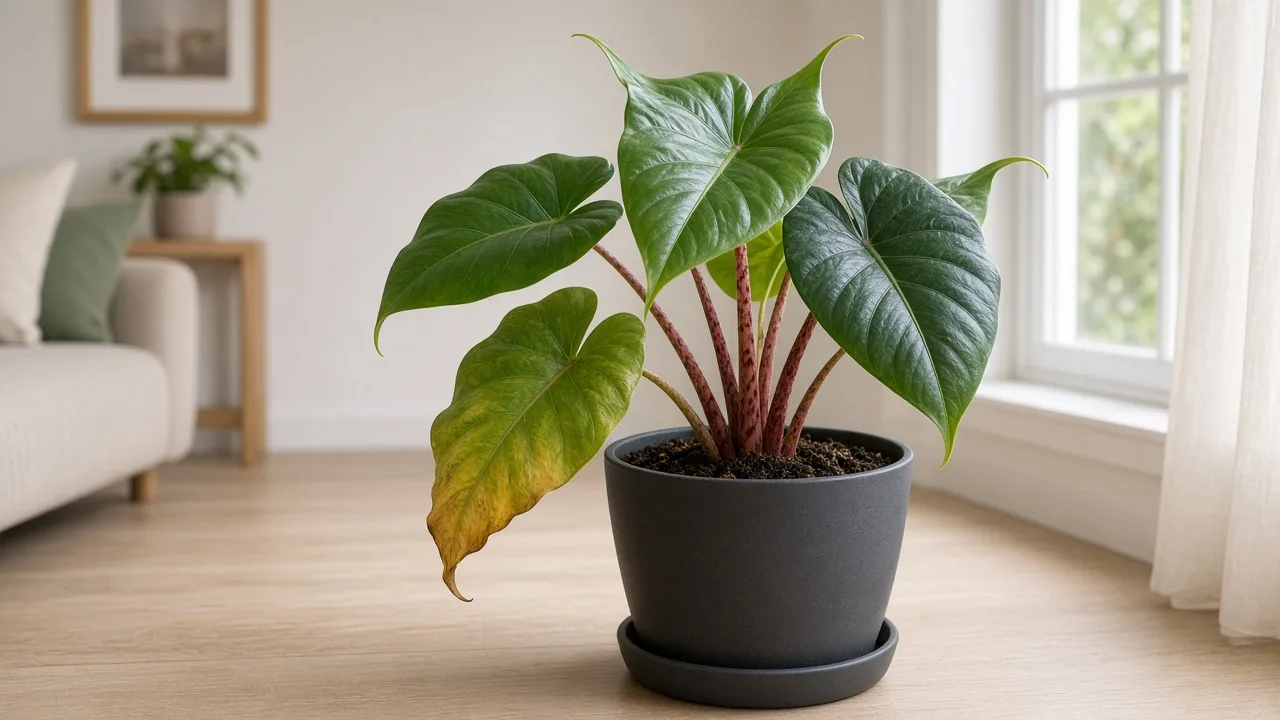
Overwatering on Alocasia Stingray: Causes, Checks & Fixes
This guide covers overwatering on Alocasia Stingray. See also the general Overwatering guide, watering, and light pages for this plant.
Overwatering on Alocasia Stingray: Causes, Checks & Fixes
Quick answer
Overwatering on Alocasia Stingray (Alocasia macrorrhizos ‘Stingray’) is not a vague “too much love” problem — it is oxygen loss at the corm while the mix stays saturated. This floor-sized elephant ear often carries only a handful of huge round blades on upright red-mottled stalks, so one wet week can yellow every ray-tail leaf before you notice the pot never lightened.
First step: stop watering and probe the mix 2–3 cm deep with your finger or a chopstick. If it is still wet below that line and the pot feels heavy, wait until the top half dries before the next soak. Mushy red petioles at the soil line or a sour smell mean you are past a simple dry-down — inspect the corm before root rot spreads.
For how chronic wet soil damages roots in general, see our overwatering guide. On Stingray, the pattern usually shows up as mushy petiole bases on fast-growing summer leaves, or as rescue-soaking a bare winter pot while the corm below is still alive but drowning.
When to use this page vs other Stingray guides
- Root rot — corm or roots are soft, black, or smelly after weeks of wet soil
- Yellow leaves — yellow appears before collapse but petioles may still be firm
- Wilting — limp ray-tail blades on either wet or dry soil
- Drooping leaves — heavy blades sagging without full yellowing
- Underwatering — very light pot, bone-dry mix, crispy ray-tail tips
- Fungus gnats or mold on soil — surface signs that mix has stayed wet too long
- Brown leaves — soft dark patches with yellow halos after chronic saturation
What overwatering looks like on Alocasia Stingray
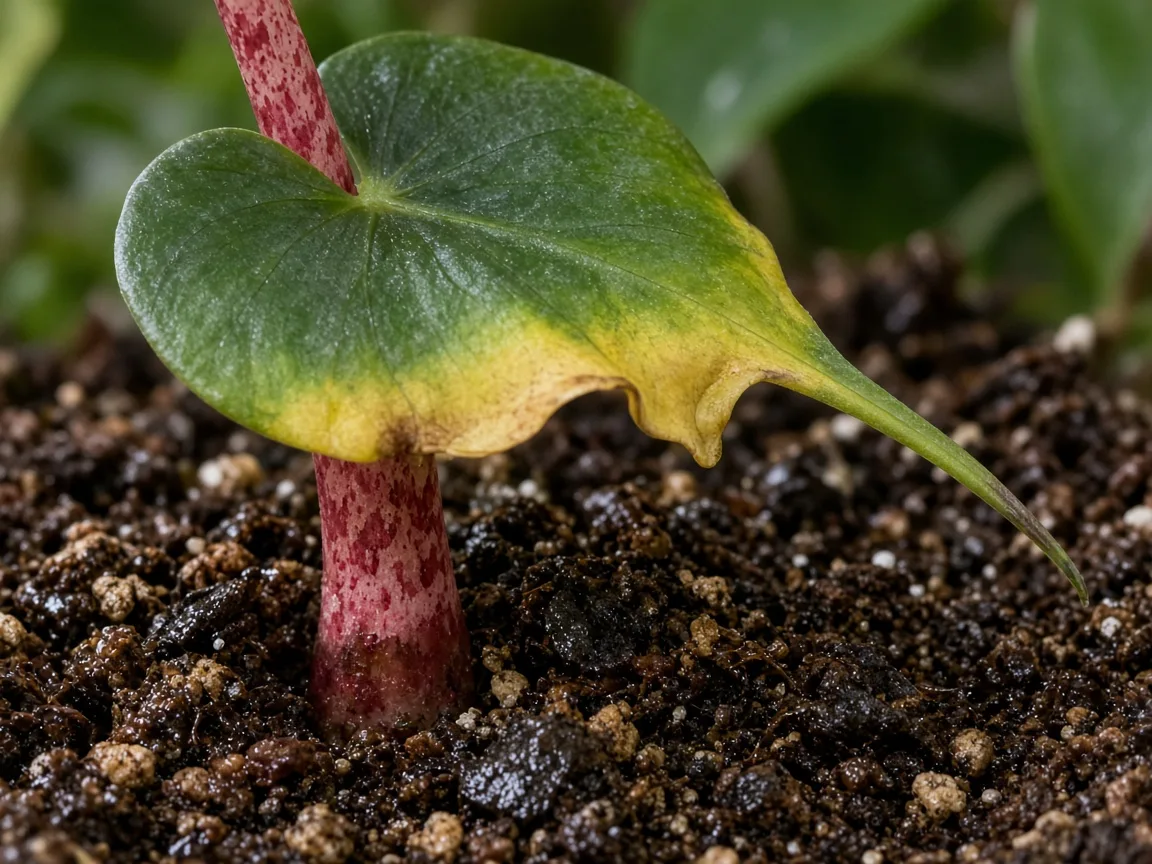
Yellow ray-tail leaf drooping from a soft red-mottled petiole at the soil line — compare with a firm stalk on the same plant.
Early overwatering:
- Mix stays wet past the top 2–3 cm for five or more days after your last soak
- Pot feels heavy on a floor stand; saucer or cachepot still holds water
- One oldest ray-tail leaf yellows at the base while the round blade still looks glossy
- Red-mottled petiole stays firm but the plant stops pushing new leaves
Active overwatering:
- Several ray-tail leaves yellow within a week on the same wet pot
- Red-mottled petiole base feels soft or collapses before the whole blade browns
- Blades droop or wilt despite wet soil — not the crisp curl of drought
- White mold on the surface, fungus gnats at the soil line, or sour smell from the mix
Advanced saturation:
- Mushy black tissue at the corm when you probe gently at the soil line
- Newest ray-tail leaf yellows or fails before unfurling
- Soft brown patches with yellow halos on glossy blades — see brown leaves
- Entire plant collapses in summer on an oversize pot in dim light
Why the corm rots before the ray-tail leaf tells you
Stingray is built around a substantial underground corm, not a spreading fibrous root mat like a pothos. NC State Extension notes that alocasias prefer moist, well-drained soil and are prone to root rot from overwatering — on this macrorrhizos cultivar, oxygen loss at the corm often shows first as a soft red-mottled petiole at the soil line, not slow tip yellowing.
The RHS lists Stingray leaves up to 60 cm long on upright red-mottled stalks. Each round blade with its elongated ray-tail is visually dominant — when one petiole goes mushy, it feels like the whole floor plant is dying even if the corm is only partly stressed. That drama pushes owners to keep watering because a drooping ray-tail leaf looks thirsty. Wet soil in a dim room completes the spiral.
Pair chunky aroid soil with the watering dry-down check — top 2–3 cm dry, then soak and empty the saucer — rather than adding water because a single dramatic leaf sags.
Summer growth speed vs. the oversize pot trap
In warm bright conditions, Stingray can push a new ray-tail leaf every week or two in summer per the RHS alocasia guide. Fast top growth outruns root oxygen in an oversize pot filled with dense peat-heavy mix — the huge leaf surface transpires, you respond with another soak, and the bottom half of the pot never dries.
This is different from a compact jewel alocasia in a snug pot. Stingray is often repotted into a floor container “to give it room,” which keeps the mix saturated for days after each watering. Lift the pot before you water — if it still feels heavy from last week, skip the soak even if a new ray-tail blade is unfurling.
Give bright indirect light per the light guide so the mix actually cycles between wet and aerated. Dark corners plus generous watering are the most common overwatering setup on this cultivar.
Rescue-soaking the bare winter pot (dormancy trap)
In cooler months, Stingray may drop all ray-tail leaves while the underground corm stays alive — normal dormancy, not death. The RHS guide describes winter slowdown in alocasias with reduced watering above 10°C (50°F). The Stingray profile advises reducing watering to a minimum in winter and keeping above 15°C. Proven Winners warns that overwatering during dormancy is the most common alocasia killer.
Because Stingray often held only two or three huge leaves before dormancy, an empty-looking floor pot triggers panic watering every few days. A firm corm below bare soil does not need summer soak frequency — every 2–4 weeks is often enough to keep the corm from shriveling without saturating dormant roots. Overwatering here rots the corm while you wait for spring shoots that never come.
If autumn leaf drop coincides with firm petioles, normal dry-down, and no sour smell, switch to dormancy rhythm instead of rescue soaking. If the same pattern hits in July on wet soil, treat it as urgent rot — not seasonal rest.
How to confirm overwatering on Stingray
| Signal | Overwatering | Underwatering | Dormancy |
|---|---|---|---|
| Mix at 2–3 cm | Wet for 5+ days | Bone dry well below surface | Drying slowly, cool season |
| Pot weight | Heavy | Very light | Normal to light |
| Petiole at soil line | Soft, mushy | Firm, maybe crisp leaf edges | Firm as leaves drop |
| Leaf pattern | Yellow + droop on wet soil | Crispy ray-tail tip, cupping | Whole leaves yellow then drop |
| Smell / surface | Sour, mold, gnats | Dry dust on rim | None |
| Season | Any; urgent in summer wet pot | Dry heated room | Late autumn–winter |
Run checks in this order: moisture at 2–3 cm depth, pot weight, petiole pinch at the soil line, then newest ray-tail leaf. Confirm wet soil plus soft base or spreading yellow before you treat drought or humidity.
First fix for Alocasia Stingray
Stop watering. That is the single first action — not repotting, not fertilizer, not misting.
Let the top half of chunky mix dry. Improve airflow around the floor pot and empty any standing water in saucers or cachepots. If petioles are still firm and only one lower ray-tail leaf yellowed, this dry-down alone often stabilizes the plant within one to two weeks.
Escalate only if: red-mottled petioles go mushy, mix smells sour, or several ray-tail leaves yellow within one week on the same wet pot. Then unpot gently, rinse away wet mix, and inspect the corm — trim black mushy tissue and repot into fresh chunky aroid mix per the root rot guide.
Do not move the plant to direct sun as a “dry it out” hack — scorch on glossy round blades adds a second stress. Bright indirect light plus withheld water is enough.
Lookalikes to rule out on Stingray
| What you see | Likely cause | Next page |
|---|---|---|
| Limp ray-tail leaves, heavy wet pot | Overwatering | This page → root rot if mushy |
| Crispy ray-tail tip, very light pot | Underwatering | Underwatering |
| Drooping on normal dry-down rhythm | Low humidity or heat | Low humidity, wilting |
| Yellow lower leaf, firm petiole, normal moisture | Natural turnover or feed issue | Yellow leaves |
| All leaves drop in winter, firm corm, no smell | Dormancy | Overview — reduce water, do not soak |
Wet wilt vs. dry wilt: Drooping on saturated mix with soft petiole bases is overwatering. Drooping on light pots with dry mix below 2–3 cm is drought — soaking fixes that; soaking a heavy wet Stingray worsens rot.
Step-by-step recovery
- Stop watering and note pot weight and smell today.
- Probe 2–3 cm daily until the top half feels dry — typically one to two weeks in an overpotted floor container.
- Remove standing water from saucers; pull nursery pot out of decorative cachepots after soaks once you resume.
- If petioles mush or mix smells sour: unpot, inspect corm, trim black tissue, repot into fresh airy mix — see root rot.
- Resume watering only when the top 2–3 cm is dry; one thorough soak, then empty runoff.
- Watch the next unfurling ray-tail leaf — firm red petiole and glossy round blade mean the fix worked.
- In dormancy: switch to every 2–4 weeks minimum moisture, no fertilizer, until spring shoots appear.
What not to do
- Do not keep watering drooping ray-tail leaves on a heavy pot — the corm rots faster than new leaves replace old ones on this fast summer grower.
- Do not fertilize yellow foliage to “push growth” — salts stress roots already struggling in wet mix.
- Do not repot on day one unless corm tissue is clearly failing; dry-down alone often works for early saturation.
- Do not discard a bare winter pot without checking for a firm corm — dormancy looks like total loss when only two leaves were on the plant.
- Do not use dense peat-only mix or oversize pots “so you water less often” — that extends saturation and hides the problem.
When to worry
Treat as urgent when red-mottled petioles go mushy, several ray-tail leaves yellow within one week on wet soil, mix smells sour, newest leaves fail before unfurling, or the corm feels soft when probed — salvage window is narrow.
Lower urgency: one oldest ray-tail leaf yellowing slowly while remaining leaves stay glossy, petioles firm, and mix dries normally between soaks — often normal turnover if roots are healthy.
Recovery timeline
Early overwatering often stabilizes within one to two weeks after you stop watering and the mix aerates — existing yellow leaves will not green up, but yellowing should stop spreading.
Corm recovery after mushy petioles takes several weeks to months, depending on how much tissue survived. Judge success on the next new ray-tail leaf: firm red-mottled petiole, round glossy blade, clean elongated tip. Remove fully yellow or mushy leaves at the base once new growth looks stable.
Dormancy-related leaf loss may leave the pot bare until mid-spring — normal if the corm stays firm and you are not soaking on a summer schedule.
How to prevent overwatering
Match the overview baseline: bright indirect light, 60–75% humidity, chunky fast-draining mix, and a pot only one size up at repot. Water when the top 2–3 cm is dry; cut watering 60–70% in winter when growth slows. Proven Winners emphasizes that winter overwatering kills more alocasias than underwatering.
Lift the pot before every soak. Use pots with drainage holes and empty saucers within 30 minutes of watering. Avoid letting Stingray sit in outer cachepots with standing water. Grouping with other tropicals can help humidity so you are not compensating with extra soil moisture.
Inspect weekly for fungus gnats or mold on soil — both flag chronic wet mix before the corm fails. After active growth resumes in spring, feed lightly per the fertilizer guide only when new ray-tail leaves look healthy for two weeks.
Related Alocasia Stingray guides
- Overview — species baseline, dormancy, and ray-tail leaf rules
- Problems hub — all sibling symptom pages
- Watering — dry-down depth and seasonal cuts
- Soil — chunky aroid mix that prevents corm rot
- Root rot — corm salvage after chronic wet soil
Related tool
Use the Root Rot Risk Checker to narrow causes for overwatering on this plant before changing multiple variables at once.