Leggy Growth on Banana: Light & Pseudostem Fixes
Quick answer
Leggy Banana shows a tall thin pseudostem, long gaps between undersized paddle leaves, and a hard lean toward the brightest window—classic etiolation from too little light for a fast-growing Musa acuminata. First step: move the plant to the brightest available spot with gradual acclimation and rotate the pot weekly before repotting, feeding, or cutting the pseudostem.
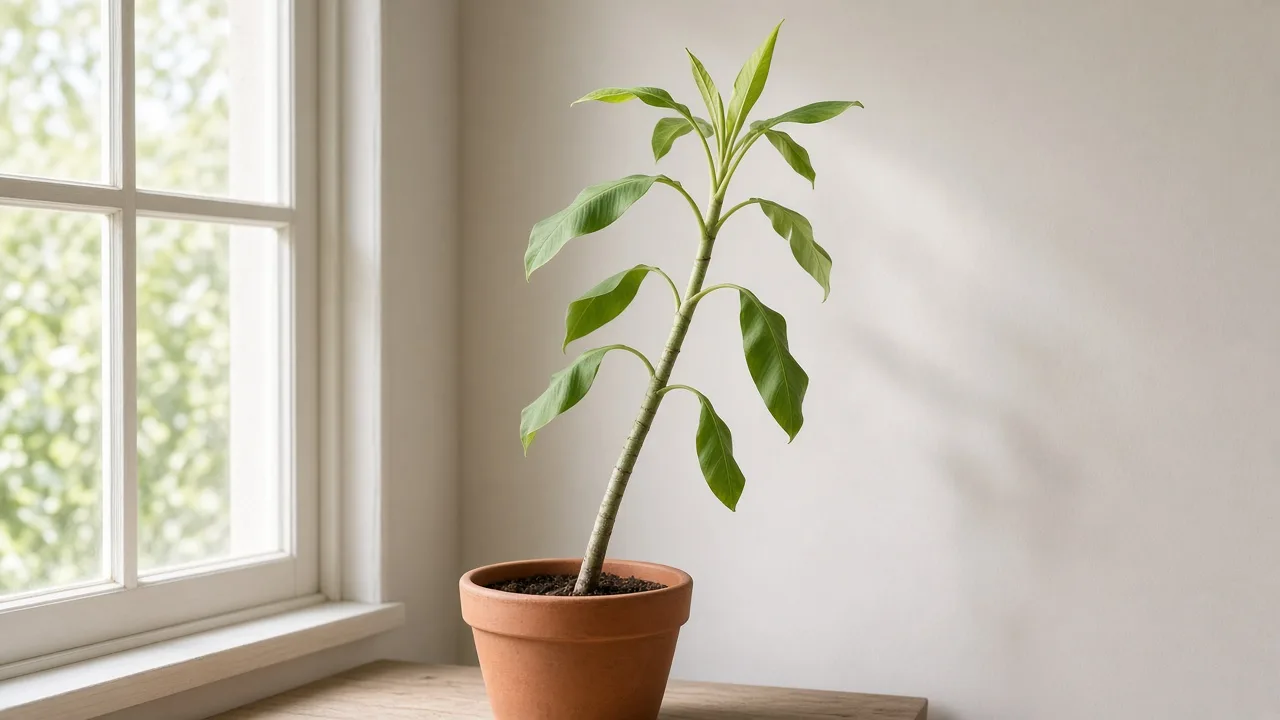
Leggy Growth on Banana: Causes, Checks & Fixes
This guide covers leggy growth on Banana. See also the general Leggy Growth guide, watering, and light pages for this plant.
Leggy Growth on Banana: Causes, Checks & Fixes
Quick answer
Leggy growth on Musa acuminata is etiolation expressed through a tall thin pseudostem, not long vines. The plant stretches its trunk-like stem toward light, leaving long gaps between undersized paddle leaves while the emerging cigar leaf stays small and slow to unfurl.
For how low light causes stretch in general, see our leggy growth hub. On Banana, the telltales are a pseudostem that outpaces leaf size, a hard lean toward one window, pale green paddles on the newest sheath, and a top-heavy container that tips before lower leaves age out.
First step: move the plant to the brightest available location with gradual acclimation over seven to ten days, then rotate the pot a quarter turn every week—before repotting, feeding, or cutting the pseudostem.
When to use this page vs other Banana guides
This page is the structure-and-stretch entry when the pseudostem is tall, thin, and leaning—not when color alone fades or roots fail.
| Pattern | Read next |
|---|---|
| Washed-out or yellow-green paddles without much height gain | Pale leaves |
| Dim room but stretch not advanced yet | Not enough light |
| Firm pseudostem, just slow in cool weather | Slow growth |
| Soft base on wet mix | Overwatering or root rot |
| Ready to shorten the pseudostem after light is fixed | Pruning guide |
| Window placement and acclimation | Light guide |
What leggy growth looks like on Banana
Healthy Banana builds an upright pseudostem from overlapping leaf sheaths, with broad paddle leaves that can span more than a meter outdoors. NC State Extension records a rapid growth rate when warmth, moisture, and light align. Leggy etiolation breaks that silhouette:
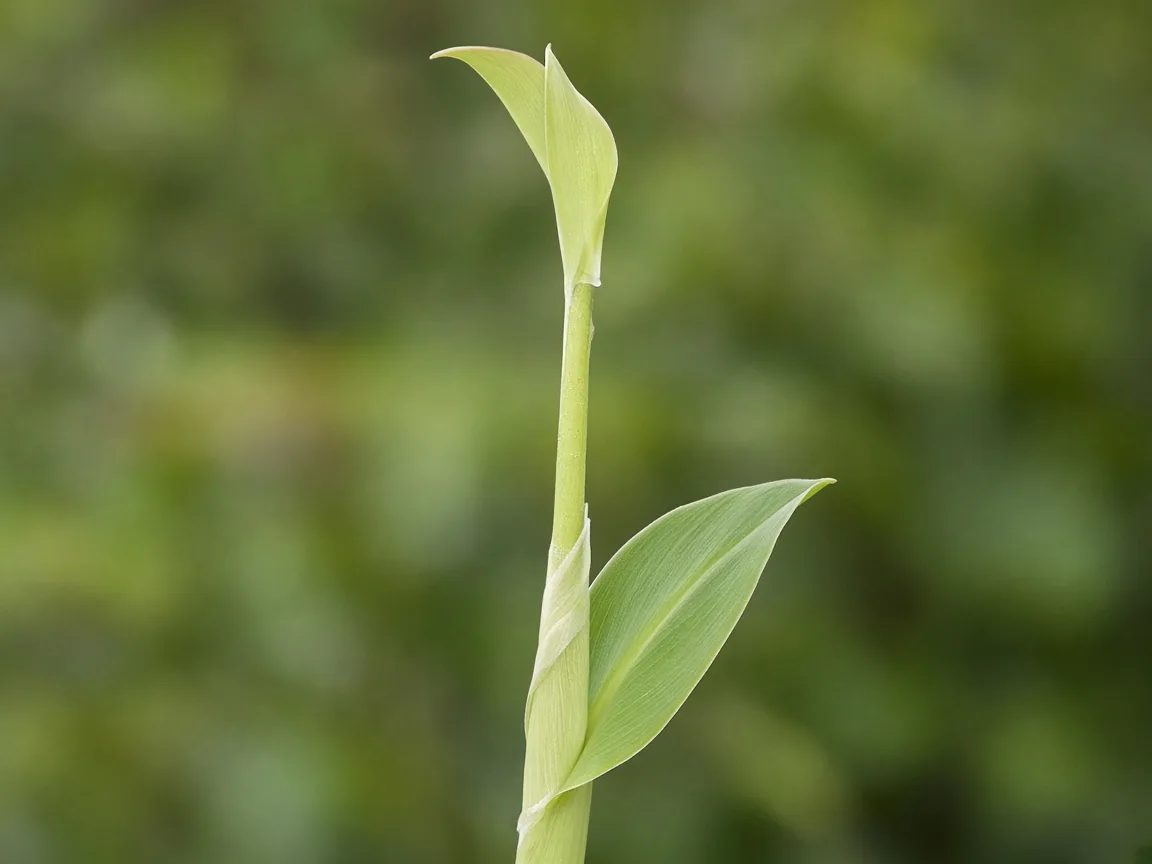
Long gap between small paddle leaves on a stretched pseudostem—compare the wide internode on newest growth with tighter spacing on older firm sheath below.
- Tall thin pseudostem with small paddle leaves — Stem height outpaces blade width; newest leaves look juvenile for the plant’s age
- Long petiole gaps between sheaths — Wide spaces where larger paddles should sit close together on a fast grower
- Hard lean toward one window — Whole pseudostem angles toward the brightest side; pot tips with top weight
- Slow, undersized cigar leaf — The unfurling top blade emerges slowly and stays narrow instead of expanding quickly
- Pale green new paddles — Stretch weakens color before blades mature to deep green
- Top-heavy container — Vertical growth in dim light outpaces root ball stability in a nursery pot
A firm, dry pseudostem with normal lower leaf aging is different from a soft, wet base with yellowing—see overwatering when the rhizome feels mushy at soil line.
Cigar-leaf spacing vs normal sheath drop: a plant-only check
Musa acuminata renews itself from an underground rhizome and pushes each new leaf from the pseudostem tip as a cigar leaf that unfurls into a paddle. That growth rhythm changes how you read stretch:
- Lower paddles aging out, firm stem, no lean — Often normal turnover on a mature pseudostem; the cigar leaf still emerges at a healthy pace.
- Long gaps climbing the whole pseudostem plus window lean — Etiolation; light is the primary fix.
- Stretch only on the shaded side of a patio pot — Directional shade; rotate the container and improve exposure on the weak side.
- Stretch plus heavy wet pot in a dim corner — Low light slowed water use; check watering before assuming hunger.
This cigar-leaf and pseudostem-sheath logic does not apply to compact succulents or rosette houseplants.
Why Banana gets leggy growth
Banana is a fast-growing tropical herb that wants full sun outdoors and the brightest realistic indoor position. When photons are short, the plant lengthens the pseudostem toward the source—classic etiolation—while keeping paddle leaves small because energy goes to height, not blade area.
Plant-specific triggers:
- Bright room but little direct sun indoors — Human eyes overestimate brightness; a banana beside a north window often receives far less energy than it would outdoors. Epic Gardening recommends about eight hours of sunlight for vigorous container bananas and grow lights when indoor lighting is weak.
- One-sided window exposure — Paddles on the shaded side stretch longer; the pot leans as weight shifts toward glass.
- Winter short days in the same indoor spot — Cool rooms plus low light widen sheath gaps; stretch from fall often shows by late winter. UF/IFAS reports shoot growth slows below 60°F (16°C) and stops near 50°F (10°C), so cold and dim together stall recovery.
- Dwarf Cavendish in a dim conservatory — Compact cultivars are easier to house but still need strong light; they stretch before full-size selections would top the ceiling.
- Heavy nitrogen feed in low light — Soft, elongated shoots on a dim plant; fix light before fertilizer.
- Shade tolerance mistaken for shade preference — Banana can tolerate moderate shade up to about 50%, but shading delays plant and fruit growth; excessively shaded plants are stunted with small, poor-quality growth—not a healthy indoor look.
How to confirm the cause
Work through these checks in order:
- Light audit — At the pot, does a hand cast a sharp shadow on a clear day, or only a faint blur? Banana wants six or more hours of direct sunlight daily for best vigor.
- Lean direction — Does the pseudostem point at one window or grow light? Confirms phototropism, not random weakness.
- Sheath gap comparison — Measure distance between paddle bases on newest upper growth vs mid-stem from last season. Widening gaps = ongoing stretch.
- Cigar-leaf pace — Peel back the outer sheath slightly at the tip. A healthy fast grower pushes a plump cigar leaf often; a dim plant’s stays thin for weeks.
- Rhizome squeeze at base — Firm and dry supports light-first diagnosis; soft on wet mix needs overwatering steps in parallel.
- New paddle flush — After a week in brighter light, watch for wider blades and faster unfurling—not old long stem sections shortening.
First fix for Banana
Move the plant to the brightest available spot and acclimate over seven to ten days—then rotate the pot a quarter turn every week.
That single change addresses most leggy cases on a firm pseudostem:
- Shift gradually from a dim corner toward east, south, or west glass; hot afternoon sun after shade can scorch paddles—see the light guide.
- Add a full-spectrum grow light twelve to eighteen inches above the cigar leaf if the only window is north-facing or obstructed.
- Stop fertilizing until new paddles look normal in size and color for two weeks in the brighter spot.
- Do not repot on day one; a stretched banana is rarely a root-volume problem.
If the pot still tips after two weeks of better light, stake the pseudostem temporarily at the base—permanent fix is compact new growth or spring pruning at soil line, not a larger pot for stability alone.
Pseudostem cutback when stretch is already extreme
Existing long sheath gaps do not shorten when light improves. On severely leggy container bananas, the rescue path is plant-specific:
- Wait until spring or early summer when warmth and bright light return so the rhizome can push a replacement sucker quickly.
- Cut the stretched pseudostem at soil line after flowering decline or when the stem is too tall to support—each pseudostem fruits once, then dies back naturally on fruiting plants.
- Leave one strong sword sucker at the rhizome to become the next stem; remove weak water suckers that compete in dim corners.
- Let the cut surface dry before overhead watering; avoid removing every sucker the same day on a stressed plant.
- Do not expect indoor fruit from a reset sucker unless you have a long warm bright season—the RHS notes bananas need a long, sunny growing season for flowering.
Cutting without brighter light produces another generation of leggy pseudostem. Fix exposure first, then manage suckers.
Recovery timeline and mistakes to avoid
Tighter paddle spacing and faster cigar-leaf emergence often show in two to four weeks in warm rooms with improved light. Full canopy balance after a hard cutback may take one warm season as a new sucker matures. Do not:
- Fertilize a stretched plant still in dim light
- Chop the only pseudostem at once without confirming firm rhizome and a backup sucker
- Expect lower long stem sections to regrow full-size paddles—they usually stay spaced out on mature sheaths
- Ignore a tipping pot until the pseudostem snaps—weight the base or stake early
Signs you are winning: upright top growth, deeper green on new paddles, shorter gaps between sheaths, and symmetric leaves after rotation. Signs to escalate: creased bending pseudostem, soft base on soggy mix, or collapse despite bright light—root checks before more cutting.
How to prevent leggy growth next time
Match the overview routine: bright light, even moisture, rich well-drained mix, and weekly rotation. Scout the cigar leaf monthly in fall when days shorten. Move outdoor containers to the sunniest frost-free spot before bringing them in for winter. Keep dwarf selections as close to glass or grow lights as room allows without scorching acclimated leaves.
Related Banana guides
Conclusion
Leggy Banana is almost always a light-and-rotation problem expressed as a tall thin pseudostem, small paddle leaves, and a hard window lean. Move to brighter exposure first, rotate weekly, then cut back at the rhizome in spring if old stretch cannot be reversed. Firm pseudostem bases and wider new paddles tell you the plant is recovering; soft wet bases need water correction before any cutback plan.