Slow Growth on Banana: Causes, Checks & Fixes
Quick answer
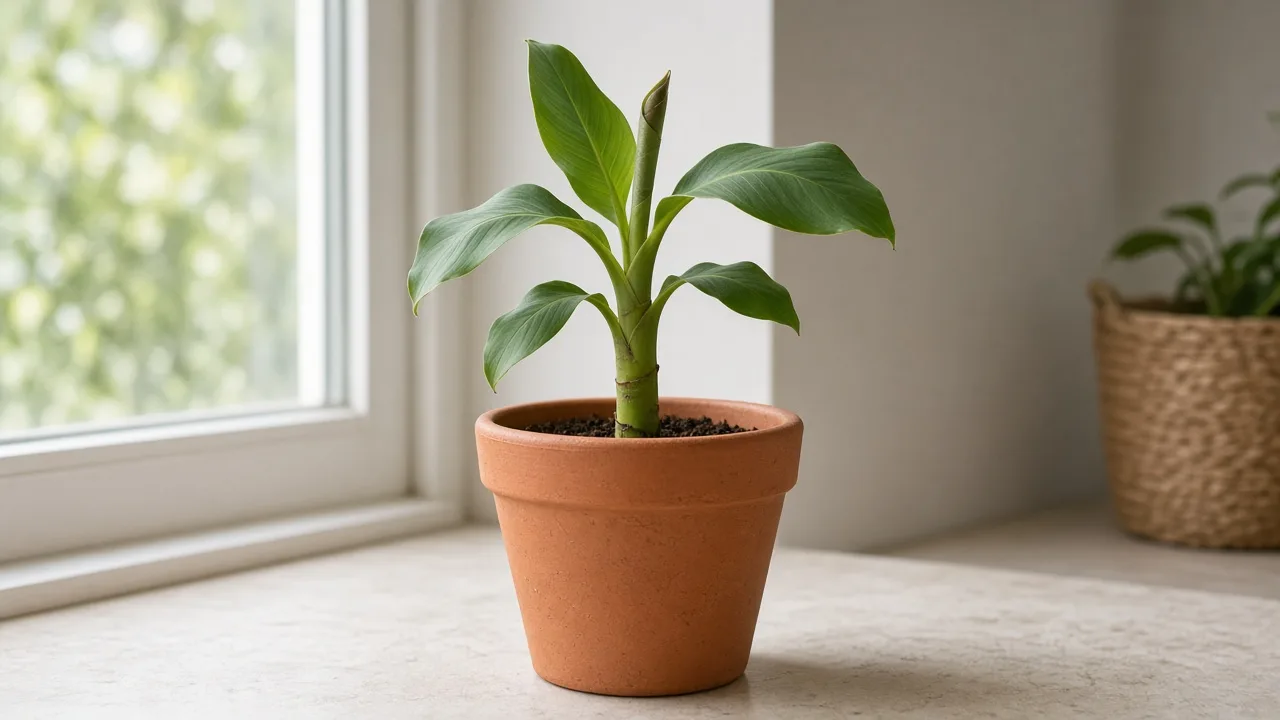
Slow growth on Banana shows as a firm upright pseudostem with weeks between new paddle unfurls, a cigar leaf that stays small at the crown, and little height gain despite adequate water—often when root-zone temperatures sit below 16°C (60°F), light is weak, the pot is root-bound, or chronically wet mix stunts the rhizome. First step: slide a thermometer probe to rhizome depth and confirm daytime warmth above 16°C before repotting, feeding, or blaming pests.
Slow Growth on Banana: Causes, Checks & Fixes
This guide covers slow growth on Banana. See also the general Slow Growth guide, watering, and light pages for this plant.
Slow Growth on Banana: Causes, Checks & Fixes
Quick answer
Banana (Musa acuminata) is a fast-growing tropical herb that normally pushes broad paddle leaves from a fleshy pseudostem when warmth, moisture, and bright light align. Slow growth means the plant looks alive—firm pseudostem, green tissue—but weeks pass between unfurling paddles, the cigar leaf at the crown stays small, and height gain stalls without the tall lean typical of etiolation.
For how chronic stress limits photosynthesis and cell division in general, see our slow growth hub. On Banana, the decisive first check is root-zone temperature at rhizome depth—not whether you watered this week.
First step: slide a soil thermometer to rhizome depth and confirm daytime warmth stays above 16°C (60°F) before repotting, feeding, or moving the plant.
When to use this page vs other Banana guides
This page is the pace-and-stall entry when the pseudostem is firm but new leaves arrive slowly—not when stretch or color alone dominates.
| Pattern | Read next |
|---|---|
| Long thin pseudostem, hard window lean, small paddles | Leggy growth |
| Pale or washed-out paddles in a dim room | Not enough light |
| Uniform pale oldest lower paddles, smaller new blades | Nitrogen deficiency |
| Soft base on wet heavy mix | Overwatering or root rot |
| Folded paddles after dry spell | Underwatering |
| Long-term placement and grow lights | Light guide |
| Full cluster index | All banana problems |
What slow growth looks on Banana
Healthy banana in warm bright conditions produces new paddle leaves on a steady rhythm—often one large blade every one to three weeks outdoors in peak summer. NC State lists a rapid growth rate for Musa acuminata when conditions match its tropical metabolism. Slow growth breaks that cadence without necessarily collapsing the plant:
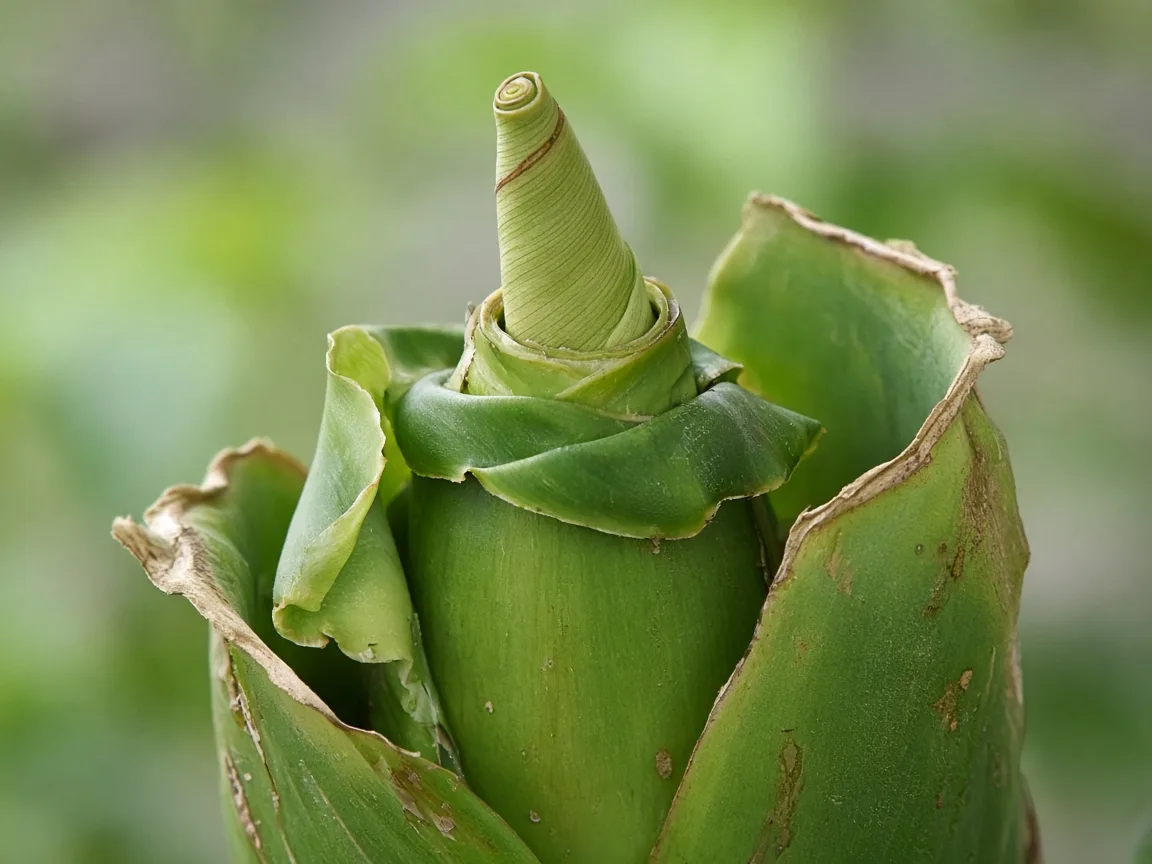
Small cigar leaf stalled at the pseudostem tip with a wide sheath gap below—firm stem, but the crown has not unfurled a new paddle for weeks in cool indoor conditions.
- Firm upright pseudostem with wide gaps between paddle bases and no strong lean toward a window
- Small cigar leaf at the crown that stays rolled for weeks without expanding
- Undersized new paddles when they finally unfurl—blades smaller than last season’s in the same pot
- Little height gain over a month despite moist mix and no obvious pest webbing
- Pot weight unchanged for long periods in a cool room—roots are using little water because metabolism is low
- Multiple small sword suckers at soil line competing with the main pseudostem
- Normal winter pause below about 16°C—one or no new leaves for months can be seasonal, not failure
This differs from leggy growth when the stem stretches tall toward glass, from not enough light when paddles pale and petioles lengthen, and from overwatering when the pseudostem base goes soft on sour wet soil.
Reading cigar-leaf pace: a banana-only growth clock
Each pseudostem renews from an underground rhizome. New tissue emerges only as a cigar leaf—a tightly rolled paddle at the tip. That crown is your growth clock:
| Cigar-leaf signal | Likely cause | First move |
|---|---|---|
| Green cigar leaf, weeks without unfurling, cool mix | Root-zone temperature below 16°C | Warm placement; see watering reduction in cold |
| Thin pale cigar leaf in a bright window | Light still marginal or recent move from shade | Confirm six or more hours direct sun; see light guide |
| Firm stem, fast-drying pot, roots circling drainage holes | Root-bound; rhizome has little fresh mix | Spring repot one size up—not day one if cold |
| Green cigar leaf on heavy wet pot that never dries | Wet-soil stunting | Dry-down; UF/IFAS links continuously wet soil to plant stunting and yellowing |
| Several sword suckers same height as main stem | Rhizome energy split | Remove weak suckers; keep one backup peeper |
Press the pseudostem 10–15 cm above soil. Firm with a stalled green cigar leaf usually means environment or roots, not emergency rot surgery.
Why Banana gets slow growth
UF/IFAS reports that shoot growth is best between 78°F and 82°F (26–28°C), slows below 60°F (16°C), and stops at 50°F (10°C). Banana is not a temperate houseplant that merely “rests” in winter—it is a giant herb whose rhizome and pseudostem push depend on sustained warmth.
Banana-specific triggers:
- Cool conservatory or unheated sunroom — Paddle leaves may look fine while the rhizome sits in 12–15°C mix; cigar-leaf emergence stalls for weeks.
- Brought indoors for winter in the same summer watering rhythm — Cold roots plus steady moisture mimic the continuously wet soil that stunts bananas in production fields.
- Moderate shade indoors — Banana tolerates shade up to about 50%, but shading delays plant and fruit growth; excessively shaded plants are stunted with small growth—not just paler color.
- Root-bound container — Mix dries within a day in heat but growth still stalls; the RHS growing guide expects repotting every one to two years in spring for vigorous glasshouse bananas.
- Nutrient exhaustion after a hot leaching season — Huge paddles strip nitrogen from container mix; pale oldest leaves plus slow new blades point to nitrogen deficiency after light and warmth are ruled out.
- Too many rhizome suckers — UF/IFAS notes that allowing numerous pseudostems per mat prolongs time to growth and harvest; three or four stems in one nursery pot share one rhizome budget.
- Drought stress on a thirsty giant — Severe dry spells increase time to new growth; folded paddles usually appear before pure stall.
Do not confuse normal winter dormancy with failure. Below 16°C, one new leaf in several months on a firm pseudostem is expected. Resume aggressive diagnosis when warmth returns and the cigar leaf still will not move.
How to confirm the cause
Work through these checks in order:
- Rhizome temperature — Probe 5–8 cm deep at dusk. Below 16°C (60°F) explains most indoor winter stalls.
- Light at paddle height — Sharp hand shadow on a clear day? Banana wants full sun outdoors and the brightest realistic indoor spot.
- Cigar-leaf timeline — Note the date the last paddle fully opened; count weeks to the next unfurl in a room above 18°C.
- Pot weight and root check — Tip the container: circling white roots and bone-dry mix in hours suggest root-bound stress; heavy wet mix that never lightens suggests stunting wetness.
- Sucker count — More than one vigorous pseudostem plus peepers in a small pot splits energy.
- Lower paddle color — Uniform pale oldest leaves after a warm bright season may need fertilizer review, not more water.
First fix for Banana
Warm the root zone above 16°C (60°F) at rhizome depth and hold that warmth through the day before any other intervention.
That single correction addresses the most common indoor slow-growth case:
- Move the container off cold stone floors, drafty doorways, and uninsulated glass at night.
- Use the warmest bright room, heated greenhouse, or frost-free terrace during the day.
- Reduce watering frequency while the rhizome is cool—soggy cold mix stunts harder than slightly dry firm tissue.
- Do not fertilize a cold stalled plant; wait until new cigar-leaf movement returns in warmth.
- Do not repot on day one unless roots are circling and the room is already warm.
If the thermometer already reads above 18°C with good light and growth is still flat, escalate to brighter placement (not enough light), spring repot, sucker thinning, or measured feed—not more water.
Rhizome sucker competition: a container-only fix
Field bananas are thinned to one flowering stem, one half-grown stem, and one peeper per mat so energy concentrates. Container growers often keep every sword sucker that appears.
Plant-only recovery path when warmth and light are adequate but height still stalls:
- Identify the tallest firm pseudostem with the healthiest cigar leaf—that is your main stem.
- Cut weak water suckers at soil line; leave one backup peeper no taller than 30 cm.
- Wait two weeks before removing additional shoots so the rhizome is not stressed twice in cool weather.
- After spring repot, position the main stem where it receives even sun; rotate weekly.
Splitting one small rhizome across four stems in a 25 cm pot is a common reason dwarf Cavendish labels disappoint indoors.
Recovery timeline and mistakes to avoid
Faster cigar-leaf unfurling and larger new paddles often appear within two to six weeks once root-zone warmth, bright light, and appropriate moisture align. A full season may be needed to rebuild pseudostem height after a long winter stall. Do not:
- Feed heavily while the mix is below 16°C
- Keep summer watering volume on a cold dormant rhizome
- Repot into a huge pot “for growth” without warmth and light to use the extra mix
- Remove every sucker at once on a stressed plant
- Assume stretch will fix slow growth—see leggy growth only when lean and thin stem dominate
Signs you are winning: plumper cigar leaf, shorter time between unfurls, deeper green on new paddles, and pot weight cycling normally after watering. Signs to escalate: soft base, crown browning, or total stall above 20°C with six or more hours of sun—inspect roots and pests before repeating fertilizer.
How to prevent slow growth next time
Match the overview routine: warm root zone, six or more hours of direct sun when possible, even moisture in heat, reduced water in cold, annual spring repot for young plants, and one dominant pseudostem per pot. Scout the cigar leaf weekly when days shorten in fall. Move outdoor containers to the sunniest frost-free spot before indoor winter. Resume fertilizer only when new leaves return in warmth.
Related Banana guides
- Overview
- Light
- Watering
- Fertilizer
- Leggy growth
- Not enough light
- Nitrogen deficiency
- Overwatering
- Problems hub
Conclusion
Slow Banana growth is usually warmth, light, or root-zone limits on a firm pseudostem—not a mystery disease. Measure temperature at rhizome depth first, then adjust light, watering, suckers, and feed in that order. A plump active cigar leaf tells you the rhizome is working again; soft wet bases need water correction before any growth plan.