Brown Barrel Cactus: Corking, Rot, Sunburn & Fixes
Quick answer
Barrel cactus does not have true leaves—brown patches on ribs, areoles, or the base usually mean corking (firm, dry, base-up), root rot (soft, mushy, wet mix), sunburn (one sun-facing side), or cold damage. First step: press the brown tissue with a gloved finger—firm and woody is often harmless corking; soft and sunken means stop watering and inspect roots.
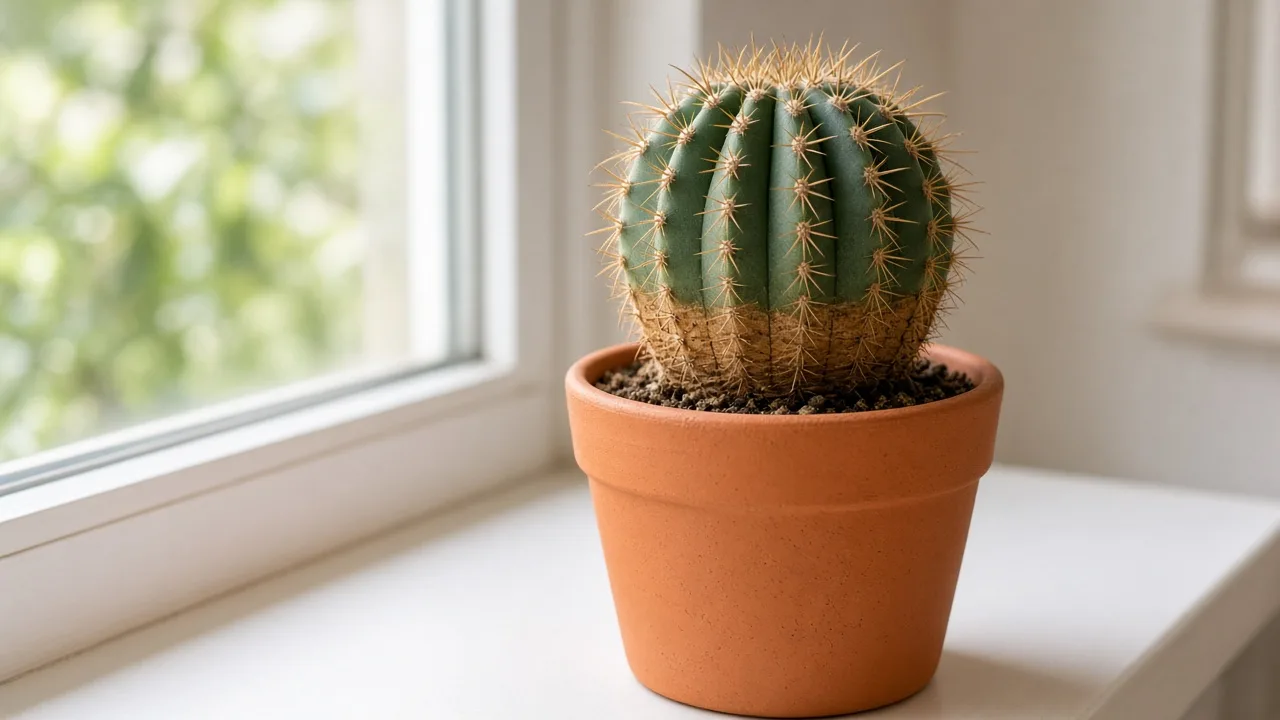
Brown Leaves on Barrel Cactus: Causes, Checks & Fixes
This guide covers brown leaves on Barrel Cactus. See also the general Brown Leaves guide, watering, and light pages for this plant.
Brown Leaves on Barrel Cactus: Causes, Checks & Fixes
Quick answer
Brown patches on barrel cactus (Ferocactus spp.) rarely mean “dead leaves.” These desert barrels have ribbed stem tissue and spines, not broad foliage—so browning shows up on ribs, areoles, or the base instead. For how whole-tissue browning works across houseplants, see our brown leaves guide. On Ferocactus, the rib squeeze test routes you faster than any calendar: firm dry brown at the soil line is often harmless corking; soft sunken brown on a heavy wet pot is rot.
First move: with thick gloves, press the brown patch. Firm and woody like tree bark usually means corking (normal aging). Soft, mushy, or weeping tissue on wet mix means stop watering and inspect roots before the next drink. One-sided tan patches after a window move point to sunburn. Sudden soft brown after a cold night near glass points to chill injury.
| What you find | What it usually means | Read next |
|---|---|---|
| Firm dry brown band at soil line, plump ribs above | Corking (normal aging) | Stay on this page—no treatment needed |
| Soft dark brown, heavy wet pot, deflated feel | Root or stem rot | Overwatering or root rot |
| Tan/bleached patch on sun-facing ribs | Sun scorch | Sunburn |
| Soft brown after cold snap | Frost or chill damage | Warm stable room; cut mushy tissue |
| Crusty brown bumps on ribs | Scale insects | Scale insects |
What brown tissue looks like on Barrel Cactus
Healthy Ferocactus ribs are firm, plump, and green to blue-green, with sharp spines emerging from areoles in neat rows. “Brown leaves” searches usually describe one of these stem-surface patterns instead:
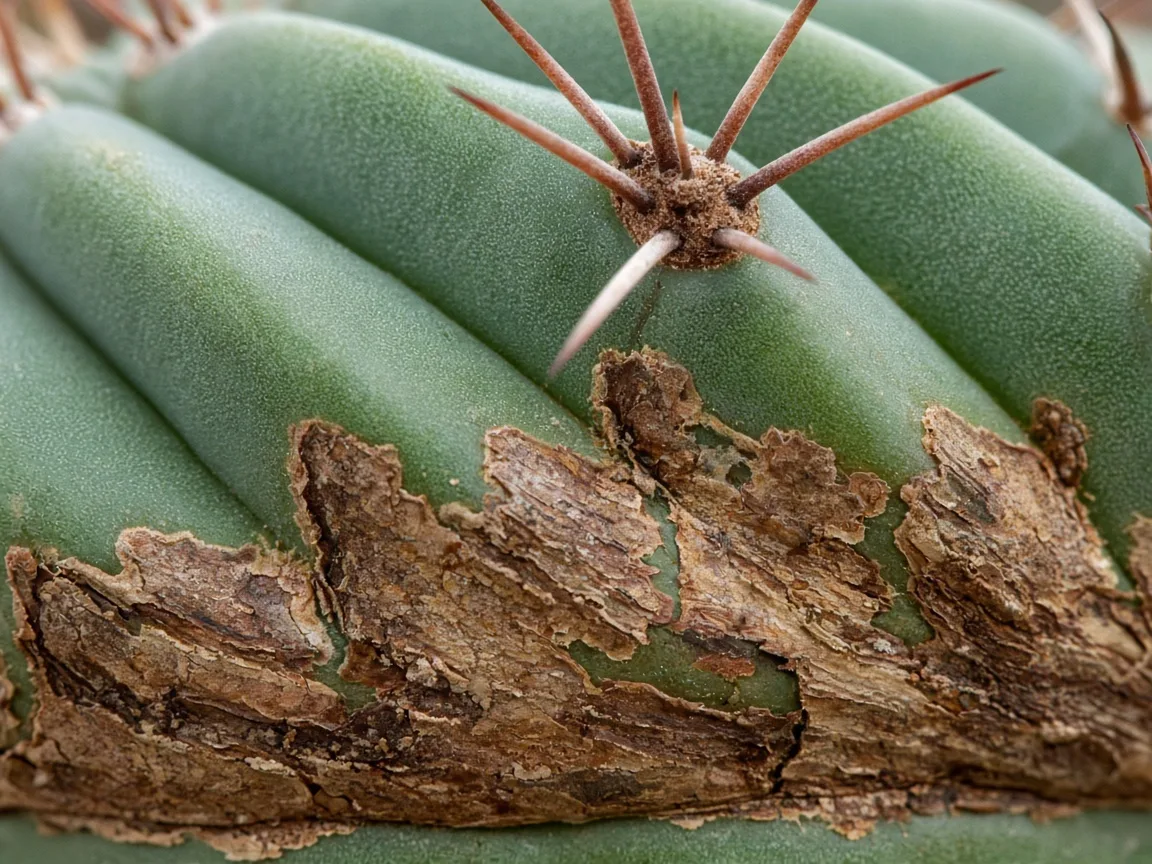
Brown tissue on Ferocactus ribs—compare firm corky bark at the base with soft rot patches above.
- Corking band at the base — tan, brown, or gray woody tissue starting at the soil line and slowly climbing one or two rib sections. Texture is rough and hard, like bark. The barrel above stays plump and spine color stays normal.
- Rot patches — soft, sunken, dark brown to black areas, often near the base or where soil stays damp against ribs. May smell sour. The barrel may look slightly deflated or lean.
- Sun scorch — bleached yellow-white patches that later tan or brown on the side facing the brightest window, especially after moving from a dim shop to harsh south sun. Tissue is firm and dry, not mushy.
- Cold damage — water-soaked, soft brown patches on outer ribs or the crown after temperatures drop near a cold window or during an outdoor frost. Often appears suddenly overnight.
- Scale or pest scarring — small crusty brown bumps you can flick off with a fingernail, sometimes with sticky residue on ribs near the base.
- Drought dulling — ribs look slightly shrunken and dull gray-green with brown-tan spine tips after very long drought—not the same as spreading soft rot. See underwatering when ribs contract noticeably.
A few brown spine tips on an old barrel are often normal weathering, not a crisis. Concern rises when brown spreads on rib skin, the barrel softens, or mix stays wet for weeks.
Why Barrel Cactus gets brown tissue
Ferocactus evolved for rocky desert sun with rare deep watering and fast drainage. Indoor browning almost always means water, light, or temperature landed outside that range—not a missing houseplant leaf.
Corking as the barrel matures
Columnar and globular cacti develop a protective woody layer at the oldest tissue. Corking is a natural aging process that hardens the lower ribs while the plant stays firm and healthy above. Slow-growing indoor barrels may show a cork band after several years even in a small pot. This is structural bark—not disease.
Root rot from overwatering
Overwatering or poor drainage can cause rot and brown or mushy areas on the stems. Ferocactus roots suffocate in stale wet mix; decay climbs into rib tissue from below. Winter watering while the plant is dormant is the classic indoor trigger—cool rooms plus damp soil rot roots before you notice soft brown at the base. Overwatering and root rot pages cover escalation when the barrel deflates.
Sunburn on sun-trained ribs
Barrel cactus wants full sun, but ribs grown in lower light lack pigment to handle a sudden move to blazing south glass. The sun-facing side bleaches, then scars brown. Scorched tissue is dead but stable—unlike rot, it does not spread on its own. Full detail on the sunburn guide.
Cold and chill injury
Most Ferocactus tolerate brief cool spells but suffer cell rupture when temperatures drop sharply—common when a pot sits against a cold window in winter. Soft brown patches on exposed ribs resemble rot but follow a freeze night. Highly drought-tolerant barrels still need stable room temperatures indoors.
Pests and mechanical damage
Mealybugs, scale insects, and spider mites can leave brown feeding scars on rib skin near areoles. Spine punctures or repotting knocks that do not dry cleanly may brown at the wound edge. These are localized—not a whole-barrel cork band.
Nutrient deficiency is a late suspect on Ferocactus. Fix water rhythm, light, and seasonal rest before fertilizing a stressed barrel.
The rib squeeze test: corking vs rot vs scorch
This single check prevents the two biggest mistakes: panicking over harmless corking, or ignoring soft rot.
- Gear up — wrap the barrel in folded newspaper or use thick gloves. Do not press bare skin against fishhook spines.
- Press the brown patch — gentle thumb pressure through padding. Firm and dry = corking or old sun scar. Soft, squishy, or sunken = rot or cold mush—urgent.
- Check location — base-up firm band = corking. One sun-facing side only = scorch. Random soft patches on a wet pot = rot.
- Skewer the pot — slide a dry bamboo skewer to the bottom per the watering guide. If it emerges damp and the brown tissue is soft, rot is likely. If the skewer is dry and tissue is firm, corking or a dry scar is likely.
- Smell the drainage hole — sour odor confirms decay in the root zone even before visible mush climbs high.
| Texture | Location | Pot / season | Likely cause |
|---|---|---|---|
| Firm, woody, dry | Base band creeping up | Dry mix; older plant | Corking |
| Firm, dry, tan | One sun-facing side | After window move | Sun scorch |
| Soft, dark, mushy | Base or random ribs | Wet heavy pot | Root or stem rot |
| Soft, water-soaked | Outer ribs or crown | After cold night | Chill injury |
| Crusty, removable bumps | Near areoles | Any moisture | Scale insects |
The first fix to try
Press the brown tissue and probe soil depth before you water, repot, or cut.
That one pause prevents watering a rotting barrel or hacking off healthy cork. If the patch is firm and dry at the base on a dry pot, do nothing except keep your normal soak-and-dry rhythm. If the patch is soft or the skewer shows wet mix throughout, skip the next drink and set the pot in bright airflow—do not mist ribs or “help” with extra water.
Only after this check should you unpot, behead, or treat pests. One correction today beats stacking surgery, repotting, and fungicide on the same afternoon.
Step-by-step recovery
Add these steps based on what you confirmed—one pathway at a time.
If corking is the cause
No treatment needed. Do not carve cork off the ribs—it protects mature tissue. Keep mineral cactus mix, full light, and dry-down watering. Judge health by firm ribs and new spine growth at the crown, not by reversing the brown band.
If overwatering or rot is the cause
- Stop watering immediately.
- Unpot with gloves and newspaper; shake off wet mix.
- Trim soft, brown, or black roots with a sterile blade until you reach firm white tissue. Sterilize between cuts.
- If mush climbed into ribs, behead above the damage and discard the rotten base. Let the cut callus dry 5–10 days in warm shade.
- Repot the firm section into dry gritty mix in a pot with drainage holes. Wait at least one week before a light first soak.
- Follow the root rot guide if the base collapses despite dry mix.
If sun scorch is the cause
Move the barrel back from hot glass or filter midday sun with a sheer curtain. Acclimate to stronger light over one to two weeks—an hour or two more direct sun per day. Existing brown scars stay; watch for plump new spine clusters at the crown.
If cold damage is the cause
Move to a stable room above roughly 50–55°F, away from drafty glass. Wait several days—some tissue firms up. Cut any remaining soft blackened patches to healthy green flesh, callus, and keep dry. Do not water until cuts seal and mix is fully dry.
If scale or pests are the cause
Isolate the barrel. Scrape scale gently with a cotton swab dipped in rubbing alcohol, or use a soft brush on mealy colonies at areoles. Rinse lightly if needed, then keep ribs dry. See scale insects if bumps return.
Recovery timeline
Corking does not reverse—it is permanent bark. Success means ribs above stay plump and spines keep emerging normally over months to years.
Sun scorch scars are lifelong cosmetic marks. New growth at the crown should look clean within one growing season once light is corrected.
Mild rot caught early may stabilize after dry-down and root trim in two to four weeks. Beheaded tops root slowly—expect several weeks to months before firm anchoring in dry mix.
Cold damage recovery depends on how deep freezing penetrated. Superficial firm scars stabilize in weeks; deep mush into the crown may be fatal.
Judge recovery by firm rib flesh, stable pot weight after proper dry-down, and new spine growth—not by old brown skin re-greening.
What not to do
Do not increase watering because ribs look brown or dull—wet soil worsens rot on a desert barrel. Do not peel corky bark off healthy tissue. Do not place a freshly repotted or beheaded Ferocactus in full south sun before it calluses.
Do not fertilize a stressed barrel before confirming roots are firm and mix dries on schedule per the fertilizer guide. Do not use standard peat-heavy potting soil to “save” a rotting cactus—it holds moisture Ferocactus cannot tolerate indoors.
Wear thick gloves when handling spines. Barrel cactus is not chemically toxic, but sharp spines cause mechanical injury to skin, pets, and curious hands.
How to prevent brown patches next time
Match desert culture in a slow-drying home:
- Soil — mineral-dominated cactus mix with pumice or coarse sand; a well-drained potting mix dries fast enough for indoor pots.
- Water — soak deeply only when a skewer exits dry from bottom to top; reduce watering in winter when growth pauses.
- Light — brightest south or west window, or supplemental grow light; acclimate before harsh summer sun.
- Pot — drainage hole mandatory; terracotta helps slow indoor dry-down.
- Inspection — monthly rib squeeze at the base during routine care; catch soft spots while salvage is still possible.
When to worry
Brown ribs alone are not an emergency if tissue is firm, the pot is dry, and spine growth continues. Worry when the barrel softens, leans, smells sour, or brown mush spreads during warm weather on wet mix—those patterns need rot protocol, not patience.
Cosmetic corking and sun scars are permanent but harmless. Progressive soft rot can kill a Ferocactus within days to weeks if watering continues.
When to use this page vs other Barrel Cactus guides
- Barrel Cactus watering guide — Use when you need the skewer dry-down routine before diagnosing brown ribs.
- Sunburn on Barrel Cactus — Use when only the sun-facing side tanned after a light move.
- Root rot on Barrel Cactus — Use when the base is soft, mushy, or smells sour.
- Brown tips on Barrel Cactus — Use when only spine tips browned, not whole rib sections.
- Barrel Cactus problems hub — Browse all common issues on this species.