Spider Mites on Barrel Cactus: Rib Checks & Spine-Safe Fixes
Quick answer
Spider mites on barrel cactus show up as fine webbing between spine clusters, pale stippling on rib skin, and dulling at the crown—not cottony wax or soft insects. First step: isolate the pot and blast rib grooves and crown areoles with a strong directed water spray in morning light to knock off mites and webbing before applying any oil or soap.
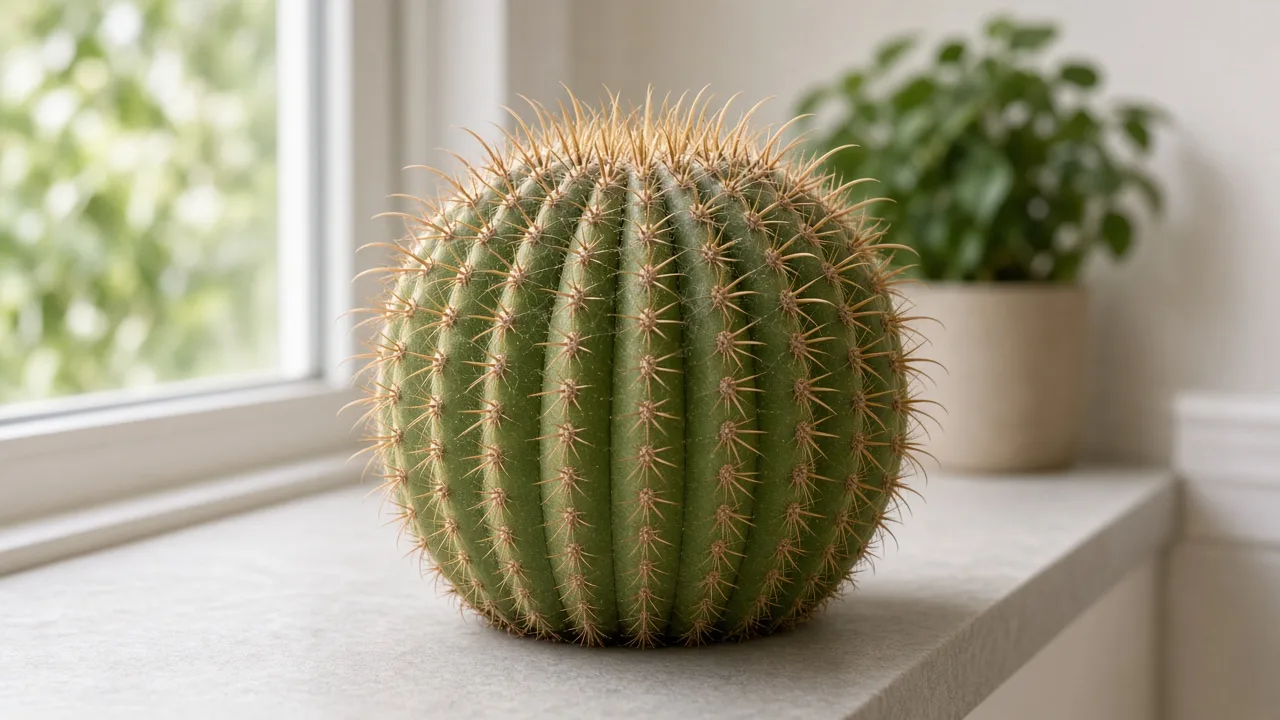
Spider Mites on Barrel Cactus: Causes, Checks & Fixes
This guide covers spider mites on Barrel Cactus. See also the general Spider Mites guide, watering, and light pages for this plant.
Spider Mites on Barrel Cactus: Causes, Checks & Fixes
Quick answer
Spider mites on Ferocactus show up as fine silk webbing between spine clusters, pale pinprick stippling on rib skin, and dulling at the crown—not cottony wax masses or soft crawling insects, because this plant has no leaves to inspect from below. Spider mites are arachnids that suck cell contents from plant tissue, leaving light dots that can bronze or yellow heavily infested areas.
For how mites reproduce, why webbing protects colonies, and when insecticidal soap works in general, see our spider mites pest guide. On barrel cactus, the practical pattern is webbing in rib grooves and crown areoles, stippling on hardened rib skin, and extra caution because rinses and sprays must reach between fishhook spines without keeping a desert cactus damp overnight.
First step: isolate the pot away from other succulents, wear thick gloves, and blast rib grooves and crown areoles with a strong directed water spray in morning light—then re-inspect with a white-paper shake test in three days before applying soap or oil.
A firm base with webbing only at the crown is an insect problem. A soft base on wet mix is a different emergency—see root rot on barrel cactus before you treat pests.
When to use this page vs other Barrel Cactus guides
This page is the pest-first entry for fine webbing and stippling feeders on rib skin.
| Pattern | Read next |
|---|---|
| White cottony wax in areole crevices | Mealybugs |
| Hard brown bumps that do not move | Scale insects |
| Soft pear-shaped insects at crown buds | Aphids |
| Slight rib contraction, dull skin, bone-dry pot | Underwatering |
| Soft base, yellow lower tissue, wet mix | Overwatering or root rot |
| Uniform bleached patches after sun move | Sunburn |
| Pinching ribs without webbing or stippling | Low humidity |
What spider mites look like on Barrel Cactus
Spider mites are tiny arachnids less than 1/20 inch long that live in colonies and produce silk webbing. On Ferocactus, damage concentrates on the only soft feeding sites this barrel offers—crown areoles and upper rib grooves:
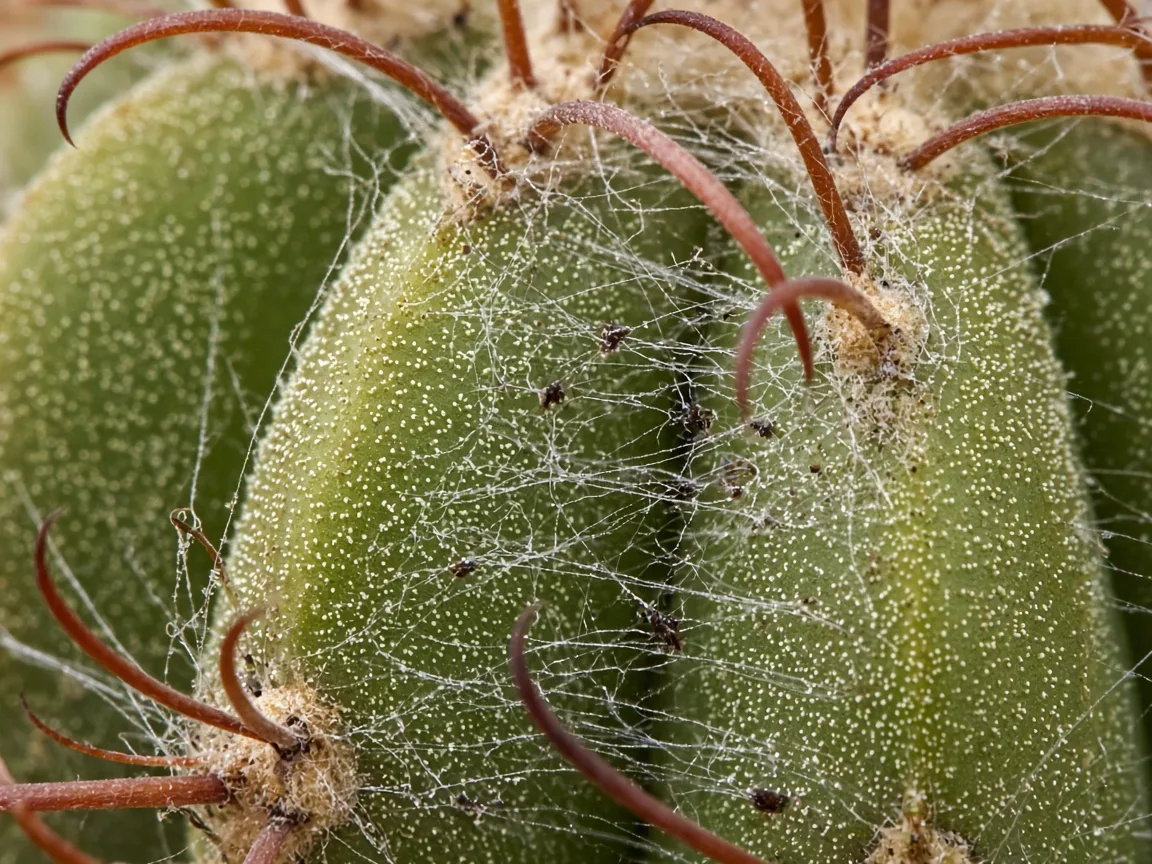
Fine webbing in a rib groove near the crown—stippling on hardened skin confirms active feeding, not mineral dust.
- Fine silk webbing between spine clusters — Messy threads in rib grooves and at the crown, not organized spider webs across the room
- Pale pinprick stippling on rib skin — Light dots from cell-contents feeding that may bronze on heavy infestations
- Dull, slightly gray-green crown tissue — Sap loss on the growing tip before lower ribs show much change
- Moving dark specks on white paper — Shake mites from rib grooves onto paper; crushed specks leave a greenish streak
- Slow crown spine growth — Heavy feeding on the only actively growing tissue this slow cactus offers
NC State Extension notes that barrel cactus is usually pest resistant but may occasionally host spider mites, mealybugs, fungus gnats, or scale. Indoor collections see mites because hot, dusty conditions and water-stressed plants favor outbreaks—the same warm windowsills where Ferocactus wants full sun.
Where spider mites hide on ribs, crown, and spine clusters
Ferocactus is a ribbed, leafless barrel. Spider mites follow protected grooves and areole crevices, not open rib faces.
Crown and upper-rib inspection
Flowers appear in a crown-like formation on top of the cactus in late spring to early summer. Mites colonize the same soft tissue year-round:
- Central growing tip — Webbing between emerging spine clusters
- Rib grooves on the upper third — Colonies shelter in the angle between spine and rib skin
- Bloom ring and bud bases — Fine threads beside swelling flower buds during warm months
- Shelf edges beside the pot — Mites drift from dusty bench surfaces onto the crown
Use kitchen tongs wrapped in paper towel to tilt the pot, or photograph rib grooves with phone zoom rather than pressing your face into fishhook spines.
The white-paper shake test on a leafless barrel
Without leaf undersides to check, use the paper shake method:
- Hold white paper under the upper ribs
- Tap the crown gently with a wooden skewer or tongs
- Watch for pinhead-sized dots that move on the paper
- Crush one speck—greenish streak confirms sap-feeding mites, not grit
A 10X hand lens helps distinguish mites from mineral dust in rib grooves.
Spine-safe handling rules
Wear protective gloves when handling barrel cactus—curved spines can puncture fabric and skin. For inspection and treatment:
- Blast, don’t soak — Directed water reaches grooves; avoid flooding the crown at dusk
- Work in bright morning light — Wet rib skin dries faster before midday sun
- Stable heavy pot — A tipping barrel cactus is a spine hazard; brace the pot before spraying
Why barrel cactus gets spider mites in dry windows
Hot dry air favors mites on desert cacti. Spider mites reproduce rapidly in hot weather and prefer dusty, dry conditions—the same south- or west-window environment Ferocactus needs for firm growth. Unlike humidity-loving ferns, your barrel cactus and spider mites both thrive in warm dry air, which is why low humidity alone rarely explains webbing plus stippling.
Rib grooves trap dust and colonies. Webbing between spine clusters shields mites from casual wiping. Open rib faces may look clean while grooves at the crown harbor hundreds of individuals.
Broad-spectrum insecticides can trigger outbreaks. Spider mites frequently become a problem after certain insecticide sprays kill predators without controlling mites. If you recently treated aphids or scale with a pyrethroid or organophosphate, check for mite flare-ups two weeks later.
Crowded shelves spread crawlers. Female mites disperse on wind currents when food quality drops. A dusty windowsill collection lets mites walk from pot to pot without you noticing until crown stippling appears.
Confirm spider mites vs. mealybugs, scale, drought, and sunburn
Work through checks in order so you do not spray a rotting base:
- Skewer and base press — Dry skewer through the pot; firm ribs and a stable base point to insects. Soft or mushy base on damp mix means rot risk first.
- Crown scan — Start at the growing tip for webbing before inspecting lower ribs.
- Paper shake — Moving specks that streak green confirm mites. Stationary white wax means mealybugs.
- Webbing location — Silk in rib grooves and crown areoles, not cottony masses packed into single areoles.
- Soil dryness — Bone-dry pot with rib pinching and no webbing points to underwatering, not mites.
Symptom lookalike comparison
| What you see | Likely cause | Key check |
|---|---|---|
| Fine webbing + pale rib stippling | Spider mites | Moving specks on paper shake; silk in grooves |
| White cottony masses in areole crevices | Mealybugs | Stationary wax; alcohol reveals orange-gray insects |
| Hard brown bumps that do not move | Scale insects | Scraping reveals tissue underneath |
| Slight rib contraction, dull skin, bone-dry pot | Underwatering | No webbing; skewer dry throughout |
| Soft base, translucent lower tissue, wet mix | Overwatering | No stippling pattern; sour soil possible |
| Uniform bleached patches after sun move | Sunburn | No webbing; sharp boundary on exposed ribs |
| Pinching ribs without webbing or specks | Low humidity | Paper shake negative; skin dull but unstippled |
Confirmed diagnosis — Webbing plus moving specks on paper shake with a firm base. Suspected — Faint stippling without visible webbing may need magnification on crown areoles before treating the whole barrel.
First fix: isolate, water knockdown, then repeat on a schedule
Isolate the pot away from other succulents and cacti until you see no new webbing for at least two weeks after treatment.
Blast rib grooves and crown areoles with a strong directed water spray first. UC IPM recommends forceful water spraying on garden and houseplant foliage to reduce spider mite numbers—webbing removal exposes colonies to predators and contact treatments. This is the lowest-risk first fix for a spiny crown: no pooled water at the growing tip and no chemical residue across the whole barrel. Spray in morning light so the crown dries within a few hours. Repeat every two to three days to catch newly hatched mites.
If water knockdown is not enough: insecticidal soap or horticultural oil
If webbing returns after two or three water cycles, apply insecticidal soap or horticultural oil labeled for ornamentals. Soaps and oils must contact mites to kill them, so coat crown areoles and upper rib grooves until runoff. Rules for barrel cactus:
- Spray early morning—do not apply when temperatures exceed 90°F or on water-stressed plants
- Patch-test one small crown areole and wait 24 hours before treating the whole tip
- Avoid stacking repot, crown pruning, or fertilizer the same week you start spray
Wear gloves throughout—spine punctures are the main safety issue.
What not to do the same day
Do not increase watering because the crown looks dull—check base firmness and skewer dryness per the watering guide first. Do not mist the whole room expecting mites to leave a desert cactus. Do not apply broad-spectrum insecticides that kill mite predators and worsen outbreaks. Do not assume one spray fixes mites hiding deep in fishhook spine clusters without repeat knockdown.
Recovery timeline and crown growth expectations
Visible webbing should thin within one to two weeks of consistent water knockdown. Expect cleaner new crown spines within four to eight weeks during active warmth—Ferocactus grows very slowly, so patience is normal. Old dull stippling on lower ribs from past feeding does not vanish; judge success by less webbing, negative paper shakes, and firm ribs throughout.
A firm ribbed base throughout treatment is a good sign. Softening at the base means rot or overwatering—not spider mites—and needs a different response immediately.
How to prevent spider mites on Barrel Cactus
Inspect plants thoroughly before bringing them home and quarantine every new cactus for two weeks. Check crown areoles weekly during spring and summer active growth. Keep care aligned with the full barrel cactus care hub—full direct sun per the light guide, mineral fast-draining soil mix, and dry-down watering so crown growth stays firm.
Wipe dusty window sills and bench surfaces—dusty conditions often lead to mite outbreaks. Avoid unnecessary broad-spectrum sprays on neighboring plants. When repotting, inspect the crown before returning the plant to a shared shelf.
When to escalate
Escalate if new crown growth repeatedly emerges with fresh webbing after three full treatment cycles, if stippling spreads down most ribs despite firm roots, or if mites return immediately after repot. Chronic feeding on a slow-growing barrel cactus can weaken bloom cycles even when rot has not started.
For heavy recurring infestations, a local extension office can confirm the species and discuss selective miticide options. Systemic products are generally a last resort on a single potted crown cactus when contact knockdown and soaps have failed.
Spine injury: If you or a pet contact spines, remove visible spines carefully and watch for infection. Barrel cactus is not pet safe in practice because rigid spines can puncture paws and noses—keep pots out of traffic paths.
Spider mites alone rarely kill a mature Ferocactus with a firm base, but they can ruin a flowering season and open the door to crown rot if you respond with extra water instead of pest removal.
Before you water again
Webbing on a firm base means knock mites off the crown first—not another drink. Soft base on wet mix means rot protocol, not water sprays. That single check keeps most barrel cactus owners from making the problem worse while they treat the right cause.
Related Barrel Cactus guides
- Barrel Cactus overview
- Barrel Cactus watering
- Barrel Cactus light
- Barrel Cactus soil
- Mealybugs on Barrel Cactus
- Scale Insects on Barrel Cactus
- Aphids on Barrel Cactus
- Low Humidity on Barrel Cactus
- Overwatering on Barrel Cactus
- Barrel Cactus problems
Related tool
Use the Pest Identifier Tool to narrow causes for spider mites on this plant before changing multiple variables at once.