Brown Tips on Barrel Cactus: Crown & Apex Checks
Quick answer
Brown tips on Barrel Cactus usually mean dry tan patches at the crown or upper rib crests—not leaf edges, because Ferocactus has no leaves. First step: check whether browning is at the top center (apex), along sun-facing upper ribs, or woody corking at the base, then weigh the pot and probe the mix with a dry skewer.
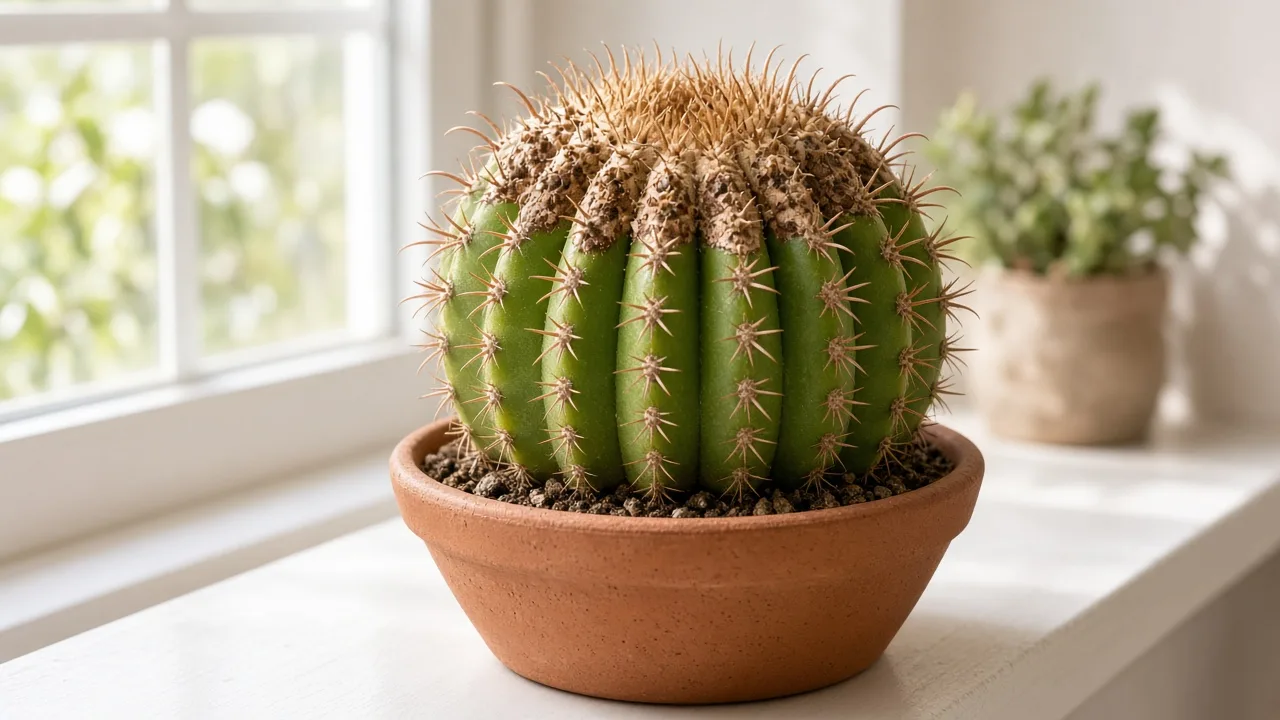
Brown Tips on Barrel Cactus: Causes, Checks & Fixes
This guide covers brown tips on Barrel Cactus. See also the general Brown Tips guide, watering, and light pages for this plant.
Brown Tips on Barrel Cactus: Causes, Checks & Fixes
Quick answer
Brown tips on Ferocactus mean dry tan or russet patches at the crown (top center) or along upper rib crests while the barrel body stays firm—not crispy leaf margins, because barrel cactus has no leaves. For how tip-style browning works on leafy houseplants in general, see our brown tips hub. On barrel cactus, the first fork is location: apex scorch after a sunny move, drought-shrunk ribs on a light pot, mealybug cotton in the crown, or harmless woody corking at the base on an older plant.
First step: weigh the pot and push a dry skewer to the bottom. Very light pot + slightly contracted ribs + tan crown patches = underwatering path. Browning only on the upper sun-facing ribs right after a window upgrade = pull back from harsh glass per the light guide before you soak. Heavy wet pot with spreading mush = overwatering path—not a tip-only problem.
When to use this page vs other Barrel Cactus guides
| Pattern | Read next |
|---|---|
| Tan patches only at crown or upper ribs, firm base | This page |
| Whole upper body mushy, sour wet mix | Overwatering or root rot |
| Large bleached patches after outdoor summer move | Sunburn scorched leaves |
| Woody brown only at soil line on old plant | Normal corking—see apex vs base section below |
| White cotton in crown areoles | Mealybugs |
| Slight rib pinch, dull skin, very light pot | Underwatering |
| Yellow translucent lower tissue | Yellow leaves |
What brown tips look like on Barrel Cactus
Unlike dracaena or spider plant, Ferocactus has ribbed stem tissue and a spine crown, not blades. Owners searching “brown tips” usually mean one of these patterns:
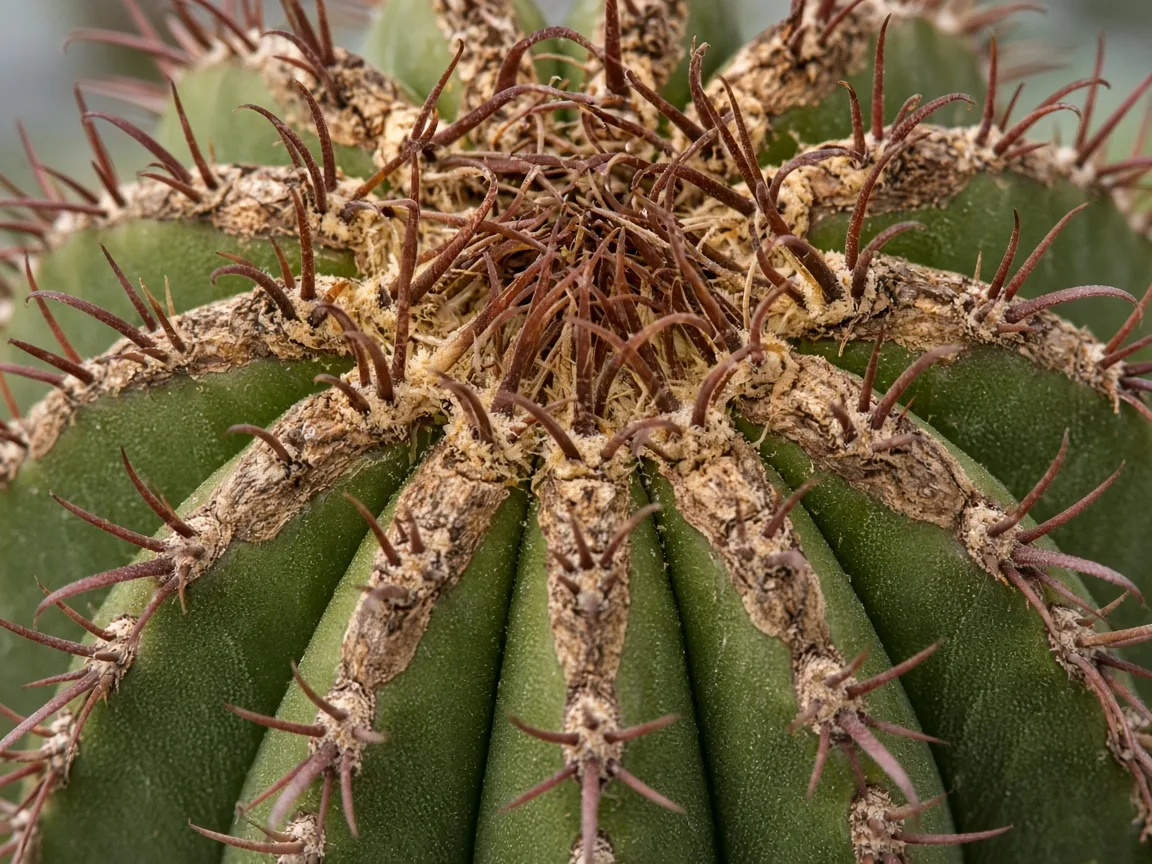
Dry tan patches at the apex and rib crest—the dead tissue will not re-green; watch the next crown spine flush for clean color.
- Dry tan or russet patches at the apex (top center) — Sun scorch on tender crown tissue, drought stress at the growth point, or cold damage after a drafty window night.
- Brown only along upper sun-facing rib crests — Harsh direct glass in summer; Gardening Know How notes direct southern sun can burn barrel cactus at peak intensity even though the species wants bright light.
- Woody brown band at the soil line on a mature barrel — Often corking (natural aging bark), not fresh tip burn—firm tissue above it stays green.
- White cottony clumps tucked into crown areoles — Mealybugs before you blame dryness.
- Brown mush spreading down ribs on a heavy pot — Wet-root injury; see overwatering—not the same as dry tan crown tips.
A firm ribbed body with small tan crown patches after one hot afternoon is stressful but recoverable. A soft sunken crown on damp mix is urgent.
Crown anatomy: why the top browns before the base
This section is barrel-cactus-specific and does not apply to broad-leaf tropicals.
- New spine clusters and future flowers emerge in a crown-like formation at the top of the ribbed stem—the thinnest, newest tissue sits farthest from stored water in the barrel body.
- Ribs act like pleats: when the plant is thirsty, they contract slightly before the base softens, and the apex can tan first because it dries fastest.
- Ferocactus prefers full sun but in scorching indoor conditions afternoon glare through clear glass hits the crown before lower ribs shade themselves.
- Slow growers may show corking (woody brown bark) at the base while the crown stays green—normal on older specimens, not a tip-burn emergency.
Always compare apex color to base firmness. Tip burn on new crown growth is more urgent than corking on a ten-year-old lower rib.
The skewer-and-pot-weight crown check
Tall barrels in heavy ceramic pots hide drought and rot. Before you change light or feed:
- Lift or tilt the pot when you think it is dry versus two days after watering. Learn your dry weight.
- Push a dry bamboo skewer through the drainage hole until it hits bottom. Pull it out—damp skewer on a light pot means wet core under a dusty surface; bone-dry through the pot on a very light container confirms drought.
- Inspect the crown with thick gloves—sharp curved spines make close looks dangerous without protection.
- Press the lowest 5 cm of ribs above soil with a folded towel. Firm = tip-level stress. Soft or sunken = stop water and see root rot.
Do not mist the crown to “fix” brown tips—surface moisture without root uptake worsens rot risk on desert cacti.
Why Barrel Cactus gets brown tips
Ferocactus evolved in rocky desert with full sun and fast drainage. Brief drought is safer than chronic wet mix, but the crown shows stress first.
Sun scorch on the crown after acclimation failure. Plants moved suddenly to harsh south or west glass can tan the apex and upper ribs even though the species is sun-loving. Diffuse light for a week before pushing closer to the pane.
Underwatering and long dry-down. Drought-tolerant barrels still need occasional deep soaks once the mix dries through. Months without water in a warm room can contract ribs and dry tan patches at the crown while the base still feels firm.
Cold or draft damage at the growth point. Winter nights near single-pane glass or AC vents can brown the apex on an otherwise dry pot—different from summer scorch but similar visually.
Mealybugs and spider mites at the crown. NC State lists mealybugs and spider mites as occasional pests on barrel cactus. Cottony patches or fine stippling at the top can precede tan tissue collapse—confirm before soaking a dry pot.
Salt and heavy fertilizer. Light feeders in mineral mix; excess salts can stress the crown areoles, sometimes with white crust at the pot rim. See the fertilizer guide.
Confusion with corking. Woody brown at the base on a slow-growing barrel is often normal aging bark, not a care failure—unless it is soft, wet, or spreading upward on saturated mix.
How to confirm the cause
- Location — Apex only vs woody base only vs mush spreading down ribs.
- Pot weight — Very light versus heavy relative to your last watering.
- Skewer test — Dry through the pot vs damp core on a dusty surface.
- Recent light change — Did browning follow a sunny move within days?
- Season — Winter brown apex on a dry pot near cold glass suggests chill, not summer scorch.
- Pest signs — White cotton, honeydew, or fine webbing in crown areoles with gloves on.
First fix for Barrel Cactus
Weigh the pot, then either deep-soak fully dry mix or pull the plant back from harsh glass—do not do both on the same day.
- Very light pot + contracted ribs + dry tan crown only, firm base — Water until runoff, drain the saucer, then wait until the skewer reads dry through the pot per the watering guide.
- Upper sun-facing tan patches after a bright move — Shift to bright indirect or filtered south light per the light guide; do not compensate with extra water while mix is still wet.
- Heavy wet pot + brown mush beyond dry tips — Stop water; see overwatering.
- White cotton in crown — Isolate and treat per mealybugs before soaking.
- Woody firm base band only, green crown — Likely corking; no action unless tissue is soft.
Do not carve brown crown tissue for cosmetics—it exposes inner flesh to infection. Do not fertilize to “heal” dead tan patches. Do not repot on day one unless roots are clearly rotting.
Recovery timeline
Tan crown tissue does not re-green. Judge recovery by firm ribs, stable dry-down weight, and the next crown spine flush opening without new tan patches. Mild drought crown tan often stabilizes within one to two proper soak cycles once the pot fully rehydrates. Sun-scorched apex may keep its tan patch for months while slow new spine growth at the crown looks clean—barrel cactus is very slow growing, so allow several weeks before expecting visible crown renewal.
Mistakes to avoid
- Soaking because the crown looks dry while the pot is still heavy and ribs near soil feel firm-wet
- Baking the apex against clear summer glass because “cacti love sun”
- Fertilizing brown-tipped stressed barrels to push crown growth
- Confusing base corking with fresh apex tip burn—and missing overwatering when mush spreads down ribs
- Inspecting the crown bare-handed near fishhook spines
How to prevent brown tips next time
Match watering to full-pot dry-down with a skewer, use mineral cactus mix in a porous unglazed clay pot, acclimate to bright light gradually, feed lightly per the fertilizer guide, and keep winter crowns away from cold glass. Accept slow base corking on mature plants. See the Barrel Cactus overview and problems hub for sibling guides.
Related Barrel Cactus guides
Conclusion
Brown tips on barrel cactus are crown and upper-rib stress on a leafless desert barrel, not margin burn on foliage. Match soak, light acclimation, or pest treatment to what pot weight, skewer moisture, and crown location tell you. Dead tan apex tissue will not recover; watch for firm ribs and clean new spine growth at the top as your success marker.