Overwatering on Barrel Cactus: Rib & Soil-Line Checks
Quick answer
Overwatering on barrel cactus shows up as a heavy wet pot, yellow or translucent tissue at the soil line, and a soft base on Ferocactus—not slight rib contraction on a light dry pot. First step: stop all watering immediately and press the lowest ribs above the soil with thick gloves on.
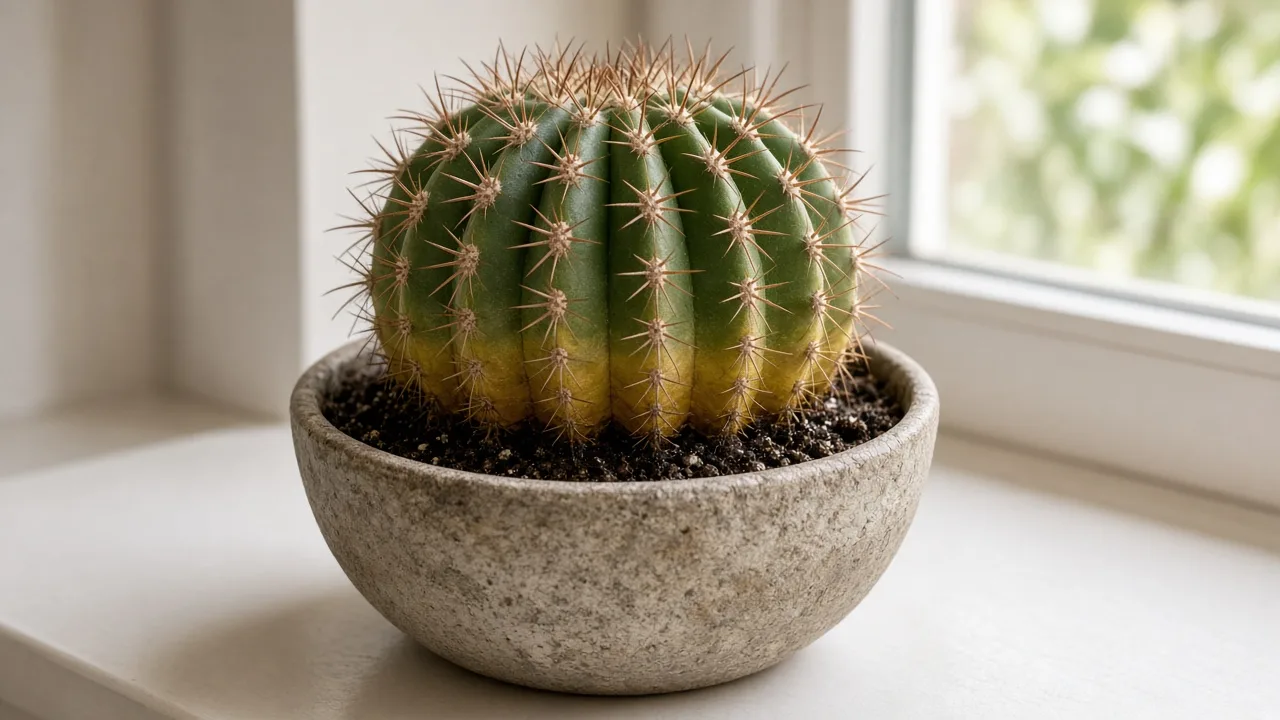
Overwatering on Barrel Cactus: Causes, Checks & Fixes
This guide covers overwatering on Barrel Cactus. See also the general Overwatering guide, watering, and light pages for this plant.
Overwatering on Barrel Cactus: Causes, Checks & Fixes
Quick answer
Overwatering on Ferocactus is the classic desert-cactus trap: a ribbed barrel that still looks mostly firm while the root zone and soil-line tissue are drowning. Barrel cactus evolved for rocky Southwestern sun and prefers a dry environment with a well-drained cactus mix. When mix stays wet, roots lose oxygen and die; NC State Extension notes overwatering or poor drainage can cause rot or brown mushy areas on the stems.
For how chronic wet soil damages roots in general, see our overwatering guide. On barrel cactus, the pattern is a heavy pot long after watering, yellow or translucent tissue at the soil line, and—most importantly—a soft base while mineral mix is still damp—not slight rib contraction on a light dry pot.
First step: stop all watering immediately. Then press the lowest ribs above the soil line with thick gloves on before you add water, fertilizer, or repot. If the base is already mushy, escalate to the root rot protocol the same day.
When to use this page vs other Barrel Cactus guides
| Pattern | Read next |
|---|---|
| Light dry pot, slight rib shrinkage, firm base | Underwatering |
| Soft base + wet soil (this page) | Stay here; escalate to root rot if base is mushy |
| Yellow lower ribs only, firm base, dry mix | Yellow leaves — often thirst or light stress |
| Black or brown patches on ribs | Black spots or brown leaves |
| Whole barrel limp on wet soil | Wilting |
| Fungus gnats hovering at soil | Fungus gnats or mold on soil |
| White mold on damp surface only | Mold on soil |
What overwatering looks like on Barrel Cactus
Unlike leafy houseplants, Ferocactus photosynthesizes through its thick ribbed stem. There are no leaves to yellow first—the warning tissue is the lowest ribs at the soil line and the feel of the barrel wall between spines.
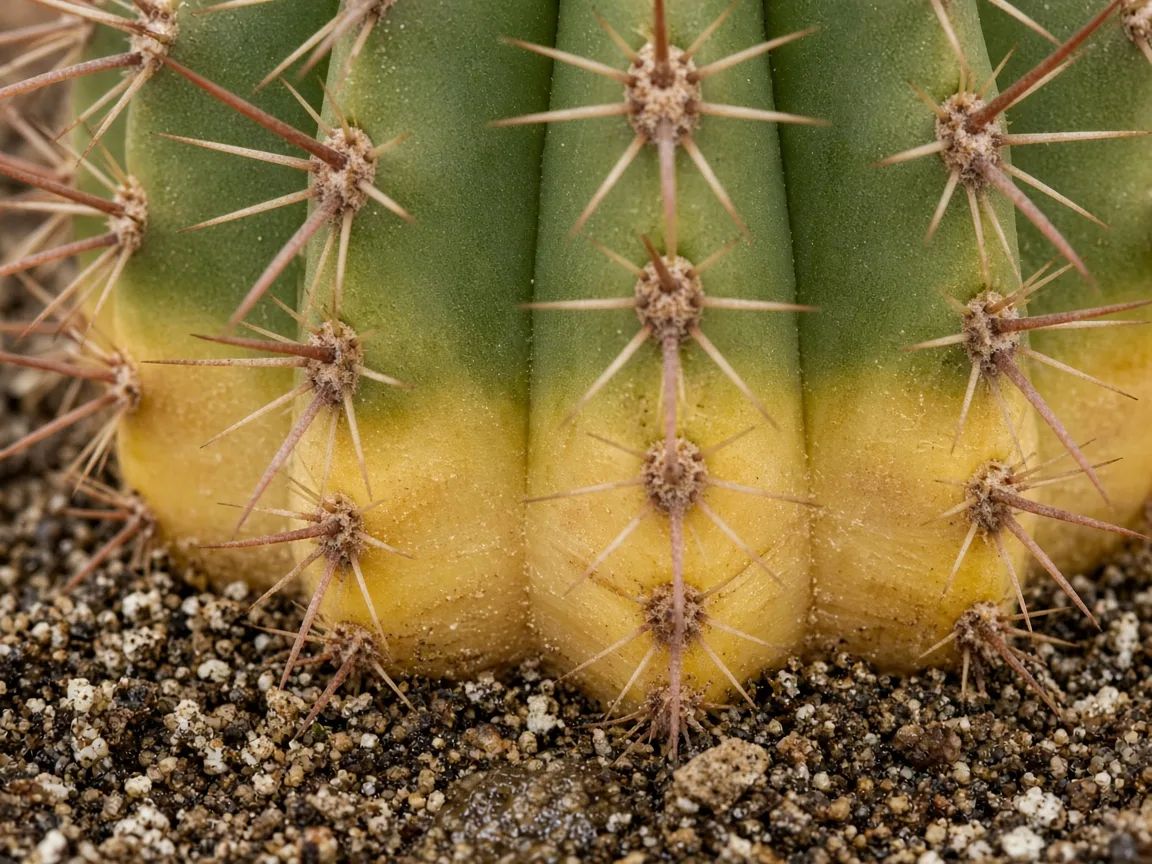
Early overwatering at the soil line—translucent yellow tissue and damp mix at the base; upper ribs may still look normal until rot advances.
Early signs
- Heavy pot days or weeks after the last watering
- Yellow or translucent lower ribs at the soil line while upper ribs still look firm
- Soft base when pressed with a gloved finger or blunt tool handle
- Persistent damp mineral mix on a skewer probe through the full pot depth
- Slowed or absent new spine growth at the crown while mix stays wet
- Fungus gnats or surface mold—chronically wet mix is their habitat; see mold on soil if patches spread
Advanced signs
- Mushy, sunken, or black tissue climbing from the soil line up the ribs
- Sour or rotten smell from the pot
- Wilt paradox—a deflated-looking barrel on wet soil because damaged roots cannot move water
- Brown mushy patches spreading across ribs within days
- Whole stem softening from the base upward—often linked to Pythium rot that starts underground before you see crown damage
A slightly contracted rib profile on a light dry pot is not automatically overwatering—Ferocactus stores water in stem tissue and tolerates drought. Overwatering adds wet mix + soft base + yellowing at the soil line to that picture.
Rib firmness vs rib contraction: the barrel squeeze test
This plant-only check would mislead you on a snake plant or fern. On barrel cactus, the rib is the diagnostic surface:
- Firm ribs + slight shrink between ribs + light dry pot — Often thirst or winter rest; see underwatering if the skewer is clean and dry.
- Firm upper ribs + yellow lower ribs + heavy wet pot — Root stress beginning; stop water now.
- Soft base + wet pot — Confirmed overwatering path; inspect roots before rot climbs.
- New spines at the crown — Recovery signal even if lower tissue stays scarred.
Always trust rib firmness at the soil line over how plump the upper barrel looks. A Ferocactus can appear full while the base is already failing.
Full-pot skewer dry-down on mineral mix
Barrel cactus in gritty indoor mix dries unevenly—the surface can look dusty while the center stays damp. Before you change anything:
- Lift or tilt the pot when you think it is dry versus two days after watering. Learn your dry weight.
- Push a dry wooden skewer through the entire pot to the drainage hole. Surface dust-dry is not enough—let the soil mix dry out completely between waterings.
- Press the lowest ribs above soil with thick gloves. Firm = follow skewer results. Soft or hollow = stop water and see root rot.
- Sniff the soil. Sour odor means treat as confirmed rot—unpot the same day.
- Check the crown height. Burying the fleshy stem too deep in soil invites rot at the soil line even when you water sparingly.
Wear thick gloves—spines are the handling hazard on this plant, not sap toxicity.
Why Barrel Cactus gets overwatering
Ferocactus is a slow-growing desert cactus that needs full sun and excellent drainage. Most chronic overwatering comes from setup mistakes, not one accidental soak.
Calendar watering. Watering every two weeks ignores how fast your specific pot dries. A barrel in a south window and terracotta may need a deep soak monthly in summer; the same plant in a dim cool room with an oversized glazed pot may stay wet for six weeks.
Winter rest mismatch. Water the plant even less during dormant fall and winter seasons. A summer rhythm in a cool November room keeps roots wet while uptake has already dropped.
Oversized pots and peat-heavy mix. Extra soil volume around a small root ball holds moisture for days. Dense indoor mix in a decorative cachepot stays damp far longer than the mineral blend this species needs—see the soil guide.
Mistaking rib contraction for thirst. Owners see slightly shrunk ribs and add water, deepening the cycle. On wet heavy soil, more water is the wrong move.
Poor drainage and standing saucer water. Heavy barrels in pots without drainage holes trap moisture at the base where rot starts first.
Stem planted too deep. If the green barrel sits below the soil line, the buried tissue stays wet and Pythium rot symptoms often begin at the soil level before you notice crown damage.
How to confirm the cause
Work through this checklist in order. Two or more wet-soil matches confirm overwatering before you repot.
- Lift the pot — Heavy days or weeks after watering means moisture is trapped.
- Skewer through full depth — Damp, cool, or soil-stained means wait; do not water.
- Press the lowest ribs — Soft on wet mix confirms advancing damage; firm on dry mix points elsewhere.
- Inspect the soil line — Yellowing lowest ribs on damp mix, not just one old scar.
- Note the season — Cool winter room plus recent watering strongly favors overwatering.
- Check for gnats, mold, or sour smell — All support chronic wet mix.
First fix for Barrel Cactus
Stop all watering immediately. Move the pot to its normal bright spot with good airflow—do not yank a stressed barrel into harsh new direct sun. Empty any standing water in saucers or cachepots.
That single pause lets you read the plant for one to two weeks without stacking variables. If the base is still firm after the skewer comes out clean and dry, you may not need to unpot.
If the base is soft, black, or smells sour, skip the wait—follow the root rot unpotting steps the same day.
Step-by-step recovery
Mild cases (firm base, heavy wet pot)
- Stop watering until the skewer is clean and dry through the full pot depth.
- Improve airflow around the pot base; terracotta pots are recommended because they are porous and remove excess moisture.
- Resume soak-and-dry only when the pot feels noticeably lighter—see the watering guide.
- Watch for new spine growth at the crown within four to eight weeks on a slow-growing Ferocactus.
Moderate cases (slight base softening, mostly firm roots on inspection)
- Unpot with thick gloves, shake off wet mix, and inspect roots. Trim brown mushy roots with sterile shears.
- Let cut roots air-dry 24–48 hours on newspaper in bright shade.
- Repot into dry fast-draining mineral mix in a smaller porous pot with drainage holes—see repotting. Keep the stem crown above the soil line.
- Wait two weeks before the first light soak at the pot edge.
Severe cases (mushy base climbing the ribs)
- Identify the highest firm green tissue on the barrel.
- Cut above the rot with a sterile knife, dust cuts if desired, and lay the firm top to callus one to two weeks.
- Re-root the callused crown in dry gritty mix per the propagation guide—salvage beats saving a collapsed base.
- Discard mushy lower sections; do not compost wet rot tissue indoors.
Recovery timeline
| Severity | What to expect |
|---|---|
| Mild (firm base) | Mix dries in 2–4 weeks; yellowing stops; new crown spines in 1–3 months |
| Moderate (trimmed roots) | 6–10 weeks before confident new upper growth |
| Severe (crown salvage) | Callus 1–2 weeks; rooting 8–12 weeks; original base usually lost |
Judge success by firm rib tissue and new spines at the crown—not by old yellow ribs re-greening. Scarred lower tissue often stays discolored permanently.
Lookalike symptoms
| What you see | Likely cause |
|---|---|
| Slight rib shrinkage, light pot, dry skewer | Underwatering |
| Tan patches on sun-facing rib only | Sunburn |
| Firm woody band at base of old plant | Harmless corking—see brown leaves |
| Yellow lowest ribs, firm base, dry mix | Light or nutrient stress—yellow leaves |
| Limp deflated barrel on wet soil | Advanced rot—root rot |
| Dark sunken spots on ribs | Black spots — touch-test soft vs hard |
Mistakes to avoid
- Watering because ribs look slightly shrunk on already-wet mix
- Fertilizing a stressed barrel before roots recover
- Repotting into a larger pot while soil is still soggy
- Moving immediately to blasting direct sun on damaged roots
- Misting the soil surface or rim repeatedly—extra moisture at the base mimics overwatering
- Assuming a plump upper barrel is healthy without checking the lowest ribs
- Planting the stem deeper after repot to stabilize spines—keep the crown dry and above mix
Hold fertilizer until new crown growth looks normal for several weeks and the base stays firm.
How to prevent overwatering next time
Match water to this plant’s biology, not a calendar.
Water deeply only after the soil mix dries out completely between waterings, then soak until drainage runs free and empty the saucer. In winter, follow sharp dry-down per the watering guide even if ribs look slightly dull—cool rooms need longer intervals.
Use fast-draining mineral cactus mix in a pot only slightly larger than the root ball. Terracotta or porous pots help indoor barrels dry evenly.
Keep the plant in full sun so photosynthesis matches your soak schedule and water uptake stays predictable.
Learn dry pot weight by lifting monthly. Scout the soil line whenever you consider watering—especially after repotting when stem depth is easy to get wrong.
When to worry
Mild yellow tissue at the soil line on a firm base after one overwatering event usually responds to a dry-down pause. Escalate same-day when:
- The stem base feels squishy or hollow
- Black tissue climbs above the soil line
- The mix smells sour
- Multiple ribs soften across the lower body within a week
- No new crown spines appear after three months of corrected care
If rot has consumed the base, crown salvage through propagation is often more realistic than saving the original root ball.
Related Barrel Cactus guides
- Overview — culture and spine safety
- Watering — soak-and-dry rhythm after recovery
- Soil — mineral mix that dries fast
- Root rot — mushy base and unpotting protocol
- Underwatering — rib contraction on dry mix
- Black spots — soft rot vs hard scars on ribs
- Problems hub — full symptom index
Conclusion
Overwatering on barrel cactus is a soil-line and pot-weight problem disguised by a firm-looking upper barrel. Stop water, press the lowest ribs with gloves on, and let mineral mix dry fully on a full-depth skewer test before the next soak. Firm tissue and fresh spines at the crown are the recovery signal; yellow lower ribs will not re-green, and that is normal once the root zone stabilizes.
Related tool
Use the Root Rot Risk Checker to narrow causes for overwatering on this plant before changing multiple variables at once.