Black Spots on Barrel Cactus: Causes, Checks & Fixes
Quick answer
Black spots on barrel cactus are usually rot at the soil line, pest damage at areoles, sunburn on the sun-facing rib, or harmless corking—not one disease. First step: touch the spot. Soft and spreading means stop watering; hard and dry usually needs no spray.
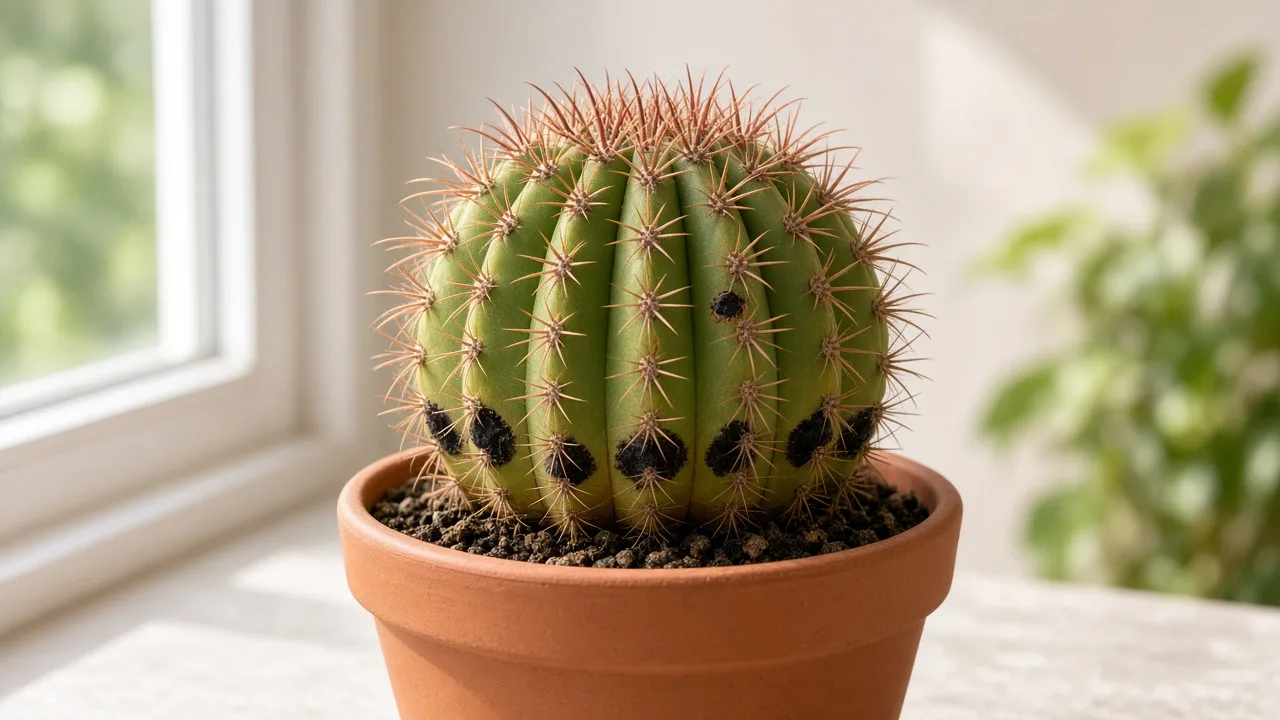
Black Spots on Barrel Cactus: Causes, Checks & Fixes
This guide covers black spots on Barrel Cactus. See also the general Black Spots guide, watering, and light pages for this plant.
Black Spots on Barrel Cactus: Causes, Checks & Fixes
Quick answer
Black spots on a barrel cactus (Ferocactus) rarely mean one fixed disease. On this ribbed desert cactus, the same dark color can mark active rot from wet soil, scale hiding at areoles, sunburn on the brightest rib, frost injury, or harmless corking at the base of an older plant.
First step: touch the spot with a gloved finger or blunt tool. Soft, sunken, or spreading tissue means stop watering immediately and inspect the soil line. Hard, dry, localized patches usually need a care adjustment—not fungicide on day one.
For how black leaf and stem spots behave across houseplants in general, see our black spots guide. On barrel cactus, the texture at the ribs and the soil line tell you which branch to follow.
When to use this page vs other Barrel Cactus guides
This page is the symptom-first entry for dark patches on the stem. Use it to sort rot, pests, sun, and scars before you change multiple variables.
- Overwatering — go here when the pot stays heavy, the base softens, or you water on a calendar instead of a dry skewer test
- Root rot — go here when the base is mushy, roots fail a probe check, or you need trim-and-repot salvage steps
- Sunburn / scorched leaves — go here when black patches sit on the sun-facing rib after a sudden move to stronger light
- Scale insects — go here when spots are raised bumps at areoles with sticky residue
- Mealybugs — go here for white cotton at spine bases that leave dark marks after feeding
- Watering guide — go here for long-term soak-and-dry rhythm after spots stabilize
- Soil guide — go here when mineral mix drains too slowly and rot keeps returning
- All Barrel Cactus problems — browse every issue on this species
What black spots look like on Barrel Cactus
Healthy Ferocactus skin is firm, evenly colored for the species, and dry between ribs. Black spots show up differently depending on cause:
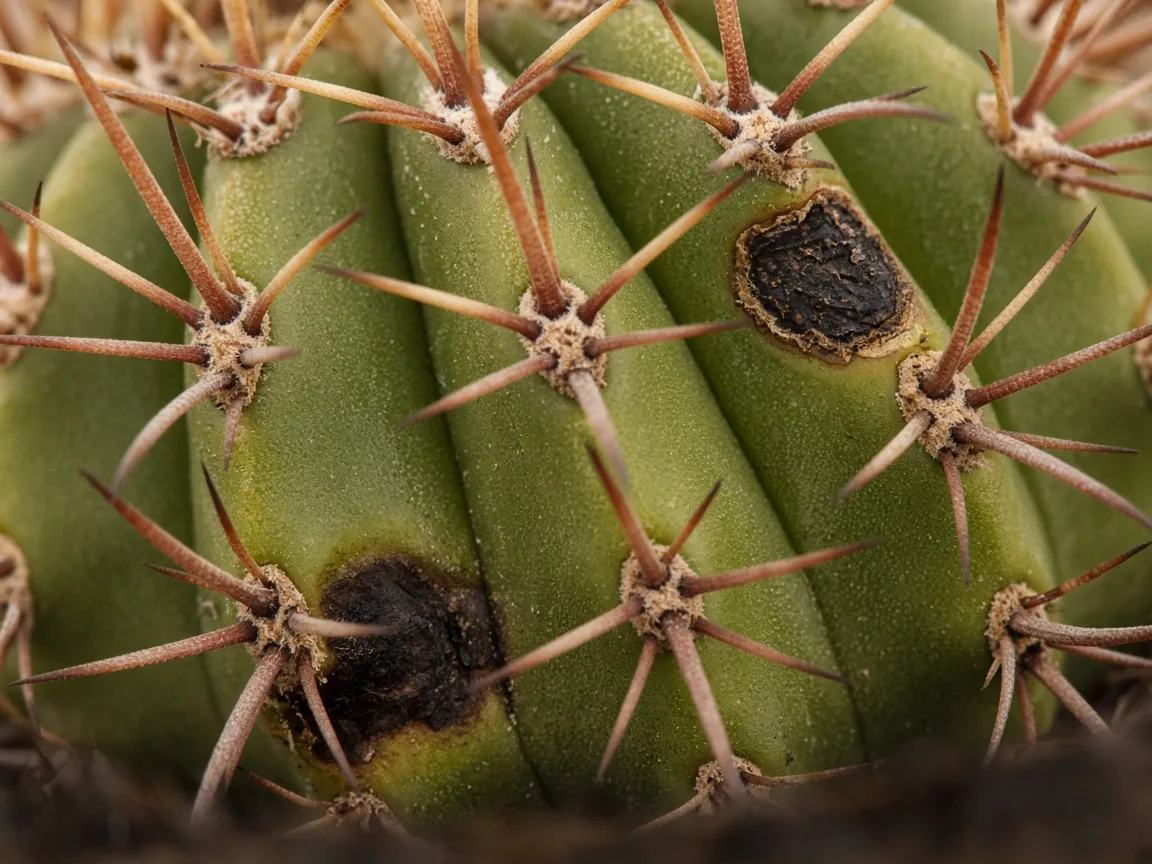
Black spot texture on barrel cactus — compare soft sunken rot at the soil line with firm dry corking or sun-scorched rib tissue.
Active rot or infection (urgent):
- Sunken black or brown patches that feel soft when pressed
- Yellowing at the soil line before the whole stem collapses
- Spots that enlarge across ribs within days
- Pot still heavy days after the last watering
Pest-related dark marks:
- Raised tan or brown bumps at areoles (scale insects)
- White cottony clusters at spine bases (mealybugs)
- Sticky honeydew or sooty dark film near feeding sites
Environmental or healed damage (usually lower urgency):
- Hard, dry black patches on the rib that faces the window (sunburn)
- Firm woody band at the base of a mature plant (corking)
- Small dry scabs where spines broke skin or the plant was bumped
Barrel cactus stores water in thick stem tissue, so outer ribs can look unchanged while the base is already compromised. Do not wait for the whole plant to soften before you act on a squishy soil-line spot.
Touch-test at the ribs: soft rot vs hard scar
This step is specific to ribbed barrel cactus and would mislead you on flat-leaved succulents.
- Locate the spot between ribs or at an areole—not on a leaf tip, because Ferocactus has no leaves.
- Press gently with a gloved finger or wooden skewer handle. Soft or yielding tissue suggests active decay. Firm, dry, bark-like texture suggests healed injury, corking, or sun-hardened scar tissue.
- Track spread. Mark the edge with a photo. Rot that crosses a new rib within a week is an emergency dry-down or salvage case. Static hard spots for months are usually cosmetic.
Black spots on cacti vary from soft decay to hard healed tissue, and that texture difference matters more on a slow-growing barrel than on fast-turnover foliage plants.
Why Barrel Cactus gets black spots
Ferocactus evolved for rocky desert soils with full sun and complete drying between rains. Indoors, black spots usually trace back to care that fights that biology.
Chronic overwatering and poor drainage. Overwatering or poor drainage can cause rot or brown mushy areas on the stems of barrel cactus. Indoor growers often water while the mineral mix is still damp in the center, especially in cool winter rooms when the plant is dormant. See overwatering for the full dry-down protocol.
Pythium and soil-line burial. Pythium rot in barrel cactus starts in moist soil when the plant sits too deep or the stem is wounded at the soil line. The pathogen works upward from roots; yellowing at the base may be the first visible clue. Once the stem turns squishy, recovery is unlikely.
Scale and mealybugs at areoles. Pests cluster where spines emerge. Feeding weakens tissue and can leave permanent dark marks or sooty mold on excreted honeydew.
Sunburn after light shocks. Barrel cactus wants bright light, but a plant moved abruptly from dim shelf to south glass can scorch the outer rib. Scorched patches are hard and dry, often on one side only.
Corking at the base. Older barrel cacti develop a woody brown-to-black base naturally. It is firm, static, and not accompanied by a heavy wet pot.
Cold or frost exposure. Brief cold drafts or frost can cause water-soaked dark areas that later dry black. Rare indoors but worth noting if the pot sat near a winter window pane.
Soil-line burial check (Ferocactus-specific)
Barrel cactus should sit with the green stem above the mix—not buried to the fleshy waist.
- Brush away top grit and look where green stem meets soil.
- If the plant was potted too deep, wet mix contacts stem tissue that never evolved to stay damp. That invites Pythium rot and sunken black lesions at the collar.
- If you see soft black tissue exactly at the buried line, treat as rot: stop water, raise the plant in the pot after it dries, or follow root rot salvage if tissue is advancing.
Never pull a wet barrel cactus up by the stem. Tilt the pot and support the body with folded newspaper to avoid spine wounds that become new entry points for rot.
How to confirm the cause
Work through these checks in order:
- Touch test — soft vs hard at the spot (see above).
- Pot weight and skewer dry-down — push a dry skewer through the mineral mix to the bottom. If it emerges damp while spots are soft at the base, overwatering is the leading cause.
- Soil-line inspection — stem buried too deep or sitting in a full saucer?
- Areole scan with bright light — raised bumps or cotton at spine bases?
- Light history — was the plant moved to stronger sun in the last two weeks?
- Age and position — firm black band only at the very base of a ten-year-old plant is likely corking.
Lookalike comparison
| What you see | Likely cause | How to tell apart |
|---|---|---|
| Soft sunken black at soil line; heavy pot | Overwatering / root rot | Mushy touch; may yellow above soil |
| Hard black on sun-facing rib only | Sunburn | Dry texture; follows light move |
| Firm woody band at base, no spread | Corking | Static for months; plant otherwise firm |
| Raised bumps + stickiness at areoles | Scale insects | Spots scrape off or leave pits |
| White cotton at spine bases | Mealybugs | Alcohol dab reveals pests |
| Dry black scab after bump | Physical injury | Localized; does not cross ribs |
First fix for Barrel Cactus
If the spot is soft or the base feels squishy: stop watering immediately and keep the stem dry at the soil line.
Do not spray fungicide, repot, and prune on the same day. Withhold water until a skewer through the entire pot reads dry. Empty any saucer water. If the stem was buried, plan to raise it once the mix is dry—but do not disturb wet roots today.
This single step matches how Ferocactus survives drought: dry tissue stops many rots from advancing. If the spot is hard, dry, and sun-facing only, move the plant slightly back from the hottest glass or rotate it weekly instead of cutting tissue.
Step-by-step recovery
If overwatering caused soft black spots:
- Stop water until the pot is light and the skewer is dry throughout.
- Confirm drainage holes are open and the plant is not in a cachepot holding water.
- Resume watering only with a deep soak per the watering guide—then full dry-down again.
- If yellowing climbs above the soil line or tissue turns squishy mid-rib, escalate to root rot salvage.
If scale or mealybugs caused dark marks:
- Isolate the plant from other succulents.
- Remove pests with a soft brush or alcohol dab at areoles—where Ferocactus pests hide.
- Monitor for new honeydew; treat again in seven to ten days if crawlers return.
- Follow dedicated scale or mealybug guides if infestation is wide.
If sunburn caused hard black patches:
- Move to bright light without direct midday beam until the plant acclimates.
- Do not cut dry scorched skin—it acts as a seal.
- Rotate the pot weekly for even rib color once healed.
If corking only:
No treatment needed. Keep normal soak-and-dry watering and avoid burying the stem deeper at repot time.
Mistakes to avoid
- Spraying fungicide on hard, dry spots — scars and corking do not need chemical treatment.
- Watering because the spot looks dry on the surface — outer ribs hide wet mix below.
- Repotting into regular potting soil — peat-heavy mix prolongs moisture and repeats rot.
- Burying the stem to stabilize a wobbly plant — depth at the soil line invites Pythium on barrel cactus.
- Cutting healthy green tissue around a small hard scab — open wounds create new rot entry on slow-healing cactus skin.
- Ignoring scale because the plant “has no leaves” — areoles are the inspection point, not leaf undersides.
Recovery timeline
Barrel cactus heals slowly. Expect weeks to months, not days.
Soft rot caught early: spreading may stop within two to four weeks after a full dry-down; new spine growth at the crown should look normal before you resume normal watering.
Sunburn or injury scars: hard black patches remain permanently; judge success by no new spots and firm ribs elsewhere.
Pest damage: dark marks may persist after pests are gone; watch for clean new areoles without sticky residue.
Advanced squishy stem: if the core collapses, salvage may require cutting above healthy tissue—a last resort covered under root rot.
How to prevent black spots next time
- Water only when the entire pot dries—skewer to the bottom, not a calendar.
- Use mineral cactus mix in a pot with drainage; terracotta helps slow indoor drying without trapping moisture.
- Keep the green stem above the soil line at repot time.
- Give full sun with gradual acclimation when moving to a brighter window.
- Inspect areoles monthly for scale and mealybugs.
- Reduce water sharply in cool winter rest—wet cold mix is the common indoor trigger for black rot at the base.
When to worry
Treat black spots as urgent when:
- Tissue at the soil line turns yellow then soft black
- Spots spread across new ribs within a week
- The stem feels hollow or squishy mid-body
- Soft rot returns after two full dry-down cycles
Low urgency when a single hard, dry patch on one rib follows a light move or old bump, or when a firm base band on an older plant has not changed in a year.
Related Barrel Cactus guides
- Barrel Cactus overview — species basics and spine safety
- Watering — soak-and-dry schedule and skewer checks
- Soil — mineral mix that prevents wet collars
- Overwatering — primary driver of soft black rot
- Root rot — salvage when the base fails
- Sunburn — hard dry patches on the bright rib
- Brown leaves — overlapping color change on stressed tissue
- All Barrel Cactus problems