Root Rot on Barrel Cactus: Unpot & Salvage Steps
Quick answer
Root rot on barrel cactus starts underground on wet mineral mix and climbs the ribbed stem from the soil line—soft base, sour smell, and black mushy tissue on a heavy pot are the red flags. First step: stop all watering and unpot with thick gloves the same day to inspect roots.
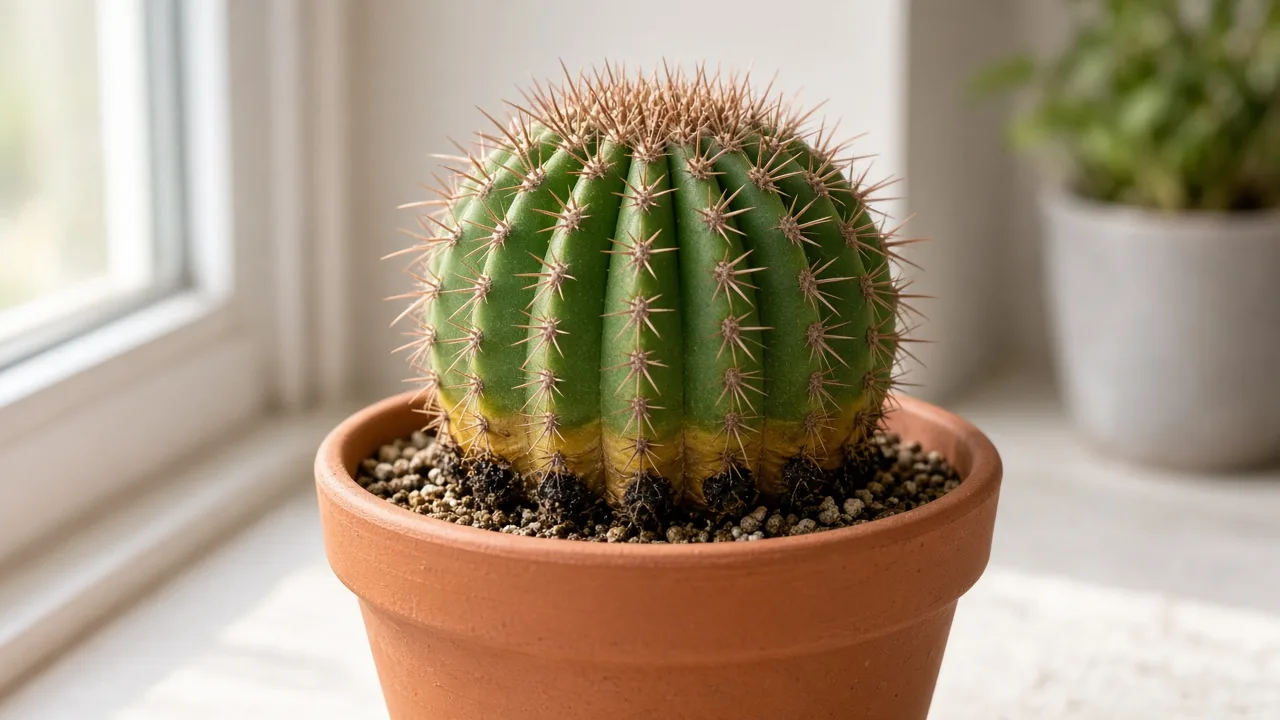
Root Rot on Barrel Cactus: Causes, Checks & Fixes
This guide covers root rot on Barrel Cactus. See also the general Root Rot guide, watering, and light pages for this plant.
Root Rot on Barrel Cactus: Causes, Checks & Fixes
Quick answer
Root rot on Ferocactus is a hidden base problem that climbs the ribbed stem from wet mix at the soil line. Barrel cactus has no leaves to yellow first—the diagnostic tissue is the lowest ribs, the root ball, and whether the pot still feels heavy weeks after watering. Overwatering or poor drainage can cause rot or brown mushy areas on the stems, and when mix stays saturated, roots lose oxygen and die.
For how chronic wet soil destroys roots in general, see our root rot guide. On barrel cactus, the pattern is a soft or squishy base on damp mineral mix, sour-smelling soil, mushy brown roots when unpotted, and black tissue climbing from the soil line—not slight rib contraction on a light dry pot.
First step: stop all watering and unpot with thick gloves the same day if the base feels soft, the mix smells sour, or the barrel wobbles in its pot. Do not add water, fertilizer, or fresh soil on top of a failing root zone.
When to use this page vs other Barrel Cactus guides
| Pattern | Read next |
|---|---|
| Heavy wet pot, yellow lower ribs, firm base | Overwatering — stop water before rot advances |
| Soft base + mushy roots (this page) | Stay here; escalate to crown salvage if rot climbs the ribs |
| Light dry pot, slight rib shrinkage, firm base | Underwatering |
| Yellow lowest ribs only, firm base, dry mix | Yellow leaves — often thirst or light stress |
| Whole barrel limp on wet soil | Wilting |
| Fungus gnats hovering at soil | Fungus gnats or mold on soil |
| Dark sunken spots on ribs, firm tissue | Black spots — touch-test soft vs hard |
What root rot looks like on Barrel Cactus
Unlike leafy houseplants, Ferocactus stores water in its thick ribbed stem and photosynthesizes through that surface. Root rot warning signs appear at the soil line and base ribs long before the upper barrel looks obviously sick.
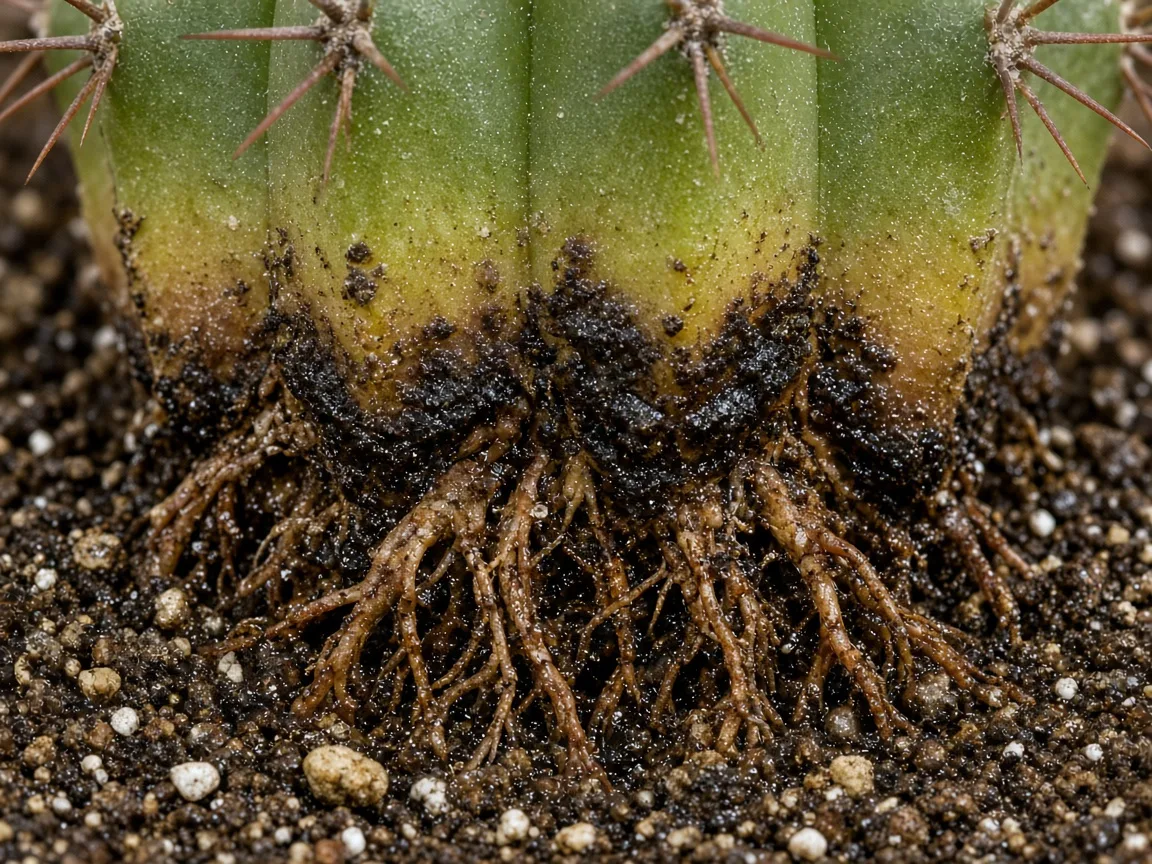
Advanced root rot at the soil line—brown mushy roots and soft black tissue where the ribbed stem meets damp mineral mix; upper ribs may still look plump.
Early signs
- Heavy pot days or weeks after the last watering
- Yellow or translucent lowest ribs at the soil line while upper ribs still look firm
- Soft base when pressed with a gloved finger between spines
- Sour or rotten smell when you disturb the mix surface
- Slowed or absent new spine growth at the crown while mix stays wet
- Fungus gnats or surface mold—chronically wet mix is their habitat; see mold on soil if patches spread
Advanced signs
- Mushy, sunken, or black tissue climbing from the soil line up the ribs
- Barrel wobbles in the pot because anchor roots have rotted away
- Wilt paradox—a deflated-looking barrel on wet soil because damaged roots cannot move water
- Roots brown, hollow, or crumbling when you unpot—Pythium rot often starts underground before crown damage is obvious
- Whole stem softening from the base upward—once the barrel wall feels squishy between ribs, salvage options narrow fast
A firm woody band at the base of an older plant is often harmless corking, not active rot. Root rot adds wet mix + soft yielding tissue + sour smell to that picture.
Rib squeeze vs corky base: the soil-line test
This plant-only check would mislead you on a snake plant or peace lily. On barrel cactus, the rib wall at the soil line is the primary diagnostic surface:
- Firm ribs + dry skewer + light pot — Rot is unlikely; see underwatering if ribs are slightly contracted.
- Firm upper ribs + yellow lower ribs + heavy wet pot — Root stress beginning; unpot before the base softens.
- Soft base + wet pot — Confirmed rot path; inspect and trim roots the same day.
- Hard dry brown band at base, firm tissue above — Often aging cork; see brown leaves if unsure.
- New spines at the crown — Recovery signal even if lower tissue stays scarred.
Always trust rib firmness at the soil line over how plump the upper barrel looks. A Ferocactus can appear full while the base is already failing.
Why Barrel Cactus gets root rot
Ferocactus is a slow-growing desert cactus that needs full sun and excellent drainage. Most root rot traces to chronic wet mix, not one accidental soak.
Calendar watering in cool rooms. Water the plant even less during dormant fall and winter seasons. A summer rhythm in a dim November room keeps roots wet while uptake has already dropped.
Oversized pots and peat-heavy mix. Extra soil volume around a small root ball holds moisture for weeks. Dense indoor mix in a glazed cachepot stays damp far longer than the mineral blend this species needs—see the soil guide.
Stem planted too deep. If the green barrel sits below the soil line, buried tissue stays wet and Pythium rot symptoms often begin at the soil level before you notice crown damage.
Poor drainage and standing saucer water. Heavy barrels in pots without drainage holes trap moisture exactly where rot starts first.
Wounds at the soil line. A spine break or repotting scrape at the base that stays wet can invite pathogens. Let injured tissue callus over and keep water off the area.
How to confirm root rot
Work through this checklist in order. Two or more matches on wet mix confirm rot before you repot.
- Lift the pot — Heavy days or weeks after watering means moisture is trapped.
- Press the lowest ribs with thick gloves — Soft, hollow, or yielding on damp mix is the primary red flag.
- Sniff the soil — Sour or rotten odor means unpot the same day.
- Tilt the barrel gently — Wobbling in the pot suggests anchor roots have failed.
- Push a dry skewer through full depth — Persistent damp center on a heavy pot supports chronic wet conditions.
- Unpot and inspect roots — Firm pale roots are healthy; brown mushy roots that crumble confirm rot.
If the base is still firm and the skewer is clean and dry, mild yellowing may be overwatering stress rather than advanced rot—start with a dry-down pause before unpotting.
First fix for Barrel Cactus
Stop all watering and unpot with thick gloves the same day if the base is soft, black tissue is climbing, the mix smells sour, or the barrel wobbles loose.
That single inspection tells you whether you are trimming roots or moving to crown salvage. Do not add water, fertilizer, or a top-dressing of dry grit to “dry out” a soggy core—the wet center needs air, not another layer of mix.
If the base is still firm after a skewer comes out clean and dry, you may pause unpotting and follow the overwatering dry-down for one to two weeks first.
Unpotting a spiny barrel safely
Ferocactus handling is about spine protection, not sap toxicity. Before you lift the plant:
- Wear thick leather gloves or wrap the barrel in several layers of newspaper folded into a collar.
- Tip the pot on its side and tap the rim—never pull by spines alone.
- Brush away wet mix from the root ball with a dry paintbrush or your gloved hands; do not blast roots with a hose indoors.
- Inspect the soil-line tissue where ribs meet mix—yellowing here is an early Pythium warning.
- Check stem depth — The green barrel should sit above the mix, not buried to the fleshy rib tissue.
Photograph firm vs mushy tissue before trimming so you can compare progress over the next weeks.
Step-by-step recovery
Mild cases (firm base, mushy outer roots only)
- Shake off wet mix and trim brown mushy roots with sterile shears. Leave firm pale roots intact.
- Let cut roots and any trimmed stem tissue air-dry 24–48 hours on newspaper in bright indirect light.
- Repot into dry fast-draining mineral mix in a smaller porous pot with drainage holes—see repotting. Keep the crown above the soil line.
- Wait two weeks before the first light soak at the pot edge per the watering guide.
Moderate cases (soft lower ribs, firm tissue above)
- Trim all mushy roots and cut back to firm white tissue inside the stem base if rot has entered the lowest ribs.
- Dust cuts with cinnamon or sulfur if desired; let wounds callus before returning to soil.
- Repot the callused plant in dry gritty mix. Terracotta pots are recommended because they are porous and remove excess moisture.
- Resume soak-and-dry only after the skewer is clean and dry through the full pot depth.
Severe cases (mushy base climbing the ribs)
- Identify the highest firm green tissue on the barrel.
- Cut above the rot with a sterile knife, dust cuts if desired, and lay the firm top to callus one to two weeks in bright shade.
- Re-root the callused crown in dry gritty mix per the propagation guide—salvage beats saving a collapsed base.
- Discard mushy lower sections; do not compost wet rot tissue indoors.
Once the stem becomes squishy across multiple ribs, the cactus is often past saving as a whole plant—crown salvage is the realistic path.
Recovery timeline
| Severity | What to expect |
|---|---|
| Mild (trimmed outer roots) | Callus 1–2 days; firm base within 2–4 weeks; new crown spines in 1–3 months |
| Moderate (base trimmed) | 6–10 weeks before confident new upper growth |
| Severe (crown salvage) | Callus 1–2 weeks; rooting 8–12 weeks; original base usually lost |
Judge success by firm rib tissue and new spines at the crown—not by old yellow ribs re-greening. Scarred lower tissue often stays discolored permanently.
Lookalike symptoms
| What you see | Likely cause |
|---|---|
| Slight rib shrinkage, light pot, dry skewer | Underwatering |
| Heavy wet pot, firm base, yellow soil line | Early overwatering — act before rot climbs |
| Tan patches on sun-facing rib only | Sunburn |
| Firm woody band at base of old plant | Harmless corking—brown leaves |
| Limp deflated barrel on wet soil | Advanced rot (this page) |
| Dark sunken spots on ribs, tissue still firm | Black spots |
Mistakes to avoid
- Waiting for upper ribs to soften before unpotting—rot starts at the base
- Watering because ribs look slightly shrunk on already-wet mix
- Fertilizing a stressed barrel before roots recover
- Repotting into a larger pot while soil is still soggy
- Planting the stem deeper after repot to stabilize spines—keep the crown dry and above mix
- Misting the soil surface repeatedly—extra moisture at the base worsens rot
- Assuming a plump upper barrel is healthy without checking the lowest ribs
Hold fertilizer until new crown growth looks normal for several weeks and the base stays firm.
How to prevent root rot next time
Match water to this plant’s biology, not a calendar.
Water deeply only after the soil mix dries out completely between waterings, then soak until drainage runs free and empty the saucer. In winter, follow sharp dry-down per the watering guide even if ribs look slightly dull.
Use fast-draining mineral cactus mix in a pot only slightly larger than the root ball. Keep the stem crown above the soil line at every repot.
Place the plant in full sun so photosynthesis matches your soak schedule and water uptake stays predictable.
Learn dry pot weight by lifting monthly. Scout the soil line whenever you consider watering—especially after repotting when stem depth is easy to get wrong.
When to worry
Mild yellow tissue at the soil line on a firm base after one overwatering event may respond to the overwatering dry-down. Escalate same-day when:
- The stem base feels squishy or hollow
- Black tissue climbs above the soil line within days
- The mix smells sour
- Multiple ribs soften across the lower body within a week
- The barrel wobbles loose in its pot
- No new crown spines appear after three months of corrected care
If rot has consumed the base, crown salvage through propagation is often more realistic than saving the original root ball.
Related Barrel Cactus guides
- Overview — culture and spine safety
- Watering — soak-and-dry rhythm after recovery
- Soil — mineral mix that dries fast
- Overwatering — catch wet mix before rot advances
- Underwatering — rib contraction on dry mix
- Repotting — stem depth and pot sizing after root trim
- Problems hub — full symptom index
Conclusion
Root rot on barrel cactus is a soil-line and root-ball problem disguised by a firm-looking upper barrel. Stop water, press the lowest ribs with gloves on, and unpot the same day if the base is soft or the mix smells sour. Firm tissue and fresh spines at the crown are the recovery signal; mushy lower ribs will not re-green, and crown salvage is the honest path when rot has climbed the stem.
Related tool
Use the Root Rot Risk Checker to narrow causes for root rot on this plant before changing multiple variables at once.