Wilting on Barrel Cactus: Wet vs Dry Pot Checks
Quick answer
Wilting on barrel cactus is a deflated or collapsing ribbed stem—lost internal water pressure—not limp leaves, because Ferocactus has no foliage. First step: lift the pot and press the lowest ribs above soil with thick gloves; a heavy wet pot with soft base tissue means stop watering immediately, while a feather-light dry pot with firm base ribs points to drought.
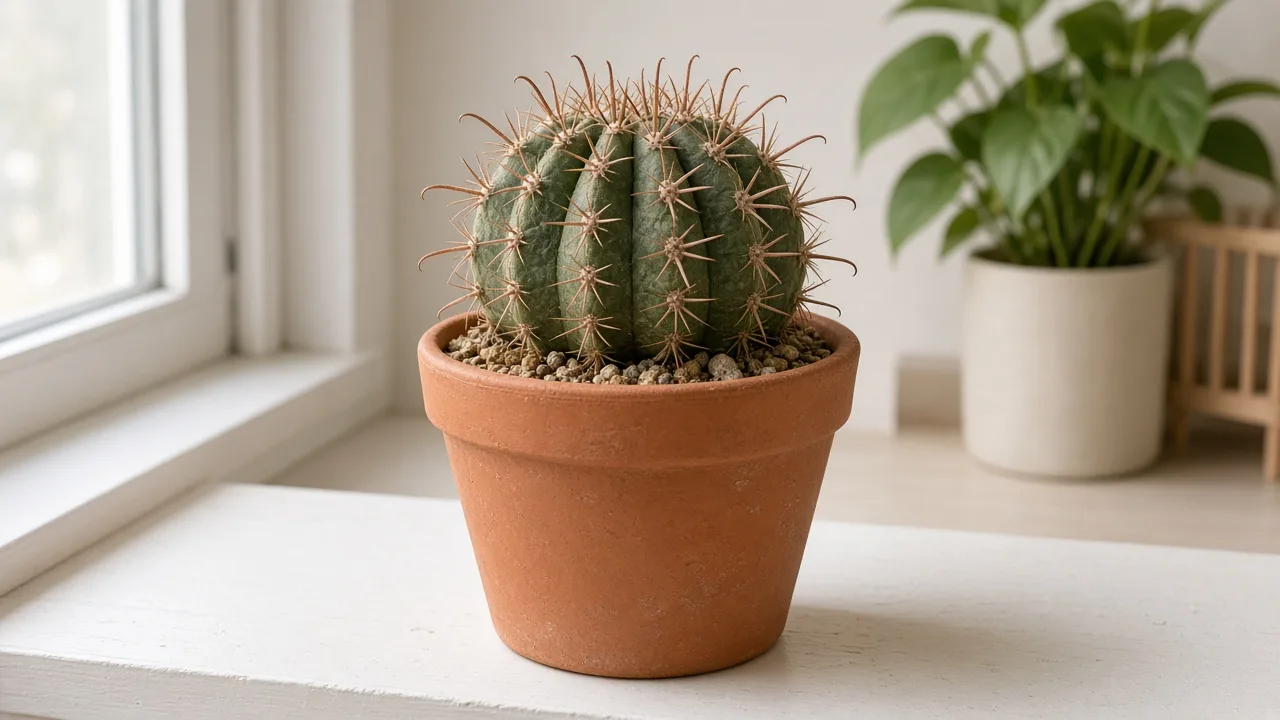
Wilting on Barrel Cactus: Causes, Checks & Fixes
This guide covers wilting on Barrel Cactus. See also the general Wilting guide, watering, and light pages for this plant.
Wilting on Barrel Cactus: Causes, Checks & Fixes
Quick answer
A healthy Ferocactus barrel stores water in its thick ribbed cylindrical stem and should feel firm between the spines. Wilting here means lost turgor—ribs look deflated, skin turns dull, or the whole barrel slumps—even though this plant has no leaves to hang limp.
For how wilting works when roots lose access to water or oxygen in general, see our wilting symptom hub. On barrel cactus, the emergency split is the wilt paradox: a deflated-looking barrel on heavy wet soil means failed roots, while a deflated barrel on a feather-light dry pot means drought.
First step: lift the pot and press the lowest ribs above the soil line with thick gloves on. Do not add water until you know which side of that split you are on.
When to use this page vs other Barrel Cactus guides
Wilting is the deflation and collapse entry—when the barrel looks shrunken, dull, or structurally defeated.
| Pattern | Read next |
|---|---|
| Deflated barrel on heavy wet soil, soft base | Stay here; escalate to overwatering or root rot |
| Deflated ribs on light dry pot, firm base | Underwatering after one careful soak |
| Barrel leans but ribs still feel firm | Drooping leaves — posture, not turgor loss |
| Yellow translucent tissue at soil line only | Overwatering |
| Long stretch toward dim window | Leggy growth or not enough light |
| Black mush climbing multiple ribs | Root rot — same-day protocol |
What wilting looks like on Barrel Cactus
Unlike a peace lily, Ferocactus does not drop leaf blades. Wilting shows up on the stem barrel itself:
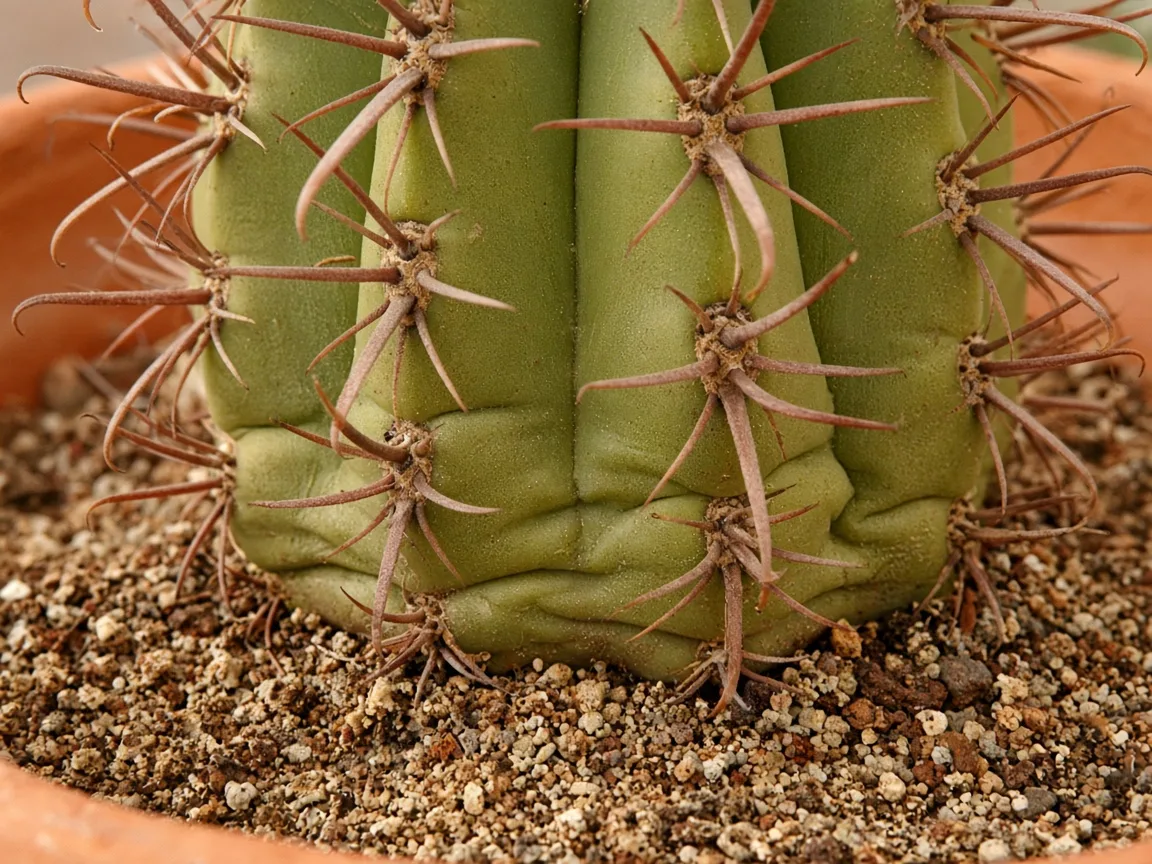
Deflated rib pleats and dull skin between spines—the stem stores water internally, so turgor loss reads on the ribs, not on leaves.
Early signs
- Ribs look flattened or sunken between spines while the crown still sits upright
- Dull, slightly wrinkled skin on the upper barrel—not the glossy firm look of a hydrated plant
- Pot feels noticeably lighter than usual after weeks without water
- Barrel tilts slightly when roots are still firm but internal stores are depleted
- No new spine growth at the crown during a long dry spell in a warm room
Advanced signs
- Whole barrel slumps sideways in the pot—roots can no longer anchor the mass
- Soft squishy tissue at the soil line while mix stays damp—the wilt paradox
- Yellow or translucent lower ribs climbing upward on wet mix
- Sour smell from the pot—soil too long without oxygen often smells rotten
- Upper barrel still looks round while the base collapses—classic failing roots on chronically wet mix
A slight rib pinch on a light dry pot with a firm base is stressful but usually reversible. A deflated barrel on heavy wet soil with a soft base is urgent.
The wilt paradox: wet soil vs dry soil
This section is barrel-cactus-specific and would mislead you on a fern or pothos.
| Pot signal | Base ribs | What wilting usually means | First move |
|---|---|---|---|
| Heavy, wet skewer | Soft or hollow | Root failure—roots cannot move water despite wet mix | Stop watering — see overwatering |
| Heavy, wet skewer | Still firm | Early root stress—act before base softens | Dry-down pause; press ribs daily |
| Light, dry skewer | Firm | Drought—stem depleted stored water | One deep soak when skewer confirms dry-through |
| Light, dry skewer | Soft | Advanced rot after long drought masking failure | Unpot same day — root rot |
Roots in waterlogged mix lose oxygen and die; the barrel deflates because uptake failed, not because the plant ran out of soil moisture. Adding water deepens the cycle.
On the dry side, Ferocactus tolerates drought by storing water in stem tissue. Ribs contract as reserves drop—Harvest to Table notes heavily ribbed stems that broaden with age—and the barrel looks wilted even though roots are still alive.
Never water a deflated barrel only because it looks thirsty. Read pot weight first.
Crown-firm vs base-soft collapse
Desert barrels fail from the soil line upward, not from the tip down. This crown/base split is the fastest severity read on a spine-covered stem:
- Firm base + deflated upper ribs + light pot — Drought stress. Roots work; reserves ran low. One soak after full dry-down confirmation.
- Firm crown spines + soft lowest ribs + heavy pot — Root zone failing while upper tissue still holds shape briefly. Stop water immediately.
- Soft base climbing + dull crown — Advanced Pythium rot that starts underground before crown damage shows. Same-day unpotting or crown salvage.
- Whole barrel pancakes sideways — Mechanical collapse when anchoring roots are gone. Treat as root rot emergency.
Pythium rot symptoms often begin with yellowing at the soil line while the upper barrel still looks deceptively firm—exactly why owners water again and worsen the wilt paradox.
The skewer, weight, and rib-press triage
Barrel cactus in deep ceramic pots hide both drought and rot. Surface dust does not tell the story.
- Lift or tilt the pot — Learn your dry weight versus two days after a soak.
- Push a dry wooden skewer through the entire pot to the drainage hole. Damp, cool, or soil-stained means do not water.
- Press the lowest ribs above soil through a towel with thick gloves. Firm = follow skewer. Soft or hollow = stop water regardless of how deflated the upper barrel looks.
- Sniff the drainage hole — Sour odor means treat as confirmed rot; unpot the same day.
- Check crown height — Burying the fleshy stem too deep invites soil-line rot that mimics wilting after every watering.
Wear thick gloves—spines are the handling hazard on this plant, not sap toxicity.
Why Barrel Cactus wilts
Ferocactus is a slow-growing desert cactus that needs full sun and excellent drainage. Wilting usually traces to one of these mismatches:
Chronic overwatering and root death. Mix stays wet while owners see a deflated barrel and add more water. Overwatering or poor drainage can cause rot or brown mushy areas on the stems. Damaged roots cannot refill stem stores.
Winter watering on a resting plant. Water the plant even less during dormant fall and winter seasons. Cool rooms plus summer soak rhythm keep roots wet while uptake has stopped—deflation follows.
Extended drought in a warm bright window. Let soil dry between moderate waterings and avoid keeping soil wet. A barrel in direct sun can deplete internal stores faster than owners expect, especially in small pots.
Repot shock or root damage. Fresh trim wounds plus immediate soaking can stall uptake. The barrel deflates while mix looks appropriately dry.
Pythium and wet-soil pathogens. Moist conditions, stem burial, and contaminated tools can trigger internal soft rot from the roots upward—wilting is a late visible stage.
Mechanical tip-over after root loss. A heavy spined barrel in a lightweight plastic pot falls when anchoring roots rot away, even before upper ribs look severely discolored.
How to confirm the cause
Work through this checklist in order. Two or more matches on one side of the wilt paradox confirm the path before you change care.
- Weigh the pot — Heavy days after watering vs feather-light after drought.
- Skewer full depth — Wet core vs dusty dry through the mix.
- Press lowest ribs — Soft on wet mix = root failure; firm on dry mix = drought.
- Inspect soil line — Yellow translucent tissue on damp mix vs dull skin only on dry mix.
- Note season and room temperature — Cool winter plus recent watering favors wet-side wilt.
- Check for sour smell, gnats, or surface mold — Chronic wet mix; see fungus gnats or mold on soil.
First fix for Barrel Cactus
Lift the pot and press the lowest ribs with gloves on—do not water yet.
That single triage step splits wet-root failure from dry drought before you stack variables. If the pot is heavy and base ribs feel soft, stop all watering immediately and move to the overwatering dry-down protocol. If the pot is light, skewer reads dry through, and base ribs stay firm, one deep soak at the pot edge per the watering guide is the correct first move—not misting, not fertilizer, not repotting.
If the base is mushy, black, or smells sour, skip the wait—follow root rot unpotting steps the same day.
Step-by-step recovery
Dry-side wilt (firm base, light pot, dry skewer)
- Soak until drainage runs free, then empty the saucer completely.
- Wait until the skewer reads dry through the full pot depth before the next soak—let the soil mix dry out completely between waterings.
- Watch ribs re-expand over 3–10 days; new crown spines within 4–8 weeks on a slow Ferocactus.
- Increase light gradually if the barrel was etiolated—see light guide.
Wet-side wilt (heavy pot, soft base, damp skewer)
- Stop watering until skewer is clean and dry through the full depth.
- Improve airflow; terracotta pots are recommended because they are porous and remove excess moisture.
- If base softening advances, unpot with gloves, trim mushy roots, air-dry cuts 24–48 hours, repot into dry mineral mix per repotting.
- Resume soak-and-dry only when base ribs stay firm for two weeks.
Collapsed barrel (sideways slump, mushy base)
- Identify highest firm green tissue on the barrel.
- Cut above rot with a sterile knife, callus the top 1–2 weeks, re-root in dry gritty mix per propagation.
- Discard mushy lower sections; do not compost wet rot indoors.
Recovery timeline
| Severity | What to expect |
|---|---|
| Mild drought wilt (firm base) | Ribs re-plump in 3–10 days after one proper soak; crown spines in 1–3 months |
| Wet-root stress (firm base after dry-down) | 2–4 weeks for mix to dry; yellowing stops; new spines in 1–3 months |
| Moderate rot (trimmed roots) | 6–10 weeks before confident upper growth |
| Crown salvage | Callus 1–2 weeks; rooting 8–12 weeks; original base usually lost |
Judge success by firm rib tissue and new spines at the crown—not by old dull ribs re-glossing. Scarred lower tissue often stays discolored permanently.
Lookalike symptoms
| What you see | Likely cause |
|---|---|
| Slight rib pinch, light pot, firm base | Underwatering — drought, not collapse |
| Barrel leans toward window, firm ribs | Drooping leaves — posture/light, not wilt |
| Yellow lowest ribs on wet mix | Overwatering |
| Tan patches on sun-facing rib only | Sunburn |
| Firm woody band at base of old plant | Harmless corking — brown leaves |
| Dark sunken spots on ribs | Black spots — touch-test soft vs hard |
Mistakes to avoid
- Watering because the barrel looks deflated on already-wet mix—the classic wilt paradox trap
- Misting the soil or stem to “revive” a cactus—extra surface moisture worsens soil-line rot
- Fertilizing a stressed barrel before roots recover
- Repotting into a larger pot while mix is still soggy
- Moving immediately to blasting direct sun on damaged roots
- Assuming a plump upper barrel is healthy without checking the lowest ribs
- Catching a falling barrel bare-handed—fishhook spines cause mechanical injury
Hold fertilizer until new crown growth looks normal for several weeks and the base stays firm.
How to prevent wilting next time
Match water to this plant’s desert biology, not a calendar.
Water deeply only after the soil mix dries out completely between waterings, then soak until drainage runs free. In winter, follow sharp dry-down per the watering guide even if ribs look slightly dull—let Ferocactus rest in a cool place with minimal water during dormancy.
Use fast-draining mineral cactus mix in a pot only slightly larger than the root ball. Terracotta or porous pots help indoor barrels dry evenly.
Keep the plant in full sun so photosynthesis matches your soak schedule.
Learn dry pot weight by lifting monthly. Scout the soil line whenever you consider watering—especially after repotting when stem depth is easy to get wrong.
When to worry
Mild rib deflation on a firm base after a missed watering usually responds to one soak cycle. Escalate same-day when:
- The stem base feels squishy or hollow on wet mix
- Black tissue climbs above the soil line
- The mix smells sour
- The whole barrel collapses sideways within a week
- No new crown spines appear after three months of corrected care
If rot has consumed the base, crown salvage through propagation is often more realistic than saving the original root ball.
Related Barrel Cactus guides
- Overview — culture and spine safety
- Watering — soak-and-dry rhythm after recovery
- Soil — mineral mix that dries fast
- Overwatering — wet-side wilt and soil-line yellowing
- Root rot — mushy base and unpotting protocol
- Underwatering — rib contraction on dry mix
- Drooping leaves — lean and posture vs deflation
- Problems hub — full symptom index
Conclusion
Wilting on barrel cactus is a pot-weight and rib-firmness problem disguised by a spine-covered stem with no leaves. Lift the pot, press the lowest ribs with gloves on, and split wet-root failure from dry drought before the next soak. Firm tissue and fresh spines at the crown are the recovery signal; dull scarred lower ribs may never re-gloss, and that is normal once the root zone stabilizes.
Related tool
Use the Plant Watering Calculator to narrow causes for wilting on this plant before changing multiple variables at once.