Not Enough Light on Barrel Cactus: Rib & Lean Checks
Quick answer
Not enough light on Barrel Cactus shows as a pot leaning hard toward the brightest window, wider gaps between ribs than when you bought it, dull gray-green skin, weak new spines at the crown, and mineral soil that stays damp for weeks because the plant barely photosynthesizes. First step: move the pot to the brightest south or west window you can offer—or add a close full-spectrum grow lamp—before changing water, fertilizer, or pot size.
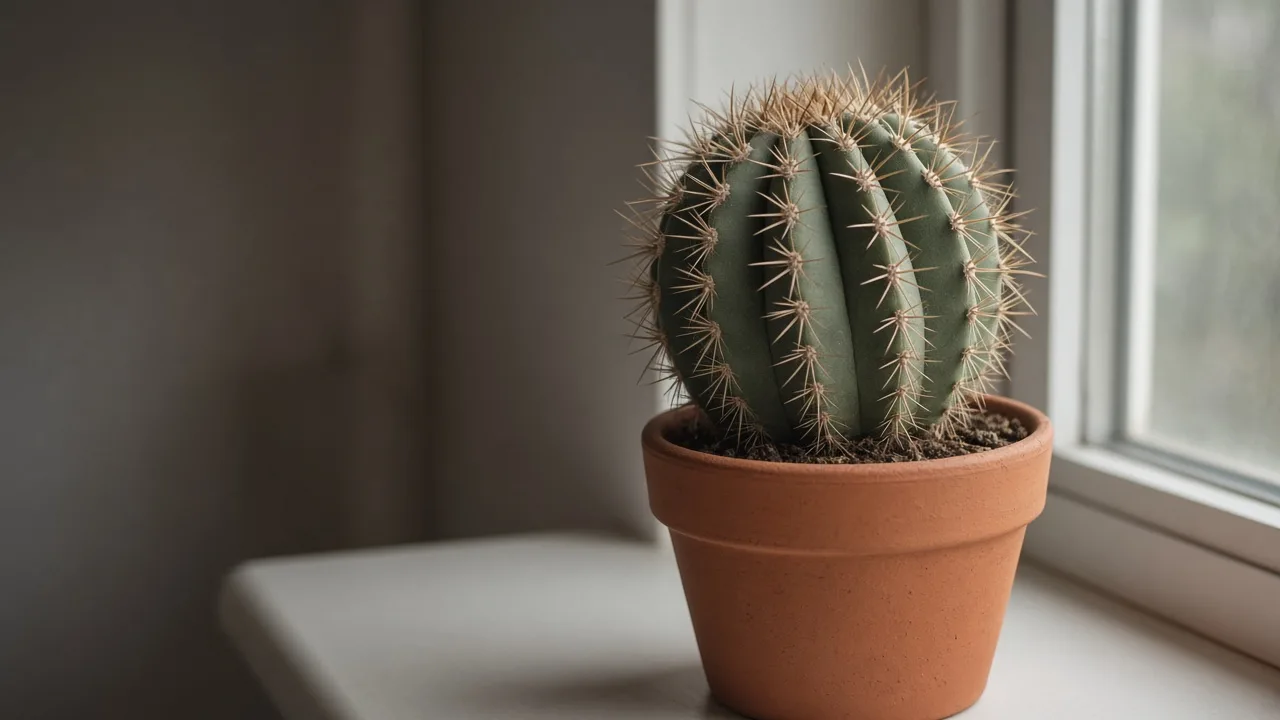
Not Enough Light on Barrel Cactus: Causes, Checks & Fixes
This guide covers not enough light on Barrel Cactus. See also the general Not Enough Light guide, watering, and light pages for this plant.
Not Enough Light on Barrel Cactus: Causes, Checks & Fixes
Quick answer
Ferocactus barrel cacti evolved in rocky Southwestern and Mexican deserts with plenty of sunshine—not on a bookshelf six feet from glass. NC State Extension notes these plants prefer full sun and that inadequate sunlight can limit flowering; indoors, the same photon deficit shows up long before bloom failure as lean, rib stretch, and soil that never dries on schedule.
For how chronic low light limits houseplant growth in general, see our not enough light hub. On Barrel Cactus, the decisive clues are a cylinder tilting toward one window, wider gaps between ribs than nursery stock, dull skin at the crown, weak new spine clusters, and gritty mix that stays damp for weeks because transpiration nearly stops.
First step: move the pot to the brightest direct-sun location you can offer today—typically an unshaded south or west windowsill, or within a few inches of a full-spectrum grow lamp running ten to fourteen hours daily. Window and acclimation detail lives in our light guide.
When to use this page vs other Barrel Cactus guides
This page is the symptom-first entry for shade-stressed Ferocactus—leaning ribs, stalled crown growth, wet mix in dim rooms, and confusion about whether the plant is “just slow.”
| Pattern | Read next |
|---|---|
| Long bare stretch between ribs with tiny crown | Leggy growth |
| Washed gray-green without dramatic lean | Pale leaves |
| Yellow base on heavy wet pot | Overwatering or root rot |
| No size gain but light seems adequate | Slow growth — often normal for Ferocactus |
| Bleached patches after a sudden window move | Sunburn |
| Placement, acclimation, grow lights | Light guide |
| Water schedule after a brighter move | Watering guide |
| Full problem index | All Barrel Cactus problems |
What not enough light looks like on Barrel Cactus
Healthy indoor Ferocactus holds a firm ribbed barrel: vertical ribs evenly spaced, skin color stable from crown to base, and the pot upright without a permanent lean. Shade stress on this slow desert species hides behind the spines longer than on leafy houseplants—the plant can look “fine” from across the room while ribs are already stretching.
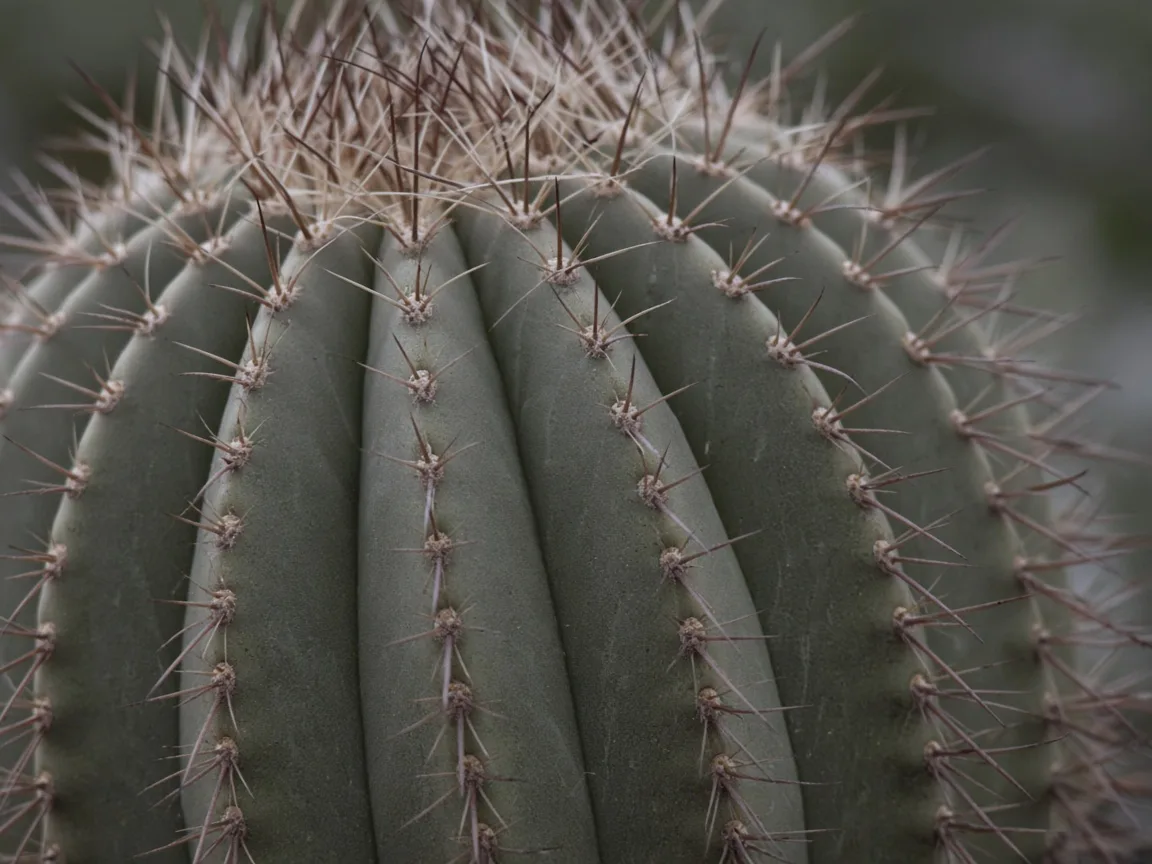
Wider rib valleys and a slight lean toward the brightest gap—compare this crown tissue with the tight rib lattice Ferocactus keeps in direct sun.
Typical signs on this species:
- Pot leans toward one window — The whole cylinder tracks the brightest gap; in habitat, fishhook barrel cacti even lean toward the southwest; indoors, the lean points at your glass
- Rib gaps widen — Valleys between ribs deepen and spacing opens compared to nursery photos; etiolation on a cactus reads as architecture change, not long petioles
- Dull gray-green or flat blue skin — Desert pigments fade when photosynthesis runs short; firm tissue can still look unhealthy before any soft rot appears
- Weak new spines at the crown — Areoles produce thinner, shorter spines in shade; the crown looks sparse while lower ribs still carry old armor
- Mix stays damp for weeks — Dim light cuts transpiration; owners who keep a summer watering rhythm in a dark corner often trigger yellow base tissue and hidden rot
- No crown flowers for years indoors — NC State links inadequate sunlight to poor flowering; chronic shade indoors usually means no bloom long before the plant looks “sick”
Barrel cacti require at least six hours of full sun daily to grow and thrive—a threshold most interior shelves never reach without supplemental lamps.
Rib-gap etiolation audit
The fastest Ferocactus-only diagnostic is not a lux number—it is how rib spacing behaves from crown to mid-body. Unlike trailing succulents where stretch hides in stem length, barrel cacti telegraph shade through their rib lattice.
| What you see on ribs | What it usually means | First adjustment |
|---|---|---|
| Even ribs, pot upright, firm skin | Adequate direct sun | Maintain placement; rotate monthly |
| Valleys slightly deeper on window side only | Directional light | Shift pot or remove window blocker |
| Gaps widened all around the cylinder | Chronic under-lighting | Move to direct sun or add grow lamp |
| Lean 10°+ with open rib spacing | Active shade seeking | Brighten before next water |
| Soft base with wide ribs | Rot, not light alone | Root rot checks first |
Wrap a string around the widest part of the barrel and note how many ribs fit in one hand span compared to when you bought the plant. Widening gaps confirm etiolation even when overall height barely changed—Ferocactus is slow growing by nature, so stretch can be subtle for months.
Crown spine flush vs winter pause
Ferocactus does not shed leaves—it adds spines and rib tissue at the crown when conditions are right. In good light through warm months, you should see fresh areole activity: new spine clusters, slightly tighter rib packing, and skin that looks saturated rather than chalky. In chronic shade, the crown goes quiet while the body still looks armored from last year’s growth.
| Crown pattern | Light status | What to do |
|---|---|---|
| New spines each warm season; ribs tight | Healthy | Maintain light guide placement |
| No crown activity for two warm seasons | Under-lit | Move to direct sun within days |
| Lean increases; crown still has old spines only | Light deficit | Brighten first; do not repot or feed |
| Zero growth, firm body, cool dry winter | Normal rest | Hold dry winter care per overview |
| Soft crown, sour mix | Root failure | Unpot and inspect—not a light fix alone |
Do not confuse species slowness with health. A fishhook barrel may add only millimeters of girth per year in perfect sun—but it should still look compact, not like a ribbed column stretching toward a lamp.
Why Barrel Cactus gets not enough light
Ferocactus is not a low-light tolerant desk plant despite surviving months in shade. The genus name combines Latin ferox (“fierce”) with cactus—built for open desert, not filtered interior corners. When photons run short, the stem allocates energy toward reach and survival rather than the tight barrel shape collectors expect.
Barrel Cactus-specific triggers:
- Misreading “cactus = any bright room.” Human eyes adapt quickly; a hallway that feels bright may sit in the 100–500 foot-candle medium band where Ferocactus survives but does not thrive
- North or shaded east windows without direct sun — Medium light keeps leafy plants alive; desert barrels lean and stretch
- Winter daylight drop without grow lights — Ferocactus benefits from grow lights when natural sun is limited; short days plus an interior shelf land far below the six-hour full-sun baseline
- One-sided window light — Ribbed cylinders develop permanent lean; occasional rotation helps only after total brightness is adequate
- Overwatering in shade — Less light means less water use; a heavy pot on a weekly pour schedule in a dim corner overlaps overwatering and shade stress
- Buying compact nursery stock — Greenhouse Ferocactus grown under high light looks tight; stretch often appears four to eight weeks after a move to a coffee-table spot
Wet grit in dim rooms: the Ferocactus light–water trap
Desert barrels in dark rooms follow a predictable failure loop: less light → slower photosynthesis → slower water uptake → mineral mix stays damp → roots suffocate → soft base.
Ferocactus owners often water when the top quarter inch of mix dries—sound advice in a south window. After the same plant moves to a dim corner, that surface may take three to four weeks to dry while the base sits in stale moisture. NC State warns that overwatering or poor drainage causes rot—and dim plants use far less water than bright ones.
Ferocactus-only check: lift the pot or run a dry skewer through the entire depth. If you are still on a calendar schedule but the container feels heavy day fourteen while ribs lean toward the window, assume light dropped before you assume the plant “needs” more water. Fix placement first; then wait until the skewer reads dry throughout before the next soak.
Lookalike symptoms
| What you see | Likely cause | How to tell apart |
|---|---|---|
| Ribs lean; gaps widen; pot heavy | Low light + slow uptake | Firm base; sour smell absent; brightens after move |
| Ribs pinch inward; skin dull but pot light | Underwatering | Long drought; ribs contract rather than stretch open |
| Yellow translucent base; sour mix | Overwatering / rot | Soft tissue; may occur in dim or bright rooms |
| Bleached white patches on sun-facing ribs | Sunburn | Follows sudden move to harsh afternoon glass |
| No visible change for a year | Normal slow growth | Ribs stay tight; no lean; pot dries predictably |
First fix for Barrel Cactus
Move the pot to the brightest direct-sun location available—south or west glass indoors, or within six to twelve inches of a full-spectrum grow lamp—and leave everything else unchanged for two weeks.
Do not repot, fertilize, or increase watering on day one. Ferocactus needs time to resume normal transpiration in brighter light before you adjust the watering rhythm. If the plant came from deep shade, acclimate over seven to fourteen days: start with morning sun or sheer-filtered west light, then increase exposure per the light guide to avoid sunburn.
This single step addresses both shade etiolation and the damp-mix trap—brighter light dries the pot on a desert schedule again.
Step-by-step recovery
After the move, work through these steps based on what you find:
If ribs are firm and mix is merely slow to dry:
- Rotate the pot a quarter turn weekly once light is adequate on all sides.
- Resume watering only when a skewer through the entire pot reads dry—often less often than before the move.
- Watch the crown for new spine clusters over the next warm season; tighter rib spacing confirms recovery.
If lean is extreme but tissue is firm:
- Brighten first; do not straighten the plant mechanically—spines make handling risky.
- Accept that lower ribs may keep their stretch; new compact growth appears at the crown.
- Consider a heavier clay pot if lean risks tipping; see soil guide for mineral mix in porous containers.
If base softens while pot stays heavy:
Stop light fixes alone and treat as potential rot. Unpot, trim decay, air-dry cuts, and repot in fresh gritty mix before watering again. Shade was likely one variable in a wet-root failure—follow the root rot guide.
Recovery vignette: desk Ferocactus in a north office
A four-inch fishhook barrel in a north-facing cubicle developed a fifteen-degree lean toward a frosted window, rib valleys visibly wider than at purchase, and mix that stayed damp twenty-one days after a small winter drink. Base tissue remained firm; no sour smell. The grower moved the pot to an unshaded west windowsill over ten days of gradual exposure, then withheld water until a skewer read dry throughout. Lean stopped increasing within three weeks; new spine tufts appeared at the crown the following June. Total visible improvement: one warm season—not overnight, matching Ferocactus pace.
Mistakes to avoid
- Watering more because the plant “looks thirsty” in shade — Dim barrels use less water; extra drinks keep grit wet and invite rot.
- Fertilizing a stretched plant before fixing light — NC State recommends cactus fertilizer only in the growing season; feed cannot replace photons.
- Jumping from deep shade to harsh afternoon sun in one day — Acclimate to prevent sunburn on ribs that thinned in shade.
- Repotting into a larger container on day one — Extra soil volume holds moisture around shallow roots; fix light and watering first.
- Assuming lean is normal because cacti “grow toward sun” — Slight orientation is expected; permanent tilt with open ribs is shade stress, not character.
- Confusing winter rest with chronic shade — Cool dry winter with firm body and no water is normal; lean plus wet mix in a warm dim room is not.
Recovery timeline
Barrel cactus recovery is measured in seasons, not days. After adequate light returns, expect:
- Two to four weeks: Pot weight drops on schedule; lean stops worsening
- One warm season: New crown spines and tighter rib packing on fresh areoles
- One to two years: Visible overall compactness improves; old stretched ribs may remain as scars
Judge success by crown activity and dry-down rhythm, not by forcing a leaned cylinder upright. Existing elongated rib tissue rarely returns to nursery tightness.
How to prevent it next time
Place Ferocactus where direct sunlight exceeds four hours daily at the plant—typically unshaded south or west glass, or a grow lamp timed through short winter days. Re-check after outdoor tree leaf-out, building shade, or moving the pot for décor.
Pair bright light with desert watering: soak only when the entire pot is dry, use mineral-dominated mix, and keep winter rest dry in cool rooms per the overview hub. Light and dry intervals work together; neither alone matches Ferocactus biology.
Related Barrel Cactus guides
Keep the care system simple: direct sun, full dry-down, gritty soil, rare feed. When shade stress appears, brighten first, then adjust water—not the reverse.
- Light guide — window choice, acclimation, grow lamps
- Watering guide — skewer dry-down after a brighter move
- Leggy growth — when stretch is the main visible symptom
- Overwatering — when damp mix and soft base dominate
- Overview — species pace, winter rest, spine safety
Related tool
Use the Plant Problem Diagnosis Tool to narrow causes for not enough light on this plant before changing multiple variables at once.