Slow Growth on Barrel Cactus: Normal Pace vs Stalled
Quick answer
Slow growth on Barrel Cactus is often normal—Ferocactus is tagged slow-growing and may add only millimeters of rib girth per warm season indoors. Worry when the crown stays silent through two warm growing seasons, ribs stretch or lean, mix stays damp for weeks, or the base softens. First step: run a crown areole audit and pot dry-down check before repotting, feeding, or watering more.
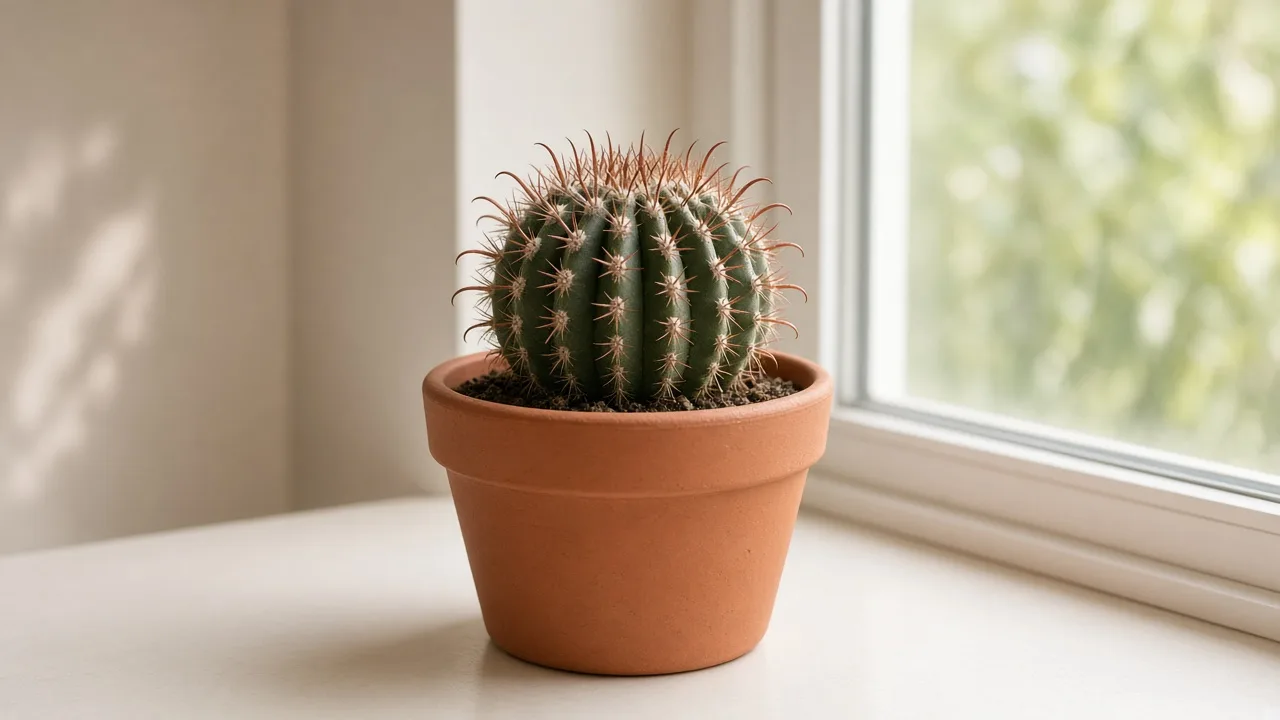
Slow Growth on Barrel Cactus: Causes, Checks & Fixes
This guide covers slow growth on Barrel Cactus. See also the general Slow Growth guide, watering, and light pages for this plant.
Slow Growth on Barrel Cactus: Causes, Checks & Fixes
Quick answer
Ferocactus barrel cacti are slow growing by nature—a four-inch fishhook barrel on a windowsill may look nearly identical twelve months later while still perfectly healthy. NC State Extension lists a slow growth rate for the genus, and fishhook barrel cacti are described as stout and slow-growing even in habitat where they live decades.
For how chronic stagnation works across houseplants in general, see our slow growth hub. On Barrel Cactus, the decisive question is whether the crown is active through warm months—not whether the pot looks unchanged on a shelf.
First step: run a crown areole audit and full-pot dry-down check before repotting, fertilizing, or watering more. If fresh spine clusters appear each warm season, ribs stay tight, and a skewer reads dry throughout between soaks, your plant is likely on normal Ferocactus time. If the crown stays silent through two warm seasons while mix stays damp or ribs lean, fix light and watering first per our light guide and watering guide.
When to use this page vs other Barrel Cactus guides
This page is the pace-and-vigor entry for Ferocactus—owners who wonder why their barrel “never grows,” whether winter silence is normal, or when slowness signals a real bottleneck.
| Pattern | Read next |
|---|---|
| Ribs lean; gaps widen toward a window | Not enough light |
| Long bare stretch between ribs with tiny crown | Leggy growth |
| Yellow translucent base on heavy wet pot | Overwatering or root rot |
| Ribs pinch inward; pot very light after long drought | Underwatering |
| Pale washed skin without dramatic lean | Pale leaves |
| No crown activity two warm seasons in good sun | Nitrogen deficiency after light and roots check clean |
| Placement, acclimation, grow lights | Light guide |
| Full problem index | All Barrel Cactus problems |
What slow growth looks like on Barrel Cactus
Healthy indoor Ferocactus holds a firm ribbed barrel: vertical ribs evenly spaced, skin color stable, and the pot upright. On this desert species, “slow growth” is often invisible day to day—you measure progress in crown spines and rib girth, not new leaves.
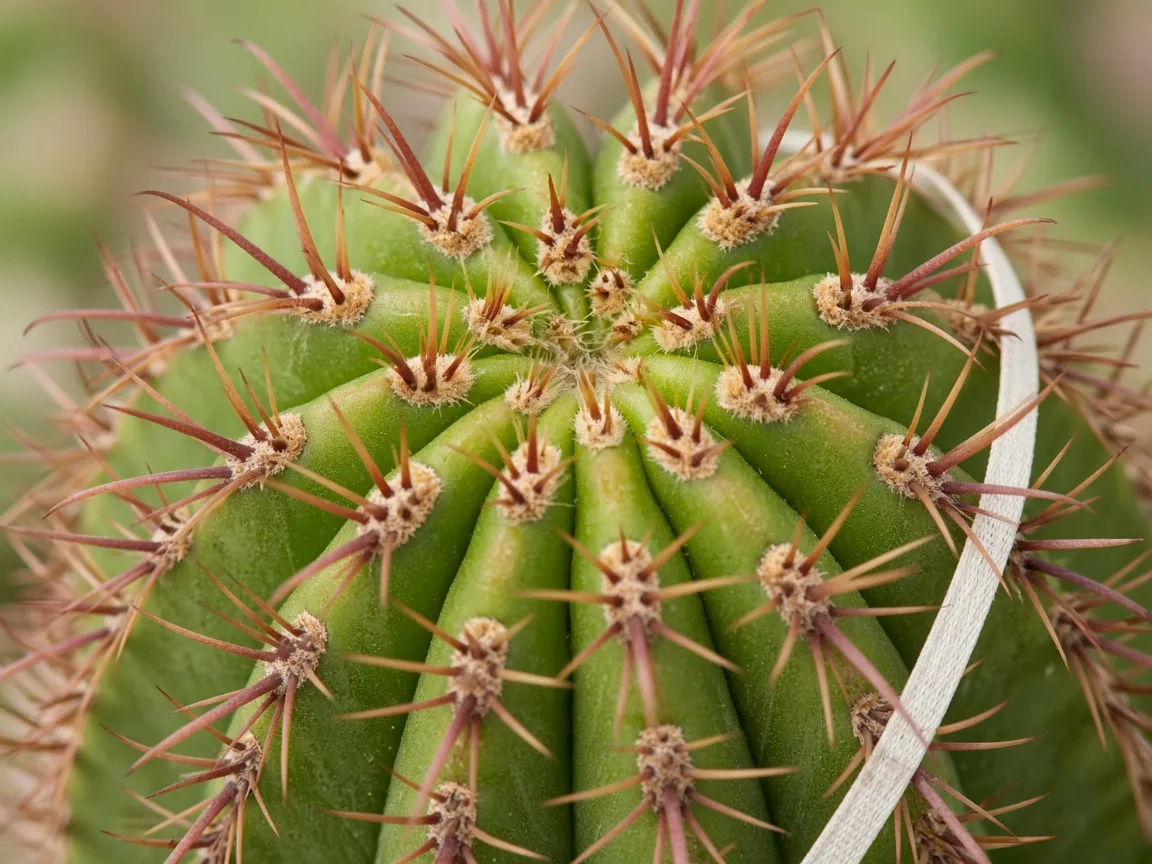
A quiet crown with tight even ribs—normal Ferocactus pace indoors. Compare crown flush year over year, not week over week.
Normal slowness (usually fine):
- Size barely changes year to year — Young indoor barrels may add only a few millimeters of girth per warm season; fishhook barrels grow stout and slow even in good care
- Zero crown activity in cool dry winter — NC State recommends watering even less during dormant fall and winter; a firm body with no new spines from late fall through early spring is expected
- No flowers indoors for years — Inadequate sunlight or nutrients can prevent flowering; lack of bloom alone does not mean the plant is failing if ribs and base stay firm
- Pot dries predictably — Skewer reads dry throughout between soaks; weight drops on a desert schedule
Stalled growth (needs action):
- No crown spines through two consecutive warm seasons — Areoles at the apex stay static while lower ribs still carry old armor
- Ribs stretch or lean — Wider valleys or tilt toward glass overlap not enough light
- Mix stays damp three to four weeks — Dim light or overwatering stalls metabolism; heavy pots in warm rooms signal a light–water trap
- Base softens while crown is quiet — Overwatering or poor drainage causes rot; slowness here is a symptom, not the root cause
- Visible pest films at areoles — Mealybugs, spider mites, or scale can sap vigor before obvious damage spreads
Crown areole audit: the Ferocactus growth clock
Unlike leafy houseplants where you count new leaves, Ferocactus tells time at the crown. Growth means fresh spine clusters, slightly tighter rib packing, and saturated skin color at the apex—not dramatic height jumps.
| Crown pattern | Season | What it usually means |
|---|---|---|
| New spine tufts each warm season; ribs tight | Spring–summer | Healthy slow pace |
| Zero crown activity, firm body, cool dry winter | Fall–winter | Normal dormancy |
| Zero crown activity two warm seasons in a row | Spring–summer | Light, roots, or nutrition bottleneck |
| Lean increases; crown still has old spines only | Any warm month | Not enough light |
| Soft crown, sour mix | Any | Root rot—not a growth-rate issue alone |
Photograph the crown in June and again in August. If the second image shows no fresh areole activity and the pot sits in direct sun with proper dry-down, move to root and substrate checks—not more water.
Rib girth and millimeter expectations
Ferocactus does not unfurl leaves—it adds rib tissue and spines. Indoor owners often expect pothos-like jumps; desert barrels work on a different clock.
Wrap a string around the widest part of the barrel and mark the overlap with tape. Check again at the end of one warm season. On a young four-to-six-inch fishhook barrel in a south window, one to three centimeters of girth gain per year is realistic; a mature specimen may show no measurable change while the crown still flushes lightly.
Fishhook barrel cacti are slow-growing and long-lived in habitat—indoor specimens should be judged against millimeters and crown flush, not nursery marketing photos of greenhouse-grown stock that arrived after years of high light.
| Girth change in one warm season | Light and care context | Likely read |
|---|---|---|
| 1–3 cm on young plant in direct sun | Good dry-down; firm base | Healthy Ferocactus pace |
| 0 mm but crown spines renewed | Adequate sun; mature or small pot | Often normal |
| 0 mm, no crown spines, ribs open | Dim room or damp mix | Fix light and watering |
| Shrinkage; ribs pinch inward | Long drought | Underwatering |
Winter dormancy vs true stagnation
Barrel cactus biology includes a cool dry rest. Harvest to Table recommends letting Ferocactus rest in winter at cool temperatures around 50°F (10°C), watering just enough to keep soil from drying completely, and withholding fertilizer. Gardenia notes keeping the plant dry in winter during the non-growing months.
Ferocactus-only dormancy check:
| Signal | Winter rest (normal) | Stalled in warm season (problem) |
|---|---|---|
| Crown growth | None for months | None through two warm seasons |
| Pot weight | Light; skewer dry | Heavy; damp for weeks |
| Room temperature | Cool; optional dry rest | Warm; active season |
| Rib spacing | Even; no new lean | Widening gaps or lean |
| Base tissue | Firm | Soft or yellow |
Do not repot or feed a firm winter-dormant barrel in December because it “is not growing.” Resume audits when nights stay warm and you return to the watering rhythm for active months.
Why Barrel Cactus gets slow growth
Slowness on Ferocactus usually falls into normal species pace or one limiting bottleneck—rarely both at once.
Barrel Cactus-specific triggers:
- Expecting leafy-houseplant growth rates — NC State tags the genus as slow growing; a visually static pot can still be healthy
- Insufficient direct sun — Barrel cacti need at least six hours of full sun daily to thrive; medium interior light keeps plants alive but crown-quiet
- Winter treated like summer — Watering and feeding on a summer calendar through dormancy stalls roots; fertilize only during the growing season
- Mineral mix breakdown — Repot every two to three years so grit stays airy; compacted peat holds moisture and slows root function
- Root congestion in a small clay pot — My Garden Life suggests repotting every two years when roots demand; tight roots in old media limit uptake without obvious wilting
- Chronic damp grit in dim rooms — Less photosynthesis means less water use; wet mix in shade overlaps overwatering and looks like “the plant stopped growing”
- Cool room through the warm season — Metabolism stays low even when light is adequate; barrels need warmth during active months
Lookalike symptoms
| What you see | Likely cause | How to tell apart |
|---|---|---|
| Firm body; no size change; tight ribs; dry pot | Normal Ferocactus slowness | Crown may still flush lightly each summer |
| Lean; open rib gaps; heavy pot | Not enough light | Stretch toward brightest window |
| Yellow base; sour damp mix | Overwatering / rot | Soft tissue; any light level |
| Ribs pinch; pot very light | Underwatering | After long drought |
| Washed color; even ribs; adequate sun | Nitrogen deficiency | After two warm seasons with poor crown flush |
| Cottony tufts at areoles | Mealybugs | Sap loss slows growth before yellowing |
First fix for Barrel Cactus
Run a crown areole audit and full-pot dry-down check—then change nothing else for fourteen days.
- Photograph the crown and note rib spacing today.
- Push a dry skewer through the entire pot depth; record whether mix is dry, damp, or wet.
- Confirm the plant receives direct sun at the spine tips for at least part of each day, or sits within six to twelve inches of a grow lamp.
If the crown flushed last warm season, ribs are even, and the skewer dries fully between soaks, your barrel is likely on normal Ferocactus time—do not repot, feed, or water more on anxiety alone.
If the crown was silent through the last two warm seasons, ribs lean, or mix stays damp for weeks, move to the brightest direct-sun spot available per the light guide and withhold the next soak until the skewer reads dry throughout. That single placement correction addresses the most common indoor bottleneck before you touch pot size or fertilizer.
Step-by-step recovery
Work through these paths based on what the audit shows:
If growth is normal but expectations were high:
- Mark rib girth with string; recheck after one warm season.
- Maintain mineral-dominated mix in a porous clay pot.
- Feed once in late spring with cactus formula diluted to quarter strength—only during active growth.
If light was the limiter:
- Brighten first; acclimate over seven to fourteen days to avoid sunburn.
- Resume watering only when the full pot is dry—often less often than before.
- Watch for crown spine tufts the following warm season.
If roots and media are the limiter:
- Repot in spring into a pot only one size larger with fresh gritty mix.
- Let cuts callus; do not water for five to seven days after repot unless the old root ball was bone dry.
- Hold fertilizer until new crown activity appears.
If base softens:
Treat as rot, not slow growth. Follow the root rot guide before optimizing growth rate.
Recovery vignette: three-year “frozen” desk barrel
A five-inch fishhook barrel sat on a west-facing shelf six feet from glass. The owner saw no height gain in three years and considered a larger pot and monthly feed. Crown audit showed zero new spine clusters for two summers, ribs slightly open on the window side, and mix damp twenty-four days after a modest drink. Base remained firm. The grower moved the pot to the windowsill lip for direct afternoon sun, acclimated over ten days, and waited for full dry-down before the next soak. Crown spine tufts appeared the following July; girth gain measured eleven millimeters over that warm season—modest by pothos standards, healthy for Ferocactus.
Mistakes to avoid
- Repotting or feeding because the plant “looks small” — Oversized pots stay wet; fertilizer on a stressed crown burns tissue.
- Watering more to “wake it up” — Damp grit in dim light worsens stagnation; dry intervals match desert biology.
- Judging progress weekly — Ferocactus improvement shows across seasons; monthly photos of the crown beat daily worry.
- Skipping winter rest — Warm wet winter rooms prevent the dry pause roots expect.
- Ignoring pests because ribs look fine — Low-level spider mites at the crown sap vigor before obvious spotting.
Recovery timeline
Barrel cactus recovery is measured in warm seasons, not days:
- Two to four weeks after light correction: Pot dry-down returns to schedule; lean stops worsening
- One warm season: New crown spines or measurable rib girth gain
- Two to three warm seasons: Consistent compact growth rhythm established
Judge success by crown flush and firm ribs, not by forcing rapid height. Old stretched rib tissue from prior shade rarely returns to nursery tightness.
How to prevent it next time
Match Ferocactus biology on the overview hub: direct sun, mineral mix, full dry-down between soaks, and a cool dry winter rest. Repot on a three-to-four-year rhythm before grit compacts. Supplement with grow lights when winter sun is short.
Track crown photos each June—not pot diameter alone—so normal slowness never gets mistaken for neglect.
Related Barrel Cactus guides
Desert barrels reward patience: bright sun, dry roots, rare feed, cool winter.
- Light guide — direct sun and grow-lamp placement
- Watering guide — skewer dry-down through active and dormant months
- Not enough light — when lean and rib stretch dominate
- Soil guide — mineral mix and repot timing
- Overview — species pace, spine safety, winter rest
Related tool
Use the Why Is My Plant Dying Tool to narrow causes for slow growth on this plant before changing multiple variables at once.