Leggy Growth on Barrel Cactus: Light & Shape Fixes
Quick answer
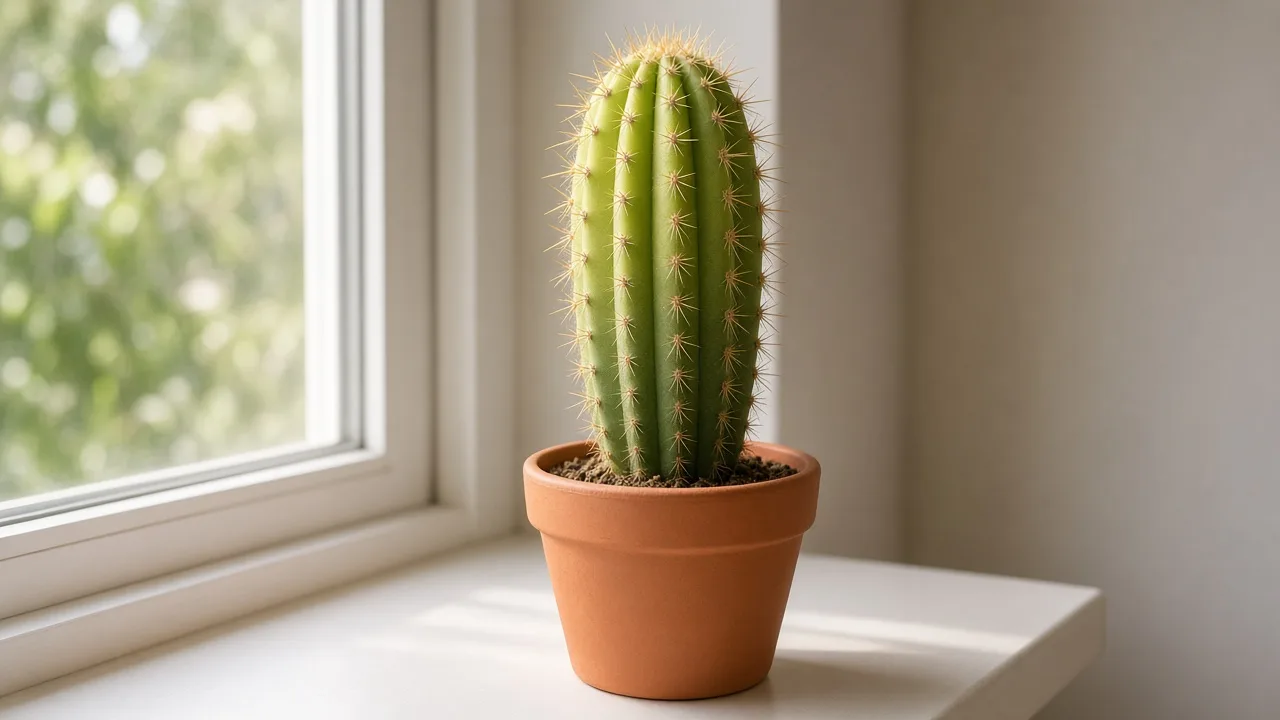
Leggy barrel cactus shows a tall narrow column instead of a compact ribbed barrel, wide gaps between ribs on new growth, pale skin, and a hard lean toward the brightest window. First step: move the pot to the brightest available spot and acclimate over seven to ten days, then rotate a quarter turn every week before repotting or feeding.
Leggy Growth on Barrel Cactus: Causes, Checks & Fixes
This guide covers leggy growth on Barrel Cactus. See also the general Leggy Growth guide, watering, and light pages for this plant.
Leggy Growth on Barrel Cactus: Causes, Checks & Fixes
Quick answer
Leggy growth on Ferocactus barrel cactus is etiolation expressed through a stretched ribbed column, not long vines or drooping leaves. The plant lengthens its tubular stem toward light, leaving wide gaps between ribs, paler skin, and often a hard lean toward one window while the base may still feel firm.
For how low light causes stretch in general, see our leggy growth hub. On barrel cactus, the telltales are a tall narrow cylinder where a compact barrel should sit, ribs spaced farther apart on the top third, weak spine density on the newest crown, and a pot that dries slowly because the plant is using little water in shade.
First step: move the pot to the brightest available location and acclimate over seven to ten days, then rotate a quarter turn every week—before repotting, feeding, or cutting the apex.
When to use this page vs other Barrel Cactus guides
This page is the shape-and-stretch entry when the cactus is tall, pale, and leaning—not when color alone fades or roots fail.
| Pattern | Read next |
|---|---|
| Dim room but stretch not advanced yet | Not enough light |
| Very slow growth in bright sun | Slow growth |
| Washed-out green or yellow-green skin without obvious lean | Pale leaves |
| Soft base on wet mix | Overwatering or root rot |
| Scorched patches after a sudden sun move | Sunburn |
| Window placement and grow-light setup | Light guide |
| Long-term watering rhythm after light is fixed | Watering guide |
What leggy growth looks like on Barrel Cactus
Healthy barrel cactus builds a stout ribbed barrel or short column with evenly spaced ribs and firm spines. NC State Extension describes stout tubular stems that look like spiked ribbed barrels growing in full desert sun. Leggy etiolation breaks that silhouette:
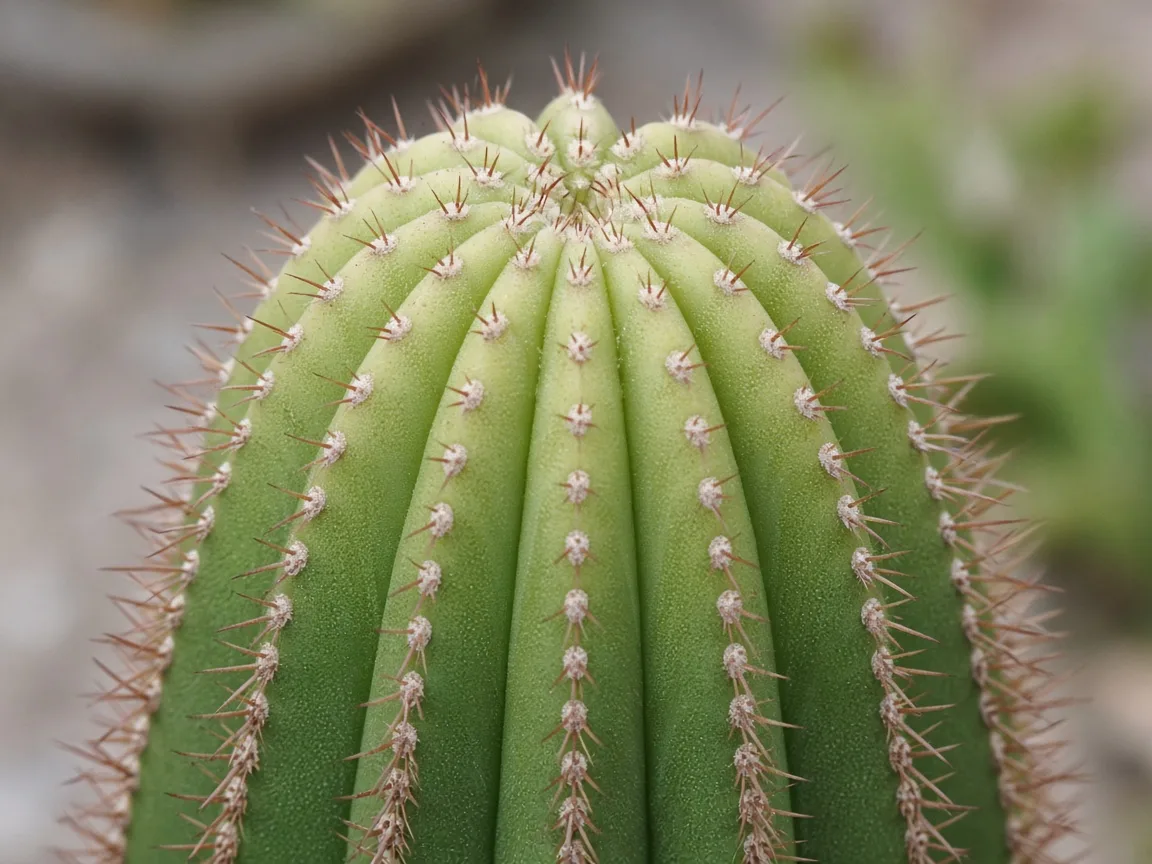
Wide gaps between upper ribs and paler crown tissue—compare stretched apex ribs with the tighter spacing on older lower tissue.
- Tall narrow column instead of a rounded barrel — The plant gains height faster than girth, especially on the top third
- Ribs spaced farther apart on newest growth — Each new rib ring sits higher above the last than on compact lower tissue
- Pale or yellow-green skin on the crown — Chlorophyll thins when light is insufficient; blue-green species look washed out
- Hard lean toward one window or grow light — The whole cylinder angles toward the brightest side
- Thin or sparse spines on stretched apex ribs — Energy goes to height, not spine bulk
- No crown flowers for years indoors — Inadequate sunlight can prevent flowering even when the plant survives
- Pot stays heavy longer after watering — Dim light slows water use; wet mix plus stretch is a common indoor combo
A firm dry base with seasonal very slow growth is normal for Ferocactus. A soft, translucent base on damp mix is not simple etiolation—see overwatering when the skewer test shows persistent wetness.
Rib spacing vs normal barrel shape: a plant-only check
Ferocactus stores water in its thick stem and grows extremely slowly in good conditions. That changes how you read a tall cactus:
- Even rib spacing top to bottom, firm skin, no lean — Often normal slow maturation; species like F. glaucescens stay globose for years before columnar.
- Widening rib gaps only on the upper crown plus window lean — Etiolation; light is the primary fix.
- Stretch on the shaded side only — Directional shade from a bookshelf or neighbor plant; rotate and improve exposure on the weak side.
- Tall pale column plus heavy wet pot — Dim light slowed water use; audit watering before feeding.
This rib-internode logic does not apply to leafy philodendrons or fern fronds—it is specific to ribbed desert cacti.
Why Barrel Cactus gets leggy growth
Barrel cactus is a slow-growing desert succulent that wants full sun and gritty, fast-draining mix. When photons fall short indoors, the stem lengthens toward the source—classic etiolation—while ribs spread and spines stay thin because energy goes to height, not the compact barrel shape desert light produces.
Plant-specific triggers:
- Dim office or hallway placement — Ferocactus is not a low-light desk plant; distant north windows produce pale stretched growth before owners notice the lean.
- One-sided window exposure — The crown points at the glass; ribs on the shaded side elongate more.
- Winter short days in the same spot — Cool rooms plus low light widen rib gaps; stretch from fall often shows by late winter.
- Store shade never acclimated to home sun — Plants held under nursery shade then placed in a dim room never develop the tight barrel form.
- Heavy nitrogen feed in low light — Soft elongated crown tissue on a dim plant; fix light before the fertilizer guide.
- Overwatering in dim corners — Wet mix on a plant using little water stresses roots while the stem still leans; confirm pot weight and base firmness.
These plants prefer full sun and need a well-drained cactus mix; dim, damp corners fight both requirements at once.
How to confirm the cause
Work through these checks in order:
- Light audit — At the pot on a clear day, does your hand cast a sharp dark shadow or only a faint blur? Barrel cactus wants more than ambient room glow—details in the light guide.
- Lean direction — Does the crown point at one window? Confirms phototropism, not random weakness.
- Rib gap comparison — Measure vertical distance between ribs on the newest crown vs mid-stem from last year. Widening gaps mean ongoing stretch.
- Skewer and base squeeze — Dry skewer through the pot and a gentle press at soil line: firm dry tissue supports light-first diagnosis; soft on wet mix needs overwatering steps in parallel.
- Spine density on apex — Sparse thin spines on stretched ribs vs sturdy hooks on compact lower ribs.
- New crown flush — After a week in brighter acclimated light, watch for tighter rib spacing on top growth—not old elongated ribs filling in.
Lookalike comparison
| What you see | Likely cause | How to tell apart |
|---|---|---|
| Tall narrow column leaning to window, firm base | Etiolation from low light | Improves rib spacing on new crown after brighter placement |
| Very slow growth, even ribs, good color | Normal Ferocactus pace | No lean; see slow growth |
| Pale skin without obvious height gain | Light stress early stage | Not enough light before ribs stretch |
| Soft base, yellow translucent tissue | Overwatering or rot | Sour smell, wet skewer; lean may be secondary |
| Bleached scorched patches after sudden sun | Sunburn | Happens after fast move to hot glass, not gradual stretch |
First fix for Barrel Cactus
Move the pot to the brightest available spot and acclimate over seven to ten days—then rotate a quarter turn every week.
That single change addresses most leggy cases on a firm stem:
- Shift gradually from a dark corner toward east, west, or filtered south glass; hot afternoon sun after shade can scorch ribs—see the light guide for acclimation steps.
- Add a full-spectrum grow light six to twelve inches above the crown if the only window is north-facing.
- Stop fertilizing until new crown ribs look normal for two weeks in the brighter spot.
- Do not repot on day one; a stretched column is rarely a root-volume problem.
Etiolated succulents grow stronger and more compact only at the tip once light improves; existing stretched ribs stay elongated. Early intervention prevents a top-heavy column that tips the pot.
Apex salvage when stretch is already extreme
Lower elongated ribs do not shorten when light improves. On severely stretched barrels, the rescue path is plant-specific:
- Wait until spring or early summer when active growth can push a compact new crown.
- Wear thick gloves — Ferocactus spines are rigid; keep the plant out of traffic paths.
- If the column is unstable — Stake temporarily or move to a heavier clay pot before the lean snaps the stem.
- Optional crown removal — On a firm rooted plant, a clean horizontal cut through the narrowest stretched section can restart a compact apex after callus; this is advanced rescue, not routine care. Seed propagation remains the standard long-term method for Ferocactus.
- Let cut surfaces dry before overhead watering; avoid stacking repot, cut, and feed the same week.
Brighter light must come before any cut, or the next crown will stretch again.
Recovery timeline and mistakes to avoid
Tighter rib spacing on new crown tissue often shows in three to six weeks in warm rooms with improved light—remember Ferocactus is slow growing even when healthy. Full visual balance after severe stretch may take one warm season as the apex thickens. Do not:
- Fertilize a stretched plant still in dim light
- Move instantly from shade to scorching south glass without acclimation
- Expect lower elongated ribs to regain barrel roundness
- Ignore a tipping pot until the stem snaps at a weak lean point
- Water on a calendar while light is low—see watering for dry-down checks
Signs you are winning: upright crown, deeper green or blue-green on new ribs, shorter gaps between new spines, and even growth after rotation. Signs to escalate: soft apex, mushy base on soggy mix, or collapse despite bright light—root checks before more changes.
How to prevent leggy growth next time
Match the overview routine: full sun, rare deep watering, mineral mix, and weekly rotation. Scout crown ribs monthly in fall when days shorten. Keep species tags—mature size varies widely across about thirty accepted Ferocactus species, but all want bright dry conditions indoors.
Related Barrel Cactus guides
Related tool
Use the Plant Problem Diagnosis Tool to narrow causes for leggy growth on this plant before changing multiple variables at once.
Conclusion
Leggy barrel cactus is almost always a light-and-rotation problem expressed as a tall narrow ribbed column leaning toward a window. Move to brighter exposure with gradual acclimation first, rotate weekly, then consider apex salvage only if old stretch cannot be lived with. Firm ribs and tighter new crown spacing tell you Ferocactus is recovering; soft wet bases need water correction before any cutting plan.