Pale Leaves on Barrel Cactus: Rib Color Checks
Quick answer
Pale leaves on Barrel Cactus show as washed-out, chalky, or yellow-green rib skin instead of the deep green, blue-green, or gray-green tone healthy Ferocactus keeps in full sun. First step: compare color on the crown areole ring to the lowest mature ribs and mid-body, then run a dry skewer through the pot and measure light at the spine tips before changing water or fertilizer.
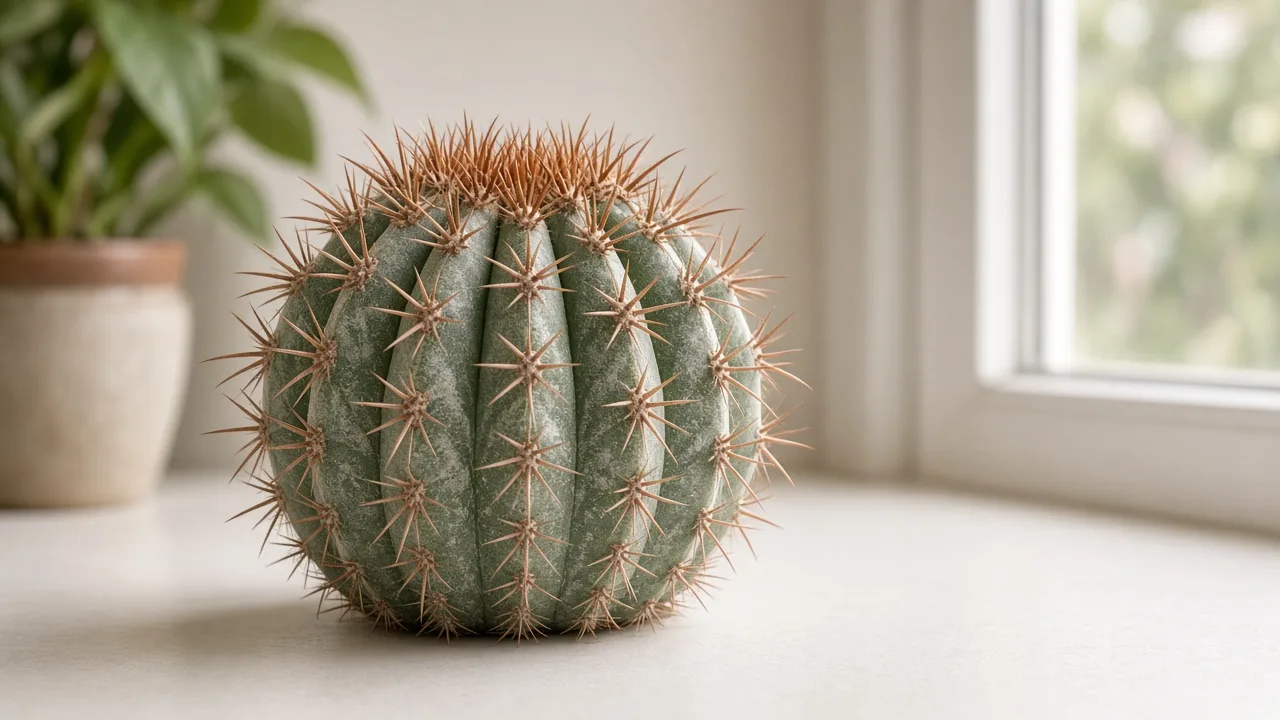
Pale Leaves on Barrel Cactus: Causes, Checks & Fixes
This guide covers pale leaves on Barrel Cactus. See also the general Pale Leaves guide, watering, and light pages for this plant.
Pale Leaves on Barrel Cactus: Causes, Checks & Fixes
Quick answer
Pale leaves on Barrel Cactus (Ferocactus spp.) look washed-out, chalky, or yellow-green rib skin instead of the saturated green, blue-green, or gray-green tone healthy barrels keep in desert sun. Ferocactus has no foliage blades—the symptom reads on rib tissue between spine rows, and where on the barrel the pale color sits tells you which branch to follow.
For general chlorosis mechanics, see our pale leaves guide. On Barrel Cactus, compare the crown areole ring to the lowest mature ribs and mid-body before you change anything.
First step: read that rib color ladder, then run a dry skewer through the pot and measure light at the spine tips. Uniform dull lower ribs, whole-body chalky wash in a dim room, rib pinch on a light pot, and yellow translucent base tissue on wet mix are four different problems—not one generic “pale” fix.
When to use this page vs other Barrel Cactus guides
| Pattern | Read next |
|---|---|
| Washed-out ribs without dramatic lean in a dim room | Pale leaves (this page) or not enough light |
| Pot leans hard; rib gaps widen | Not enough light or leggy growth |
| Uniform dull pale lower and mid ribs, stunted crown flushes | Nitrogen deficiency |
| Pale new crown tissue with greener veins | Iron deficiency |
| Yellow between veins on older rib tissue | Magnesium deficiency |
| Slight rib contraction, dull skin, light pot | Underwatering |
| Yellow translucent base on heavy wet pot | Overwatering or root rot |
| Bleached white patches after sudden sun move | Sunburn |
| Placement, acclimation, grow lights | Light guide |
What pale leaves look like on Barrel Cactus
Healthy Ferocactus carries well-defined ribs covered with sharp spines, with plump rib skin in deep green, blue-green, or gray-green tones depending on species. Pale stress breaks that pattern in recognizable ways on the rib lattice, not on leaves.
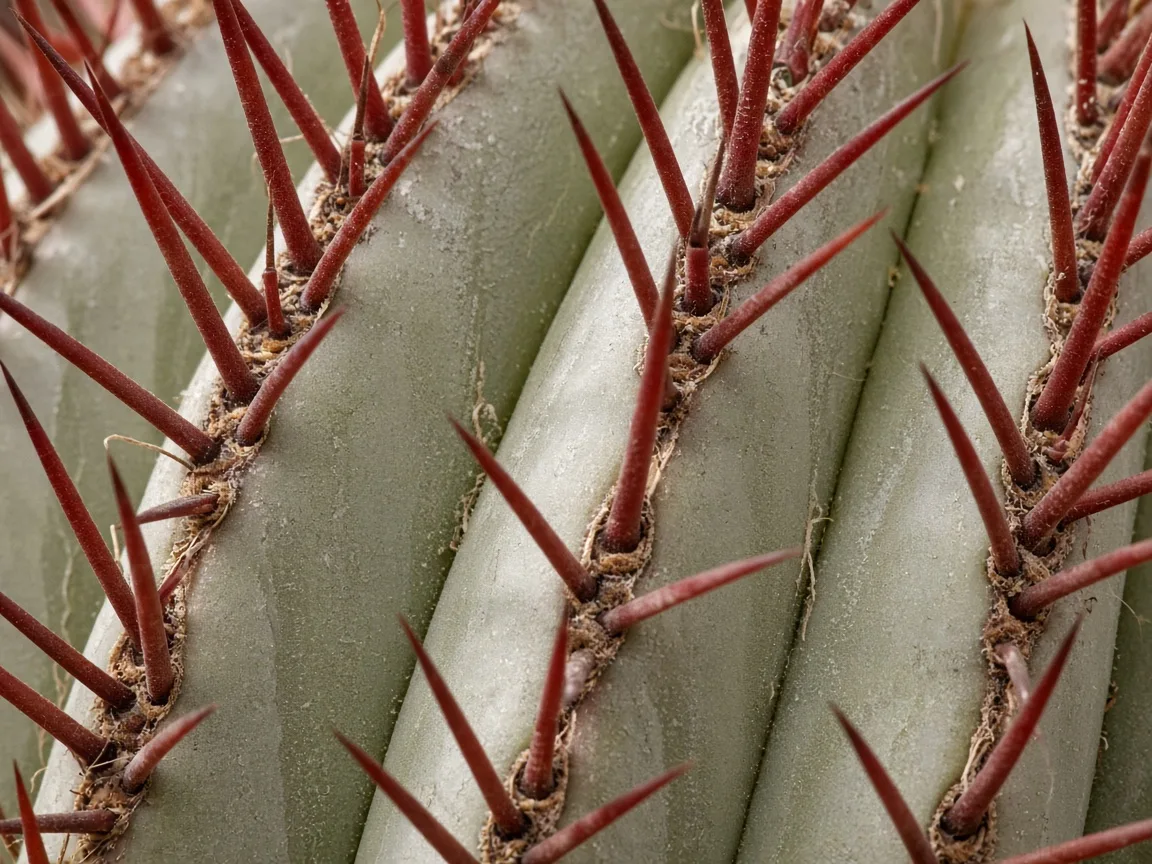
Chalky washed-out rib skin between spine rows—compare color with the crown areole ring and healthier lower rib tone before treating.
Typical pale patterns:
- Whole-body chalky wash — ribs fade to flat gray-green or olive across crown, mid-body, and base, often in a bright-looking but sunless room
- Lower and mid ribs only — uniform dull pale color confined to older rib tissue while the crown areole ring stays slightly greener
- Crown-specific pallor — newest areole tissue opens pale while lower ribs retain deeper color
- Drought dullness — skin loses saturation and ribs pinch slightly inward on a light pot after long dry intervals
- Wet-root fade — pale yellow-green lowers on mix that stays damp many days while crown growth stalls
- Species baseline confusion — blue barrel types (F. glaucescens) naturally run bluish; pale means loss of saturation, not absence of blue pigment
Not pale leaves:
- Deep green ribs with one naturally weathered lower rib from age—normal on slow desert barrels
- Bleached white or tan patches on sun-facing ribs after sudden harsh glass—see sunburn
- Black sunken patches at the base—rot or mechanical injury, not chlorosis
- No visible color change for a year in firm compact ribs—see slow growth
Rib-skin color ladder audit
The fastest Ferocactus-only diagnostic is how rib color behaves from crown to base. Unlike leafy houseplants where you compare one blade to another, barrel cacti telegraph chlorosis through skin tone on vertical ribs.
| Rib zone | Healthy in full sun | Pale from low light | Pale from nitrogen loss | Pale from wet roots |
|---|---|---|---|---|
| Crown areole ring | Saturated green or blue-green; new spines each warm season | Chalky; weak spine flush | Slightly greener than lower body early on | Pale crown on sour heavy pot |
| Mid-body ribs | Even plump color top to bottom | Uniform flat gray-green wash | Dull pale green-gray, thinner-looking ribs | Yellow-green wash climbing up |
| Lowest mature ribs | Match mid-body tone | Same chalky wash, pot upright | First zone to dull—uniform washout | Translucent yellow at soil line |
| Pot weight / skewer | Dry on desert schedule | Heavy; slow dry-down in dim room | Normal dry-down if roots healthy | Heavy; damp deep mix |
Photograph the barrel in consistent indoor light and compare with nursery stock photos for your species. A fishhook barrel (F. wislizeni) should read deep green-gray; a blue barrel should keep glaucous blue, not flat olive chalk.
Blue-green pigment fade vs species baseline
Several Ferocactus species carry natural glaucous blue or gray-green skin—F. glaucescens is literally named for it. Owners often panic when a blue barrel “turns green” after a brighter move, or when a green species looks “too gray” in shade. Pale-leaf stress is about loss of saturation and plumpness, not matching a photo from a different species.
Ferocactus-only checks:
- Compare crown to base on the same plant — species baseline is stable; stress creates a color ladder or sudden uniform wash
- Feel rib plumpness — healthy barrels have firm convex rib faces; pale nitrogen or drought stress often looks slightly sunken between spine rows
- Track the room, not the label — a blue barrel in a north cubicle chalks out within one season; moving to direct sun often deepens pigment again on new crown tissue
- Do not confuse sunburn — bleached white patches on the sun-facing rib are sunburn, not the olive-gray wash of shade chlorosis
Why Barrel Cactus gets pale leaves
Ferocactus evolved in rocky desert with plenty of sunshine and builds chlorophyll in rib tissue to fuel painfully slow growth. When light, water, or nutrients fall short, pigment production drops—and on a spine-covered barrel the symptom shows as dull rib skin long before the base looks obviously sick.
Barrel Cactus-specific causes:
- Insufficient direct sun — NC State notes Ferocactus prefers full sun and that inadequate sunlight can limit flowering; indoors, the same photon deficit fades rib color before ribs stretch dramatically. A hallway in the 100–500 foot-candle medium band keeps leafy plants alive while desert barrels chalk out.
- Nitrogen depletion — Nitrogen is mobile; deficiency shows first on older tissue as uniform pale yellow-green. On a leafless barrel that translates to dull lower and mid ribs while the crown may stay slightly greener—see nitrogen deficiency when washout is even and feed history is thin.
- Chronic underwatering — Long drought dulls rib skin and triggers slight rib contraction before obvious wrinkling. Pale here pairs with a light pot and dry skewer throughout, not heavy wet mix.
- Wet-root stress in dim rooms — Less light slows water uptake; mineral mix stays damp; roots struggle; lower ribs fade yellow-green. NC State warns overwatering causes rot—pale lowers on a heavy pot overlap overwatering more than simple shade.
- Winter rest misread as illness — Cool dry winter with firm body and no water is normal; chalky fade plus wet mix in a warm dim room is not.
Barrel cacti require at least six hours of full sun daily to grow and thrive—a threshold most interior shelves never reach without supplemental lamps per Succulent Alley Ferocactus guidance.
Wet grit in dim rooms: the pale-color trap
Desert barrels in dark corners follow a predictable loop: less light → slower photosynthesis → slower water uptake → mix stays damp → poor root uptake → pale yellow-green ribs.
Owners water when the top quarter inch of mix dries—sound advice in a south window. After the same plant moves to a dim shelf, that surface may take weeks to dry while the base sits in stale moisture. The barrel looks pale and sick while the real limiter is light plus wet roots.
Ferocactus-only check: lift the pot and run a dry skewer through the entire depth. If ribs are chalky, the container feels heavy day fourteen, and you are still on a calendar pour schedule, fix placement first per the light guide. Wait until the skewer reads dry throughout before the next soak.
Lookalike symptoms
| What you see | Likely cause | How to tell apart |
|---|---|---|
| Chalky gray-green ribs; pot upright; firm base | Low light | No rib stretch yet; brightens after move |
| Uniform dull pale lower ribs; years without feed | Nitrogen deficiency | Even washout; stunted crown flushes |
| Ribs pinch inward; pot light; long drought | Underwatering | Skewer dry throughout; no sour smell |
| Yellow translucent base; heavy pot | Overwatering / rot | Soft tissue; may occur in dim or bright rooms |
| Bleached white patches on sun-facing ribs | Sunburn | Follows sudden harsh afternoon glass |
| Rib gaps widen; pot leans | Not enough light | Architecture change, not color alone |
First fix for Barrel Cactus
Measure light at the spine tips, then move the pot to the brightest direct-sun location available if readings fall short—south or west glass indoors, or within six to twelve inches of a full-spectrum grow lamp—and leave water and fertilizer unchanged for two weeks.
Do not repot, feed, or increase watering on day one. Ferocactus needs time to resume normal transpiration in brighter light before you adjust the watering rhythm. If the plant came from deep shade, acclimate over seven to fourteen days per the light guide to avoid sunburn.
This single step addresses the most common indoor cause—shade chlorosis—and the damp-mix trap that keeps ribs looking pale even when you “care” for the plant.
If light is already strong (four or more hours of direct sun at the plant) and ribs are uniformly dull on lower tissue with thin feed history, switch to the nitrogen deficiency path: one measured quarter-strength complete cactus feed during active growth—not before confirming firm roots and dry-down rhythm.
Step-by-step recovery
After the light check and any move, work through these branches:
If ribs are firm and mix is merely slow to dry in a dim room:
- Brighten placement; rotate a quarter turn weekly once light is adequate on all sides.
- Resume watering only when a skewer through the entire pot reads dry—often less often than before.
- Watch the crown for richer color on the next areole flush over the warm season.
If uniform dull pale lowers dominate and light is adequate:
- Confirm the barrel has not been fed in two or more warm seasons in the same leached mineral mix.
- Apply one diluted complete cactus fertilizer during active growth per the fertilizer guide—not in cool winter rest.
- Judge recovery by plumper crown spines and greener new rib tissue, not old lower ribs re-greening.
If base softens while pot stays heavy:
Stop light and feed fixes alone and treat as potential rot. Unpot, trim decay, air-dry cuts, and repot in fresh gritty mix before watering again. Follow the root rot guide.
Recovery vignette: chalky desk barrel in medium light
A five-inch blue barrel in an east-facing office developed uniform chalky olive ribs across crown and mid-body, weak crown spine flush, and mix that stayed damp eighteen days after a modest winter drink. Base tissue remained firm; no lean yet. Lux at the spine tips measured under 400 foot-candles. The grower moved the pot to an unshaded west windowsill over ten days, withheld water until a skewer read dry throughout, and skipped feed that season. Crown color deepened on the next June flush; lower ribs kept their chalky cast but plumpness returned. Total visible improvement: one warm season—normal for Ferocactus pace.
Mistakes to avoid
- Feeding a pale barrel before fixing light — NC State recommends cactus fertilizer only in the growing season; nitrogen cannot replace photons in a dim room.
- Watering more because pale ribs “look thirsty” in shade — Dim barrels use less water; extra drinks keep grit wet and invite rot.
- Assuming all gray-green is unhealthy — Blue and fishhook species run naturally glaucous; compare saturation and plumpness on the same plant over time.
- Jumping from deep shade to harsh afternoon sun in one day — Acclimate to prevent sunburn on ribs that thinned in shade.
- Repotting into a larger container on day one — Extra soil volume holds moisture around shallow roots; fix light and watering first.
- Confusing pale with normal winter rest — Cool dry winter with firm body and no water is normal; chalky fade plus wet mix in a warm dim room is not.
Recovery timeline
Barrel cactus color recovery is measured in seasons, not days. After the correct fix:
- Two to four weeks: Pot weight drops on schedule; pale wash stops spreading
- One warm season: Richer crown color and plumper new rib tissue on fresh areoles
- One to two years: Overall saturation improves; old chalky lower ribs may remain as scars
Judge success by crown color on new flushes and stable dry-down rhythm, not by forcing old rib skin back to nursery tone. Existing washed-out rib tissue rarely returns to deep blue-green or saturated green.
How to prevent it next time
Place Ferocactus where direct sunlight exceeds four hours daily at the plant—typically unshaded south or west glass, or a grow lamp timed through short winter days. Re-check after outdoor tree leaf-out, furniture moves, or switching to shorter winter days.
Pair bright light with desert watering: soak only when the entire pot is dry, use mineral-dominated mix, and feed lightly once or twice in warm growth if the same mix has leached for years. Light, dry intervals, and occasional nitrogen replacement work together; none alone matches Ferocactus biology.
Related Barrel Cactus guides
Keep the care system simple: direct sun, full dry-down, gritty soil, rare feed. When pale ribs appear, read the color ladder, brighten or adjust water before you stack treatments.
- Light guide — window choice, acclimation, grow lamps
- Watering guide — skewer dry-down after a brighter move
- Not enough light — when lean and rib stretch dominate
- Nitrogen deficiency — when dull pale lowers fit feed history
- Overview — species pace, winter rest, spine safety
- All problems — full Ferocactus symptom index
Related tool
Use the Plant Problem Diagnosis Tool to narrow causes for pale leaves on this plant before changing multiple variables at once.