Drooping Leaves on Barrel Cactus: Rib & Pot Checks
Quick answer
Drooping leaves on Barrel Cactus usually means a leaning or slumping ribbed stem—not limp foliage, because Ferocactus has no leaves. First step: weigh the pot and push a dry skewer through the mix while pressing the lowest ribs above soil; a light dry pot with slightly pinched ribs points to thirst, a heavy wet pot with soft base tissue points to rot.
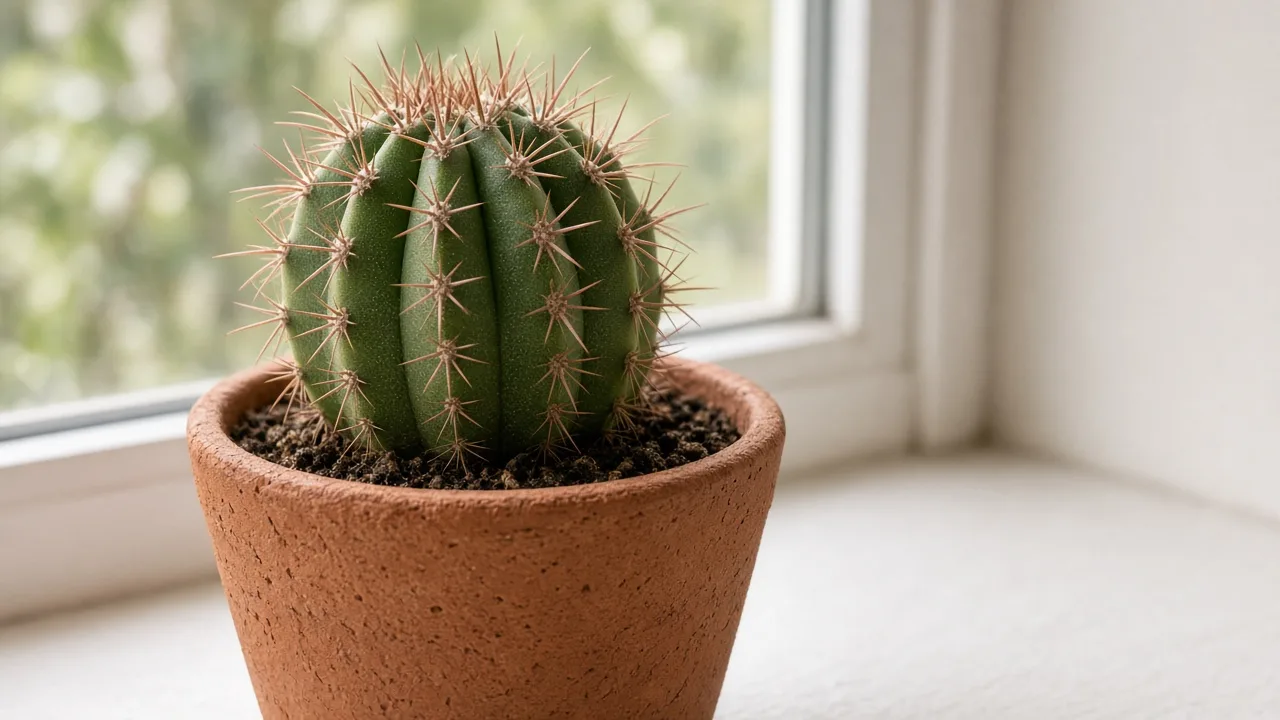
Drooping Leaves on Barrel Cactus: Causes, Checks & Fixes
This guide covers drooping leaves on Barrel Cactus. See also the general Drooping Leaves guide, watering, and light pages for this plant.
Drooping Leaves on Barrel Cactus: Causes, Checks & Fixes
Quick answer
Picture two windowsill scenes. In the first, the ribbed barrel tilts a few degrees toward the glass, ribs look slightly pinched like accordion pleats, and the pot feels feather-light—a dry skewer pulled from the drainage hole comes out dusty while the lowest ribs still feel firm. That is drought posture on a leafless desert stem, not “drooping leaves.” In the second, the barrel slumps sideways, the lowest ribs yield to gentle pressure through a towel, and the pot stays heavy days after watering—that is wet-root failure, and more water will make it worse.
Ferocactus stores water in a thick ribbed cylindrical stem covered with sharp curved spines—there are no blades to hang limp. For how turgor loss works on leafy houseplants in general, see our drooping leaves guide. On barrel cactus, translate “drooping leaves” to rib posture, base firmness, and pot weight before you soak, repot, or move the plant.
First step: weigh the pot and run a dry skewer through the mix to the bottom. Do not water until you know whether you are on the dry-thirst side or the wet-rot side.
When to use this page vs other Barrel Cactus guides
This page is the stem-posture entry when the barrel looks limp, leans, or ribs look sunken—even though the plant has no foliage.
| Pattern | Read next |
|---|---|
| Whole barrel collapses or base goes mushy on wet soil | Wilting or root rot |
| Heavy pot, sour damp mix, spreading brown tissue | Overwatering |
| Very light pot, dull skin, ribs pinched but base firm | Underwatering |
| Long stretch toward glass, pale thin growth | Leggy growth or not enough light |
| Yellow translucent lower tissue | Yellow leaves |
| Pot tips over in lightweight container | Stability section below + soil guide |
What drooping leaves look like on Barrel Cactus
Healthy indoor Ferocactus sits upright with plump ribs and a firm base above the soil line. When something goes wrong, owners still search “drooping leaves” because the whole plant looks deflated. On this species, watch these patterns instead:
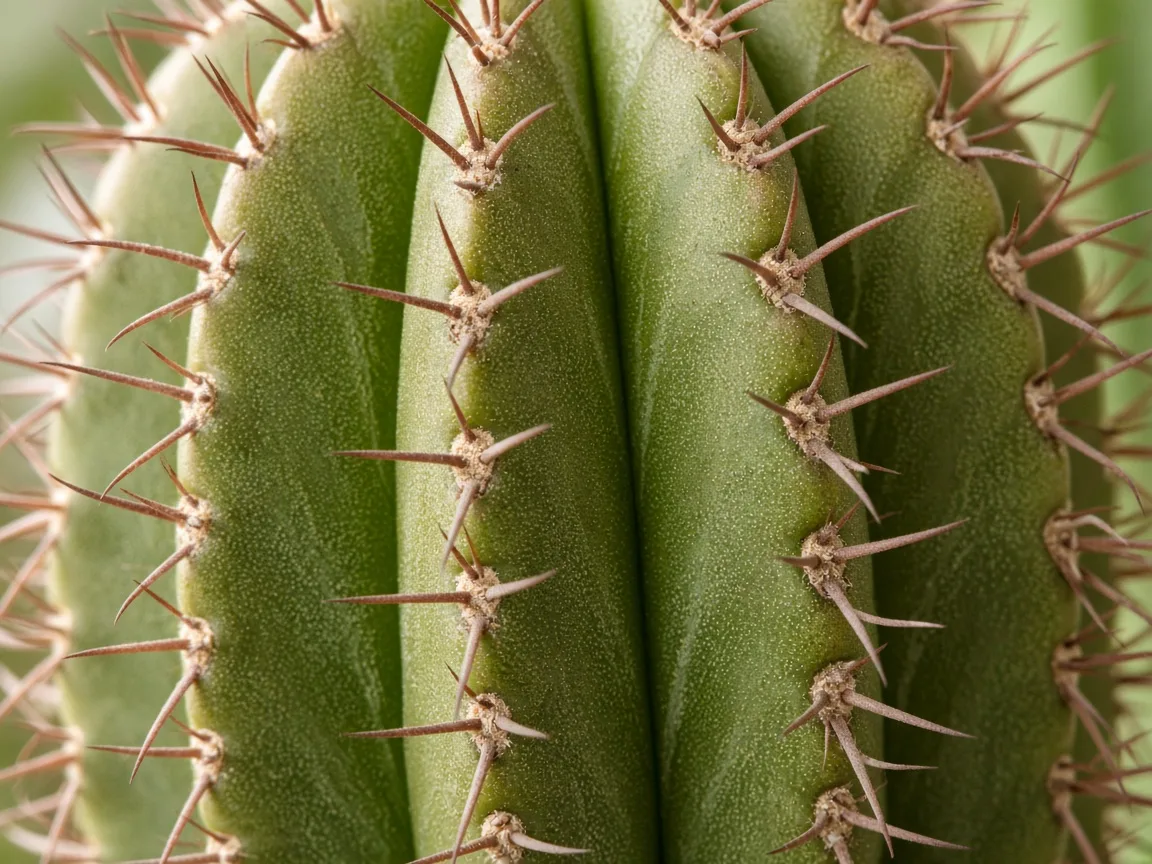
Pinched rib pleats and a slight lean—the stem has no leaves; posture and base firmness tell the story.
- Rib pinch with upright barrel — Ribs draw inward like tightened pleats while the body stays mostly round and the base feels firm. Common after long dry-down in a warm room; see underwatering.
- Barrel leans toward the window — Whole stem tilts on firm ribs, often with stretched pale growth on the shaded side. Usually low light or a top-heavy barrel in a light plastic pot—not thirst.
- Lower body softens while crown looks normal — Base ribs yield to pressure; pot stays heavy. Classic failing roots on wet mix—see overwatering.
- Barrel slumps sideways in saturated pot — Advanced rot or mechanical tip-over when roots no longer anchor the plant. Urgent—match wilting severity.
- Dull, slightly wrinkled skin on very light pot — Extended drought; ribs may pinch before the base softens because stored stem water masks trouble briefly.
A firm base with pinched ribs on a light pot is stressful but usually fixable with one proper soak. A soft sunken base on damp mix is urgent.
Rib posture vs barrel lean (no leaves to droop)
This section is barrel-cactus-specific and would be nonsense on a banana or pothos.
Rib pinch (contraction) affects the pleats between spines while the barrel may still sit upright. Ribs act like accordion folds—Harvest to Table notes heavily ribbed Ferocactus stems that broaden with age. When internal water stores drop, ribs tighten before the base collapses. Causes are usually dry soil or seasonal drought stress, not “limp leaves.”
Barrel lean is the whole stem tilting. Causes include:
- Light chase — Dim corners produce weak growth that cannot support a heavy spined top; the barrel leans toward the brightest pane before ribs look severely pinched.
- Top-heavy instability — Tall barrels in small lightweight pots tip when roots are fine but the container cannot counterbalance spines and stem mass.
- Root failure — Wet mix rots anchoring roots; the barrel falls sideways even though upper ribs still look green briefly.
If ribs pinch on a light dry pot with a firm base, treat thirst. If the barrel leans on a heavy wet pot with a soft base, stop water and see root rot. If it leans with firm ribs and normal pot weight, check light and pot stability first.
The skewer-and-pot-weight rib check
Desert barrels in deep ceramic pots hide drought and rot. Surface dust does not mean the core is dry—or wet.
- Lift or tilt the pot when you think it is dry versus two days after watering. Learn your dry weight.
- Push a dry bamboo skewer through the drainage hole until it hits bottom. Pull it out—damp skewer on a light pot means wet core under a dusty surface; bone-dry through the pot on a very light container confirms drought.
- Press the lowest 5 cm of ribs above soil with a folded towel over sharp curved spines. Firm = posture stress you can likely correct. Soft or sunken = stop water.
- Note recent light moves — Did lean appear within a week of shifting to south glass? Acclimate gradually per the light guide.
Do not mist the barrel to “perk up drooping leaves”—surface moisture without root uptake worsens rot risk on cacti that prefer a dry environment.
Why Barrel Cactus gets drooping leaves
Ferocactus evolved in rocky desert with full sun and fast drainage. Brief drought is safer than chronic wet mix, but the stem shows stress through rib posture and lean—not hanging foliage.
Overwatering and root failure (most serious cause)
Overwatering or poor drainage can cause root rot and brown or mushy areas on the stems. Damaged roots cannot anchor or hydrate the barrel, so the body slumps or leans on heavy wet soil even though upper ribs may still look green. Winter overwatering is especially dangerous—let soil dry completely between waterings and water even less during dormant fall and winter.
Underwatering and rib contraction
Drought-tolerant barrels still need occasional deep soaks once the mix dries through. Months without water in a warm bright room can pinch ribs and dull skin while the base stays firm—the plant looks “droopy” without any leaves to wilt.
Low light and etiolated lean
Ferocactus prefers full sun but weak indoor light produces stretched, pale growth that tilts toward the pane. Ribs may look less plump on the shaded side before severe drought pinch appears. Cross-check window exposure before soaking a firm dry pot that is already leaning.
Pot stability and top-heavy barrels
Unglazed terracotta pots are recommended because they are porous and remove excess moisture—they also add weight. A spined barrel in a tall narrow plastic nursery pot may tip on firm roots simply because the center of gravity sits high. That looks like drooping but fixes with a wider heavier container and rotation, not extra water.
Repot shock and recent purchases
Root disturbance limits uptake for one to two weeks even when watering looks correct. Slight lean or dull ribs after spring repotting can be temporary if the base stays firm and you avoid keeping fresh mix soggy—see the repotting guide. Store-bought barrels in dense peat inside cache pots often slump within weeks when the core stays wet while the surface dries.
How to confirm the cause
- Posture type — Rib pinch only vs whole-barrel lean vs soft base slump.
- Pot weight — Very light versus heavy relative to your last watering.
- Skewer test — Dry through the pot vs damp core on a dusty surface.
- Base firmness — Lowest ribs firm through a towel vs squishy or sunken.
- Light history — Did lean follow a sunny move or dim corner stretch?
- Season — Winter slump on damp cool mix suggests overwatering; summer pinch on light pot suggests drought.
First fix for Barrel Cactus
Weigh the pot, then either deep-soak fully dry mix or stop watering and stabilize lean—do not do both on the same day.
- Very light pot + pinched ribs + firm base + dry skewer — Water until runoff, drain the saucer, then wait until the skewer reads dry through the pot per the watering guide.
- Heavy wet pot + soft lowest ribs or sideways slump — Stop water immediately; see overwatering and root rot before repotting unless tissue is clearly rotting.
- Firm ribs + lean toward window + normal pot weight — Improve light gradually and rotate; consider a heavier wider pot if the barrel tips mechanically.
- Recent repot, firm base, slightly dull ribs — Hold water until the skewer reads dry through the new mix; avoid keeping repot soil constantly moist.
Do not carve or brace soft rotting tissue for cosmetics. Do not fertilize a leaning stressed barrel to push growth. Do not repot on day one unless roots are clearly failing and you have a dry recovery plan.
Recovery timeline
Pinched ribs from drought often re-expand within one to two proper soak cycles once the mix fully rehydrates and the base stays firm. Lean from low light may persist until new compact growth forms at the crown—barrel cactus is slow growing, so allow several weeks before expecting visible posture improvement. Soft mushy base tissue does not firm up again; success means the rot stops climbing and remaining firm ribs stay stable through proper dry-down.
Mistakes to avoid
- Soaking because the barrel “looks sad” while the pot is still heavy and base ribs feel firm-wet
- Leaving a top-heavy barrel in a tall lightweight pot and watering more to “support” it
- Baking the stem against clear summer glass because “cacti love sun” — direct southern sunlight may burn barrel cactus at peak intensity
- Confusing mechanical tip-over with drought and adding water to a saturated pot
- Inspecting soft base ribs bare-handed near fishhook spines
How to prevent drooping posture next time
Match watering to full-pot dry-down with a skewer, use mineral cactus mix in porous unglazed clay, give bright light so growth stays compact, feed lightly per the fertilizer guide, and keep winter barrels cool and dry per Harvest to Table’s dry rest guidance. Rotate occasionally for even ribs and repot into a stable wider pot before tall stems outgrow a narrow base. See the Barrel Cactus overview and problems hub for sibling guides.
Related Barrel Cactus guides
Conclusion
Drooping leaves on barrel cactus is really rib posture and barrel lean on a leafless desert stem. Match soak, stop-water, light, or stability fixes to what pot weight, skewer moisture, and base firmness tell you. Dead or mushy tissue will not straighten cosmetically; watch for re-expanded ribs, a stable upright barrel, and firm lowest ribs as your success markers.