Aphids on Barrel Cactus: Crown Checks & Spine-Safe Fixes
Quick answer
Aphids on barrel cactus usually colonize the crown, flower buds, and newest areoles—not the ribbed body below. First step: isolate the pot and dab visible colonies with a cotton swab dipped in 70% isopropyl alcohol before rinsing or spraying the whole plant.
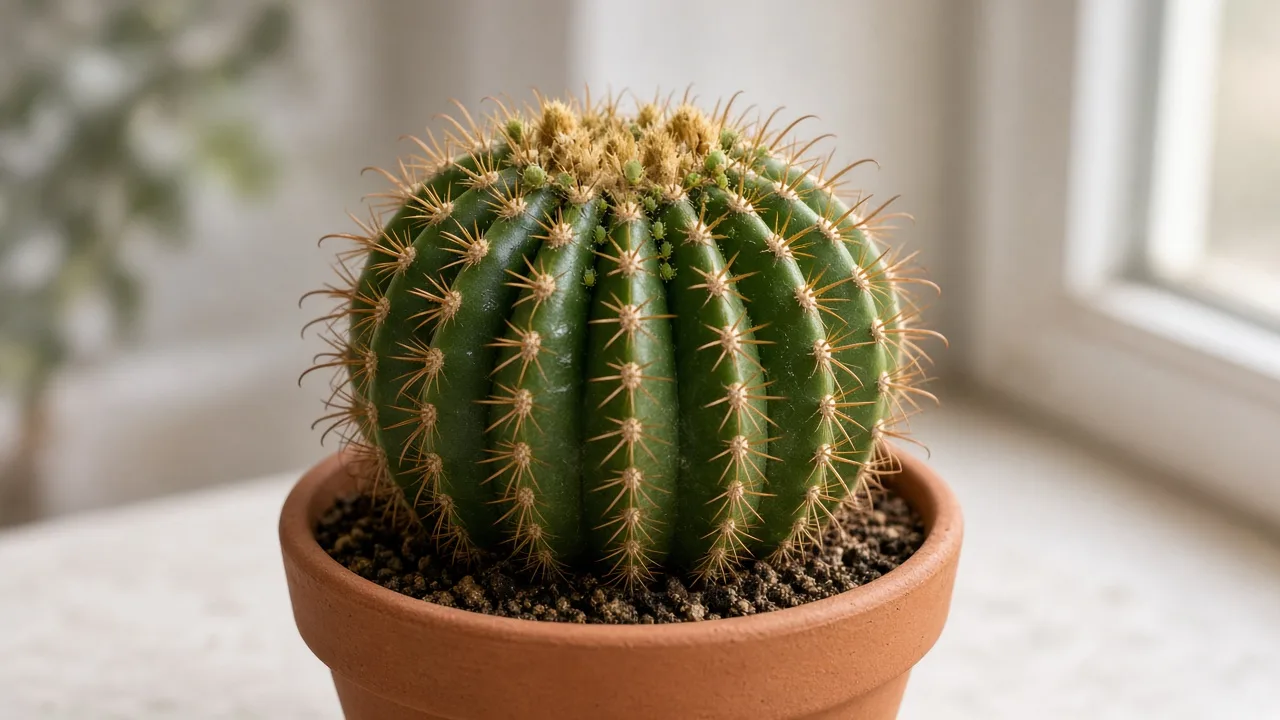
Aphids on Barrel Cactus: Causes, Checks & Fixes
This guide covers aphids on Barrel Cactus. See also the general Aphids guide, watering, and light pages for this plant.
Aphids on Barrel Cactus: Causes, Checks & Fixes
Quick answer
Soft-bodied aphids on Ferocactus almost always show up at the crown—the growing tip where ribs meet, on swelling flower buds, or tucked into the newest areoles—while the ribbed barrel below stays firm. They suck sap, leave sticky honeydew that can feed sooty mold, and can distort the slow crown growth this desert cactus puts out once or twice a season.
For how aphids reproduce, why ants defend them, and when water knockdown works in general, see our aphids pest guide. On barrel cactus, the practical pattern is warm-window colonies at the crown, sticky residue on upper ribs, and extra caution because heavy rinses can pool at the growing tip and invite rot on a plant built for bone-dry air.
First step: isolate the pot away from other succulents, wear thick gloves, and dab visible colonies with a cotton swab dipped in 70% isopropyl alcohol—then re-inspect the crown in three days before spraying the whole plant.
A firm base with pests only at the crown is an insect problem. A soft base on wet mix is a different emergency—see root rot on barrel cactus before you treat pests.
When to use this page vs other Barrel Cactus guides
This page is the pest-first entry for soft-bodied sap feeders at the crown.
| Pattern | Read next |
|---|---|
| White cottony patches in areole crevices | Mealybugs |
| Fine webbing and yellow stippling on ribs | Spider mites |
| Hard brown bumps that do not move | Scale insects |
| Small flies above damp soil | Fungus gnats |
| Soft base, yellow lower tissue, wet mix | Overwatering or root rot |
| Slight rib shrinkage, dull skin, bone-dry pot | Underwatering |
| Pale or washed-out color without stickiness | Yellow leaves (rare on leafless crowns) |
What aphids look like on Barrel Cactus
Aphids are small pear-shaped insects, often less than 1/8 inch long, that feed in dense groups on tender tissue. On Ferocactus, that means the crown and anything still expanding—not the hardened ribs lower on the barrel:
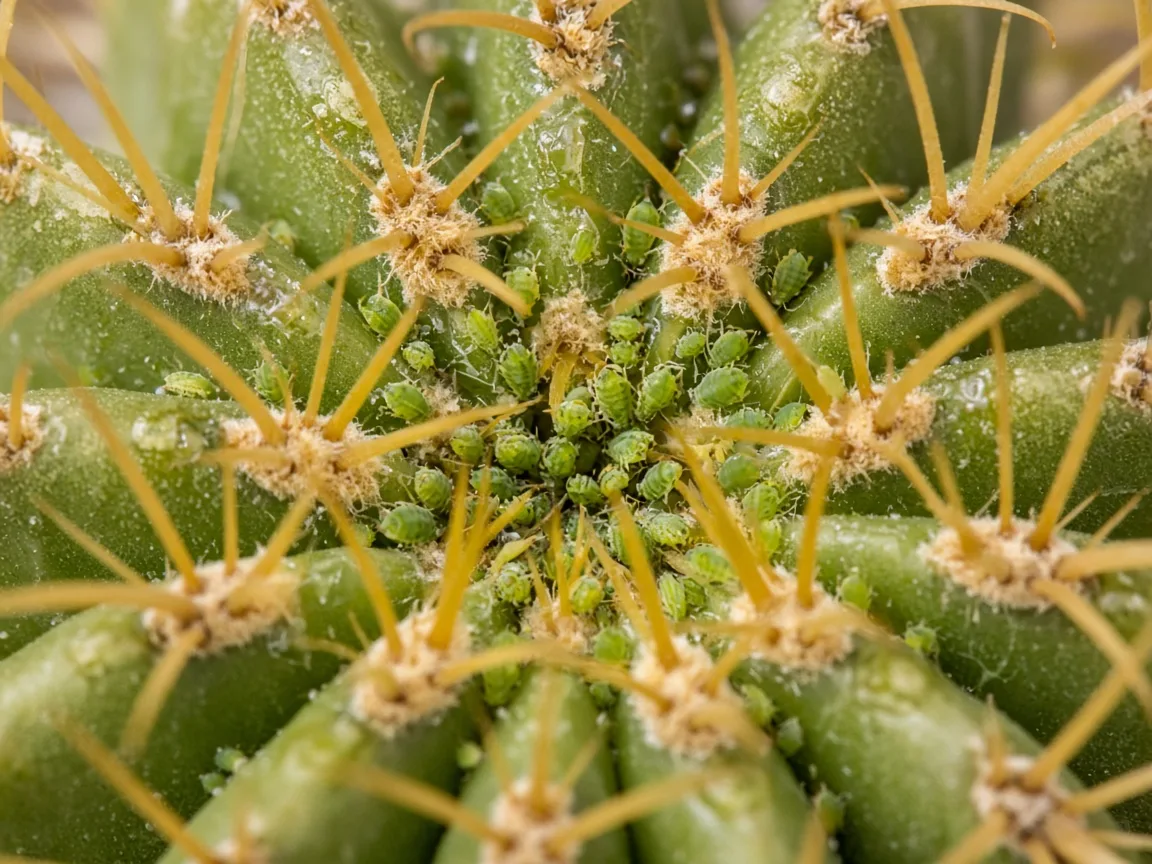
Pear-shaped aphids packed into a crown areole beside new spine clusters—compare with firm ribbed tissue below.
- Clusters at the crown or flower buds — Green, yellow, brown, or black soft-bodied insects where ribs converge at the top
- Sticky shine on upper ribs — Honeydew runs down rib grooves from the crown
- Distorted or aborted flower buds — Buds that fail from feeding will not reopen; wait for the next bloom cycle
- Ant trails on the pot rim or bench — Ants harvest honeydew and protect colonies from lady beetles and lacewings
- Black sooty coating on upper ribs — Fungus growing on dried honeydew, not stem rot
- White cast skins — Shed aphid skins left in areole crevices after molting
NC State Extension notes that barrel cactus is usually pest resistant but may occasionally host mealybugs, spider mites, fungus gnats, or scale. Aphids are less common than on leafy houseplants, which is why a crown-first inspection matters—you are looking at the only soft tissue this plant offers.
Where aphids hide on the crown and areoles
Ferocactus is a ribbed, mostly leafless barrel. Aphids follow the softest growth, not the spiny mid-body.
Crown and bloom-ring inspection
Flowers appear in a crown-like formation on top of the cactus in late spring to early summer. Before and during bloom, aphids colonize:
- The central growing tip — Where new ribs and spine clusters emerge
- Swelling flower buds — Soft tissue around the bloom ring
- New areoles on upper ribs — The first few spine clusters below the crown
- Offsets or pups — If your specimen is branching, check each new pup’s tip first
Use kitchen tongs wrapped in paper towel to tilt the pot, or photograph the crown with your phone zoom rather than pressing your face into fishhook spines.
Spine-safe handling rules
Wear protective gloves when handling barrel cactus—curved spines can puncture fabric and skin. For treatment:
- Dab, don’t scrub — Cotton swabs reach between spines better than a cloth
- Work in bright light — You need to see translucent nymphs against green crown tissue
- Stable heavy pot — A tipping barrel cactus is a spine hazard; brace the pot before treatment
Why barrel cactus gets aphids at the crown
New crown tissue is the only buffet. Unlike a fern or pothos, Ferocactus has no leaf canopy—aphids concentrate where sap flows fastest: the growing tip and flower buds during active warm-season growth.
Warm windows accelerate reproduction. Indoor barrel cacti on south or west sills stay warmer than the room. Aphids reproduce quickly in warm weather and winged forms can travel between windowsill plants on air currents—so a clean barrel cactus can pick up pests from a nearby hibiscus or pepper plant without direct contact.
Over-fed soft crown growth attracts pests. Excess nitrogen during long bright days produces succulent crown tissue aphids favor. Match feeding to the barrel cactus fertilizer guide instead of pushing soft tips during peak heat.
Stress without rot invites pests. A cactus kept too shaded or over-potted in wet mix grows slowly and weakly at the crown. That is different from a firm plant with a localized aphid colony—check the light guide and soil mix if crown growth looks pale and sticky at the same time.
Confirm aphids vs. overwatering, mealybugs, scale, and mites
Work through checks in order so you do not spray pests while the base is rotting from wet soil:
- Skewer and base press — Dry skewer through the pot; firm ribs and a stable base point to insects. Soft or mushy base on damp mix means rot risk first.
- Crown scan — Start at the growing tip and any swelling buds before inspecting lower ribs.
- Areole check — Colonies often hide where new spines emerge at the crown.
- Honeydew test — Wipe an upper rib with a tissue; if stickiness returns within a day, sap feeders are still active.
- Ant trail follow — Ants on a firm base usually lead to aphids at the crown, not root problems below.
Symptom lookalike comparison
| What you see | Likely cause | Key check |
|---|---|---|
| Soft pear-shaped insects at crown | Aphids | Colonies move when disturbed; honeydew on upper ribs |
| White cottony masses in areole crevices | Mealybugs | Stationary wax; alcohol turns them orange-gray |
| Hard brown bumps that do not move | Scale insects | Scraping reveals tissue underneath |
| Fine webbing and yellow stippling | Spider mites | Dry indoor air; damage on ribs, not bud clusters |
| Soft base, translucent lower tissue, wet mix | Overwatering / rot | No insect clusters; sour soil odor possible |
| Slight rib contraction, dull skin, dry pot | Underwatering | No stickiness; ribs firm but shrunken |
Confirmed diagnosis — Pear-shaped insects plus honeydew or ants at the crown with a firm base. Suspected — Sticky crown without visible insects may need a magnifying glass on the youngest areoles before treating.
First fix: isolate, alcohol dab, then rinse or spray safely
Isolate the pot away from other succulents and cacti until you see no new aphids for at least two weeks after treatment.
Dab colonies with 70% isopropyl alcohol on a cotton swab first. This is the lowest-risk first fix for a spiny crown—no pooled water at the growing tip and no chemical residue across the whole barrel. Touch each visible aphid and the honeydew trail beside it. Alcohol kills on contact; repeat every two to three days to catch nymphs that hatch between treatments.
If alcohol is not enough: targeted water knockdown
A strong stream of water can knock aphids off the crown, but barrel cactus needs special handling:
- Rinse only the crown, not the whole pot
- Tilt the plant so water runs off ribs and never sits in the growing tip
- Treat in morning so the crown dries in full sun within a few hours
- Skip heavy rinses during cool dormant months when the plant should stay dry per the watering guide
Repeat every two to three days if you use water instead of alcohol.
Insecticidal soap on cacti
If colonies remain after two or three alcohol or rinse cycles, apply insecticidal soap labeled for ornamentals. Coat crown tissue and bud clusters until runoff; contact sprays only kill insects they touch. Rules for barrel cactus:
- Spray early morning—do not apply in midday sun on a south-window plant; heat-stressed cactus skin is prone to scorch
- Patch-test one small crown areole and wait 24 hours before treating the whole tip
- Avoid stacking repot, crown pruning, or fertilizer the same week you start spray—that masks whether pests or care stress caused the setback
Wipe honeydew from upper ribs with a dry cloth. Wear gloves throughout—spine punctures are the main safety issue, not sap toxicity.
What not to do the same day
Do not increase watering because the crown looks stressed—check base firmness and skewer dryness first. Do not soak the crown to “wash” aphids if the plant will sit cool and damp overnight. Do not use harsh indoor pesticides without ventilation. Do not ignore ants—they protect aphid colonies from predators.
Recovery timeline and bloom expectations
Visible aphids should clear within one to two weeks of consistent alcohol dabs or soap treatment. Expect clean new crown growth within four to eight weeks during active warmth—Ferocactus grows very slowly, so patience is normal. Distorted buds from heavy feeding are gone for that cycle; judge success by the next clean flush, not by reopening old buds.
A firm ribbed base throughout treatment is a good sign. Softening at the base means rot or overwatering—not aphids—and needs a different response immediately.
How to prevent aphids on Barrel Cactus
Quarantine every new cactus for two weeks before placing it on a shared windowsill. Inspect the crown weekly during spring and summer active growth. Keep care aligned with the full barrel cactus care hub—full direct sun, mineral fast-draining mix, and dry-down watering so crown growth stays firm rather than overly soft.
Outdoor summer placement with good air movement often sees fewer pest issues than a crowded indoor shelf. When you bring plants back inside in fall, rinse the crown and check areoles before they join other pots. Manage ants on bench legs—ant barriers or sticky traps on pot rims break the honeydew partnership that keeps aphid colonies safe from lady beetles.
When to escalate
Escalate if new crown growth repeatedly emerges coated in aphids after three full treatment cycles, if sooty mold covers most upper ribs, or if ants make colonies impossible to dab away. Chronic feeding during bloom season can weaken a slow-growing barrel cactus over months even when rot has not started.
For heavy recurring infestations, a local extension office can confirm the pest and discuss options. Systemic insecticides move through plant sap and can take weeks to reach feeding sites—they are generally a last resort on a single potted crown cactus when contact dabs and soaps have failed.
Spine injury: If you or a pet contact spines, remove visible spines carefully and watch for infection. Barrel cactus is not pet safe in practice because rigid spines can puncture paws and noses—keep pots out of traffic paths.
Aphids alone rarely kill a mature Ferocactus with a firm base, but they can ruin a flowering season and open the door to crown rot if you respond with extra water instead of pest removal.
Before you water again
Sticky crown tissue on a firm base means dab aphids off the growing tip first—not another drink. Soft base on wet mix means rot protocol, not pest spray. That single check keeps most barrel cactus owners from making the problem worse while they treat the right cause.