Low Humidity on Barrel Cactus: When Dry Air Matters
Quick answer
Barrel cactus (Ferocactus) evolved for desert dry air and rarely needs a humidifier. Slightly contracted ribs, dull skin, or crown stress usually trace to underwatering, heating-vent placement, or spider mites in hot dry windows—not room humidity alone. First step: read humidity with a hygrometer near the pot; if you are already in the 25–50% range, weigh the pot and probe the mix before raising humidity or misting.
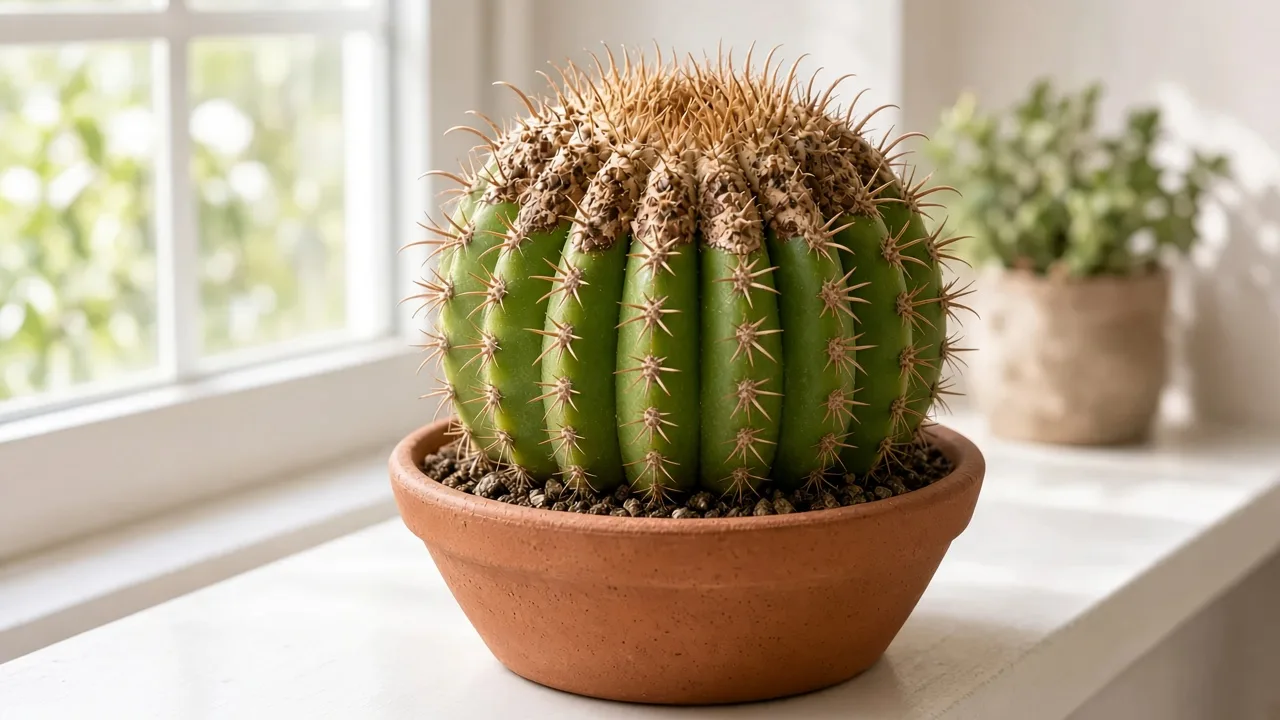
Low Humidity on Barrel Cactus: Causes, Checks & Fixes
This guide covers low humidity on Barrel Cactus. See also the general Low Humidity guide, watering, and light pages for this plant.
Low Humidity on Barrel Cactus: Causes, Checks & Fixes
Quick answer
Barrel cactus (Ferocactus) is a desert cactus native to rocky, sunny Southwest habitats built for dry air and rare rainfall. NC State Extension notes these plants prefer a dry environment and should not be overwatered—exactly the opposite of tropical foliage plants that chase humidity.
For how dry winter air crisp leaf edges on houseplants in general, see our low humidity hub. On barrel cactus, low humidity is usually a misdiagnosis—slightly contracted ribs, dull skin, or crown tan patches more often trace to underwatering, harsh glass after a window move, or spider mites in hot dry micro-climates.
First step: place a hygrometer near the pot for two to three days. If readings sit in the 25–50% range most heated homes already provide, weigh the pot and push a dry skewer through the mix before buying a humidifier or misting the crown.
When to use this page vs other Barrel Cactus guides
- Underwatering — use when ribs pinch inward, skin dulls, and the pot feels very light
- Brown tips — use when dry tan patches appear at the crown or upper rib crests
- Sunburn scorched leaves — use when bleached or russet patches follow a bright window upgrade
- Spider mites — use when dry air coincides with stippling and fine webbing near the crown
- Overwatering or root rot — use when the base softens on damp mix, not when ribs look dry
- Watering guide — use for soak-and-dry rhythm before assuming humidity is the issue
What low humidity looks like on Barrel Cactus
Barrel cactus has no leaves—dry-air stress shows on ribbed stem tissue, not crispy margins.
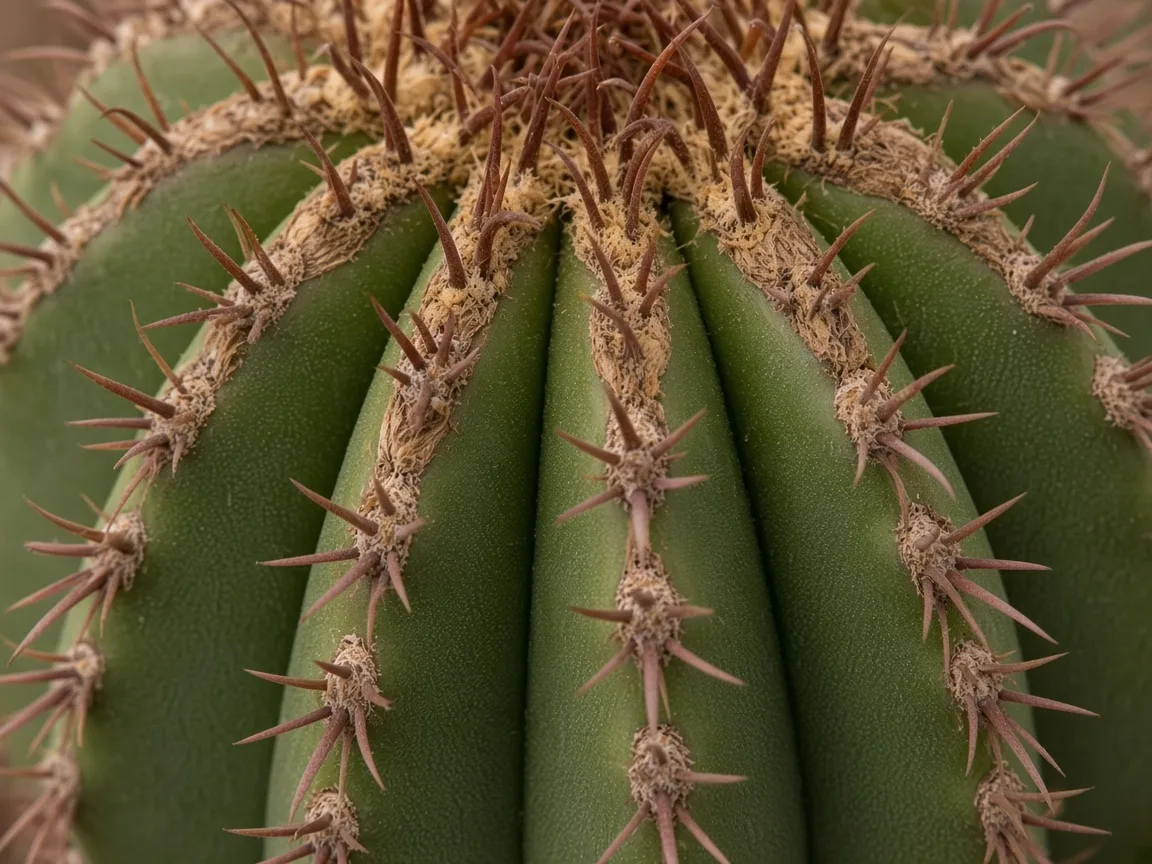
Low humidity on barrel cactus—slightly contracted ribs and dull skin on a firm Ferocactus body; crown tissue should stay dry, not misted.
Typical signs when dry air is actually involved:
- Slight rib contraction — valleys between ribs pinch inward while the barrel body stays firm
- Dull, less glossy skin on the sun-facing side beside a heating vent or fireplace
- Dry tan patches at the crown localized to the hottest micro-climate, not spread down mushy ribs
- Slow change over weeks—not overnight collapse
- Fine stippling or webbing at crown areoles in the same hot window — mite overlap, not humidity tolerance limits
Usually not low humidity:
- Woody brown band at the soil line on an older barrel — normal corking, not dry air
- Large bleached patches after a south-window move — sunburn
- Soft sunken crown on heavy wet mix — overwatering
- White cotton in crown areoles — mealybugs
Rib contraction vs drought: a pattern only Ferocactus shows
This distinction is mandatory for barrel cactus and wrong for most leafy houseplants.
Ferocactus stores water in its thick ribbed stem. When roots cannot replace moisture fast enough, the plant pulls water from stem tissue and ribs look slightly pinched—a drought signal, not proof your room lacks humidity.
| What you see | More likely cause |
|---|---|
| Subtle rib pinch + very light pot + bone-dry skewer | Drought — see underwatering |
| Tan crown patches only on the sun/heat side | Localized dry air or scorch beside a vent |
| Stippling + webbing at crown areoles | Spider mites in hot dry conditions |
| Mushy brown spreading down ribs on wet mix | Wet roots — see overwatering |
NC State Extension lists barrel cactus as drought tolerant with dry-soils tolerance. Judge health by firm ribs and stable spine color, not by whether ribs ever look perfectly plump year-round.
Why barrel cactus rarely struggles with low humidity
Native desert adaptation. Ferocactus grows in rocky, sandy desert soils with plenty of sunshine. Its ribbed barrel shape minimizes surface area and stores water between rare deep rains—the same architecture that makes it drought tolerant indoors.
Prefers dry air over steamy rooms. Extension guidance is explicit: these plants prefer a dry environment. Misting the crown, running a humidifier beside the pot, or moving Ferocactus into a bathroom keeps stem bases and soil damp longer—a bigger rot risk than dry winter air.
Winter heating is usually still adequate. Penn State Extension notes ASHRAE recommends 30–60% indoor relative humidity for human comfort, with some cacti and succulents among the exceptions that tolerate drier air. Barrel cactus falls in that tolerant group. If humidity is comfortable for you, Ferocactus typically tolerates it.
Spider mites, not humidity limits. NC State lists spider mites among occasional pests on barrel cactus. Hot, dry windowsills beside heating vents create the micro-climate mites favor on houseplants. Dry air plus mites looks like “low humidity stress” when the real issue is pests or drought.
Slow growth hides quick fixes. Barrel cactus is very slow growing. Owners often blame humidity when ribs look dull during a long dry winter rest—check the watering guide and dormancy rhythm before humidifying.
The pot-weight check (barrel stems, not leaf turgor)
On ferns you watch frond tips. On barrel cactus you watch rib firmness and pot weight.
- Lift the pot. A very light clay pot after weeks without water matches rib pinch better than low room humidity.
- Push a dry skewer to the bottom. Bone-dry mix throughout means underwatering, not a humidity crisis.
- Pinch a mid-rib with gloved fingers. Firm green tissue with slight valley pinch = drought stress. Soft mushy tissue = wet roots.
- Read the hygrometer at plant height. Below roughly 20% for weeks beside a heat vent can crisp crown tissue; 25–50% is normal for Ferocactus.
- Inspect crown areoles with gloves for stippling, webbing, or white cotton before misting.
Make one correction at a time. Do not repot, fertilize, and humidify on the same day.
How to confirm the cause
Work through checks in this order:
- Measure humidity near the pot for two to three days. Readings between 25% and 50% mean ordinary home air is adequate for barrel cactus.
- Note placement. Constant airflow from heating vents, fireplaces, or AC returns can create micro-climates drier than the rest of the room.
- Weigh the pot and probe the mix. Light pot plus rib pinch = drought. Heavy wet pot = rule out humidity as the primary issue.
- Map the browning. Crown-only tan patches on the heat side suggest localized dry air or scorch. Mushy spread down ribs on damp mix = overwatering.
- Check crown areoles for mites or mealybugs with gloves—NC State notes these pests appear occasionally.
If humidity is normal and watering has been on schedule, low humidity is unlikely to be the main driver.
First fix for Barrel Cactus
If humidity readings are below about 25% right beside the plant: move the pot away from heating vents and draft paths. Grouping with other plants may help localized air slightly, but Penn State Extension notes pebble trays barely change room humidity—relocation matters more than trays. Do not mist the crown; wet areoles invite rot on desert cacti.
If humidity is already 25–50%: skip the humidifier. Soak thoroughly only when the skewer reads dry throughout—see the watering guide. Pull back from harsh summer glass per the light guide if crown tan patches followed a window move. Treat spider mites if stippling appears.
If ribs are pinched and the pot is light: deep soak in warm active growth, then return to full dry-down before the next drink. Winter dormancy means even less water, not more humidity.
Causes to rule out before blaming humidity
| Likely cause | Clue on Barrel Cactus |
|---|---|
| Underwatering | Pinched ribs, dull skin, very light pot, dry skewer |
| Sun scorch at crown | Tan patches only on upper sun-facing ribs after bright move |
| Overwatering | Soft base, mushy ribs, heavy wet pot—not a humidity pattern |
| Spider mites | Stippling and webbing at crown in hot dry window |
| Normal corking | Woody brown at soil line on mature plant, firm tissue above |
| Winter dormancy | Slow activity, no new spines—expected, not humidity failure |
Gardening Know How recommends bright sun, gritty mix, and minimal watering for barrel cactus indoors—light and water rhythm matter more than room humidity.
Lookalike symptoms
Low humidity vs underwatering: Both can coincide with rib pinch. Humidity stress alone rarely pinches ribs on a well-watered Ferocactus in ordinary room air. A light pot and dry skewer confirm drought.
Low humidity vs sun scorch: Scorch shows as tan or bleached patches on the upper sun-facing ribs right after a window upgrade. Whole-room humidity readings do not explain one-sided crown damage.
Low humidity vs spider mites: Mites leave stippling, fine webbing, and dusty crown surfaces in hot dry corners—a pest issue. Humidifying without treating mites wastes effort and risks wet soil.
Low humidity vs normal winter rest: Cool dry winter slows growth. Slightly duller skin on a firm barrel that has not been watered in weeks may be dormancy, not a humidity emergency.
Recovery timeline
Tan crown patches stay tan permanently. Expect one to two full dry-down and soak cycles—often four to eight weeks in cool winter, faster in warm bright growth—before ribs look plump again.
New crown spine flushes without fresh tan patches confirm the fix. Barrel cactus is very slow growing; cosmetic rib pinch may linger even after the root zone stabilizes.
What not to do
- Do not mist the crown to raise humidity. Ferocactus prefers dry air; wet areoles increase rot risk.
- Do not buy a humidifier if a hygrometer already reads 25–50%—fix watering and light first.
- Do not overwater because ribs look dry. Mushy roots kill barrel cactus faster than dry winter air.
- Do not place Ferocactus in a steamy bathroom for humidity. Low light plus moisture invites fungal problems.
- Do not fertilize a stressed barrel to “help it recover.” Feed only in warm active growth with cactus-formula fertilizer.
- Do not handle without gloves when inspecting the crown—sharp curved spines puncture easily.
Barrel Cactus care cross-check
Align humidity work with this species’ baseline needs:
- Light: Barrel cactus light guide — full sun indoors; diffuse harsh summer glass before soaking.
- Water: Soak only after the pot dries through; sharp reduction in cool winter dormancy.
- Soil: Mineral cactus mix with pumice and grit; unglazed clay pots help excess moisture evaporate.
- Air flow: Harvest to Table notes air circulation matters for indoor Ferocactus—stagnant humid corners are worse than dry winter air.
When air is dry and the pot stays wet too long, fix drainage and watering before humidifying.
How to prevent low humidity stress next time
Keep barrel cactus in ordinary dry indoor air without special humidity equipment. Penn State Extension suggests concentrating on light and watering when home humidity is comfortable for people—Ferocactus fits that approach.
Practical prevention:
- Run a hygrometer once each heating season near the crown.
- Pull pots back from radiator ledges and heat registers.
- Water only after full dry-down per the watering guide.
- Inspect crown areoles for mites each winter beside sunny glass.
- Use porous clay pots and mineral mix so soil dries predictably.
- Wear gloves when rotating or inspecting spines.
Practical checks
Urgency check
Low humidity alone is a low-severity, slow-moving issue on barrel cactus. Escalate immediately if the crown feels soft or sunken, brown mush spreads down ribs on a heavy wet pot, or white mealybug cotton fills areoles—that is root-zone failure, pests, or rot—not dry air.
Best inspection order
For barrel cactus, check hygrometer readings, pot weight and skewer dryness, crown placement relative to heat vents, then crown areoles for pests—in that order—before adding humidity.
Severity note
This issue is marked medium in the LeafyPixels database because owners worry when ribs look pinched, but Ferocactus is among the most dry-air-tolerant houseplants. The real risk is chasing humidity while ignoring drought, scorch, or mites.
When the first fix fails
If ribs keep pinching after four to eight weeks with humidity in range and proper soak-and-dry watering, revisit light intensity and repot timing per the repotting guide into grittier mix—not higher humidity. Persistent crown stippling points to spider mites, not humidity limits.
When to use this page vs other Barrel Cactus guides
- Barrel cactus overview — species baseline: full sun, dry winter rest, mineral soil
- Barrel cactus problems hub — browse all common issues on Ferocactus
- Brown tips — different entry point when crown tan patches overlap with dry air