How to Repot a Bay Laurel Tree
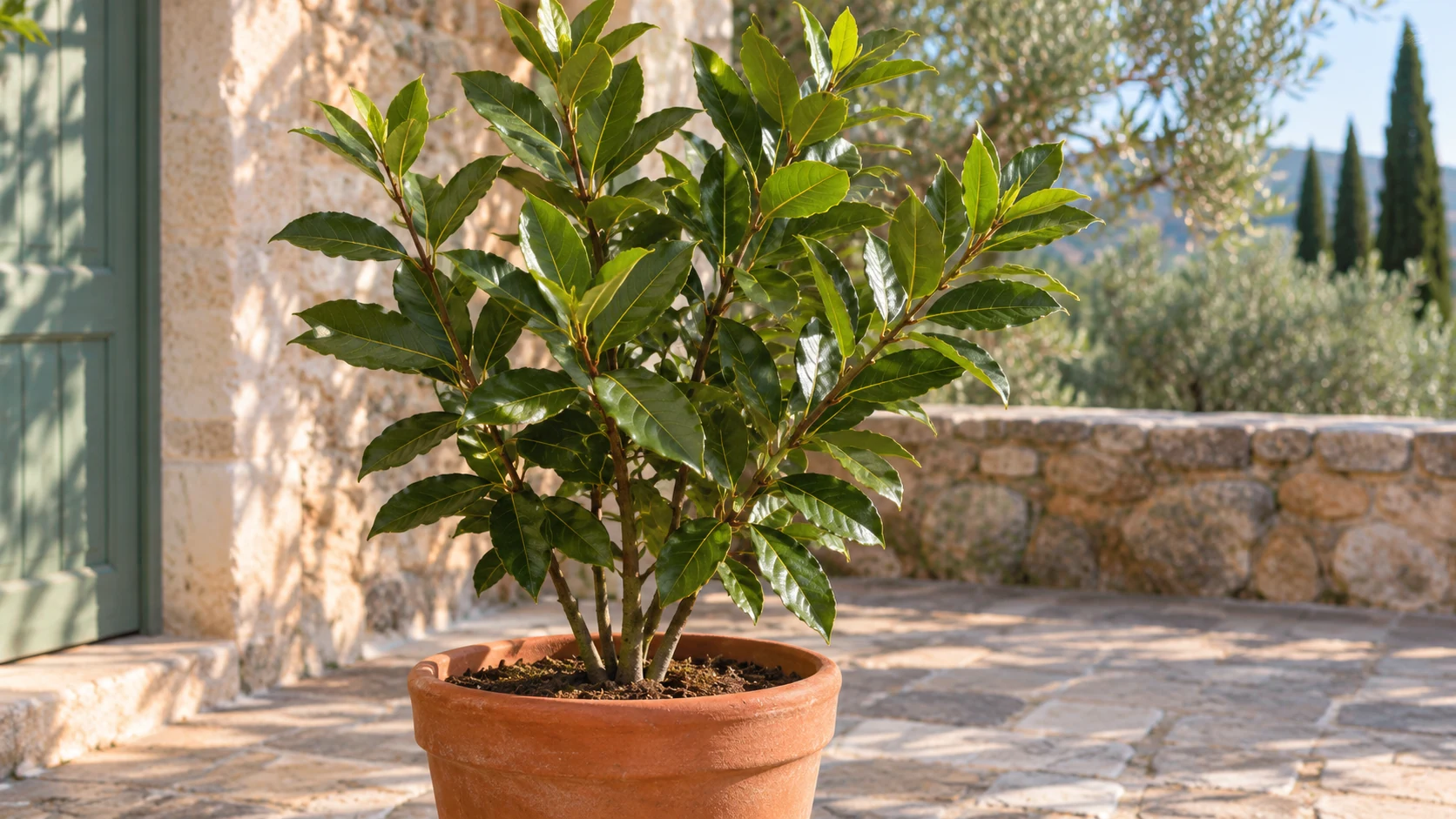
How to Repot a Bay Laurel Tree
How to Repot a Bay Laurel Tree
Repot a bay laurel only when the root system or tired potting mix calls for it. If roots circle the container, water runs straight through, or the plant dries out unusually quickly, plan a spring repot into a stable pot just one size larger. Bay grows well a little snug, so roots peeking from a drainage hole do not automatically mean it needs a much bigger container. If the pot is adequate but the mix has compacted, refreshing the surface may be enough. NC State lists root rot among potential problems for sweet bay, so avoid keeping the root ball wet while deciding what to do.
Bay laurel repotting at a glance
Choose spring, prepare a pot with drainage holes and a broad stable base, and use a free-draining container mix. Slide the plant out without pulling on the trunk, loosen only tight circling roots, and remove damaged roots with clean pruners. Set the root ball at its original depth, fill around it, water to settle the mix, and let the pot drain. The RHS recommends repotting bay in spring, but published intervals vary; use plant condition to decide.
Does your bay need a new pot?
Look at the whole plant and its watering pattern. A dense mat of circling roots, a root ball that dries soon after watering, or mix that has broken down may indicate it is time to repot. A few roots emerging from the bottom can be normal. The Spruce and Better Homes & Gardens both note that bay tolerates a snug container, so do not repot only because you see one root through a hole. The Bay Leaf plant hub gives the full care context.
How often should you repot bay laurel?
There is no single interval that suits every pot and climate. The RHS suggests spring repotting every two years, while The Spruce and Better Homes & Gardens describe intervals around five years for bay that is growing comfortably. These differences make a calendar less useful than checking roots, drainage, and how quickly the mix dries. Repot earlier if the soil has failed or the plant is unstable.
Roots showing at the drainage holes
A few visible roots do not prove the plant is severely root-bound. Check whether roots form a dense spiral around the outside of the root ball and whether water and air still move through the mix. If the root mat is thin and the plant stays healthy, you can wait or refresh the upper compost. If the roots form a tight mass and the pot dries very quickly, prepare a slightly larger container. The watering guide helps distinguish fast drying from inconsistent watering.
Best time to repot bay
Spring is the most practical time in many climates because the plant can resume growth as it settles into fresh mix. In colder regions, wait until the hardest winter conditions have passed; avoid repotting just before the plant must be moved into a cool dormant space. If a pot is broken, waterlogged, or too unstable to use safely, correct the problem promptly regardless of the calendar. After a routine spring repot, keep the plant in a sheltered position while it adjusts.
Choose a stable, well-drained pot
Select a container with open drainage holes and enough weight or base width to support the canopy. A tall bay can topple in a narrow lightweight pot, especially outdoors in wind. The Spruce notes that container bay needs a stable base; Nature & Garden also emphasizes stability and drainage. If the current container is large and heavy but structurally sound, you may not need to replace it. The soil guide explains how to choose a mix that drains in the new pot.
How large should the next pot be?
Move up only modestly, usually to the next practical container size. A very large volume of fresh mix can stay wet around a small root system, particularly indoors or in cool weather. Choose a pot that allows fresh mix around the root ball while keeping the tree upright. If the bay is already in a large, stable pot, root pruning and mix refresh may be safer than moving it into an even heavier planter. Do not select the biggest container available as a way to avoid future checks.
Prepare the potting mix
Use a quality container mix that retains some moisture yet drains freely. The RHS recommends peat-free soil-based or soilless compost with added grit for stability and drainage. Avoid using dense garden soil by itself in a container, where it can compact and remain wet. The Spruce’s potting-mix guide explains why container media should stay porous. Check that the drainage holes are uncovered, and add a mesh screen only if needed to keep loose mix from falling out; do not block the outlet with a thick gravel layer.
Water before removing the plant
If the root ball is very dry, water it the day before repotting so it holds together more easily. Do not soak a plant whose mix is already wet. Place the new pot, mix, clean pruners, and a work surface within reach before lifting the bay. A mature container tree can be heavy; support the pot and root ball rather than pulling the stem. If the plant is too large to handle safely, ask for help or choose a method that avoids damaging the canopy.
Slide the bay out without pulling the trunk
Lay a smaller pot on its side and ease the root ball out while supporting its base. For a large container, tip it carefully with another person. Tap the outside or flex a nursery pot to release the mix; do not yank the tree by its main stem. Inspect the sides and base of the root ball. If roots are only lightly circling, tease a few outward with your fingers. Leave the core intact rather than washing soil away from healthy roots.
What to do with circling or damaged roots
Trim only roots that are dead, broken, or tightly circling and cannot be guided outward. Use clean, sharp pruners and remove a modest amount; heavy root pruning can set back a slow-growing bay. Wisconsin Horticulture describes periodic root pruning as an option when keeping the same container, but it should be conservative. If most roots are healthy and there is space in a slightly larger pot, preserve them and increase the container size instead.
Reset the tree at its original depth
Add mix to the bottom of the new pot so the top of the root ball will sit at the same height as before. Center the plant and keep the root collar and trunk base above the soil surface. Fill the gaps gradually, tapping the pot to settle mix without compressing it hard. Do not bury bare trunk or pack soil tightly around the root ball. Stable support and open mix are more helpful than forcing the tree into an exact vertical position by compacting the soil.
Water and drain after repotting
Water slowly around the root ball until the fresh mix is evenly moist and excess runs out of the drainage holes. Empty the saucer or cachepot. If the plant was root-pruned, avoid keeping the mix saturated while roots recover. Do not fertilize immediately unless the mix label calls for it; many commercial products contain starter nutrients. The fertilizer guide explains when to resume feeding after the plant is growing again.
Aftercare in the first few weeks
Place the repotted bay in bright conditions similar to its prior location, sheltered from strong wind and harsh afternoon sun while it adjusts. Keep checking the root zone rather than watering by date. A little temporary pause in growth can occur after handling; it is not a reason to prune healthy branches or feed heavily. If leaves wilt, check whether the mix is too dry or too wet and confirm drainage. The light guide covers gradual changes in exposure.
When not to repot
Wait if the plant is healthy, the mix drains properly, and the root ball still has room. Avoid combining repotting with major pruning, seasonal relocation, and fertilizer changes unless a problem requires immediate action. Do not disturb a bay just because a few roots appear at the drainage holes or because the nursery pot looks small compared with the canopy. If you are unsure, monitor watering and growth for several weeks and inspect the root ball only when there is a clear reason.
Top-dress instead of repotting
When the pot remains stable but the upper mix looks depleted, remove a shallow layer and replace it with fresh compost without scraping into roots. The RHS recommends replacing the top few centimeters of compost when not repotting regularly. Top-dressing is a maintenance option, not a cure for a solid root mat, blocked drainage, or collapsed mix throughout the pot. If water no longer moves through the root zone, schedule a full repot rather than adding a surface layer.
Repotting large or topiary bay
A shaped standard or large shrub may be difficult to lift without breaking its root ball. Work with another person, protect the canopy, and decide whether root pruning in the existing container is more manageable than changing pots. The Missouri Botanical Garden notes that bay can be kept smaller through pruning; do shaping separately from root work so you can assess recovery. For pruning details, see the Bay Leaf pruning guide. For growing a replacement, use the propagation guide.
Related Bay Leaf guides
Start with the Bay Leaf plant hub for identification and seasonal care. Pair repotting with soil and watering to keep the new root zone well drained. Use light guidance while the tree adjusts, and wait to feed until active growth returns using the fertilizer guide. Read pruning and propagation for separate canopy and new-plant tasks.
Conclusion
Repot bay laurel when its roots are crowded, its mix has failed, or the container is unstable—not simply because a set number of years has passed. Choose spring when possible, use a modestly larger stable pot with drainage, and preserve as much healthy root as practical. Set the tree at its original depth, water thoroughly, and let excess drain. A healthy, snug bay may need only fresh surface compost and continued observation.