How to Prune Black Pepper: When, Where & What to Cut
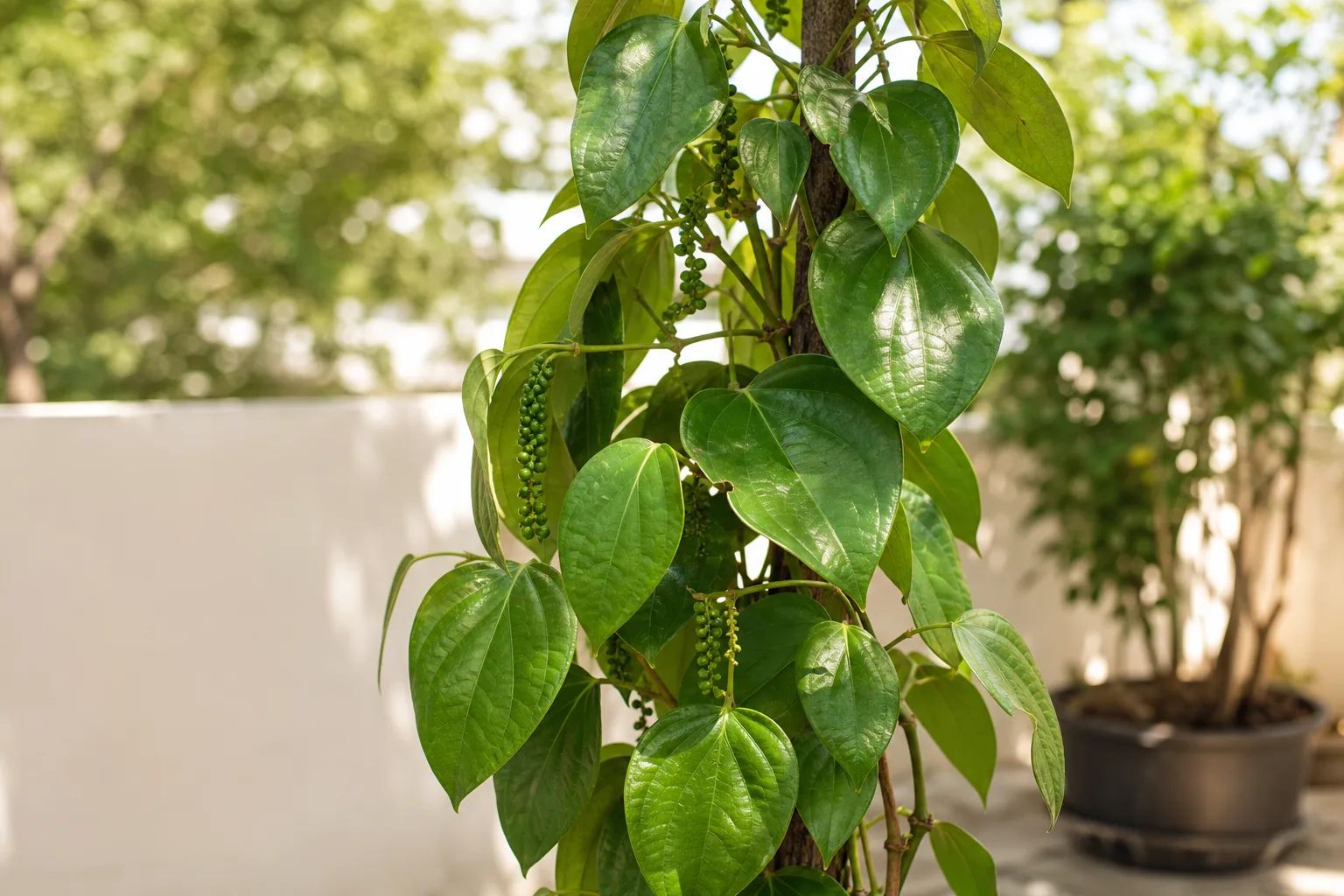
How to Prune Black Pepper: When, Where & What to Cut
How to Prune Black Pepper: When, Where & What to Cut
First action: Walk the vine and remove only fully yellow, brown, soft-rotted, or clearly diseased leaves and stem tips with clean sharp scissors or bypass pruners—finish that cleanup before you tip healthy leaders, shorten long laterals, or cut ground runners for shape. Black Pepper grows from nodes, so you want a clear map of live, glossy joints before you decide how much length to take.
For whole-plant context—filtered light, humidity, and watering rhythm—see the Black Pepper overview.
Reviewed by LeafyPixels Review Board · Author: sai-ananth
Quick answer
Prune Black Pepper (Piper nigrum), also sold as kali mirch or pepper vine, to keep climbing stems on a support, remove failing tissue, and encourage denser laterals—not to “fix” harsh sun, dry air, or waterlogged soil. It is a woody evergreen climber that needs a frame, prop tree, or trellis; without training it sprawls and looks thin. (Missouri Botanical Garden) Package-of-practices guidance for India stresses tying shoots to the standard as they grow, and commercial care notes also recommend trimming vines for bushier growth. (Vikaspedia) (PlantVillage)
Make tip and size-control cuts just above a node—the swollen joint where leaves and adventitious roots form—limit live foliage removal to about one-third per session on pots, and schedule major tip work for warm, humid active growth. Pruning improves shape and branching, but it cannot replace filtered light or a steady watering rhythm on fertile, well-draining mix.
What pruning does for Black Pepper
Black Pepper is a Piperaceae climber native to southern India and Sri Lanka. University extension notes describe a woody, freely branched tropical vine that climbs supporting trees with heart-shaped evergreen leaves and rooting stems. (UAEX) In cultivation it typically reaches about 10–15 ft on a support outdoors; indoors it stays shorter but still wants something to cling to.
Indian package-of-practices material distinguishes three useful shoot types: primary climbing shoots with long internodes and adventitious roots at the nodes; runner shoots from the base that creep on the ground and root at each node; and fruit-bearing lateral shoots. (Vikaspedia) That architecture explains almost every pruning decision:
- Cleanup removes yellow, scorched, pest-coated, or rotting leaves and soft stem tips whenever you spot them.
- Training loosely ties new climbing growth to a bamboo stake, trellis, moss pole, or outdoor standard so nodes can root against the support.
- Tip cuts shorten soft climbing leaders just above a node to encourage side laterals and a denser column.
- Runner management lifts or removes unwanted ground-creeping runners so they do not root into wet soil and invite disease splash.
Pruning cannot fix chronic midday scorch, low humidity that browns tips, or Phytophthora-style foot rot from soggy mix. Correct those conditions first, then cut.
Cleanup vs training vs tip cuts
Cleanup is safe anytime and should always come first. Training is ongoing maintenance during active growth—package-of-practices guidance is to tie shoots to the standard as often as required while the vine climbs. (Vikaspedia) Tip cuts are the shaping job: when internodes stretch or the vine outgrows the pole, shorten soft leaders so laterals fill in. On a pot, that usually means keeping a framework of sturdy climbing stems with several live nodes on the support—not stripping the plant bare.
What to check before cutting
Before any shaping session, inspect in good light:
- Live nodes — slightly swollen joints with a leaf scar or aerial-root nub; new growth emerges here, not from smooth internode skin.
- Shoot type — climbing stems with rootlets at nodes are framework; ground runners are for propagation or removal; fruiting laterals carry flower spikes and should not be stripped if you want peppercorns.
- Soft vs firm stems — soft, dark, or sour-smelling sections near the soil line may signal foot rot; remove those and reassess drainage before heavy tip work. (PlantVillage)
- Support contact — stems hanging free stretch; stems pressed to a moist pole cling better at nodes.
- Leaf quality — large glossy leaves on upper laterals are keepers; small, pale leaves on shaded sections mark where light needs fixing.
- Stress signs — recent repotting, cold nights near or below about 10–13°C (50–55°F), or constantly wet mix. Houseplants are intolerant of winter temperatures below 50°F. (Missouri Botanical Garden) Delay hard cutbacks until the vine is stable.
- Tools — sharp scissors or bypass pruners for herbaceous to semi-woody stems; wipe and sterilize blades between plants if disease is present. (Clemson HGIC)
Decide the goal before the first cut: cleanup only, tip for bushiness, train onto a support, or intentional runner removal.
When to prune Black Pepper
Best window for tip cuts and size control
Time major tip cuts and size-control pruning for warm, humid active growth. In most Indian climates that means spring into the monsoon, when nodes below a cut break quickly and humidity supports new flush. Soft tip pinching can continue whenever the plant is pushing new nodes and clinging well to its support.
Avoid hard canopy removal during cool dry winters, after a cold snap, or right after repotting. A hard prune followed by chill and dry AC air leaves fewer leaves to buffer stress, and Black Pepper already dislikes cold below about 50°F indoors. (Missouri Botanical Garden)
What you can remove anytime
Dead leaves, fully yellow leaves, broken tips, and clearly diseased tissue can come off year-round. That maintenance cleanup is different from reshaping. If runners are trailing into wet soil during the monsoon, lift or remove them promptly—package-of-practices disease notes link infected runner shoots trailing on soil to splash spread of foot rot onto the vine. (Vikaspedia)
The first cut to make
Start with cleanup only. Cut fully yellow or brown leaves at the petiole base, and sever soft-rotted or blackened stem tips back to firm green tissue just above a healthy node. Do not tip every leader or shorten fruiting laterals in the same pass.
Once cleanup is done, pause and decide: does the vine need training ties, a gentle tip for density, or runner removal? One clear first pass prevents stacking stress on a plant that is already climbing hard.
How to prune Black Pepper step by step
- Sanitize tools, then remove dead, yellow, and diseased tissue only.
- Map the shoot types—climbing leaders on the support, fruiting laterals, and any ground runners.
- Train before you tip. Loosely tie loose climbing stems to the pole or trellis so nodes contact the support; package-of-practices culture is to tie shoots as often as required. (Vikaspedia)
- Tip soft leaders just above a node if the vine is too tall or sparse, so side laterals can fill the column. Commercial and home growing notes both treat light trimming as a way to encourage bushier growth. (PlantVillage)
- Manage runners. Coil surplus runners on pegs at the base if you want cuttings later, or cut them cleanly if they are rooting into wet soil and spreading disease risk. (Vikaspedia)
- Stop once live leafy growth removed approaches about one-third on a container vine. Reassess after new flush before a second shaping session.
Where to cut
Cut just above a node—the swollen ring where a leaf attaches and where adventitious roots often form on climbing stems. Angle the cut slightly so water sheds from the bud. Do not leave long leafless stubs between nodes; they dry back slowly and look untidy.
On fruiting plants, harvest peppercorn spikes by cutting the spike cleanly at its base when berries begin to color—that is harvest, not structural pruning. Leave healthy fruiting laterals in place if you want the next flush of spikes.
How much you can safely remove
For pot and balcony vines, keep live foliage removal to about one-third of leafy growth in a single session so remaining leaves can still feed the roots. Field vines on standards have more reserve; a container does not. If the plant is badly overgrown, spread major reductions across two sessions a few weeks apart rather than clearing the support in one day.
What not to cut
- Do not strip every fruiting lateral if you want peppercorns—those shoots carry the flower spikes.
- Do not cut all climbing leaders flush to the soil; leave a living framework of nodes on the support.
- Do not hard-prune a vine that is wilted from wet soil or cold until the root environment is stable.
- Do not confuse culinary Capsicum “pepper” pruning advice with Piper nigrum—different plant, different habit.
Healthy tip or runner cuttings with one to three nodes can go into propagation if the parent vine is pest-free; package-of-practices nurseries commonly use two- to three-node runner cuttings. (Vikaspedia) Lateral-branch cuttings are the route to bush pepper if you want a shrubby pot plant instead of a climber. (Vikaspedia)
Training runners and climbing stems onto a support
Black Pepper is not a freestanding shrub. Missouri Botanical Garden notes it needs a wooden frame or prop tree outdoors and an attached trellis (or hanging basket when young) in containers. (Missouri Botanical Garden) UAEX similarly describes vines that scamper over supporting trees. (UAEX)
Every couple of weeks during fast growth, guide new climbing stems onto the support and secure them with soft ties. Press nodes gently against a moss pole or stake so aerial roots can grip. A vine left to wander looks leggy even when light and water are fine—training is part of pruning, not an optional extra.
If internodes are already long and new leaves look small, improve light placement before aggressive tip cuts. Topping a shade-stretched vine without brighter filtered light often produces another thin leader.
Aftercare and recovery timeline
After pruning:
- Return the plant to bright filtered light or partial shade—not harsh midday sun. See the light guide.
- Keep soil evenly moist but never waterlogged; water when the top 2–4 cm feels dry. See the watering guide.
- Hold off on heavy fertilizer until you see new nodes unfurling; then resume a mild feed if the season is warm. See the fertilizer guide.
- Maintain high humidity and good airflow so cut surfaces and new flush stay clean.
Recovery signs (usually within one to three weeks in warm humid weather): firm remaining leaves, new buds at nodes below tip cuts, and climbing stems that reattach to the support. Slow or no flush after a month usually means cool temperatures, dim light, or wet roots—not a need for another hard cut.
Indoor vines often stay foliage-first; fruiting usually needs a long warm tropical season, so do not judge pruning success only by peppercorn spikes. (Missouri Botanical Garden)
Mistakes to avoid
- Cutting without fixing light. Stretched internodes return after tip cuts unless you improve filtered placement.
- Leaving runners on wet soil. Infected runners can splash disease onto the vine in rainy weather. (Vikaspedia)
- Stacking stress. Hard pruning plus repotting plus fertilizer on the same day often stalls recovery.
- Dull or dirty blades. Crushing stems slows healing; dirty tools spread problems—sterilize when disease is present. (Clemson HGIC)
- Expecting indoor fruit from one tip prune. Flowering and fruiting need warmth, humidity, and maturity more than a single cut.
When not to prune
Skip structural tip cuts when nights are cold, the vine was just moved or repotted, soil smells sour, or soft collar rot is active. Limit yourself to removing dead tissue until the plant is stable. If the mix stays wet and stems soften at the base, prioritize drainage and watering correction over shape.
Related Black Pepper guides
- Black Pepper overview — growth habit, humidity, and placement context
- Black Pepper light — filtered shade vs scorch that drives leggy or burned growth
- Black Pepper watering — even moisture without waterlogging after cuts
- Black Pepper soil — fertile, free-draining mix that supports recovery
- Black Pepper propagation — rooting runner and tip cuttings from pruning
- Black Pepper fertilizer — when to resume mild feeding after new flush
- Black Pepper repotting — when root stress means delay hard pruning