Yellow Leaves on Black Pepper: Wet Roots, Nutrients &
Quick answer
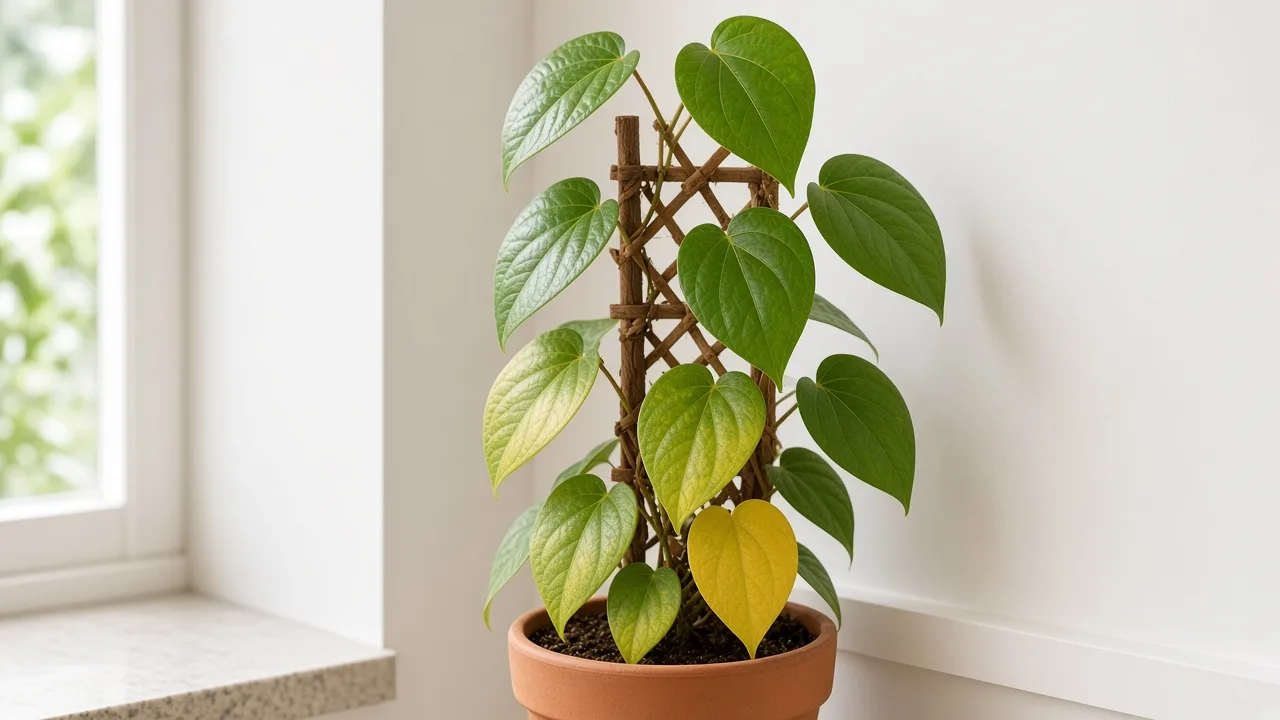
Yellow leaves on Black Pepper (*Piper nigrum*) usually start on the lowest cordate blades when roots sit wet on a heavy pot, or on new tip leaves when iron or light fails—not as random middle spots. First step: compare one yellow leaf at the basal nodes with the newest leaf at the trellis top, then probe the top 2–4 cm of mix and press the collar before you change watering or feed.
Yellow Leaves on Black Pepper: Causes, Checks & Fixes
This guide covers yellow leaves on Black Pepper. See also the general Yellow Leaves guide, watering, and light pages for this plant.
Yellow Leaves on Black Pepper: Causes, Checks & Fixes
Quick answer
Yellow leaves on Black Pepper (Piper nigrum, the peppercorn vine) are a pattern symptom, not one disease. Healthy vines hold glossy, cordate, palmately veined green blades on a woody climbing stem; yellowing tells you where the plant is failing—basal old leaves on wet mix, new tip leaves in dim rooms, or the whole canopy when roots or nutrients collapse.
For how yellow foliage works on houseplants in general, see our yellow leaves guide. On a pepper vine, the first fork is blade position: lowest hearts on a heavy wet pot (root stress), oldest leaves fading evenly in a leached container (nitrogen deficiency), or yellow new growth with green veins (iron deficiency).
First step: compare one yellow leaf at the lowest nodes near the pot with the newest cordate leaf at the trellis top—then run the 2–4 cm finger test and press the collar at the soil line. Do not fertilize until you know which pattern you have.
When to use this page vs other Black Pepper guides
| What you see | Read next |
|---|---|
| Yellow lowest leaves on heavy wet mix, limp petioles | Overwatering |
| Soft collar, sour smell, mushy roots | Root rot |
| Uniform yellow on oldest basal leaves, firm stems | Nitrogen deficiency |
| Yellow new leaves, green veins | Iron deficiency |
| Yellow between veins on old leaves | Magnesium deficiency |
| Washed-out green before clear yellow | Pale leaves |
| Long internodes, pale new growth in a dim corner | Not enough light |
| Yellow with brown scorched edges | Potassium deficiency |
What yellow leaves look like on Black Pepper
Piper nigrum leaves are glossy, heart-shaped, and alternate along a climbing woody vine—smaller than betel hearts but with the same Piperaceae habit. Yellowing rarely appears as a random middle-leaf spot; it follows node height on the trellis and care mistakes this species repeats indoors.
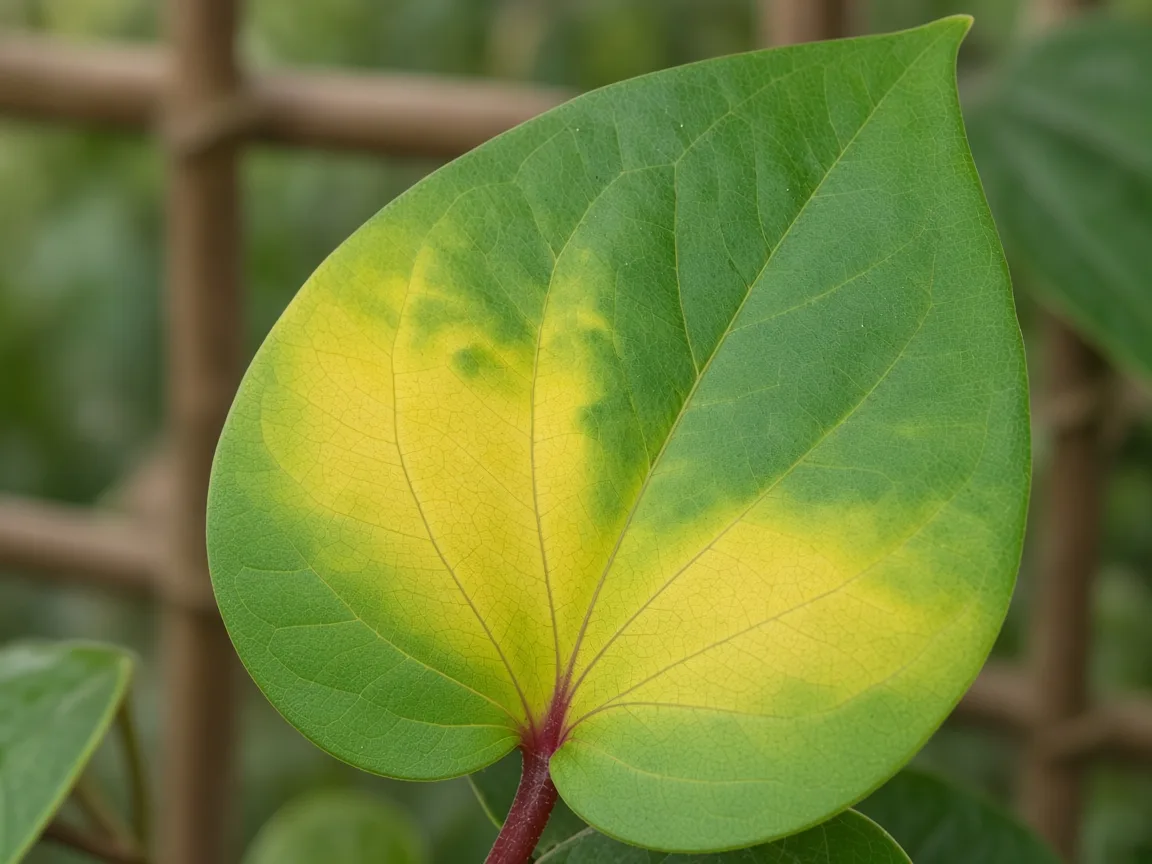
Yellowing from the petiole upward on a basal cordate pepper leaf—compare with the greener tip leaf on the same runner before you change watering.
Wet-root yellow (most common indoors):
- Lowest cordate leaves turn yellow-green, then full yellow, while soil stays damp for many days
- Petioles stay limp; blades may look glossy but hang at a sharper angle
- Pot feels heavy when lifted; drainage holes may smell sour on organic mix
- Matches chronic wet mix reducing root function on a humid-tropics vine that still needs drainage
Nitrogen yellow:
- Oldest leaves along the basal section of vine yellow evenly—veins and tissue fade together
- Yellow creeps upward over weeks; new tip leaves may stay greener but emerge smaller
- Nitrogen is mobile; deficiency shows on lower leaves first
- Roots firm; mix moisture rhythm otherwise normal—see nitrogen deficiency
Iron / pH yellow:
- Youngest cordate leaves at the tip show yellow between green veins (interveinal chlorosis)
- Often follows months of alkaline tap water on acid-leaning mix (target pH about 5.5–6.5 per the soil guide)
- Route to iron deficiency
Light-stress yellow:
- New growth yellows or stays chartreuse while lower leaves still look green
- Internodes stretch; vine leans toward glass—overlap not enough light and leggy growth
Normal basal turnover:
- One or two fully yellow blades at the very bottom of a tall trellis, rest of vine glossy
- Common when lower nodes spent months shaded by their own canopy
Urgent collapse:
- Several leaves yellow within days, collar soft on wet mix—overlap root rot and foot-rot risk on waterlogged pepper culture
Why Black Pepper yellows on a supported vine
Piper nigrum is a moist tropical forest understory climber with adventitious roots along the stem. University of Arkansas Extension describes pepper as a vine with heart-shaped evergreen leaves in sheltered, moist conditions. Container growers often copy “tropical = water often” without copying drainage and airflow at the collar.
That mismatch produces oxygen-starved roots even though leaves look thirsty. The vine sheds chlorophyll on lower leaves first because mobile nutrients and water move toward the growing tip—the lower-leaf yellowing pattern extension services describe on overwatered plants.
PFAF lists black pepper as preferring moist soil in semi-shade. In a dim indoor corner, a peat-heavy pot dries slowly while the care card still says water every few days—classic wet-root yellow on basal cordate blades.
Reading yellow by height on the trellis
Field pepper is trained up living supports; indoors you use a pole or trellis. Yellow only on the lowest 30–60 cm while the tip still climbs often means light starvation on old tissue, nitrogen redistribution, or normal turnover—not automatic root death.
Use this pepper-vine read:
- Yellow climbing steadily up the vine on firm stems in warm weather → nitrogen or magnesium—check months without fertilizer
- Yellow lowers + wet mix + limp petioles → root stress—pause water before any feed
- Yellow at tip with green veins → iron/pH—do not dump high-nitrogen feed on the problem
- Yellow only on the top third under an AC vent while lower nodes look fine → dry canopy air can pair with low humidity stress; confirm moisture before you only mist leaves
If basal yellow leaves sit where adventitious roots touch stagnant moisture against the pot rim, lift the coil and check whether those nodes sit in sour wet mix—a common cachepot mistake on Piper vines.
Collar and foot-zone checks before you treat leaves
On black pepper, the collar—where the woody stem meets the mix—is where foot rot and root failure start on chronically wet organic soil. Leaves can stay partly green while the base fails.
First fix when lowers are yellow on wet mix: stop watering and press the collar with a clean finger. Firm corky tissue means move to dry-down and airflow per overwatering. Soft, dark, or water-soaked collar on damp mix means unpot the same day—see root rot. Do not spray leaves or fertilize until collar and moisture logic are clear.
Adventitious roots at buried nodes should look white and firm when you peek at the soil surface. Brown mush at nodes plus yellow hearts confirms root-zone failure, not a leaf spray deficiency.
Pepper spikes vs foliage yellow
Indoor growers sometimes worry that yellow leaves will ruin future peppercorns. Foliage chlorosis and spike failure are different problems.
- Leaf yellow affects mature cordate blades at specific nodes; stems often stay firm and nodes keep extending.
- Spike stress shows as dropped catkins, failure to set fruit, or wilt on new spikes—not isolated yellow on older basal blades.
- Missouri Botanical Garden notes that houseplant pepper vines are often grown for foliage and may not fruit indoors; fix root-zone and light health before you chase berries.
Do not increase fertilizer to “force” fruit while leaves are still yellowing—that can worsen salt stress at the margins.
How to confirm the cause
Work in this order so you change one variable at a time:
- Moisture: finger 2–4 cm deep; lift pot weight; sniff drain holes
- Collar: firm vs soft at soil line on wet vs dry mix
- Leaf age: basal oldest vs newest tip on the same runner
- Vein pattern: uniform fade vs interveinal yellow on new leaves
- Light: distance to bright filtered window; recent move from shade to scorch or vice versa per the light guide
- Feed history: months in same leached compost without fertilizer in warm months
- Pests: stippling plus webbing on undersides points to spider mites; sticky residue to aphids or scale
| Pattern | Most likely cause | First action |
|---|---|---|
| Yellow lowers, wet heavy pot, limp | Overwatering / root stress | Stop watering; collar check |
| Soft collar, sour wet mix | Root rot / foot rot risk | Unpot; trim mush; dry-down |
| Even yellow oldest leaves, firm stem | Nitrogen deficiency | Confirm warm active growth; measured feed |
| Yellow new leaves, green veins | Iron / alkaline water | Adjust water; chelated iron if confirmed |
| Yellow new growth, long internodes | Low light | Improve placement |
| One–two yellow bottom leaves only | Senescence / basal shade | Accept or shorten basal section; watch tip growth |
First fix for Black Pepper
Apply one correction first, then wait for the next node flush.
If lowers are yellow on wet, heavy mix
Pause watering until the top 2–4 cm feel dry to the touch, empty saucers within 30 minutes after any soak, and improve airflow around the pot rim. Judge success by firmer petioles and no new yellow blades within two weeks—not by old leaves re-greening.
If the collar is firm but oldest leaves fade evenly
Confirm the vine is in active warm growth, roots are moist-not-soggy, then apply one half-strength balanced feed from the fertilizer guide. Container plants lose nutrients to leaching with repeated watering—fast leafy vines burn through nitrogen in small pots.
If new tip leaves show green veins on yellow blades
Flush with lower-pH water (rainwater or filtered) and correct iron only after confirming the pattern on subsequent flushes—see iron deficiency.
If new growth is chartreuse with stretched internodes
Move once to bright filtered or sun-dappled light—east morning sun with afternoon protection, or sheer curtain indoors. MOBOT recommends sun-dappled areas or bright indirect sun for this tropical vine.
Recovery timeline
- Overwatering pause: limp yellow lowers often stabilize in 7–14 days if collar stays firm; new tip growth in 2–4 weeks
- Nitrogen feed: next two cordate leaves at the tip should look larger and deeper green within 3–6 weeks in warm humid growth
- Iron correction: interveinal yellow on new leaves fades on subsequent flushes, not on blades already fully yellow
- Collar rot: weeks to months if salvageable; yellow leaves are the late signal—collar decides save vs cutting
Fully yellow cordate tissue does not re-green. Trim yellow blades only for appearance after the cause is fixed.
What not to do
- Fertilizing yellow vines on wet mix—salts stress roots that already lack oxygen
- Increasing watering because leaves look yellow while the pot is already heavy and cool at depth
- Treating all yellow as nitrogen hunger—tip pattern with green veins is iron, not urea
- Ignoring the collar because upper leaves still look green
- Stacking repotting, hard pruning, and pesticide on the same day as a watering overhaul
How to prevent yellow leaves on Black Pepper
Align with pepper-vine rhythm: bright filtered light, even moisture via the 2–4 cm check, 60–80% canopy humidity, fertile soil with drainage, and light feeding in warm months. Extend trellis height before basal leaves live in permanent shade. Inspect collar and drain holes when you see fungus gnats at the rim. Return to everyday care on the overview when symptoms overlap sibling issues.
When to worry
Treat as urgent if yellow damage spreads to most new leaves within a week, stems soften at the soil line on wet mix, soil smells sour, or fine webbing appears on undersides—those patterns point past simple chlorosis toward root rot, chronic overwatering, or spider mites.
Lower urgency: one or two yellow basal blades while stems stay firm, soil moisture matches the finger test, and new nodes still emerge along the trellis.
Conclusion
Yellow leaves on Black Pepper are usually a readable pattern on a climbing Piper vine, not a mystery disease. Piper nigrum yellows on lowest wet-root blades, oldest nitrogen-starved leaves, or new iron-stressed tips—and the collar tells you when the problem is already root failure. Compare basal vs tip blades, run the 2–4 cm dry-down, and fix one lever at a time; then watch the next cordate flush for the real verdict.
Related Black Pepper guides
- Overview — pepper vine habit and placement
- Problems hub — full symptom index
- Watering — dry-down rhythm after yellow lowers on wet mix
- Light — filtered shade vs harsh sun on cordate leaves
- Fertilizer — when to feed without burning stressed roots
Related tool
Use the Yellow Leaves Diagnosis Tool to narrow causes for yellow leaves on this plant before changing multiple variables at once.