Not Enough Light on Black Pepper: Causes, Checks & Fixes
Quick answer
Not enough light on Black Pepper shows as long gaps between nodes, smaller pale ovate leaves at the growing tip, and a vine that leans toward the brightest window even when watering is steady. First step: move the pot to the brightest filtered spot you have—usually an east window or dappled balcony—and leave everything else unchanged for two weeks.
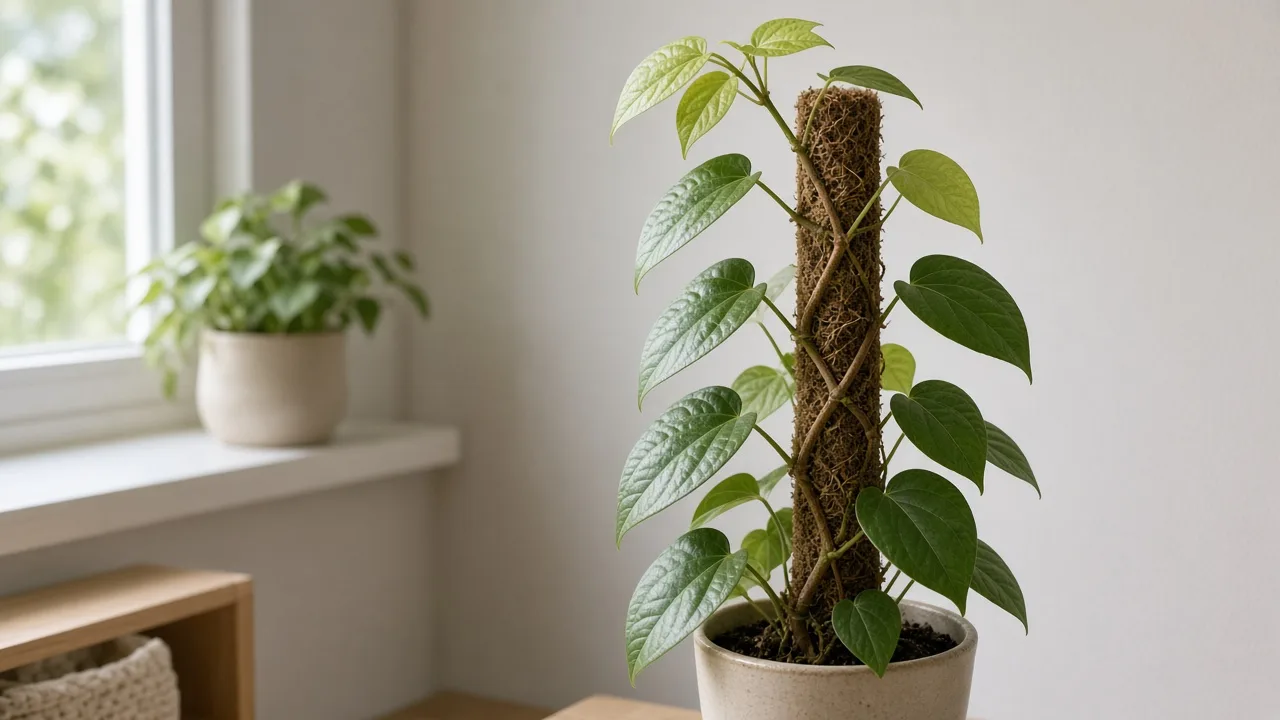
Not Enough Light on Black Pepper: Causes, Checks & Fixes
This guide covers not enough light on Black Pepper. See also the general Not Enough Light guide, watering, and light pages for this plant.
Not Enough Light on Black Pepper: Causes, Checks & Fixes
Quick answer
Black Pepper (Piper nigrum) is a woody tropical spice vine—not a sun-baked Capsicum bush. In the wild it climbs through the moist tropical forest understory, where light is bright but filtered. Indoors, “part shade” does not mean a hallway with no usable rays. In too little light, internodes stretch, new cordate leaves stay small and yellow-green, and the whole vine leans toward the brightest gap even when your watering rhythm is fine.
For how chronic low light limits photosynthesis in general, see our not enough light hub. On black pepper, the decisive check is node spacing on the climbing stem—not whether the room looks bright to you.
First step: move the pot to the brightest filtered spot you have (typically an east window, a shaded east balcony, or within a few feet of a sheer-curtained south window) and change nothing else for two weeks so you can read the vine’s response.
When to use this page vs other Black Pepper guides
- Leggy growth — when elongated stems and window-lean are the headline symptom
- Pale leaves — when washed-out color dominates but internode length looks normal
- Slow growth — when cool nights or root stress stall the vine despite good light
- Yellow leaves — when older leaves fade on heavy wet soil or after drought
- Low humidity — when crisp brown tips appear in dry AC air with otherwise adequate light
- Light guide — long-term placement, shade cloth, scorch vs stretch, and grow-light backup
- Problems hub — full symptom index
What not enough light looks like on Black Pepper
Healthy black pepper in good filtered light carries glossy, palmately veined, dark green leaves (often 5–7 inches long on mature vines) at relatively short intervals along flexible climbing stems. Low light breaks that rhythm before the vine collapses.
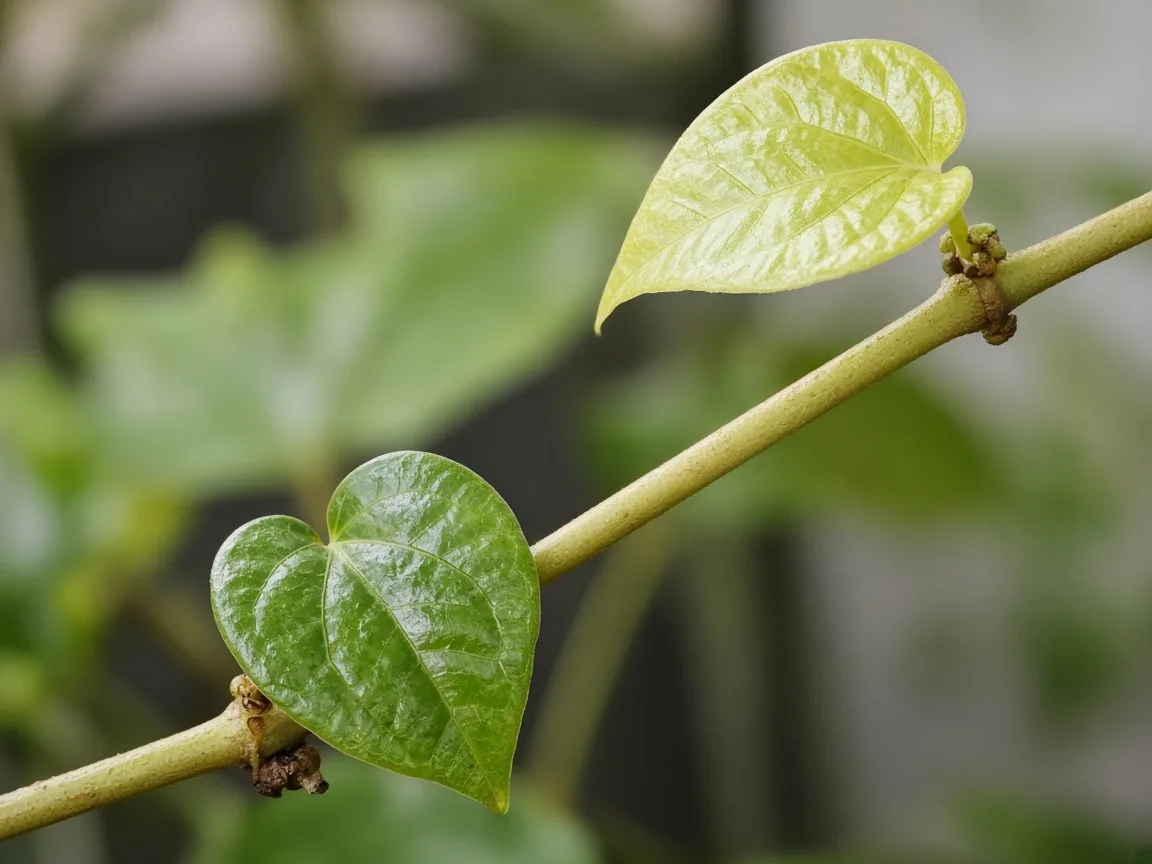
Long internode with a small pale leaf at the tip—compare spacing and leaf size to older nodes lower on the same vine.
Typical shade-stress pattern on Piper nigrum:
- Long internodes between nodes on the trellis or moss pole—often obvious on the top 30–60 cm of vine
- Smaller new leaves at the growing tip compared with leaves the plant made in a brighter season
- Pale yellow-green color that never deepens to the rich green of a well-lit flush
- Strong phototropism—the vine and newest leaves angle toward one window or terrace opening
- Thin, soft new tissue that spider mites and aphids colonize quickly in dry rooms
- Stalled extension on an otherwise green vine—growth continues but each new leaf is a disappointment
- No pepper spikes indoors even after years—houseplants rarely fruit without greenhouse conditions; chronic shade makes weak foliage the main signal
This differs from underwatering when the pot is light and soil is dry at 2–4 cm depth, from overwatering when nodes soften on sour wet mix, and from curling leaves when turgor loss or pests twist foliage while internode length stays normal.
Why Black Pepper gets not enough light
Missouri Botanical Garden lists Piper nigrum for part shade and recommends growth in sun-dappled areas or areas with bright indirect sun, with a support structure such as a wooden frame or prop tree. (Missouri Botanical Garden) That is brighter than many dim living rooms deliver at leaf height.
UAEX describes pepper as part of the moist tropical forest understory, where freely rooting vines run across the ground and climb supporting trees. (University of Arkansas Extension) Field culture uses partial sunlight on trellises so vines can spread and climb—useful brightness, not zero photons. (PlantVillage — Penn State)
When photons fall short, the vine extends stems to search for light—etiolation—and reduces leaf area at each new node.
Black-pepper-specific triggers:
- North-facing or interior rooms — human eyes adapt to dim light; the vine at leaf height may receive far less energy than an east balcony.
- Winter move indoors without a grow light — the same pot that thrived on a humid terrace stretches by spring.
- Sheer curtains plus deep setback — filtered light is correct, but distance from glass can drop intensity below what this Piperaceae climber needs for full leaves.
- Competing shade from taller plants — grouped displays often shade the pepper crown while lower pots still look “bright.”
- Confusing Piper with Capsicum — moving a spice vine into “full sun vegetable” placement can scorch leaves; pulling it back into a dark corner fixes scorch but recreates stretch.
- Overcast monsoon weeks — growth slows and internodes lengthen even when watering stays steady; light, not moisture, is the limiting factor.
Do not blame shade alone if the collar is soft on wet soil—confirm firm green nodes before you treat stretch as purely a light problem.
Reading internode spacing on a pepper vine
Each black pepper node can produce adventitious roots where the stem touches a moist support. That climbing habit gives you a measuring tape built into the plant—something you cannot do on a rosette succulent.
| What you see on the newest vine section | What it usually means | First adjustment |
|---|---|---|
| Internodes short; leaves broad and glossy | Light likely adequate | Look at water, humidity, or pests if other symptoms persist |
| Internodes long; tip leaves small and pale | Chronic insufficient light | Move to brighter filtered placement; hold fertilizer |
| Upper leaves shrinking while lower leaves look normal | Light limiting top growth on the trellis | Raise or relocate the crown into brighter filtered rays |
| Lean toward one window with normal internodes below | Recent placement change or seasonal sun angle | Rotate pot weekly after you improve the bright side |
| Pale stretch plus cottony tufts in leaf axils | Pests on weak tissue, not light alone | Inspect; see mealybugs |
Press a node 10–15 cm above the soil line. Firm and green with pale slow tips points to placement. Soft and wet-smelling on a heavy pot demands dry-down first regardless of stretch.
The soft-shadow field test at leaf height
Black pepper wants bright filtered light, not harsh midday beams on unacclimated leaves. The quick field test from the light guide still applies when you are diagnosing stretch:
On a clear morning, hold your hand between the sun path and the vine at leaf height. A soft shadow with defined edges usually means bright indirect or dappled light—the thrive zone for Piper nigrum. A faint or missing shadow means the spot is too dim for steady growth even if you can read a book nearby. A sharp hard shadow at midday on the lamina means direct intensity that may bleach leaves after a move from deep shade.
Re-test after monsoon cloud cover lifts and again in winter—the same balcony corner can flip from ideal to punishing as sun angle changes.
How to confirm not enough light
Work through these checks in order:
- Light at leaf height — on a clear morning, note whether soft sun or bright indirect rays touch the leaves (not just the wall behind the pot).
- Internode comparison — measure spacing between the last four nodes on the growing tip versus four nodes from mid-vine.
- Pot weight vs watering — if the 2–4 cm layer is evenly moist and the vine still stretches, light is a stronger suspect than drought.
- Directional lean — strong one-sided growth toward a window supports light stress; even growth in a dim room can still mean insufficient intensity.
- Pest cross-check — flip the newest leaf; stippling or webbing means pests on etiolated tissue, not a reason to delay better light.
If stretch appeared right after a move to a darker room, you already have a confirmed diagnosis—skip straight to placement.
The first fix to try
Move the container to brighter filtered light in one deliberate step—not harsh midday sun on a shade-grown vine.
Practical targets for home Piper nigrum:
- East window or east balcony — brightest “safe” default for spice vines
- South or west exposure with sheer curtain or 1–2 m setback so leaves do not heat-scorch
- Grow light 30–45 cm above the canopy, about 12–16 hours daily, if only north light is available
Leave watering, fertilizer, and pot size unchanged for two weeks. Black pepper in low light uses water slowly; stacking extra irrigation while you experiment will invite fungus gnats and root stress.
Step-by-step recovery
After the move:
- Rotate the pot a quarter turn every few days so new nodes do not all face one direction.
- Keep humidity high (60–80%+) so pale new leaves do not crisp at the margins while they harden—see low humidity if tips brown in AC air.
- Train fresh growth onto the support with soft ties; adventitious roots cling better on a moist pole in good light.
- Snip the worst stretched tip only after you see two nodes with shorter spacing and larger leaves—otherwise the vine elongates again.
- Hold fertilizer until new flush looks glossy green for two weeks; feeding a shade-stressed vine does not replace photons.
If the vine was etiolated for months, expect a thin top section that never fills out—recovery is new nodes, not old leaves re-greening.
Recovery timeline
| Severity | What you usually see | Realistic window |
|---|---|---|
| Mild (recent move to dim room) | Next node slightly shorter; leaf a bit larger | 2–3 weeks after brighter filtered light |
| Moderate (months of north-window growth) | Two to three nodes with better size and color | 4–8 weeks in growing season |
| Severe (woody stretched top, tiny leaves) | Firm new nodes after tip prune + light | One warm season; old stretched wood stays thin |
Winning signs: the next two cordate leaves open larger and glossier; internode length stabilizes; lean stops increasing. Losing signs: continued stretch on wet soil, yellowing lower leaves, or pest colonies spreading—re-check overwatering and pests.
Lookalike symptoms
| Pattern | Likely cause | Where to go |
|---|---|---|
| Long internodes, pale small tip leaves, firm stem | Not enough light | Stay on this page |
| Long internodes only on one side | Uneven window light | Improve placement; rotate pot |
| Pale leaves with normal internodes | Nutrient or pH issue possible | Pale leaves or nitrogen deficiency after light is ruled out |
| Small twisted new leaves, stippling | Pests | Spider mites, thrips |
| Yellow leaves on heavy wet pot | Root stress | Overwatering |
| Crisp bleached patches after bright move | Sun scorch | Light guide — add shade, not more sun |
What not to do
- Do not flood a dim vine because growth slowed—wet mix in low light worsens root stress.
- Do not fertilize heavily hoping leaves darken without brighter placement.
- Do not jump from a dark room to harsh midday terrace sun in one day—acclimate over a week to avoid scorch.
- Do not repot to fix stretch—root room does not replace photons.
- Do not assume “part shade” means a bathroom with no window—the species tolerates filtered understory light, not zero usable light indoors.
How to prevent not enough light
Match habitat logic at home: bright filtered or sun-dappled light on a sturdy trellis, with steady moisture and high humidity. (Missouri Botanical Garden) Re-read placement when monsoon cloud cover thickens or when you bring the pot indoors for cool nights. Pair light checks with the 2–4 cm finger test from the watering guide—low light slows water use, and the two stresses often arrive together in winter rooms.
Inspect new nodes weekly. MOBOT notes indoor plants are susceptible to aphids and mealybugs; pale stretched tips are their favourite landing zone. (Missouri Botanical Garden)
Related Black Pepper guides
- Overview — Piper nigrum biology and placement baseline
- Problems hub — all sibling symptoms
- Light — filtered sun, windows, and scorch vs stretch
- Soil — organic mix that holds moisture without waterlogging
- Watering — dry-down rhythm that changes with light level
Related tool
Use the Plant Problem Diagnosis Tool to narrow causes for not enough light on this plant before changing multiple variables at once.