Underwatering on Black Pepper: Causes, Checks & Fixes
Quick answer
Underwatering on Black Pepper shows up as a light pot, dry top 2–4 cm of mix, and dull limp glossy leaves—not yellow mushy foliage on a heavy wet pot. First step: probe the top 2–4 cm and lift the container before you pour; if both read dry, give one thorough soak and drain fully.
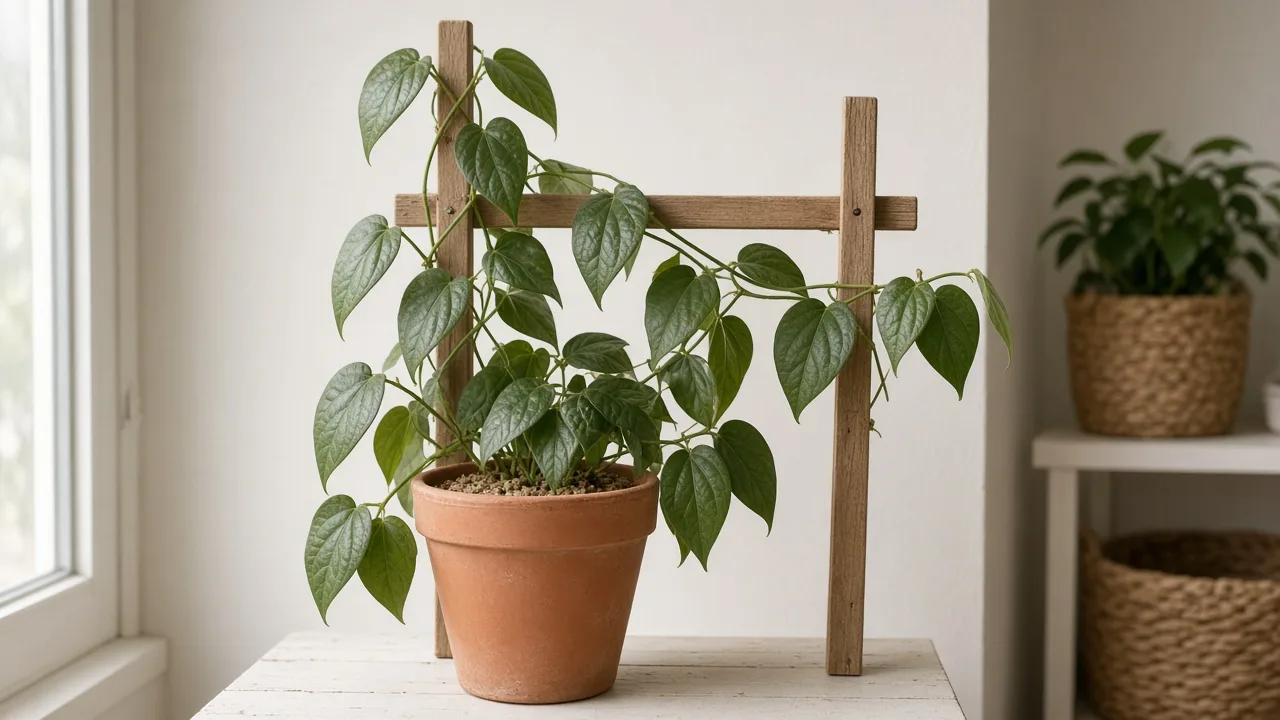
Underwatering on Black Pepper: Causes, Checks & Fixes
This guide covers underwatering on Black Pepper. See also the general Underwatering guide, watering, and light pages for this plant.
Underwatering on Black Pepper: Causes, Checks & Fixes
Quick answer
Underwatering on Piper nigrum is easy to miss because growers often fear the opposite problem. Black pepper belongs to the moist tropical forest understory, where vines root freely through humid shade—not in a bone-dry windowsill that only gets a weekly splash. When the root zone dries too far or too fast, glossy leaves lose turgor, node spacing widens, and owners who recently corrected overwatering may wait too long to soak again.
For how chronic dryness stresses houseplants in general, see our underwatering guide. On Black Pepper, the tell is a light pot, dry top 2–4 cm of mix, dull limp leaves, and sometimes crispy tips when air is also dry—not limp yellow lowers on heavy wet soil.
First step: push your finger 2–4 cm into the mix and lift the pot before you add water. If both read dry, one thorough soak with full drainage is the correct first fix—not fertilizer, repotting, or pruning on the same day.
When to use this page vs other Black Pepper guides
- Drooping leaves — limp foliage from many causes; this page focuses on confirmed dry root zone and light pot weight
- Wilting — rapid whole-vine collapse; use when turgor drops fast after heat or collar failure
- Overwatering — heavy cool pot, yellow lowers on dark damp mix, fungus gnats at the rim
- Root rot — sour mix, soft collar, wilt on wet soil after chronic saturation
- Low humidity — crisp brown tips with otherwise firm leaves and moist mix
- Watering guide — long-term top-layer dry-down rhythm after thirst is corrected
- Overview and problems hub — cluster navigation when symptoms overlap
What underwatering looks like on Black Pepper
A healthy Kali Mirch vine holds glossy cordate leaves at a firm angle along climbing stems on a trellis, pole, or prop tree. Underwatering changes gloss and posture before it kills the plant.
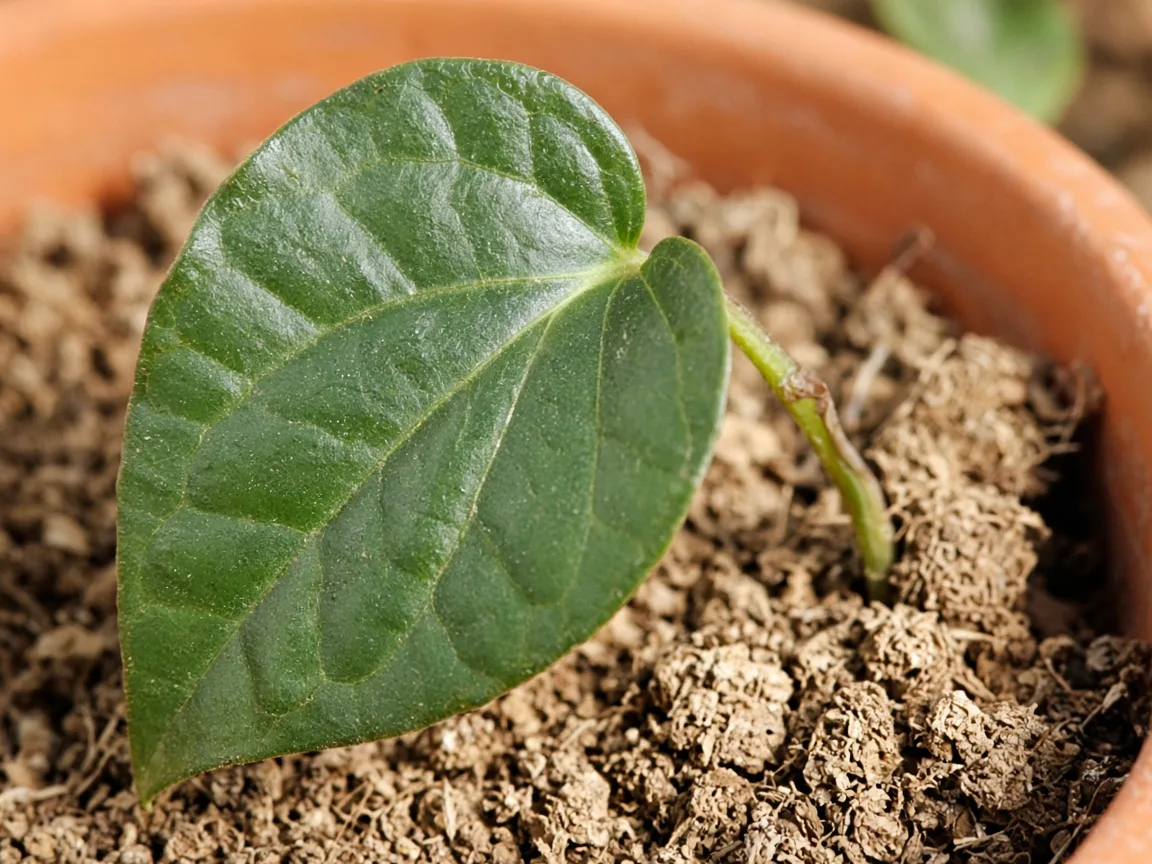
Underwatering on Black Pepper—slightly dull leaf surface, soft limp petiole angle, and pale crumbly mix pulling from the pot wall beside a woody support.
Early thirst shows subtly dull leaves, petioles that hang lower than usual, and mix that looks pale or dusty in the top 2–4 cm while the pot feels lighter than you expect. New tip growth may pause for a week without obvious pest damage.
Established drought brings clearly limp glossy blades that feel thin rather than turgid, slowed vine extension between nodes, and soil pulling away from the pot edge. Adventitious roots on a dry moss wrap or rough bark may look shriveled.
Advanced dry-down can include papery lower leaves, brown crispy margins when humidity is also low, and a vine that wilts on a feather-light container. Very dry peat or coir may repel water on the surface even after you pour—see the hydrophobic ring section below.
What underwatering is not: limp glossy leaves on a heavy wet pot (overwatering or root rot); stippling with webbing (spider mites); yellow lowers on constantly dark mix; sudden flop after a cold night below about 10°C (wilting from chill).
Why Black Pepper dries out faster than you expect
Black pepper is not drought-tolerant. PlantVillage cultivation notes stress consistent moisture and slightly damp soil while avoiding waterlogging—a narrow band that breaks when pots swing too dry. Missouri lists Piper nigrum at medium water need in rich potting soil with good drainage and advises frequent foliar misting for humidity (Missouri Botanical Garden — Piper nigrum). Several Piper-specific habits push containers dry faster than a calendar schedule suggests:
The 2–4 cm dry rule vs waiting for collapse
LeafyPixels profiles and the Black Pepper watering guide target watering when the top 2–4 cm feel dry while deeper mix stays lightly damp. Waiting until every leaf droops means the root ball has already been dry too long—especially in a small or root-bound pot climbing actively in bright filtered light.
Fear of foot rot after overwatering scares
Because Phytophthora foot rot thrives in wet, poorly draining soil, cautious growers sometimes skip drinks until vines wilt—swinging past the safe dry side into real drought. Underwatering is less common indoors than chronic wetness, but dry AC rooms, forgotten balcony pots, and winter heat still empty mix quickly.
Root-bound instant-drainage trap
When roots circle the bottom and displace soil, water runs through in seconds without soaking the mass. You keep watering, see instant drainage, assume the plant is wet, and the vine wilts anyway—a pattern that mimics chronic underwatering even when you water often. See repotting when the pot dries within a day of a full soak.
Trellis height and top-heavy transpiration
Long climbing stems complicate the picture. A mature vine may look fine at the base while upper leaves wilt first—the longest shoots lose water fastest on a hot east balcony. Sparse nodes and stalled pepper spikes often follow prolonged dry spells (slow growth).
Hydrophobic aged peat or coir
Mix that stays dry for weeks can repel water on the surface while the interior root ball stays bone dry. Black pepper in old mix may get a splash on top every few days while the center never rehydrates—especially after a travel gap or a switch to a smaller decorative cache pot.
How to confirm the cause
Use this order so you do not treat rot with more water or drought with a dry wait:
- Pot weight — Lift the container. A light pot often needs water; heavy means moisture remains.
- Finger or skewer test — Push into the mix 2–4 cm deep. Dry at that depth with limp leaves supports underwatering.
- The wet-soil paradox — Dry soil + drooping = underwatering. Wet soil + drooping = overwatering or root rot. Wilted leaves may indicate soil that is too dry or too wet. This single pairing prevents most pepper watering mistakes.
- Drainage check — Pour a small amount of water. If it exits the bottom instantly and the top stays pale and dry, suspect hydrophobic mix or root binding—not adequate watering.
- Leaf color and texture — Soft limp green leaves on dry soil fit drought. Yellow lower leaves on damp soil with firm stems often fit overwatering.
- Collar feel — Soft dark tissue at the soil line on a wet pot points to foot rot, not thirst (root rot).
- Recent history — Travel, a new low-light spot, monsoon pauses that lasted too long between storms, or AC blasting on a shelf all raise underwatering risk.
If soil is moist 2–4 cm down and leaves remain wilted after 24 hours, stop adding water and inspect roots for rot or binding.
First fix for Black Pepper
Rewet the entire root ball with one slow, thorough watering session.
Take the pot to a sink or tub. Water evenly across the surface until water runs freely from the drainage holes—then wait two minutes and water once more so dry pockets absorb moisture. If water channels through immediately without darkening the mix, switch to bottom watering: set the pot in 3–5 cm of room-temperature water for 20–30 minutes until the top inch feels moist, then lift it out and let it drain completely. Very dry soil may need soaking to wet properly again.
Do not fertilize, repot, or prune heavily on day one. One proper soak solves most mild black pepper drought. After draining, return the plant to bright filtered light on its support and recheck leaf turgor in a few hours.
Step-by-step recovery
If a single soak does not fully rehydrate the plant, continue in this order:
- Repeat bottom watering once if the mix still feels dry at depth after top watering—especially when soil has shrunk from the pot edge.
- Break surface tension on hydrophobic mix — After bottom watering, poke a few shallow holes in the dry crust with a chopstick so the next drink penetrates. If water still will not absorb, plan to refresh the mix within the next week using the soil guide; do not leave the root ball permanently dry inside wet-looking surface crumbs.
- Trim only fully crisp leaves — Brown dead edges will not recover. Removing them is optional cosmetic work, not the primary fix.
- Repot if root-bound — If roots fill the pot and water never lingers, move to a container one size up with fresh well-draining organic mix. Water once after repotting, then resume the 2–4 cm dry-down rhythm.
- Adjust placement temporarily — Move severely wilted vines out of harsh midday sun until turgor returns; filtered light reduces further water loss while roots catch up.
- Hold fertilizer — Wait until leaves firm up and new nodes appear before feeding. Salts on drought-stressed roots can burn tender tissue.
Recovery timeline
Mild drought: Leaves often regain turgor within 24–48 hours of a thorough watering. Watch for glossy blades and upright petioles by the next day.
Moderate drought (dry several days, some crisp edges): Vines stabilize in 3–5 days. Old damaged margins stay brown; judge by firm leaf blades and resumed internode length.
Severe or repeated drought: Fine root tips may die back. New growth at vine nodes may take 1–3 weeks to resume in warm humid conditions. Judge progress by new growth, not by forcing every older leaf perfect.
Signs recovery is working: Leaves feel thick again, stems lift along the trellis without flopping, and new cordate leaves at tips are glossy and turgid.
Signs the problem is worsening: Increasing papery leaves on a still-light pot after two soaks may mean root damage from earlier drought; soft collar on a wet pot means stop watering and inspect for foot rot.
Lookalike symptoms on Black Pepper
| What you see | Likely cause | Next step |
|---|---|---|
| Limp leaves, light pot, dry 2–4 cm | Underwatering | One thorough soak + drain |
| Limp leaves, heavy pot, damp mix | Overwatering / root uptake failure | Overwatering page |
| Yellow lowers, sour smell, soft collar | Foot rot / Phytophthora | Root rot — do not soak |
| Crisp tips, firm leaves, moist mix | Low humidity / salt | Low humidity |
| Whole vine flop after heat spike | Temporary heat wilt | Re-check dry-down; may need more frequent checks in summer |
| Stippling, webbing, dusty undersides | Spider mites | Spider mites — not fixed by water alone |
Mistakes to avoid
Do not pour daily shallow sips after a drought—that keeps the top damp while the core stays dry and invites the overwatering pattern within a week. Do not compensate for underwatering by leaving the pot in a saucer of standing water; black pepper still needs oxygen at the roots between drinks (overwatering contrast). Do not fertilize, repot, and hard-prune on the same day after you finally soak—give the vine 48 hours to show turgor response. Do not assume afternoon limp leaves mean thirst if the mix is wet at 2–4 cm; temporary wilt in hot sun can recover by evening without extra water.
How to prevent underwatering next time
Water when the top 2–4 cm approach dry, then soak until runoff and empty saucers within 30 minutes—details in the watering guide. Learn your pot’s weight after a full drink versus when the finger test passes. In Indian summer on an east balcony, many containers need checks every 2–4 days; in cool cloudy stretches, stretch toward 5–8 days without skipping probes entirely.
Keep humidity high with mist or grouping, but treat that as leaf support—not a substitute for root moisture when the mix is dry. Repot when the vine dries out in under a day after watering. Pair watering checks with light and soil so the same pot does not stay wet for a week in deep shade or empty in two days on a windy terrace.
Related Black Pepper guides
Use drooping leaves when limp foliage could be wet or dry—start with probe and lift. Use this page when the pot is light and the top 2–4 cm are dry. Use overwatering when mix stays dark and damp under shade cloth. Use wilting for sudden collapse after heat or chill. Use slow growth when nodes stall after drought stress is resolved but light or nutrition may also be limiting.
Related tool
Use the Plant Watering Calculator to narrow causes for underwatering on this plant before changing multiple variables at once.