Drooping Leaves on Black Pepper: Causes, Checks & Fixes
Quick answer
Drooping leaves on Black Pepper usually mean the root zone is out of balance—often overwatered mix in a shaded pot, but also a dry spell, low humidity, or collar foot rot after cold wet nights. First step: probe the top 2–4 cm of mix and lift the pot before you water again.
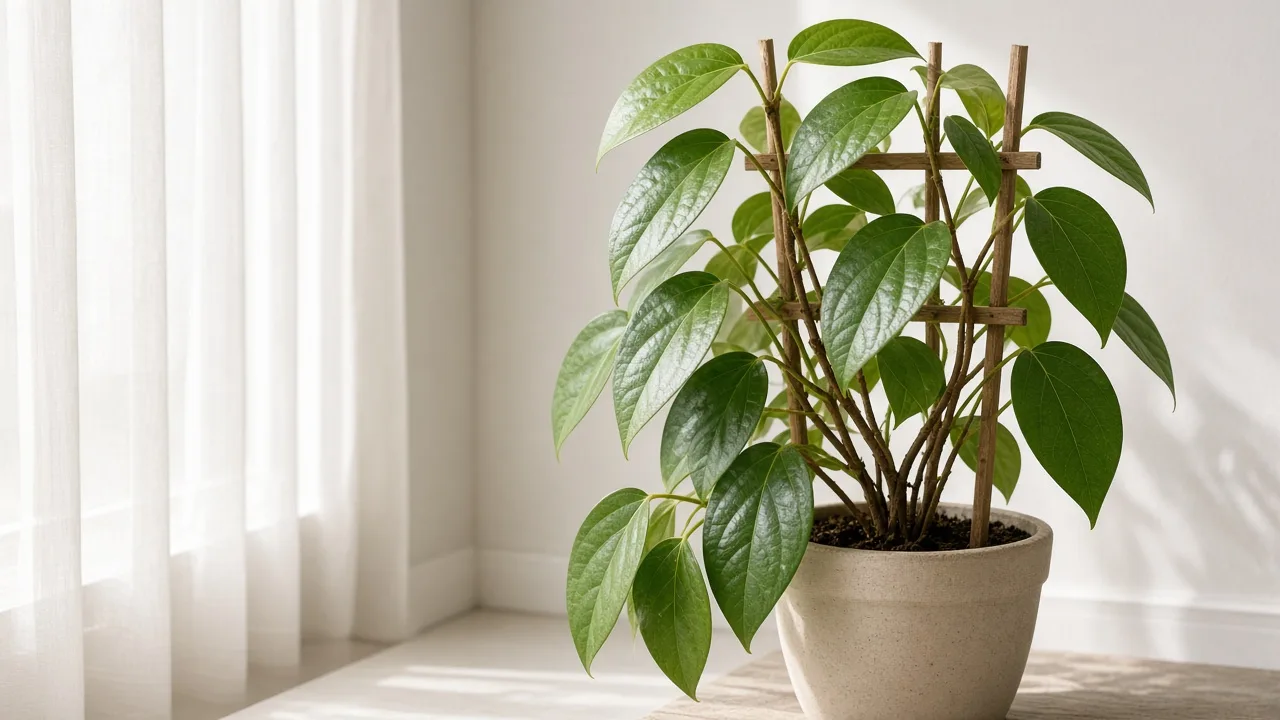
Drooping Leaves on Black Pepper: Causes, Checks & Fixes
This guide covers drooping leaves on Black Pepper. See also the general Drooping Leaves guide, watering, and light pages for this plant.
Drooping Leaves on Black Pepper: Causes, Checks & Fixes
Quick answer
Drooping leaves on Piper nigrum mean the glossy oval foliage has lost turgor and hangs from the climbing stem instead of holding its usual firm angle along the trellis. That sag almost always traces to the root zone—not because the pepper vine automatically needs more water. For how turgor loss works on houseplants in general, see our drooping leaves hub. On Black Pepper, probe the top 2–4 cm of mix and lift the pot before you pour another drink.
First step: push your finger 2–4 cm into the mix and lift the container. A light, dry pot with limp leaves calls for measured watering. A heavy, wet pot with drooping lower leaves means root stress or collar foot rot—stop watering and check stem firmness at the soil line before you add more water.
When to use this page vs other Black Pepper guides
| Pattern | Read next |
|---|---|
| Slow sagging oval leaves, gradual limp petioles | Stay here |
| Rapid multi-node collapse within hours | Wilting |
| Heavy wet pot, yellow lowers, no urgent collar mush | Overwatering |
| Soft collar + mushy roots on wet mix | Root rot |
| Light pot, dry top 2–4 cm, dull firm leaves | Underwatering |
| Limp leaves after repot or root disturbance | Black Pepper repotting stress section |
| Long-term dry-down rhythm after the vine stabilizes | Watering guide |
What drooping leaves look like on Black Pepper
On a healthy pepper vine trained on a trellis, pole, or support tree, simple oval leaves sit at a firm angle along woody climbing stems. The plant looks lush even in filtered shade. Drooping changes that silhouette—and the pattern tells you which branch to follow.
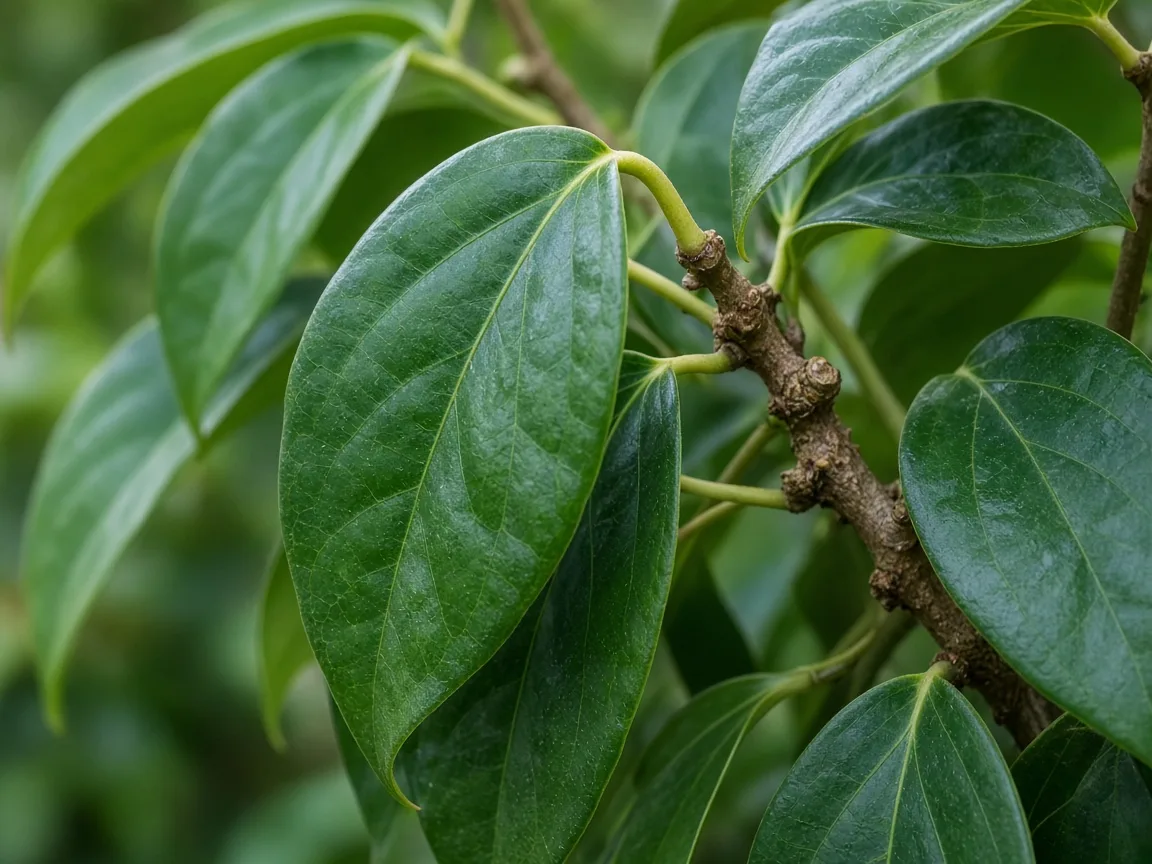
Drooping leaves on Black Pepper—a limp oval blade and soft petiole often track wet roots in a shaded pot, not simple thirst.
Wet-soil droop is the most common misread on this species. Lower oval leaves hang limp while the mix stays dark, cool, and heavy. Yellowing often starts on bottom leaves first. Gloss may dull to flat green as stress builds. You may see fungus gnats near the soil surface or a faint sour smell from drain holes. The collar—the stem base where adventitious roots enter the mix—may feel soft if foot rot is advancing.
Dry-soil droop shows slightly limp leaves on a lightweight pot. The surface mix is pale and crumbly when you probe the top 2–4 cm. Leaves feel thinner but still firm—not mushy. Black Pepper shows drought stress visibly because thin tropical leaves transpire steadily even in semi-shade. This pattern often follows a missed watering, a windy balcony that dried the small pot fast, or winter heat that pulled moisture from dense organic mix.
Sudden whole-vine flop within a day or two usually points to cold draft, repot shock, or rapid root failure—not gradual thirst. A balcony vine drooping after a cold night below about 10°C (50°F) is a classic cold-stress pattern. Droop that appears right after Black Pepper repotting often follows root disturbance rather than a calendar watering mistake.
Gradual droop over weeks on an otherwise moist pot in very deep shade can reflect insufficient light weakening stems. Black Pepper tolerates filtered shade, but prolonged dark corners can produce soft, leaning foliage that looks like droop even when soil moisture is adequate—see not enough light when new internodes stretch and leaves stay small.
Why oval pepper-vine leaves droop differently than other houseplants
Piper nigrum is a Piperaceae climber with simple, alternating oval leaves on relatively long petioles—not the thick succulent blades of a snake plant or the broad heart-shaped paan leaves of betel vine. When turgor drops, entire oval leaves hang downward along the woody stem rather than folding crisply at the midrib. Owners sometimes mistake the natural downward angle of mature leaves for stress until several blades sag at once.
Because Black Pepper evolved for sheltered semi-shade with moist soil, the plant can look healthy while the pot dries very slowly in a dim room. That combination—low transpiration plus calendar watering—keeps roots wet longer than owners expect. Wet roots fail to move water upward, and the glossy leaves droop even though the mix feels moist. This is the opposite of a thirsty succulent; it is a root-zone oxygen problem disguised as leaf wilt.
The shaded-pot evaporation trap
Black Pepper belongs on an east balcony, under shade cloth, or behind a sheer curtain—not in harsh midday sun that scorches oval leaves. The trap is evaporation speed. In a shaded corner with cool AC, a peat-heavy nursery pot may stay wet for two weeks after one watering. Black pepper prefers consistent moisture but should not be waterlogged. Owners who water every few days because “tropical vines need constant moisture” keep pepper roots saturated while oval leaves slowly lose firmness.
Signs you are in the trap:
- Mix stays dark and cool for days after watering while lower leaves droop
- Pot never feels light between soaks despite limp foliage
- Fungus gnats hover at the rim on organic mix
- Saucer or cachepot still holds water 24 hours after watering
The fix is not more water—it is matching soak frequency to how fast your shaded pot actually dries. Review the watering guide dry-down rhythm once drooping stabilizes.
Trellis nodes and collar foot rot on pepper vines
Field black pepper is trained on supports because the vine is a natural climber; home pots mirror that habit. When soil stays wet and airflow at the soil line is poor, foot rot (Phytophthora-style collar failure) can start where the stem meets saturated mix—exactly where adventitious roots should anchor.
Periodically waterlogged soils favor Phytophthora root diseases. On pepper vines, that often shows as dark water-soaked tissue at the collar, sudden lean on the trellis, and drooping that spreads up the stem while mix remains wet. Route to root rot when roots are brown and mushy after inspection.
Trellis wrap traps add another plant-specific wrinkle. Owners mist the support daily for humidity while also watering soil on schedule. Nodes pressed against constantly wet fiber or coir share one anaerobic zone with the collar. Upper leaves may look fine while lower nodes soften and oval blades droop from the soil line upward.
Low humidity and dry indoor air on thin Piper leaves
Black Pepper targets roughly 60–80% humidity in the care overview. Dry AC air can dull and limp oval leaves even when mix moisture looks correct—the petioles bend while the top 2–4 cm still feels lightly damp. This pattern overlaps low humidity more than underwatering.
Before you soak a drooping vine in a humid room with a heavy pot, check leaf edges for crisp brown tips and whether only the newest growth looks thin. Raising humidity with a pebble tray or grouping plants may firm petioles without changing the watering schedule.
The collar pinch and pot-weight fork
Your fastest home test mirrors field foot-rot triage on pepper stems:
- Lift the pot. Heavy and cool days after watering → wet-soil branch. Feather-light → dry-soil branch.
- Probe the top 2–4 cm. Clinging damp on a heavy pot confirms you should not add water yet.
- Pinch the collar where adventitious roots enter the mix. Firm tissue with limp lowers may recover after a dry-down. Soft, dark, or collapsing base on wet mix means inspect roots the same day.
- Sniff drain holes. Sour or rotten odor on saturated mix fits oxygen-starved roots that cannot move water upward—so leaves droop while soil stays wet.
This is the plant-specific version of the global rule: wilting on moist soil often means roots cannot take up water, not that the vine needs another soak.
How to confirm the cause
Work through one branch at a time—do not fertilize, repot, and drench on the same day.
| Check | Wet-soil droop / foot rot | Dry-soil droop | Cold-night droop |
|---|---|---|---|
| Pot weight | Heavy, cool | Light | Moderate; may feel normal |
| Top 2–4 cm | Damp, dark | Dry, pale | Often moist |
| Collar feel | Soft or dark on wet mix | Firm | Firm unless rot preceded cold |
| Smell at drains | Sour possible | Neutral | Neutral |
| Timeline | Days of shade + watering | After missed soak / heat | Morning after cool night |
| Next page | Root rot if mushy | Underwatering | Warmth first; then watering |
The first fix to try
Your first action depends on the collar pinch and pot weight—one move only:
If the pot is heavy and the top 2–4 cm stay damp: stop watering, empty saucers and cachepots, and move the vine to brighter filtered air if it has been in a stagnant corner. Do not fertilize. Recheck collar firmness in 48 hours. If the collar softens or mix smells sour, unpot only then for root rot triage.
If the pot is light and the top 2–4 cm are dry: water thoroughly until a little runs from drainage holes, then discard excess from the saucer. Wait 24 hours and lift the pot again—oval leaves from mild drought often re-firm before you change anything else.
If droop followed a cold night: move the vine to stable warmth (above about 13°C / 55°F) and bright filtered light—not a cold windowsill draft. Let the root zone warm before judging whether a measured soak is needed. Wet soil and cold temperatures often lead to root rots.
Step-by-step recovery after drooping stabilizes
Once the first fix matches the cause and new growth looks stable:
- Align mix and pot — Confirm soil drains freely; upsize only when roots need room, not into a tub that stays wet for weeks.
- Reset watering — Use the top 2–4 cm finger test from the watering guide; empty trays after every soak.
- Support the climber — Re-tie the vine so nodes breathe; let trellis wraps dry between mists.
- Trim only mushy tissue — Remove yellow or soft lower leaves that will not recover; keep healthy nodes for new shoots.
- Hold fertilizer until new oval leaves emerge firm and glossy for about two weeks—stressed roots cannot use feed safely.
Recovery timeline and what “better” looks like
Mild dry-soil droop often shows firmer petioles within 24–48 hours after one proper soak. Wet-soil droop may take one to three weeks of corrected drying before new tips look glossy again—and judge progress by new growth, not by forcing older sagging blades upright.
Improving signs: pot weight cycles predictably after watering; collar stays firm; new internodes extend along the trellis; youngest oval leaves hold angle.
Worsening signs: collar darkens and softens; droop climbs the stem; mix stays sour-smelling; several nodes fail within 48 hours on a still-wet pot—escalate to wilting and root inspection the same day.
Mistakes to avoid
- Watering a heavy wet drooping vine because leaves “look thirsty”—classic uptake-failure error on Piper vines.
- Repotting on day one without confirming whether the collar is firm; disturbance on already-failing roots can accelerate collapse.
- Fertilizing limp foliage before roots recover—salts on stressed roots worsen droop.
- Blasting cold AC on wet mix after monsoon weeks indoors—compounds foot-rot risk at the collar.
- Ignoring cachepots that hold standing water while the trellis looks fine above the rim.
How to prevent drooping leaves next time
Match watering to pot weight and the top 2–4 cm dry-down, not a calendar copied from field pepper schedules. Keep bright filtered light, high humidity without soaking the collar, and a support sized to the vine. Inspect weekly at the soil line during humid seasons when evaporation is slow. Browse the full Black Pepper problems hub when symptoms shift to yellowing, pests, or rapid wilt.
Related Black Pepper guides
- Black Pepper overview — light, water, and soil baseline for the pepper vine
- Black Pepper watering — top 2–4 cm dry-down rhythm and pot-weight checks
- Black Pepper light — filtered shade vs harsh sun on balconies
- Underwatering on Black Pepper — light pot, dry mix, thin limp leaves
- Overwatering on Black Pepper — limp leaves on wet soil, gnats, yellow lower leaves
- Root rot on Black Pepper — mushy roots, soft collar, sour smell
- Wilting on Black Pepper — rapid turgor loss vs slower droop
Conclusion
Drooping leaves on Black Pepper tell you the root zone is out of balance—not that the vine needs an automatic drink. Probe the top 2–4 cm, lift the pot, and match one fix to one cause. Most droop resolves when watering rhythm, pot drainage, humidity, and shade placement stabilize; the leaves that recover first are the new glossy ones at the growing tip, not every older oval blade that already sagged.
Related tool
Use the Drooping Leaves Diagnosis Tool to narrow causes for drooping leaves on this plant before changing multiple variables at once.