Best Soil for Black Pepper: Mix, Drainage & pH
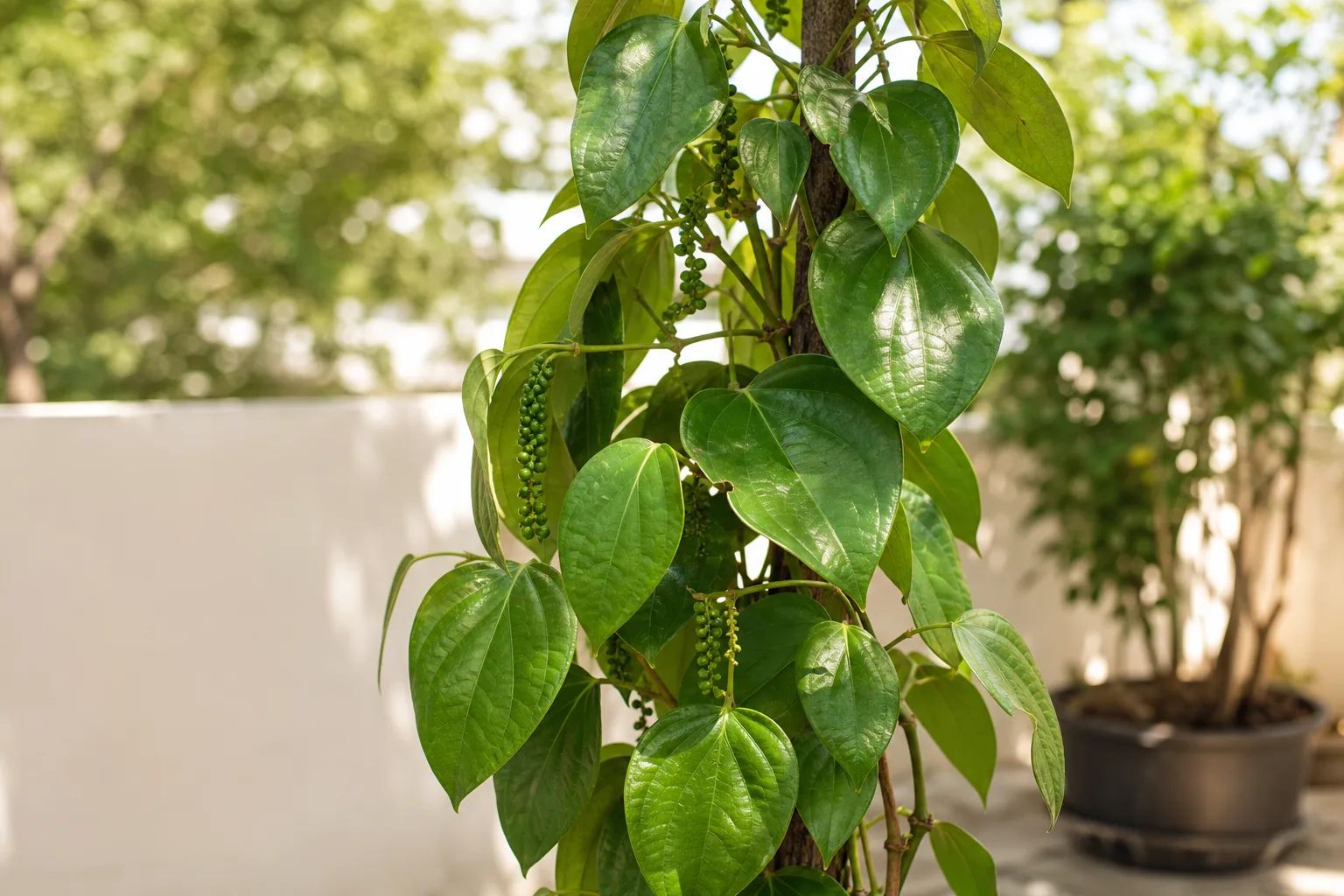
Best Soil for Black Pepper: Mix, Drainage & pH
Best Soil for Black Pepper: Mix, Drainage & pH
Black Pepper soil is the root-zone system that decides whether Piper nigrum—also sold as Kali Mirch, pepper vine, or common pepper—climbs steadily or collapses after a few wet weeks. This Piperaceae climber is native to southern India and Sri Lanka and is grown commercially across the wet tropics (Missouri Botanical Garden — Piper nigrum; University of Arkansas Extension). In cultivation it wants well-draining soil rich in organic matter, steady moisture without waterlogging, and a slightly acidic pH around 5.5–6.5 (PlantVillage — Black pepper). Missouri Botanical Garden’s container note is short and useful: use a rich potting soil with good drainage, keep the vine on a support, and expect indoor plants to stay foliage-first more often than fruiting (Missouri Botanical Garden — Piper nigrum).
If your balcony pot stays heavy and sour for a week, or your bed ponds after every monsoon shower, the vine is fighting the substrate—not “needing more fertilizer.” This guide covers the best soil for Black Pepper in pots and beds, a workable DIY ratio, pH targets, drainage checks, monsoon realities, and the first fixes when soil goes wrong. Pair soil choices with Black Pepper watering and Black Pepper light—wet mix in weak light is the fastest path to collar soft rot and stalled nodes.
Why Black Pepper soil is different from generic houseplant mix
Black Pepper is not a drought-smart cactus and it is not a swamp plant either. Crop and cultivation summaries describe a root zone that stays slightly damp, with good aeration and texture, while explicitly warning against waterlogging that harms roots (PlantVillage — Black pepper). That is a narrower lane than “any indoor potting mix.” Moisture-control peat sponges stay anaerobic at the bottom. Pure sandy cactus blends dry so fast the vine tips crisp before you notice. Dense garden clay in a closed pot ponds after rain and cuts oxygen to roots.
The disease angle makes soil structure non-negotiable. PlantVillage lists root rot / foot rot (Phytophthora capsici) as a destructive pepper problem favored by wet, poorly draining soil (PlantVillage — Black pepper). Missouri Botanical Garden also flags the species as susceptible to root rot in cultivation (Missouri Botanical Garden — Piper nigrum). Waterlogged soils starve roots of oxygen and raise Phytophthora risk in periodically saturated ground—the same pathway Missouri describes for overwatering injuries that are often misdiagnosed as pests (Missouri Botanical Garden — Overwatering). For identity, size, and placement context, start from the Black Pepper overview.
Ideal soil profile for Piper nigrum
Authoritative cultivation notes converge on a clear profile: well-draining, organic-matter-rich soil with good aeration, kept evenly moist rather than flooded (PlantVillage — Black pepper). For containers, Missouri’s shorthand—rich potting soil with good drainage—is the right mental model (Missouri Botanical Garden — Piper nigrum). The RHS plant profile places Piper nigrum in Piperaceae among climbing or shrubby peppers, which matches the supported vine habit you should design soil and pots around.
In practice, that profile feels crumbly when moist, dark from compost or well-rotted manure, and open enough that a squeezed handful holds briefly then breaks apart. You should see grit, perlite, or bark flecks—not a sticky clay ball or a peat paste that smears on your fingers. Kew’s taxonomic distribution confirms the species’ deep tropical Asian footprint, which helps explain why lean desert mixes and cold, waterlogged European winter pots both fail it (Kew POWO — Piper nigrum).
pH target and organic fertility
Aim for pH about 5.5–6.5—the band PlantVillage lists as ideal for black pepper (PlantVillage — Black pepper). Slightly acidic chemistry supports nutrient availability in organic-rich mixes without chasing exotic amendments. If new leaves stay pale despite filtered light and steady moisture, test pH and refresh tired mix before stacking fertilizers. Organic matter is part of the fertility story: PlantVillage recommends enriching soil with organic matter alongside balanced feeding, and notes organic amendments such as manure or neem cake in disease-management contexts (PlantVillage — Black pepper). For day-to-day feeding schedules after the mix is right, use the Black Pepper fertilizer guide rather than dumping slow-release pellets into a failing pot.
Best container mix for Black Pepper
For pots on Indian balconies, terraces, and bright indoor rooms, aim for a fertile, moisture-retentive mix with deliberate drainage—not a lean cactus blend and not a sealed peat sponge. A practical starting formula that matches how LeafyPixels profiles this species is:
- 40% quality potting mix or coco coir base
- 30% compost or well-rotted manure
- 20% perlite or coarse sand
- 10% orchid bark or fine coco chips
The mix should feel spongy-yet-open when squeezed. After a thorough watering, excess should run from drainage holes within a few minutes, and the top 2–4 cm should approach lightly dry within a few days in warm weather—matching the finger-test cue used in Black Pepper watering—while deeper layers stay lightly moist rather than bone dry. Extension guidance on potting media emphasizes blends that balance water-holding capacity with aeration, often combining peat or coir, perlite or vermiculite, and compost for structure and slow nutrients (Penn State Extension — Potting Media).
DIY recipe that holds moisture without drowning roots
Build the DIY mix in a tub so you can see texture. Moisten lightly while combining so dust settles and particles coat evenly. Prefer well-rotted compost or manure that smells sweet and earthy—not unfinished piles that smell sour; Penn State notes unfinished compost can release volatile acids that hurt young plants, and high-salt compost batches can stress roots (Penn State Extension — Potting Media). Use coarse river sand or horticultural grit, not fine builder’s sand that packs like cement. Perlite or pumice works when sand quality is poor. Orchid bark or coco chips keep larger air pockets that slow compaction as organic matter breaks down.
Once mixed, fill a pot with drainage holes, settle gently without compressing, and water once to confirm free outflow before planting. Give every vine a stake, trellis, moss pole, or outdoor prop tree at potting time—Missouri notes Black Pepper needs a support structure, and adventitious roots cling better when the mix stays evenly moist rather than swinging between swamp and dust (Missouri Botanical Garden — Piper nigrum).
Store mixes that fail this vine
Skip moisture-control bagged soils packed with water-holding gels. They keep the root zone wet long after the surface looks acceptable and hide the dry-down cues you need for even moisture. Avoid undrained decorative cachepots unless the nursery pot inside can lift out so you empty runoff every time. Straight garden soil or builder’s clay is a poor indoor base: it compacts, drains unpredictably, and can carry pests and pathogens into a closed pot. Pure coco coir or pure peat without chunky amendments holds water beautifully and drains poorly—fine as part of a blend, risky as the whole mix (Penn State Extension — Potting Media).
Cactus or succulent mixes are usually too lean and fast-draining for a tropical pepper vine that prefers slightly damp roots. If that is all you have, amend heavily with compost and a coir or potting-mix base rather than planting into grit alone. When a store “indoor plant mix” is your only option, treat it as a base: add roughly 20–30% perlite or coarse sand and 10% bark or coco chips before potting.
Drainage, pots, and saucer habits
Drainage is physics, not a gravel layer at the bottom of the pot. Holes must stay open; elevate pots slightly so outlets are not sealed against a flat tray. Empty saucers within 15–30 minutes after watering. A pot that stays heavy for many days in warm weather is telling you the mix, pot size, or light level is wrong—not that the plant “likes wet feet.” Missouri’s overwatering guidance is blunt: roots in waterlogged soil cannot absorb oxygen, damaged roots invite rot organisms, and soil that has been anaerobic too long often smells sour or rotten when you dig into the root zone (Missouri Botanical Garden — Overwatering).
Pot material changes dry-down speed. Unglazed terracotta pulls moisture through the walls and suits humid rooms or monsoon months. Plastic and glazed ceramic hold moisture longer, so they need a chunkier blend and stricter saucer emptying. Choose a pot only modestly larger than the root ball; an oversized pot of wet mix is a common foot-rot setup for Black Pepper. Match pot choice to Black Pepper light—filtered bright light helps the vine use water; deep shade keeps the same mix wet for days.
Ground beds and monsoon realities in India
In-ground Black Pepper in warm humid India still wants the same biology: organic-rich soil, free drainage, and no standing water around the collar. Raise beds or mounds where monsoon rains pond. Incorporate compost before planting, and keep mulch a few centimeters back from the stem so the collar stays drier than the root zone. PlantVillage’s cultivation notes stress well-draining soil, partial sunlight, and consistent moisture while avoiding waterlogging—practical rules for both beds and large containers (PlantVillage — Black pepper).
During heavy monsoon weeks, watch basins after storms. If water sits overnight around the vine, improve grading or temporarily reduce irrigation rather than adding fertilizer. Foot rot risk rises when wet, poorly draining soil persists (PlantVillage — Black pepper). In cooler dry months, the opposite failure appears: compacted pots that stay wet from infrequent but heavy watering in low light. Adjust the mix and watering together; soil alone cannot fix a dark corner.
Wrong-soil warning signs on Black Pepper
Treat these as soil-system alarms, not random leaf drama. Yellowing leaves with soft stems, a sour or rotten smell when you probe the mix, and wilt that does not recover after the surface dries often point to oxygen-starved roots rather than underwatering (Missouri Botanical Garden — Overwatering). Collar or foot-rot wilt after chronically wet weather or a waterlogged pot matches the Phytophthora-style pattern PlantVillage links to poorly draining soil (PlantVillage — Black pepper). Fungus gnats and a surface that never approaches dry between drinks usually mean the mix is too fine or the pot is oversized.
Compaction shows up as water sitting on the surface, then channeling down the pot wall while the center stays saturated. Soil pulling from the pot edge with a dusty crust can mean the organic fraction collapsed or the plant was left bone-dry too often—refresh the mix rather than only misting leaves. Fix the root environment first; then resume a calm watering rhythm and only later adjust fertilizer.
When to refresh or repot the mix
Refresh Black Pepper soil every 1–2 years, or sooner when roots circle and poke from drainage holes, the pot dries within a day after watering, or the mix smells sour and stays wet for days. Spring to early monsoon (roughly February–June in much of India) is the usual window, when warm temperatures help new roots explore fresh mix. Full step-by-step pot sizing and aftercare live in the Black Pepper repotting guide—use this page to choose what goes in the pot, and that page to decide when and how to move the vine.
When you repot a stressed plant from anaerobic soil, discard the failed mix. Do not reuse sour, waterlogged media on the same vine. Tease away as much old sludge as roots allow without shredding healthy tissue, trim clearly mushy roots with clean tools, and replant into the DIY blend above. Keep the plant in bright filtered light and even moisture while it re-establishes; avoid heavy feeding for a few weeks.
When to use this page vs other Black Pepper guides
Use this soil page when you are choosing or fixing the mix, diagnosing sour wet pots, or deciding whether drainage and pH are the real problem. Use Black Pepper watering when the mix is already appropriate but you need finger-test timing and seasonal intervals. Use Black Pepper light when leaves scorch or the vine stays sparse in gloom—light changes how fast any soil dries. Use Black Pepper fertilizer only after drainage and moisture are stable. Use Black Pepper repotting for pot size, root checks, and move-day steps. Use Black Pepper propagation when you need a cutting mix for new plants rather than a mature vine blend. For species basics and placement, return to the Black Pepper hub.
Related Black Pepper guides
- Black Pepper overview — habit, size, and core tolerances
- Black Pepper watering — even moisture without waterlogging
- Black Pepper light — filtered light that drives water use
- Black Pepper fertilizer — feeding after soil basics are right
- Black Pepper repotting — when and how to refresh the pot
- Black Pepper propagation — substrates for cuttings and seedlings
Conclusion
Black Pepper thrives in fertile, slightly acidic, organic-rich soil that drains freely while staying lightly moist—roughly pH 5.5–6.5, with a container blend near 40% potting mix or coir, 30% compost, 20% perlite or coarse sand, and 10% bark or coco chips. That structure supports the vine’s tropical roots and lowers the waterlogging conditions that favor foot rot. If the pot smells sour, stays heavy for days, or the collar softens after wet weather, fix drainage and refresh the mix before changing fertilizer or pruning hard. Get the soil system right, keep a support in place, and the rest of Black Pepper care becomes much easier to read.