Black Pepper Watering Guide: How Often & How Much
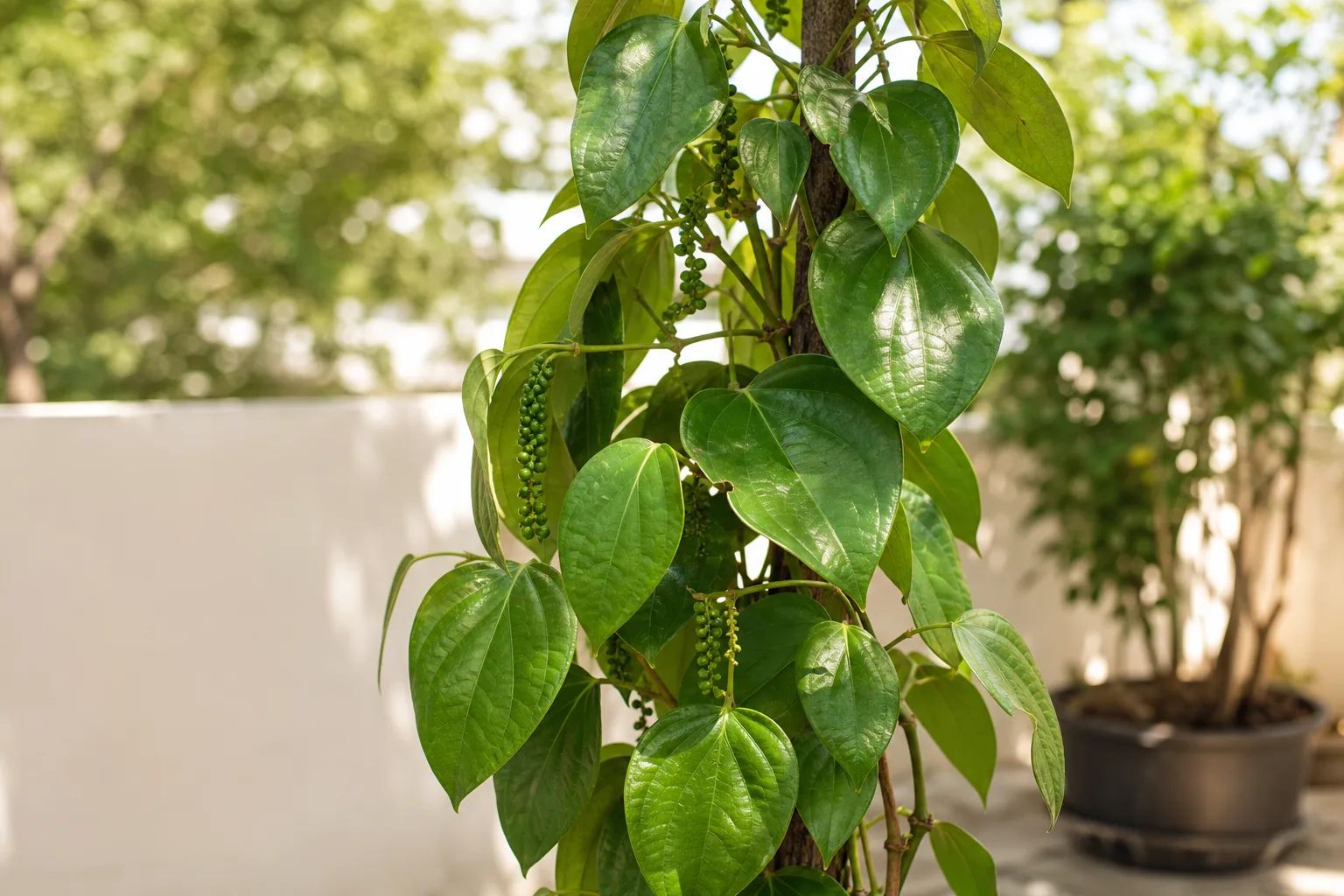
Black Pepper Watering Guide: How Often & How Much
Black Pepper Watering Guide: How Often & How Much
Black Pepper watering is a narrow lane: keep Piper nigrum—also sold as Kali Mirch, pepper vine, or common pepper—evenly moist, never waterlogged, and never bone-dry for long stretches. This Piperaceae climber is native to the moist tropical understory of southern India and Sri Lanka, where freely rooting vines run through humid forest shade rather than standing in flooded basins (University of Arkansas Extension; Missouri Botanical Garden — Piper nigrum). Missouri Botanical Garden lists the species at a medium water need, grown in rich potting soil with good drainage, with frequent foliar misting for humidity—not a “wet feet” culture (Missouri Botanical Garden — Piper nigrum).
Cultivation summaries say the same thing in practical language: maintain consistent moisture and slightly damp soil, and avoid waterlogging that harms roots (PlantVillage — Black pepper). Get that wrong and you see yellow soft leaves, stalled nodes, sour-smelling mix, or a sudden collar wilt that looks like drought while the pot is still heavy. This guide covers how often to water, the finger-test depth that matches this vine, over- and underwatering signs, humidity versus root irrigation, monsoon pauses in India, and what to do first when you are unsure. Pair it with Black Pepper light and Black Pepper soil—filtered light and open drainage decide how fast the same pot dries.
Why Black Pepper Needs Even Moisture, Not Wet Feet
Black Pepper is not a cactus and it is not a bog plant. In habitat it belongs to wet-tropical forest understory, so leaves and fine roots expect humidity and regular moisture, but commercial and home culture still depend on aerated, well-draining soil so oxygen returns between irrigations (University of Arkansas Extension; PlantVillage — Black pepper). Kew’s distribution record places the species firmly in tropical Asia, which explains why cold, stagnant winter pots and lean desert mixes both fail it (Kew POWO — Piper nigrum).
The disease link makes the distinction non-negotiable. PlantVillage lists root rot / foot rot (Phytophthora capsici) as a destructive pepper problem favored by wet, poorly draining soil, with water-soaked lesions, rapid wilt, and vine death over days to weeks in severe cases (PlantVillage — Black pepper). Missouri Botanical Garden also flags Piper nigrum as susceptible to root rot in cultivation (Missouri Botanical Garden — Piper nigrum). Extension overwatering guidance explains the shared mechanism: roots in waterlogged soil cannot absorb oxygen, damaged roots invite rot organisms such as Phytophthora, and plants then wilt while the mix is still wet (Missouri Botanical Garden — Overwatering). The target for Black Pepper is even moisture with free drainage—not a calendar that forces water into a still-heavy pot.
How Often to Water Black Pepper
There is no honest universal “every Tuesday” schedule. Frequency is the result of how fast the top 2–4 cm of mix dry in your light, heat, pot size, and humidity. Use these starting ranges as prompts to check, then lock them to your own pot’s dry-down rhythm.
In hot, active climbing weather, many container vines need water about every 2–4 days. In cooler or cloudy stretches, the same plant often stretches to every 5–8 days. Small terracotta pots in bright filtered light dry faster; large plastic tubs in deep shade stay wet longer and need less frequent irrigation, not more volume poured on a wet core. Track two full wet-dry cycles—date watered, when the finger test passed, and leaf response—and you will outgrow any blog’s generic interval.
Hot weather and active climbing
When nights stay warm and the vine is pushing new nodes on a stake or prop tree, water use rises. East balconies and shade-cloth setups in Indian summer can empty a 20–25 cm pot in two or three days if airflow is strong. Water thoroughly the same day the top 2–4 cm feel dry while the mix below is still lightly damp. Do not wait for leaves to go limp if heat is extreme—by then the outer roots may already be stressed and tips may crisp, especially in dry AC or desert-wind rooms.
If the pot still feels heavy and cool at depth after four days in heat, the problem is usually too little light, an oversized pot, or a peat-heavy mix—not “not enough water.” Fix placement with the Black Pepper light guide and drainage with Black Pepper soil before you shorten the interval again.
Cool months and slower growth
When temperatures drop toward the plant’s comfort floor, growth slows and pots hold moisture longer. Missouri notes houseplants of this species are intolerant of winter temperatures below about 50°F (10°C) (Missouri Botanical Garden — Piper nigrum). In cool rooms, stretch the interval, keep watering thorough when you do water, and never leave the pot sitting in a cold saucer of runoff overnight. Ideal growing temperatures for black pepper are often cited around 23–32°C, so chill plus wet soil is a double stress (PlantVillage — Black pepper).
How to Check Dryness Before You Water
Surface color lies. Peat- and coir-based mixes can look pale on top while staying saturated near the collar—the exact zone foot rot prefers.
Finger test (primary): Push a finger 2–4 cm into the mix. Water when that layer feels dry or only faintly cool, and the soil below is still lightly damp. If it feels wet or muddy, wait. This depth matches how LeafyPixels profiles Piper nigrum and keeps you out of both swamp and dust extremes.
Pot weight: Lift the container after a full watering and again when you suspect it is dry. A sharp drop in weight often beats looking at the surface.
Wooden skewer: Push a dry stick toward the root ball. Soil clinging or darkening means moisture remains. Clean, dry wood means it is time to water.
Do not water because leaves look soft at noon if the mix is still wet. Temporary heat wilt can recover by evening; chronic wet wilt does not. Missouri’s overwatering guidance warns that a dry surface is not a true indicator of root-zone need, and soil that has been anaerobic too long often smells sour or rotten when you dig in (Missouri Botanical Garden — Overwatering). Confirm depth moisture before you add another drink.
The Thorough Water, Then Drain Method
When the finger test says yes, water slowly and evenly across the surface until excess runs freely from the drainage holes. That confirms the whole root ball rewetted—not just a dry rim that channels water down the pot wall. Stop there. Empty the saucer within 15–30 minutes. Leaving Black Pepper in standing runoff recreates the waterlogged condition that favors Phytophthora and oxygen-starved roots (PlantVillage — Black pepper; Missouri Botanical Garden — Overwatering).
Avoid daily “sips” that keep the top centimeter damp while the core stays uneven. One thorough irrigation per dry-down cycle trains roots through the full soil volume and matches the medium water / good drainage culture Missouri describes for container vines (Missouri Botanical Garden — Piper nigrum). Use room-temperature water when possible; ice-cold water on a tropical vine in winter adds unnecessary shock after cool nights.
Signs You Are Overwatering Black Pepper
Overwatering on Black Pepper usually announces itself as softness and stall, not crisp drought tips. Watch for yellowing leaves with soft stems, wilting while the pot is still heavy, sour or rotten-smelling mix, fungus gnats hovering over constantly wet soil, and a soft or darkened collar at the soil line. Slow or absent new nodes in warm months, despite “enough” fertilizer, often means roots are drowning rather than hungry.
Missouri’s general overwatering profile matches what growers see on this vine: stunted growth, yellowing, leaf scorch that is easy to misread, and root systems that fail while the plant looks thirsty (Missouri Botanical Garden — Overwatering). If several signs appear together, stop watering immediately. Do not “perk it up” with another soak. Improve airflow, empty trays, and check whether the mix or pot size is the real problem via Black Pepper soil and Black Pepper repotting.
Foot rot and Phytophthora risk
Foot rot is the species-specific reason wet pots are dangerous. PlantVillage describes black water-soaked lesions on leaves or stems in wet weather, rapid wilt and leaf drop, and vines that can die within days to weeks when Phytophthora takes hold in poorly draining soil (PlantVillage — Black pepper). Emergence is favored by wet conditions; infected runners and clinging soil can move the pathogen into a new pot or bed. Prevention is cultural first: open drainage, no standing saucers, filtered light that helps the mix dry on schedule, and a fertile but aerated mix rather than a moisture-gel sponge (PlantVillage — Black pepper; Penn State Extension — Potting Media).
If the collar is already soft and the root ball smells foul, unpot, trim mushy roots, and repot into fresh draining mix only if firm tissue remains. Late-stage collar collapse is often not fully recoverable as a whole vine; healthy cuttings from firm green nodes may be the salvage path via Black Pepper propagation.
Signs Your Black Pepper Needs Water
Underwatering is less common indoors than chronic wetness, but dry AC rooms and forgotten balcony pots still dry vines out. Expect dull, limp leaves, brown crispy tips when air is also dry, slowed vine extension and sparse nodes, and soil pulling from the pot edge. The container feels noticeably light, and the top several centimeters are bone dry rather than just lightly dry at 2–4 cm.
A single dry episode rarely kills a healthy Black Pepper if you rehydrate thoroughly once and return to even moisture. Do not compensate with daily shallow sips after a drought—that swings the plant into the overwatering pattern within a week. If leaves are limp and the mix is wet, you are not underwatered; you are dealing with root failure from excess water. Confirm with the finger test and pot weight before you act.
Humidity, Mist, and Airflow (Not a Substitute for Root Water)
Black Pepper prefers high humidity—typical of a moist tropical understory rather than a dry room—and Missouri specifically advises growers to mist foliage frequently on houseplants (Missouri Botanical Garden — Piper nigrum). Mist and pebble trays help leaf tips in dry rooms, but they do not replace a root-zone soak when the finger test says the mix is dry. Conversely, misting a plant sitting in soggy soil does nothing for drowning roots and can keep foliage wet longer than airflow can clear.
Keep humidity high and air moving. Stagnant damp corners favor leaf spot and soft rot on top of foot-rot risk. If tips brown while the mix stays correctly moist, raise humidity and check for harsh sun or fertilizer burn rather than pouring more water into an already damp pot. For placement that balances humidity with light-driven water use, see Black Pepper light.
Pots, Soil Mix, and Saucer Habits
Watering only works as well as the container system. Use pots with open drainage holes; elevate them so outlets are not sealed against a flat tray. Empty saucers after every thorough watering. Undrained decorative cachepots are acceptable only if the nursery pot lifts out so runoff never pools around the roots.
Mix texture decides dry-down speed. Penn State’s potting-media guidance emphasizes blends that balance water-holding capacity with aeration—typically combining coir or peat-like bases with perlite or similar aggregates and compost for structure (Penn State Extension — Potting Media). For this vine, that means fertile organic matter plus grit or bark so the top 2–4 cm can approach dry while deeper layers stay lightly moist—details live in Black Pepper soil. Terracotta dries faster and suits humid monsoon rooms; plastic holds moisture longer and needs stricter saucer discipline. An oversized pot of wet mix is a classic foot-rot setup; size up only when roots fill the current container, as covered in Black Pepper repotting.
Monsoon and Seasonal Adjustments in India
In much of India, monsoon is when home growers accidentally drown Black Pepper. When rain keeps the root zone wet, pause irrigation. Tip pots so drainage holes clear freely, and never leave trays full overnight. For in-ground or large outdoor containers, raise the planting so water does not pond at the collar—PlantVillage’s cultivation notes stress well-draining soil and avoiding waterlogging even while keeping moisture consistent (PlantVillage — Black pepper).
Resume watering only after the finger test returns to the usual dry-at-2–4-cm cue between storms. Hot dry spells between rains may still need a full soak the same day the top layer dries. In winter for cooler cities, protect the vine from cold wet feet: reduce frequency, keep pots indoors above the ~10–13°C caution zone Missouri implies with its 50°F houseplant limit, and prioritize drainage over “keeping it tropical-wet” (Missouri Botanical Garden — Piper nigrum).
When You Are Unsure: First Action Checklist
When leaves look wrong and you cannot tell drought from drown, do this in order:
- Finger-test 2–4 cm and lift the pot. Wet + heavy means stop watering; dry + light means water thoroughly once.
- Empty saucers and confirm drainage holes are open.
- Check light and airflow—a vine in deep shade holds water for days; move toward bright filtered light per the Black Pepper light guide before changing fertilizers.
- Smell and inspect the collar. Sour mix or soft stem base means root/collar trouble—dry the surface, improve drainage, and plan a mix refresh via Black Pepper soil or Black Pepper repotting if roots are mushy.
- Wait 48 hours after any change before stacking fertilizer, hard pruning, and a full repot on the same day.
If the plant perks after one correct soak or after a forced dry-down, you have your answer. If yellowing spreads while soil stays wet, treat it as overwatering until proven otherwise.
When to use this page vs other Black Pepper guides
Use this watering page when you need finger-test timing, seasonal intervals, over- and underwatering diagnosis, monsoon pauses, or humidity-versus-root-water clarity. Use the Black Pepper overview for species identity, size, and core tolerances. Use Black Pepper light when scorch, legginess, or chronic wet pots in gloom are the real driver. Use Black Pepper soil when the mix stays sour or never drains. Use Black Pepper fertilizer only after moisture and drainage are stable. Use Black Pepper repotting for pot size and root surgery after chronic wetness. Use Black Pepper propagation when you are rooting cuttings that need a lighter, consistently moist starter mix rather than a mature vine schedule.
Related Black Pepper guides
- Black Pepper overview — habit, placement, and care baseline
- Black Pepper light — filtered light that drives water use
- Black Pepper soil — mix and drainage that make watering forgiving
- Black Pepper fertilizer — feeding after moisture is stable
- Black Pepper repotting — refreshing failed wet root balls
- Black Pepper propagation — moisture for new cuttings
Conclusion
Water Black Pepper for even moisture with oxygen at the roots: thorough soaks when the top 2–4 cm dry, free drainage every time, and longer gaps whenever cool weather or monsoon rain keeps the pot heavy. Treat soft yellow leaves on wet soil as an emergency stop, not a cue to water again, because Phytophthora foot rot thrives in the stagnant conditions this vine cannot forgive. Get the rhythm right—and keep light and soil in the same lane—and Kali Mirch climbs with firm glossy nodes instead of collapsing at the collar.