Aphids on Black Pepper: Vine-Tip Checks & Fixes
Quick answer
Aphids on black pepper colonize the softest new shoot tips, leaf axils, and young pepper spikes along the climbing vine—often with sticky honeydew on thick glossy leaves. First step: isolate the plant and rinse colonies off tender growth and leaf undersides with a firm water stream before reaching for spray.

Aphids on Black Pepper: Causes, Checks & Fixes
This guide covers aphids on Black Pepper. See also the general Aphids guide, watering, and light pages for this plant.
Aphids on Black Pepper: Causes, Checks & Fixes
Quick answer
Soft-bodied aphids on Piper nigrum almost always show up on the tenderest shoot tips, leaf axils, and young pepper spikes along a climbing black pepper vine—often before older thick leathery leaves look wrong. They suck sap, leave sticky honeydew that can feed sooty mold, and can curl or stunt the glossy new leaves and spike clusters the plant needs for future peppercorns.
For how aphids reproduce, why ants defend them, and when water knockdown works in general, see our aphids pest guide. On black pepper, the practical pattern is warm-season clusters at the leading vine tip, sticky residue on thick glossy foliage in humid part-shade, and extra attention to nodes where the vine wraps a trellis or pole.
First step: isolate the plant and blast colonies off with a firm stream of water, focusing on the top growth, leaf undersides, young spikes, and every axil along the climbing stem. A soft stem at the soil line on constantly wet mix is a different emergency—see the black pepper overwatering guide before you treat pests.
When to use this page vs other Black Pepper guides
This page is the pest-first entry for soft-bodied sap feeders on new vine growth.
- Black Pepper watering — Use when limp leaves and wet mix suggest moisture stress, not insects.
- Curling leaves on Black Pepper — Use when leaves curl without visible colonies or honeydew.
- Mealybugs on Black Pepper — Use for white cottony masses in axils, not moving pear-shaped insects.
- Spider mites on Black Pepper — Use for fine webbing and stippling in dry AC air.
- Black Pepper problems hub — Browse all common issues on this species.
Why black pepper vines get aphids on shoot tips and spikes
New flush growth is the target. Piper nigrum is a fast-climbing evergreen vine with thick, leathery alternate leaves that pushes soft tissue at the leading tip when warmth and humidity are high. Aphids feed on that tender tissue while older glossy leaves lower on the woody stem often look fine—the pest is on the newest nodes and developing spikes, not the whole plant.
Humid part-shade favors both vine growth and aphids. Black pepper performs best in bright filtered light with steady moisture and high humidity—conditions that keep pepper vines lush. Those same conditions let aphid populations multiply quickly in warm weather, especially when airflow is weak and pests hide under overlapping leaves along a support.
Nitrogen-rich feeding softens new shoots. Vines on regular balanced fertilizer during active growth can push succulent tip growth aphids prefer. Heavy feeding during monsoon warmth while the vine is already climbing fast can make the leading flush especially attractive.
Entry routes are predictable. New nursery vines, unquarantined cuttings, open balcony doors in warm weather, and shared greenhouse benches introduce winged aphids. Ants attracted to honeydew on stems or pot rims often signal an established colony higher on the vine—not a separate ant problem to ignore.
What aphids look like on black pepper
- Small pear-shaped insects—green, black, pink, or yellow—clustered on new shoot tips, young leaf undersides, and soft pepper spike clusters
- Colonies tucked in leaf axils where the petiole meets the woody climbing stem
- Sticky, shiny honeydew on which sooty moulds can grow on thick glossy leaves or trellis ties
- Ants traveling up the vine toward the leading tip
- Curling, yellowing, or stunted newest leaves while lower leathery foliage stays green
- White cast skins on leaf undersides after molting
- Distorted or stalled young pepper spikes when feeding is heavy during the flowering flush
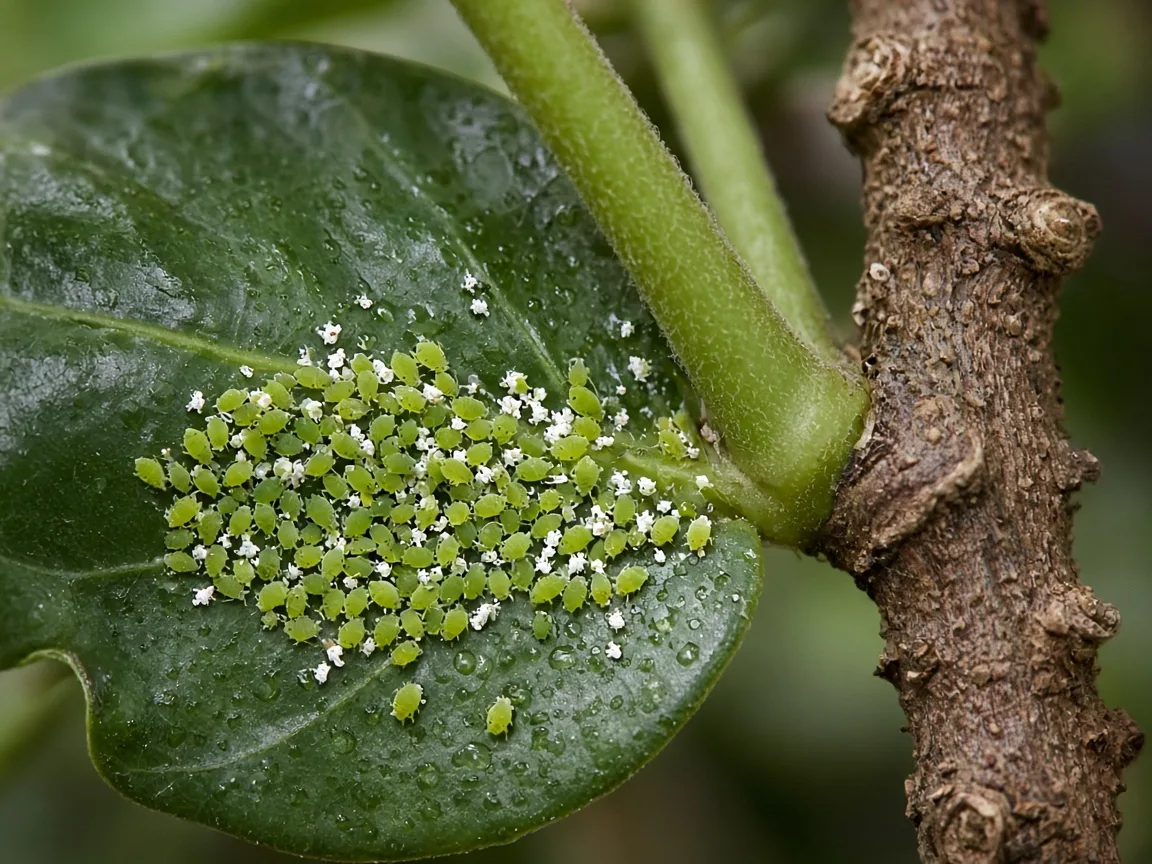
Aphid colonies on black pepper often concentrate at the leading shoot tip, on young spike clusters, and in leaf axils along the woody stem—compare with clean older nodes below.
On thick Piper leaves, honeydew is especially obvious—wipe a fingertip along a new leaf; tacky residue that returns within a day means sap feeders are still active.
Where to inspect along the climbing pepper vine
Black pepper is grown on a sturdy support, and aphids use that structure to hide. Work through this order:
- Leading shoot tip — The softest 10–15 cm of new growth above the last mature node.
- Young pepper spikes — Catkin-like clusters on the upper third of the vine; aphids often coat soft spike tissue before peppercorns set.
- Leaf axils on the upper third — Where petioles meet the stem along the trellis or pole.
- Aerial root nodes — White root initials along buried or misted stem sections can harbor colonies in humid setups.
- Underside of the top three leaves — Aphids congregate on leaf undersides more than upper surfaces.
- Pot rim and support ties — Ant trails and honeydew drips often start here before you look up the vine.
This inspection path is specific to a climbing Piper vine grown for spikes—not a rosette succulent or tree-form houseplant.
Confirm aphids vs. overwatering, mealybugs, scale, thrips, and mites
| What you see | Likely cause | Key check |
|---|---|---|
| Soft pear-shaped insects on fresh shoot tips or spikes | Aphids | Colonies move when disturbed; honeydew on glossy leaves |
| White cottony masses in leaf axils | Mealybugs | Stationary wax; alcohol turns them orange-gray |
| Hard brown bumps that do not move | Scale insects | Scraping reveals tissue underneath |
| Fine webbing and yellow stippling on older leaves | Spider mites | Dry indoor air; mites on undersides, not tip clusters |
| Silver streaks and black specks on young leaves | Thrips | Scraping leaves onto white paper releases slender insects |
| Limp stems, soft collar, sour wet mix | Overwatering / root rot | No insect clusters; soil never dries at 2–4 cm depth |
Confirmed diagnosis — Pear-shaped insects plus honeydew or ants on shoot tips with firm lower stems. Suspected — Sticky tips without visible insects may need a magnifying glass on the youngest leaves and spikes before treating.
First fix: isolate and rinse the vine tip
Isolate the plant away from other climbers and kitchen herbs for at least two weeks after you last see live aphids.
Blast colonies off with water first. Use a firm stream of water on new shoots, leaf undersides, young spikes, and every axil along the upper vine. Get Busy Gardening recommends washing leaves as the first houseplant step—lowest risk for Piper foliage and no residue on leaves you may handle when harvesting or pruning.
Rinse timing without inviting collar rot
Schedule rinses in early morning so thick leaves dry before midday heat or stagnant humid air traps moisture overnight. Black pepper tolerates consistent moisture in the root zone but is vulnerable to foot rot when the collar stays wet in poor airflow—improve ventilation after rinsing rather than misting foliage again the same day. Never let rinse water pool around the stem base in a cachepot.
Repeat every two to three days to knock down nymphs that hatch between rinses.
Insecticidal soap and neem on Piper vines
If colonies remain after two or three rinses, apply insecticidal soap or neem oil labeled for ornamentals. Epic Gardening recommends spraying every 7 to 10 days until the problem subsides, preferably at dawn or dusk.
Critical rules for black pepper:
- Spray early morning so leaves dry before peak humidity builds in shade setups.
- Coat tops and undersides of young leaves, shoot tips, and soft spikes; contact sprays only kill insects they touch.
- Patch-test one leaf and wait 24 hours before treating the whole vine.
- Avoid stacking repot, heavy prune, or fertilizer the same week you start spray—that masks whether pests or care stress caused the setback.
Wipe honeydew from leaves with a damp cloth. Piper nigrum is grown as a spice crop in many homes—rinse treated foliage before any kitchen use and follow label intervals on edible crops if you harvest leaves or spikes.
What not to do the same day
Do not increase watering because leaves look stressed—check whether the top 2–4 cm of mix is actually dry first. Do not apply oil sprays in hot afternoon sun on balcony vines. Do not ignore ants—they protect aphid colonies from predators.
Recovery timeline and new node flush
Visible aphids should clear within one to two weeks of consistent rinsing or soap treatment. Expect clean new shoots climbing the support within three to five weeks during active growth. Distorted young leaves and stunted spikes will not fully recover once tissue hardens. Judge success by the next glossy node flush and healthy spike development, not by reopening damaged tissue.
Firm lower stems and steady new internode extension are good signs. Softening at the collar on wet mix means rot or overwatering—not aphids—and needs a different response immediately.
How to prevent aphids on black pepper
Quarantine every new vine or cutting for two weeks before placing it near other plants. Inspect shoot tips and young spikes weekly during spring and summer active growth. Rinse foliage occasionally when you water, especially after moving plants between indoors and a humid balcony.
Keep care aligned with the black pepper overview—filtered light, fertile well-draining organic mix, and moisture that matches how fast the pot dries. Outdoor shade-house vines often see fewer indoor-style outbreaks when air movement is strong. Manage ants on pot rims before they establish aphid “farms” on the leading tip.
When to escalate
Escalate if new shoots repeatedly emerge coated in aphids after three full treatment cycles, if sooty mold covers most foliage, or if ants make colonies impossible to rinse away. Chronic feeding during peak growth can stall vine extension and weaken new spikes even when roots are healthy.
For heavy recurring infestations on outdoor vines, a local extension office can confirm the pest and discuss options. Systemic insecticides move through plant sap and can affect pollinators—contact rinses and soaps are usually safer first choices on a leafy vine you handle regularly.
Aphids alone rarely kill a mature black pepper with firm lower stems, but they can ruin a flush of tender leaves and young spikes and open the door to secondary stress if you respond with extra water or fertilizer.