Brahmi Fertilizer Guide: When and How to Feed
Brahmi Fertilizer Guide: When and How to Feed
Brahmi Fertilizer Guide: When and How to Feed
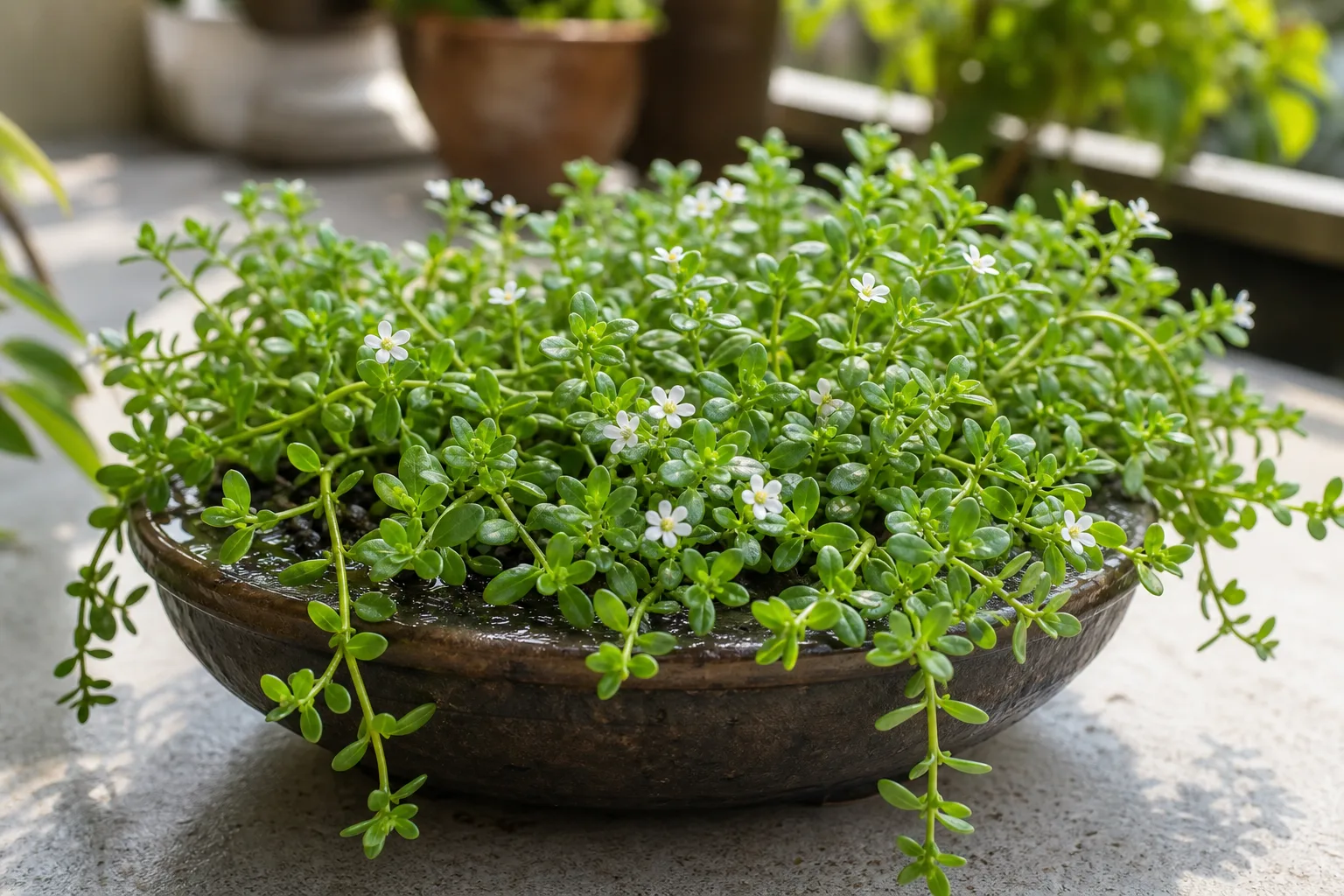
Brahmi (Bacopa monnieri) is a creeping wetland herb, so brahmi fertilizer decisions should stay light, seasonal, and secondary to moisture. This plant spreads by rooting at the nodes in damp mix; it is heat tolerant but not drought tolerant, and it belongs in consistently moist to wet soil rather than a dry-windowsill routine (NC State Extension Gardener Plant Toolbox). Fertilizer can support denser mats and longer flowering once light and water are right. It cannot rescue a pot that keeps drying out.
This guide is for home growers in India and similar warm climates: balcony pots, hanging baskets, bog trays, and shallow water-garden margins. Field cultivation rates are mentioned only as context so you do not copy farm doses into a 20 cm pot.
What Brahmi Actually Needs From Fertilizer
Brahmi builds soft, succulent foliage and long creeping stems while the root zone stays wet. Nutrients matter because frequent watering of containers leaches soluble fertilizer from a small volume of mix, and because active warm-season spread uses nitrogen, phosphorus, and potassium continuously. The goal is steady green growth and node rooting — not soft, salt-stressed tips.
Confirm you are feeding Bacopa monnieri (water hyssop / nirbrahmi), not a nursery pack of gotu kola sold under a shared “brahmi” label. Gotu kola is Centella asiatica, a different plant with different architecture (NC State Extension — Centella asiatica). Feeding the wrong species with the right bottle still wastes effort.
Moisture First, Then Nutrients
Extension profiles place Brahmi in moist, occasionally wet, or occasionally flooded sites, from marshes and muddy shores to hanging baskets and aquariums (NC State Extension Gardener Plant Toolbox). Florida Native Plant Society lists moisture tolerance from aquatic to usually moist with occasional inundation (Florida Native Plant Society). Plants For A Future likewise notes a preference for moist or wet soil and tolerance of a wide pH range, including saline soils (Plants For A Future).
That biology sets the feeding rule: stabilize water and light before you fertilize. Clemson Extension’s nutrient stewardship guidance is blunt about drought timing — do not fertilize when plants cannot take up water and support new growth (Clemson HGIC — Fertilizers and the Environment). On Brahmi, crispy tips and stalled mats after a dry spell almost always need rehydration and a tray check first. Open the Brahmi watering guide before you reach for a stronger dose.
NPK Roles for a Creeping Wetland Herb
Nitrogen supports leafy, green mats. Phosphorus supports roots and overall energy use as nodes colonize new mix. Potassium helps with water regulation and stress tolerance in hot balcony weather. For most home Brahmi, a balanced water-soluble formula (for example 10-10-10 or 20-20-20 used dilute) or a complete organic liquid is enough. You do not need a bloom-booster marketed for flowering annuals unless you already understand how to cut the dose.
Field trials in India show Brahmi responds to both organic and inorganic nutrient programs when moisture and season are suitable. One Amritsar kharif study compared vermicompost, farmyard manure (FYM), combined organics, a recommended soil NPK of 100:60:50 kg ha⁻¹, and half-strength Hoagland hydroponics; vermicompost treatments outperformed FYM alone and the soil NPK treatment for several growth traits, while hydroponics produced the highest herbage in that trial (Academia.edu — Nutrient Management of Brahmi). A West Bengal field study found FYM plus vermicompost produced the strongest growth indices and returns among organic and NPK treatments tested (International Journal of Economic Plants). Those results argue for organic matter plus modest available nutrients — not weekly full-strength synthetic hits in a hanging basket.
Best Fertilizer Types for Brahmi
The best fertilizer for Brahmi in a home pot is one you can dilute precisely and apply to moist mix during active spread. Prefer products that dissolve cleanly, list all three macronutrients, and do not force you into a “heavy feeder” calendar.
Dilute Balanced Liquids
A complete water-soluble fertilizer at half the label strength once a month during active growth is the practical default for balcony pots and baskets. Apply enough solution to wet the root zone, then empty any saucer so fertilizer salts do not reconcentrate as water evaporates. UF/IFAS notes that excess fertilizer in containers builds salts in the media and can cause stunted growth, leaf browning, or plant death (UF/IFAS Gardening Solutions — The Basics of Fertilizer).
If your potting mix already contains slow-release granules, wait several weeks after planting or repotting before adding liquid feed. Double feeding is a common cause of tip burn on small wetland mats that already sit wet.
Organic Options: Compost, Vermicompost, and Mild Organics
Organic programs map well to Brahmi’s preference for living, moisture-holding media. A thin compost or vermicompost top-dress once or twice in the warm season can replace or reduce liquid feeds, especially in larger bowls. Field results favoring FYM–vermicompost combinations support that organic route for herbage growth (International Journal of Economic Plants). Keep top-dressings thin so the crown still gets light and airflow; never bury the mat under a thick manure cake that turns anaerobic in a sealed tray.
Mild organic liquids such as diluted fish emulsion or seaweed blends can work at half strength or weaker on the same monthly cadence. Use them outdoors or with good ventilation if odor is an issue indoors. Fresh, hot manure is a poor choice for pots — it can burn roots and spoil water trays.
When to Fertilize Brahmi in India
Feed only when Brahmi is actively spreading and the mix stays moist to wet. In much of India that window runs from late spring through the monsoon and into early autumn, roughly March through October, when warmth and light keep internodes short and nodes rooting. Match light placement to the Brahmi light guide so you are not fertilizing a thin, shaded plant.
Active Growth Window (March–October)
During peak heat, pots may need daily or every-other-day water. That leaching is why a monthly dilute feed (or a modest organic top-dress) is useful even though Brahmi is not a classic “hungry” houseplant. Watch new tip color and spread rate more than the calendar. Pale growth with good moisture and bright light is a fair cue to feed; pale growth with dry mix or deep shade is not.
In cooler hill stations or air-conditioned indoor rooms, stretch the interval or skip months when the mat barely moves. Fertilizer sitting unused in wet media still contributes to salt stress and algae films in trays.
When to Pause Feeding
Stop fertilizing when any of these are true:
- The plant is drought-stressed, wilted, or showing crispy tips from dry mix
- You just repotted into fresh fertilized mix (wait 2–3 weeks for new tips)
- The mix smells sour and stems are soft from stagnant trays — refresh water and airflow first
- Growth has stalled in cool winter rooms below comfortable temperatures
- You see white salt crust on the surface or brown margins after a recent feed
Clemson’s 4R framing still applies: right product, right rate, right time, right place in the root zone (Clemson HGIC — Fertilizers and the Environment). For Brahmi, “right time” almost always means warm-season active growth with a wet root zone.
How Much Fertilizer to Use in Pots and Beds
Pots and hanging baskets: half-strength balanced liquid once a month in the active season, or a thin compost/vermicompost top-dress every 6–8 weeks instead of liquid. Small baskets dry and leach faster; do not compensate by doubling concentration — shorten the interval slightly only if growth stays pale under strong light and correct moisture.
Wide bowls and balcony trays: same dilution, but you may need slightly more solution volume to wet the whole mat. Keep trays refreshed so diluted fertilizer does not sit as a stagnant film for weeks.
In-ground or raised bog edges: field NPK rates such as 100:60:50 kg ha⁻¹ are agricultural references, not scoop instructions for a courtyard bed (Academia.edu — Nutrient Management of Brahmi). For home beds, incorporate compost or vermicompost at planting and use light liquid feeds only if mats look hungry after monsoon rains. Organic combinations that performed well in West Bengal field work are a better mental model than dumping urea weekly (International Journal of Economic Plants).
How to Apply Fertilizer Safely
Water with plain water first if the surface has gone barely dry — Brahmi should rarely be bone-dry, but a damp root zone still burns less than a stressed one when salts arrive. Mix the dilute solution thoroughly. Apply at the soil line, not as a routine foliar spray of synthetic concentrate on edible-leaning leaves.
Let a little excess drain, then empty saucers and refresh shallow water trays with plain water the next day if you keep a continuous tray habit. UF/IFAS warns that container salt buildup from overfeeding leads to browning and stunting (UF/IFAS Gardening Solutions — The Basics of Fertilizer). If crust appears, flush the pot thoroughly with plain water until runoff runs clear, then pause feeding for a month.
Pair feeding with the right mix. Moisture-retentive loam or potting blends that stay wet suit this species; clay, loam, or sand can work when moisture is steady (NC State Extension Gardener Plant Toolbox). Details live in the Brahmi soil guide. Fertilizer does not fix a cactus mix that dries in hours.
Signs of Underfeeding vs Overfeeding
Possible underfeeding in an old, leached pot: slower spread despite bright light and consistent moisture, smaller pale new leaves, and a mat that looks tired between monthly feeds. Rule out low light and dry roots first using the overview and watering pages.
Possible overfeeding: brown leaf tips after a feed, white crust on the mix, soft overly dark growth that collapses in heat, or algae-heavy trays after repeated strong doses. Flush, pause, and resume later at a weaker dilution.
| Symptom | Likely cause | First action |
|---|---|---|
| Pale tips, pot dried recently | Drought, not hunger | Rehydrate; delay feed |
| Pale growth, mix stays moist, bright light | Possible nutrient lag | Half-strength monthly feed |
| Brown tips after fertilizing | Too strong or dry at application | Flush; pause 4 weeks |
| White crust on surface | Salt buildup | Flush; cut rate/frequency |
| Soft stems, sour smell | Anaerobic tray, not need for more N | Refresh tray; improve air |
Common Brahmi Fertilizer Mistakes
Feeding a dry or drought-crisped mat is the fastest way to burn roots. Clemson advises against fertilizing during drought because uptake and growth both fail (Clemson HGIC — Fertilizers and the Environment). Fix water first.
Copying field NPK rates into a tiny pot overloads a shallow root mat. Scale down to dilute liquids and thin organics.
Stacking fertilizer with hard pruning and repotting on day one multiplies stress. Stabilize moisture and light, then feed only after new tips appear.
Chasing yellow leaves with nitrogen while the tray is stagnant worsens soft collapse. Refresh water and check soil structure before adding more salts.
Assuming unlabeled “brahmi” is Bacopa leads you to follow the wrong care notes. Confirm leaf shape and botanical name before you invent a feed schedule.
When to use this page vs other Brahmi guides
Use this fertilizer page when moisture and light are already stable and you need a dilution, schedule, and product type for active growth. Use the Brahmi watering guide when tips crisp, mats wilt, or trays turn sour. Use the Brahmi light guide when growth is thin or flowering stalls in shade. Use the Brahmi soil guide when the mix never stays wet or becomes anaerobic. Use repotting when the mat packs the pot and dries too fast despite correct watering. Use propagation when you want cuttings from a healthy parent, not when you are troubleshooting pale leaves. The Brahmi overview remains the identity and full-care map, including Centella lookalike checks.
Related Brahmi guides
- Brahmi overview — identity, habitat, and care map
- Brahmi watering — moist-to-wet rhythm and tray habits
- Brahmi light — full sun to part shade placement
- Brahmi soil — moisture-retentive mixes and pH range
- Brahmi repotting — when the mat outgrows the pot
- Brahmi propagation — cuttings and division after feeding basics are right
Conclusion
Feed Brahmi lightly and only while it is actively spreading in warm months. Keep the root zone moist to wet, place the pot in full sun to partial shade, then use a half-strength balanced liquid once a month or a thin compost/vermicompost top-dress. Pause for drought stress, new transplants, sour trays, and cool-season stall. Organic field results favor modest organic matter over heavy salt loads, and container extension guidance warns that excess fertilizer burns pots quickly. Get moisture right first — then fertilizer becomes a simple monthly habit instead of a rescue mission.