Brahmi Watering Guide: How Often & Soil Checks
Brahmi Watering Guide: How Often & Soil Checks
Brahmi Watering Guide: How Often & Soil Checks
Brahmi watering breaks the usual houseplant rule of “let it dry between drinks.” Bacopa monnieri — also sold as Water Hyssop, Herb of Grace, or Nirbrahmi — is a creeping wetland herb that evolved along marshes, stream edges, and muddy shores. Extension profiles describe it as heat tolerant but not drought tolerant at all, and they list soil drainage as moist, occasionally wet, or subject to occasional flooding. On an Indian balcony, that biology means one non-negotiable habit: keep the root zone consistently moist to wet. Never wait for a bone-dry pot.
This guide covers how often to water Brahmi in pots and hanging baskets, how to check moisture without guessing, when a water tray helps, what underwatering looks like on this species, and how sealed stagnant mix can still go wrong even though the plant loves wet feet. Pair it with the Brahmi overview if you are still confirming placement and growth habit.
Why Brahmi Needs Moist-to-Wet Roots
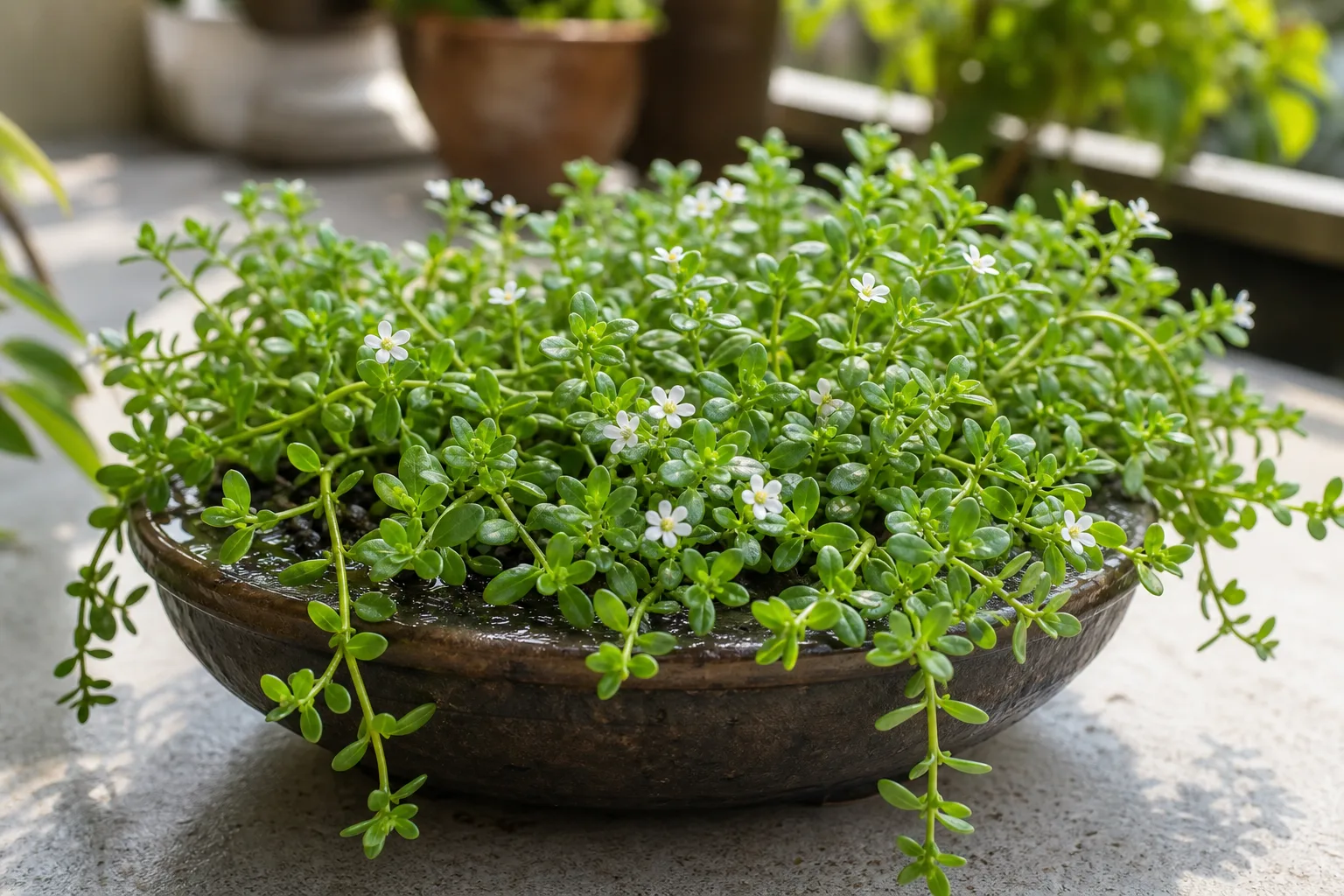
Bacopa monnieri is a mat-forming perennial with shallow roots and succulent leaves that root at the nodes as stems creep. In habitat it occupies freshwater tidal marshes, riparian margins, pools, and muddy shores — places where moisture is reliable. The Florida Native Plant Society places its moisture tolerance from aquatic conditions through usually moist soil with occasional inundation. The Atlas of Florida Plants lists it as an obligate (OBL) wetland plant, and the USDA PLANTS wetland profile for symbol BAMO treats it as a wetland indicator herb.
That status matters for watering strategy. Obligate wetland plants are poor candidates for soak-and-dry schedules designed for succulents or woody tropicals. Brahmi can shrug off heat when water is available; it cannot shrug off a dry root ball for several days in a small pot. NC State also notes resistance to wet soil and recommends moist to wet culture in bogs, water gardens, hanging baskets, and containers. Your job is steady moisture — not clever fertilizer timing and not “tough love” dry-downs.
How Often to Water Brahmi in Containers
There is no honest universal calendar, but Brahmi’s interval is short compared with most houseplants. In warm, bright weather a typical 15–20 cm pot often needs water daily or every other day so the surface never becomes fully dry. Larger bowls and self-watering trays stretch that interval; hanging baskets and windy balconies shorten it. Always verify with a finger check rather than the calendar alone.
Track two full watering cycles in your home. Note pot size, mix texture, sun hours, and how long the surface stayed damp. Within a week you will know whether your plant is a daily drinker or a every-other-day plant. The goal is simple: the mix should feel cool and moist at 1–2 cm depth almost all the time during active growth.
Hot weather and peak summer
In Indian summers and heatwaves, treat Brahmi like a living sponge on a hot ledge. Morning watering is usually best so foliage dries and roots refill before afternoon heat. If the pot feels light by evening and the top centimetre is barely damp, water again — especially in terracotta or hanging baskets. A shallow tray of water under the pot (with the pot sitting in 1–2 cm of water, not fully submerged) buffers midday drying without forcing you to babysit hourly.
Do not confuse heat wilt with drought automatically. Brahmi may look soft in harsh afternoon sun even when the mix is wet; check the soil before adding more. If the mix is already saturated and stems are soft and collapsing, the problem is oxygen and stagnation, not thirst.
Cooler months and monsoon pauses
In cooler winters, ease frequency but do not switch to dry-down culture. Many growers move from daily to every 2–4 days if nights are cool and evaporation slows — still keeping roots moist. During monsoon, skip irrigation whenever rain or humidity already keeps the mix wet. Empty trays that overflow with dirty water for days, then refill with clean water if you use tray culture. Frost and cold dry winds are more dangerous than mild cool-season wetness; protect pots below about 10°C and keep the mix from freezing solid.
The Finger Test for a Wetland Herb
Surface color lies, especially in coco-peat mixes that look pale while still holding moisture underneath. For Brahmi, insert a finger 1–2 cm into the mix. Water as soon as that layer feels barely dry or only faintly cool. Do not wait until the pot is light and dusty. That timing is appropriate for drought-tolerant species; for Brahmi it is already late.
In hanging baskets, also lift the pot. A light basket almost always needs water the same day in warm weather. In dense mats, peel back a trailing stem and check the mix where nodes are rooting — that shallow zone dries first and is where crispy tips begin. If you prefer a wooden skewer, look for clean dry wood near the surface as your cue to water; damp or soil-stained wood means you can wait a few hours, not days.
Tray Culture, Bog Edges, and Shallow Standing Water
Brahmi is one of the few “houseplant-adjacent” herbs that tolerates shallow standing water when oxygen and cleanliness are managed. NC State lists moist to wet soils and occasional flooding as acceptable drainage categories, and notes the plant grows and spreads rapidly in moist soil or shallow water. Practical options for home growers:
Keep a saucer or tray with 1–2 cm of water under a pot that has drainage holes, refilling as it evaporates. Grow Brahmi at the edge of a balcony water bowl or bog planter where the mix stays saturated. In dedicated water-garden setups, mats can trail into shallow fresh water — extension landscape notes support pond and water-garden use.
Tray culture is not a license for sealed, airless sludge. Refresh stagnant tray water every few days in heat, rinse algae, and never leave a pot sitting in foul, sour-smelling liquid. If the mix smells rotten, empty the tray, flush the pot with clean water, and improve airflow before returning to a shallow water reservoir.
Signs You Underwatered Brahmi
Underwatering is the usual failure on balconies. Watch for wilting that does not recover after evening cool-down, crispy or brown leaf tips, thin pale new growth, and mats that stop spreading even though temperatures are warm. Stems may look wiry and nodes stop rooting into dry mix. Because Brahmi is heat tolerant, people often blame “too much sun” when the real issue is a dry root zone under full sun — the pairing that extension notes warn against when drought tolerance is absent.
Recovery is usually fast if roots are still alive. Soak thoroughly until water exits drainage holes, then keep the mix moist for the next week. Trim only the worst crispy tips after new growth resumes. If an entire mat has desiccated to brittle stems, take healthy stem cuttings into fresh moist mix rather than waiting for dead tissue to revive — see the Brahmi propagation guide for cutting basics.
When “Wet” Becomes a Problem
Loving wet soil does not mean Brahmi thrives in foul, oxygen-free pots. Roots still need some gas exchange. Missouri Botanical Garden’s overwatering guidance explains the mechanism for plants in waterlogged conditions: roots in saturated soil can die from lack of oxygen, then fail to supply water and nutrients even though the mix is wet. On Brahmi, that looks like soft collapsing stems, yellowing with stalled growth, and a pot that smells sour rather than earthy.
The distinction is practical. Clean moisture and shallow tray water are normal. Sealed plastic pots with no drainage, compacted anaerobic mix, and weeks of unchanged dirty reservoir water are not. If stems wilt while the mix is cold, heavy, and foul, stop adding water, open drainage, and improve aeration — do not “fix” it with another soak.
Sour mix in sealed pots
A sour or rotten smell is the clearest warning. Dig into the root zone or gently tip the plant from its pot. Healthy Brahmi mix smells like damp garden soil; anaerobic mix smells like swamp sludge. Flush with clean water, discard the worst compacted media if needed, and move into a moisture-retentive but not sealed mix with drainage holes. The Brahmi soil guide covers mix recipes that stay wet without turning into glue. Repotting into fresh media is covered in the repotting guide when mats have packed the pot and water sits on top without soaking through.
Hanging Baskets vs Ground Beds
Hanging baskets dry fastest because air moves on all sides and the root volume is small. In peak heat, expect daily watering, sometimes twice on windy west-facing balconies. Choose moisture-retentive mix, mulch the surface lightly with coco chips if it crusts, and consider a liner that slows evaporation without sealing the pot airtight.
Ground beds, courtyard edges, and bog planters hold moisture longer. Water to keep the top few centimetres damp, then rely more on rainfall in monsoon. NC State notes Brahmi spreads rapidly as a ground cover in moist soil or shallow water — useful if you want a mat, but watch that it does not crawl into dry raised beds where it will crisp out. In mixed herb planters, do not pair Brahmi with drought-loving companions that force you to dry the shared soil.
Seasonal Watering Across Indian Climates
Summer / pre-monsoon: Highest demand. Daily checks, tray buffers, morning soaks. Protect from reflected heat on concrete that cooks pots by afternoon.
Monsoon: Often reduce or pause irrigation. Empty dirty trays after storms. Watch for anaerobic smells in pots that never drain.
Post-monsoon / autumn: Resume regular moist-keeping as humidity drops and sun returns.
Winter (plains and hills): Keep moist, water less often, protect from frost and cold dry winds. Do not store Brahmi bone-dry indoors “for rest” — this species does not want a desert dormancy in a pot.
Coastal growers may see more salt exposure; NC State lists salt among challenges Brahmi resists, but still rinse foliage and flush pots occasionally if you use hard municipal water that leaves crusts. Inland dry-air flats should prioritize trays and grouping plants to raise humidity around the mat.
Water Quality, Salt, and Saucer Habits
Room-temperature water is fine. Extreme chlorinated tap water is rarely fatal for Brahmi if you water thoroughly and let excess drain or evaporate from a clean tray. If white crust builds on the rim, flush the pot monthly with a heavier watering and wipe the crust away. Prefer watering the soil and tray rather than constantly misting leaves as a substitute for root moisture — misting alone will not save a dry root ball.
If you use a saucer without intentional tray culture, empty standing water after ordinary top watering so the pot is not half-submerged for weeks in stagnant liquid. Intentional shallow reservoirs are different: you refresh them on purpose. Accidental saucer swamp is how sour smells start.
Confirm Bacopa monnieri, Not Centella
In parts of India, “brahmi” is also sold as Centella asiatica (gotu kola). The two plants are not the same species. Centella asiatica is a different creeping herb with distinct leaf shape and its own moisture preferences listed by extension sources such as NC State’s Centella profile. Confirm labels say Bacopa monnieri (Water Hyssop / Nirbrahmi) before you copy watering advice from a gotu kola seller. Wrong identity leads to wrong expectations about growth habit and how aggressively the mat drinks.
When to use this page vs other Brahmi guides
Use this page for how often to water, moisture checks, trays, seasonal rhythm, and wet-vs-sour diagnosis. Use the Brahmi light guide when crispy tips appear in harsh sun despite wet soil, or when mats stretch in deep shade. Use the soil guide when the mix dries in hours or stays anaerobic. Use fertilizer only after moisture is stable — Brahmi fails from drought far more often than from underfeeding. Use pruning to tidy mats after you restore watering, not before.
Related Brahmi guides
- Brahmi plant hub — profile, size, and grower notes
- Brahmi overview — full care context
- Brahmi light — sun vs partial shade with wet roots
- Brahmi soil — mixes that stay moist to wet
- Brahmi fertilizer — feeding after moisture is right
- Brahmi repotting — when mats dry too fast
- Brahmi propagation — cuttings from hydrated stems
Conclusion
Brahmi watering succeeds when you treat Bacopa monnieri as the wetland herb it is: consistently moist to wet roots, never a dry pot. Check 1–2 cm deep, water daily or every other day in heat, use a shallow clean tray if balconies dry too fast, ease slightly in cool weather without switching to drought culture, and fix sour sealed mix by restoring oxygen rather than by withholding all water forever. Keep the mat plump and spreading, and most “mystery wilt” problems disappear.