Brown Tips on Brahmi: Drought, Heat & Tray Checks
Quick answer
Brown tips on Brahmi (Bacopa monnieri) usually mean the shallow root mat dried out, wind desiccated a hanging basket, or harsh sun outpaced uptake—not a mysterious leaf disease. First step: press your finger 1–2 cm into the mix; if it is dusty-dry or the pot feels light, soak thoroughly and keep the root zone moist to wet afterward.
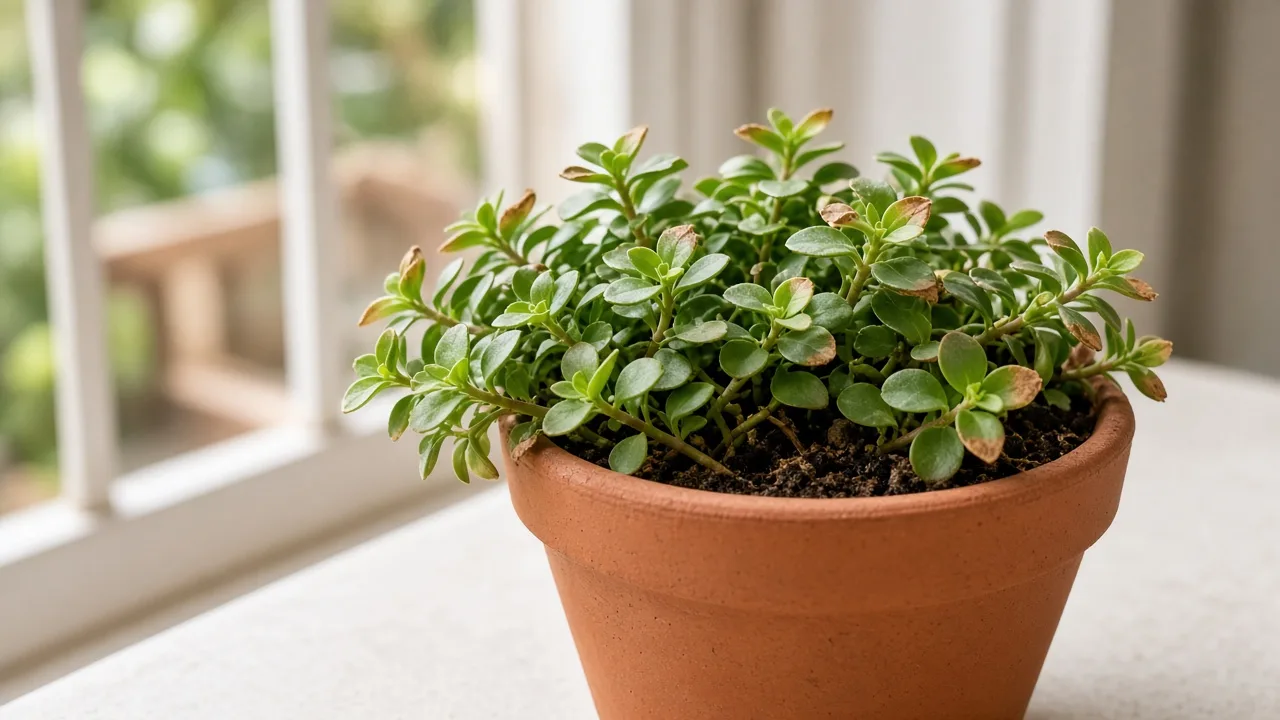
Brown Tips on Brahmi: Causes, Checks & Fixes
This guide covers brown tips on Brahmi. See also the general Brown Tips guide, watering, and light pages for this plant.
Brown Tips on Brahmi: Causes, Checks & Fixes
Quick answer
Brown tips on Brahmi (Bacopa monnieri — water hyssop, herb of grace, nirbrahmi) mean the distal edge of a small succulent leaf has turned dry and tan while the rest of the creeping mat may still look green. For how tip burn works on houseplants in general, see our brown tips hub. On this wetland herb, the pattern almost always traces to a dried shallow root mat, a missed watering cycle on a hanging basket, harsh sun after a move, or salt stress—not a leaf fungus.
First step: run the Brahmi finger test at 1–2 cm depth. Dusty-dry mix plus a light pot points to underwatering. Cool damp soil with crispy tips on a windy ledge points to low humidity. Bleaching on the sun-facing side right after a brighter move points to the light guide.
When to use this page vs other Brahmi guides
| Pattern | Read next |
|---|---|
| Light pot, dusty mix at 1–2 cm, wilting mats | Underwatering |
| Mix stays wet but tips crisp near AC or wind | Low humidity |
| Yellow leaves, sour smell, soft stems on wet mix | Overwatering |
| Whole mat limp on wet stagnant mix | Wilting |
| Bleached or tan patches on sun-facing leaves | Light / scorch |
| Tips after heavy feed, white crust on soil | Fertilizer guide |
What brown tips look like on Brahmi
Unlike broad tropical foliage, Bacopa monnieri forms a low creeping mat of small, thick, oval succulent leaves on thin stems that root at the nodes. The leaf tip is the farthest point from the shallow root zone, so it desiccates first when moisture or uptake lags. NC State Extension notes that water hyssop is heat tolerant but not drought tolerant at all, and it grows in moist to wet soils along streams, ponds, bogs, and hanging baskets—indoors, that biology means tips brown when you treat Brahmi like a typical “let it dry” houseplant.
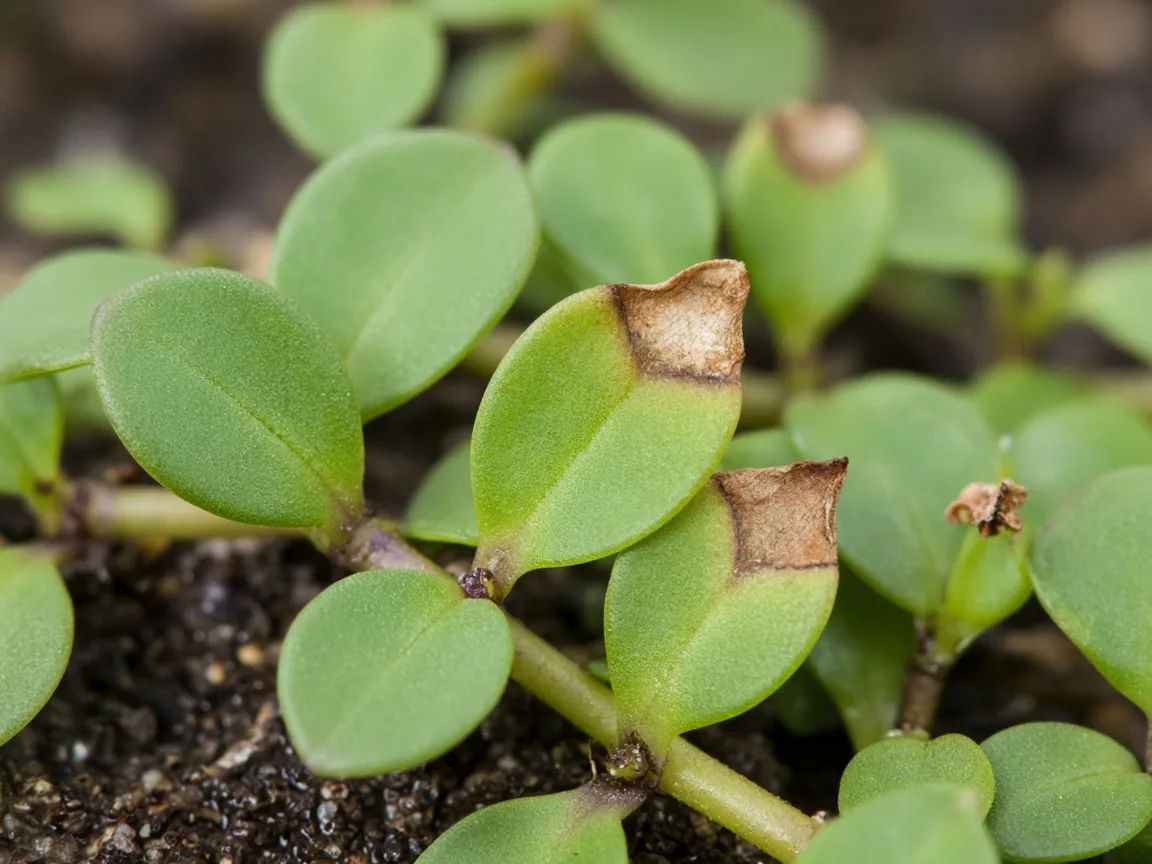
Dry tan tips on small succulent Brahmi leaves—dead tissue will not re-green; watch the next node flush for clean margins.
Classic tip burn (thirst or dry air):
- Narrow tan-to-brown band at the very tip or along the thin margin
- Papery, dry texture on an otherwise plump succulent leaf
- Often worse on trailing runners and basket edges while the center still looks green
- May worsen in hot wind or heated dry rooms even when you watered yesterday
Underwatering signature:
- Tips crisp while stems look slightly limp or the mat stops spreading
- Pot feels light; top 1–2 cm of mix are dusty-dry (not the 2–4 cm dry-down many houseplants use)
- Hanging baskets may need water the same day in peak heat
Sun-scorch signature:
- Browning or bleaching on the sun-facing side soon after a move to harsh glass or open west sun
- Damage may skip shaded leaves on the same mat
- Missouri Botanical Garden explains that leaf scorch appears when foliage loses water faster than roots can replace it—hot midday sun on wet roots can still scorch if transpiration spikes
What tip burn is not: uniform yellowing with sour wet mix (overwatering), whole-mat collapse with mushy stems (root rot), or stippling with webbing (spider mites).
Why Brahmi browns at the tip before the rest of the mat fails
This section is wetland-herb-specific—it would not apply to snake plants or desert succulents.
- Shallow mat architecture: Brahmi roots creep just under the surface and at nodes along stems. The mix surface and outer runners dry first; tips on those exposed leaves fail before the center wilts.
- Obligate moisture habit: The Florida Native Plant Society lists moisture tolerance from aquatic conditions through usually moist soil with occasional inundation. A one- or two-day dry spell in a small pot is enough for tip necrosis on this species.
- Heat without drought reserve: NC State describes the plant as heat tolerant but not drought tolerant. Summer sun is fine only while water is steady; heat plus dry mix crisps tips fast.
- Basket physics: NC State also notes common use in hanging baskets, where wind and edge exposure dry the outer mat hours before the center feels dry to a casual glance.
Tray culture vs a dry crust on the rim
Brahmi is one of the few balcony herbs that tolerates shallow standing water when the water stays clean. Many growers keep 1–2 cm of water in a tray under a drained pot through peak heat. Tips brown when:
- The tray ran dry for a day or two in summer
- The surface crusted while deeper mix stayed damp—outer leaves still crisp
- Stagnant, foul-smelling tray water coincides with soft stems (that is overwatering stress, not a cue to withhold water entirely)
First fix when the 1–2 cm check reads dry: Soak the pot until water runs from drainage holes, empty the saucer within 30 minutes, then refill a clean shallow tray if you use tray culture. Do not leave the collar in sour stagnant water—waterlogged roots can fail to move moisture upward even while tips look dry.
Bacopa monnieri vs “brahmi” gotu kola mix-ups
In parts of India, “brahmi” is sold as both Bacopa monnieri and Centella asiatica (gotu kola). Both like moisture, but leaf shape differs: Bacopa carries small thick succulent ovals on creeping stems; Centella has rounded kidney-shaped leaves on longer petioles. If you bought a mixed pack and only one plant shows crispy tips, check whether the Bacopa runners are the dry ones—Bacopa’s shallow mat dries faster at the pot edge. Confirm identity on the Brahmi overview before you change fertilizer or repot.
Hanging baskets and the outer-runner dry zone
On a trailing basket, the lowest and outermost stems see the most wind and the least shade from their own foliage. Tips brown there first even when the top of the basket still feels moist.
- Lift the basket—if it is light by afternoon, water the same day in heat.
- Peel back a trailing stem and check mix where nodes root; that shallow band dries before the center.
- Group baskets or move off a windy railing before you assume disease.
If only outer tips are tan while new nodes keep rooting inward, your fix is usually more consistent moisture at the rim, not pesticide.
How to confirm the cause
Work through these checks in order. Change one variable at a time so the next node flush tells you the truth.
-
Finger test at 1–2 cm — Match the watering guide. Dusty-dry at depth plus a light pot = thirst. Cool, clinging soil plus limp yellow leaves = wet-root stress; see overwatering.
-
Pot weight and tray level — Light basket or empty tray in peak summer strongly supports drought tip burn on this species.
-
Light history — Did tips appear within a week of brighter glass or removed shade? Inspect the sun-facing side first.
-
Air movement — AC vents, fan drafts, and open balcony wind can crisp tips while mix at depth still feels damp—cross-check low humidity.
-
Feeding and crust — White mineral film after frequent fertilizer suggests salt tip burn. Hold feed and flush with plain water before resuming from the fertilizer guide.
-
New-growth watch — The decisive test is the next succulent leaf pair at a rooting node. Clean margins on fresh tissue confirm your fix; repeated damage on new flushes means another cause is still active.
First fix for Brahmi
Apply one correction first, then wait for the next node flush.
If the top 1–2 cm are dry and the pot is light
Water thoroughly with room-temperature water until it runs from drainage holes, then empty standing water from the saucer within 30 minutes. For peak summer, refill a clean shallow tray (about 1–2 cm) under the pot if you use tray culture—consistent moisture is the normal habitat for wetland-indicator Brahmi.
If mix is damp but tips crisp on a windy or AC-exposed ledge
Move the pot out of direct fan or AC blast and raise ambient humidity—grouping pots, a pebble tray with the pot above the water line, or a small humidifier near the mat. See low humidity for targets; misting alone rarely fixes a whole basket edge.
If sun scorch followed a recent move
Relocate once to morning sun with afternoon protection or bright filtered light per the light guide. Avoid shuffling the mat daily; let new nodes settle.
Cosmetic trim (after the environment fix)
Snip dead tips with clean scissors along the natural leaf contour. Brown tissue will not re-green; trimming is optional and for appearance only.
Recovery timeline
Damaged tip tissue is permanent. Judge success by stopped spread and clean margins on newly opened leaves.
- After a proper soak and tray refill: Wilting often eases within 24–48 hours; old tip color stays brown.
- After humidity or wind correction: New succulent leaves often show intact tips within one to two weeks in warm growth.
- After shade adjustment: Sun-scorched tissue remains tan; the next shaded flush should open without fresh crisping.
If three consecutive node flushes open with clean edges, consider the brown-tip problem controlled. Keep monitoring through heating season and monsoon tray pauses.
What not to do
- Do not switch to a long dry-down cycle because tips are brown—Brahmi is not drought tolerant.
- Do not increase watering because tips are brown while the pot is already heavy, cool, and sour-smelling—that deepens overwatering risk.
- Do not park the mat in harsh midday sun to “dry out” tips—wet roots plus scorch still crisp margins.
- Do not fertilize a stressed mat before moisture and light stabilize.
- Do not stack repotting, hard pruning, and pesticide on the same day as a watering overhaul.
How to prevent brown tips on Brahmi
- Keep the top 1–2 cm moist to barely dry—never bone-dry—per the watering guide.
- Use moisture-retentive mix from the soil guide and refresh when the mat outgrows the pot.
- Maintain tray or bog-edge moisture in peak heat without letting water turn stagnant.
- Grow in full sun to partial shade with steady water, not harsh unshaded west glass without acclimation.
- Inspect trailing edges weekly on hanging baskets so tip damage is caught while the fix is still one thorough soak.
When to worry
Treat as urgent if the whole mat wilts and does not perk after a thorough soak, stems soften on sour-smelling mix, or most new leaves crisp within a week—those patterns point past cosmetic tip burn toward root rot or chronic overwatering.
Lower urgency: a few crispy tips on outer runners while nodes keep rooting, mix moisture matches the 1–2 cm check, and the center stays firm. Correct water and placement before escalating to repotting.
Conclusion
Brown tips on Brahmi are usually a moisture and placement mismatch on a creeping wetland herb, not a death sentence. Bacopa monnieri telegraphs drought, dry wind, harsh sun, and salt stress at the succulent leaf margin before the whole mat collapses. Confirm the 1–2 cm finger test, refresh clean tray water in heat, and pull back from scorching sun; then watch new leaves at rooting nodes for the real verdict. Old tips stay tan, but clean new growth means you found the right lever—return to everyday Brahmi care when symptoms overlap with sibling issues.
Related Brahmi guides
- Brahmi overview — identity, placement, and cluster map
- Brahmi watering — finger test, tray culture, and seasonal rhythm
- Brahmi light — full sun vs harsh scorch
- Brahmi soil — mixes that stay wet without going sour
- Underwatering on Brahmi — when thirst drives crisping
- Low humidity on Brahmi — wind and AC dryness on mats
- Brahmi problems hub — all common issues on this species
Related tool
Use the Brown Tips Diagnosis Tool to narrow causes for brown tips on this plant before changing multiple variables at once.