Brahmi Light Needs: Full Sun to Part Shade
Brahmi Light Needs: Full Sun to Part Shade
Brahmi Light Needs: Full Sun to Part Shade
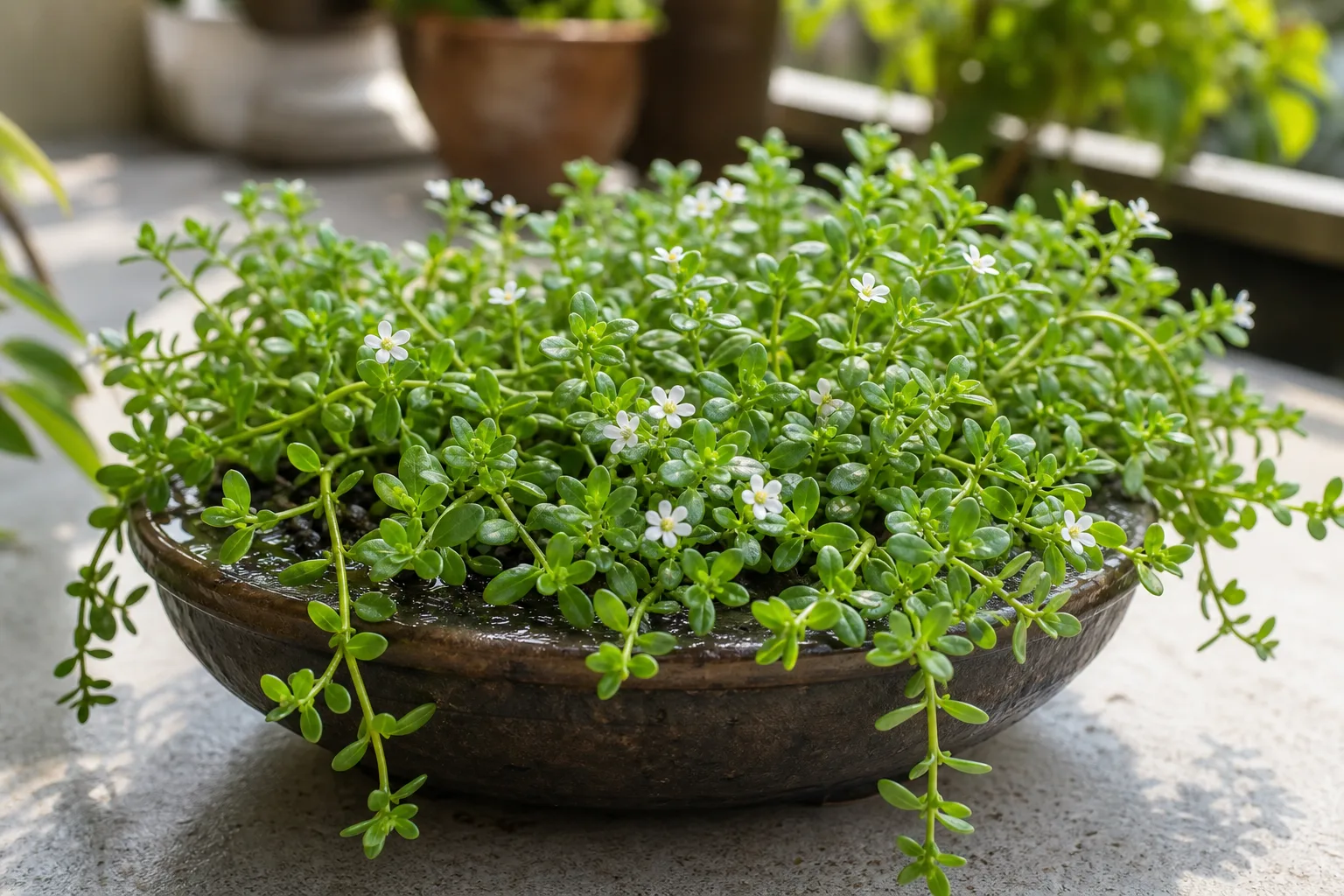
Brahmi (Bacopa monnieri) is a low, creeping wetland herb — not a dim-corner houseplant that “likes shade.” Extension and native-plant profiles place it in full sun to partial shade, with the best mats forming when the sky is bright and the mix stays moist to wet. Give it weak light and you usually get thin, sparse stems and little flowering. Give it hot sun without water and you get crispy tips even though the species is heat tolerant.
This guide covers how much sun Brahmi needs, which Indian balcony exposures work, how far you can push indoor light, how to spot too little or too much intensity, and why light decisions always drag watering with them. Confirm the label says Bacopa monnieri (water hyssop / nirbrahmi) before you copy shade advice meant for other plants sold as “brahmi.”
How Much Light Brahmi Actually Needs
NC State Extension lists cultural light for Bacopa monnieri as full sun (6 or more hours of direct sun) or partial shade (2–6 hours of direct sun). The Florida Native Plant Society matches that range as full sun or part sun. The Florida Wildflower Foundation is more emphatic outdoors: exposure is listed as full sun, with the note that the plant can survive in partial sun but does best with plenty of sun and water. Plants For A Future places it in semi-shade or no shade on moist or wet soil.
Translate that for home pots: aim for strong daylight most of the day, including real sunbeams for several hours when you can keep roots wet. Partial shade is a valid long-term option — especially under light terrace shade cloth or morning-only sun — not a license for a north-facing alcove with no plant-facing brightness.
Kew’s Plants of the World Online treats the species as a plant of the tropics and subtropics, which matches the marsh margins, muddy shores, and open wet places where it spreads as a mat. Open wetland edges are bright environments with reflective water and sky; they are not deep forest floors.
Full Sun Versus Partial Shade in Plain Hours
Use hours as a starting dial, then judge by new growth:
- Full sun target: about 6+ hours of direct sun on clear days — ideal for dense mats and steady flowering when moisture keeps up.
- Partial shade band: about 2–6 hours of direct sun, with bright open shade the rest of the day — workable on east balconies or lightly filtered west/south spots.
- Too dim: less than about 2 hours of real sun and no strong ambient brightness — mats thin out, internodes lengthen, and flowering stalls.
Hold your hand above the foliage at midday. A sharp shadow means strong direct exposure; a soft but readable shadow is still useful bright light; a faint or absent shadow is survival light, not growth light. Brahmi’s small succulent leaves photosynthesize efficiently in bright conditions, but they do not invent photons in a dark hallway.
Why Wetland Habit Still Wants Bright Sky
Growers sometimes assume “wetland plant” means “shade plant.” For Brahmi, that shortcut fails. NC State describes it in moist to wet soils along streams, ponds, and bog gardens in full sun to partial shade, and notes it is heat tolerant but not drought tolerant at all. Bright light drives the rapid spreading habit that fills hanging baskets and trays; shade merely slows the same biology until the mat looks sparse.
RHS advice on how plants use light is blunt: without enough light, plants cannot make the sugars they need, so you see weak, pale, spindly growth and fewer flowers. On Brahmi, that shows up as long gaps between nodes, smaller leaves, and mats that stop knitting together even when you water on schedule.
Best Placement for Indian Balconies and Terraces
In India and similar warm climates, Brahmi belongs on a bright balcony, terrace tray, or hanging basket where full sun to partial shade is realistic — not on a bone-dry, dim windowsill. Pair placement with a mix that stays moist; the Brahmi watering guide covers daily heat-season cadence once light is set.
East, South, West, and Filtered Exposures
An east balcony is the safest default for many homes: morning sun is strong enough to keep mats compact, then bright ambient light continues without the worst late-day heat load. Keep the pot near the railing so foliage faces open sky, not buried behind a parapet wall.
A south terrace (northern hemisphere) delivers the highest total light and often the best flowering — if you water so the shallow mat never fully dries. In peak summer, light shade cloth for the hottest afternoon hours can reduce tip crisping without dropping the plant into deep shade.
A west exposure works when moisture is aggressive. Late-day sun plus hot concrete can cook soft tips on pots that dried at noon. Use a shallow water tray under the pot in heat waves, and pull the basket a little back from reflective walls if leaves feel hot to the touch.
Deep north shade or interior rooms with no window path are poor long-term homes. The plant may stay green for a while on stored reserves, then stretch, stall, and invite the next wrong diagnosis (usually more fertilizer). If north is your only outdoor wall, choose the brightest corner and plan on a grow light or accept slower, thinner growth.
Hanging Baskets, Trays, and Pond Margins
NC State notes Water Hyssop does well in bogs, water gardens, hanging baskets, and draping pots, and that it spreads rapidly in moist soil or shallow water as a ground cover. Hanging baskets need open sky above, not a deep covered verandah that cuts hours of sun. Shallow trays and pond margins often succeed because light and water arrive together — the same pairing FWF stresses when it says the plant does best with plenty of sun and water.
Rotate baskets a quarter turn every week or two if one side faces a wall. Creeping stems will lean toward brightness; rotation keeps the mat even without constant pruning.
Can Brahmi Take Harsh Midday Sun?
Yes — when the plant is acclimated and the root zone stays wet. FWF’s garden tip is explicit: it does best with plenty of sun and water and does not tolerate long drought. Scorch on Brahmi is usually sudden intensity plus dry mix, not proof that the species wants permanent shade.
Outdoor mats in open marsh light handle high sky brightness. Soft nursery plants grown under shade cloth or indoors are different. Their leaves formed under weaker light and burn faster when you drop them onto a July west terrace.
Acclimating Nursery Plants Without Tip Scorch
Move new Brahmi into stronger sun over 7–14 days. Start with morning east light or filtered terrace shade for a few hours, then add midday exposure in short steps. Watch the newest tips: bleached or crispy patches on sun-facing leaves mean you jumped too fast — pull back one step, keep watering, and resume more slowly.
Do not “fix” scorch by starving the plant of light forever. Once tips stabilize, return toward the full sun / part sun band that supports dense mats. Damaged leaf tissue will not green up; new growth after correct placement is the real recovery signal.
Indoor Light Limits and Grow Lights
Brahmi can live indoors in India if you give it strong plant-facing light — typically a bright east or south window with the pot nearly against the glass — and never let the shallow roots dry in AC air. Dim living rooms and north interiors are temporary holding zones at best. Expect less flowering and slower spread indoors than on an open balcony.
If you lack a bright window, use a full-spectrum LED grow light for roughly 12–14 hours daily, positioned close enough that the mat casts a soft shadow (often 20–40 cm depending on fixture strength). Ceiling room lights are not a substitute. Indoor success still hinges on moisture: dry AC plus weak light produces thin, crispy mats faster than either stress alone. For soil that holds wetness without going sour, see the Brahmi soil guide.
Warning Signs of Too Little or Too Much Light
Too little light usually shows as longer internodes, smaller or paler new leaves, sparse mats that stop spreading, weak or absent flowering, and pots that stay wet for days because the plant is barely using water. RHS notes that low light produces weak, pale, spindly shoots and fewer flowers — the same pattern on Brahmi looks like a “tired” creeper rather than a sudden wilt.
Too much light or heat load (especially after a sudden move) shows as bleached or brown crispy tips on the sun-facing side, leaf surfaces that feel hot within an hour of direct exposure, and stress that worsens if the mix dried at the same time. Acclimate; do not permanently exile a sun-capable wetland herb into deep shade.
Judge by new growth for two weeks after any move. Old scars tell you about last month’s sill; the newest nodes tell you about today’s placement.
Before you chase fertilizer, confirm species identity. In Indian markets, packs labeled only “brahmi” may be Centella asiatica (gotu kola), which also likes moist conditions but has fan-shaped leaves and different growth architecture. True Bacopa monnieri has small opposite succulent leaves on creeping stems; lemon-scented lookalikes like Bacopa caroliniana are a different species again.
Light and Watering Work as One System
Stronger appropriate light makes Brahmi use water faster. Weaker light slows dry-down and can leave trays stagnant. NC State’s warning that the plant is not drought tolerant at all matters most on bright terraces: full sun without a wet root zone fails. Deep shade without airflow can fail the other way — soft collapse in sour, airless mix.
When growth stalls, check light and moisture together before changing feed. A brighter spot often needs more frequent watering or a tray; a dimmer spot needs less water volume, not more fertilizer. Details live in the Brahmi watering and overview guides.
When to Use This Page vs Other Brahmi Guides
Use this light page when you are choosing balcony direction, window distance, hangers, grow lights, or diagnosing thin growth versus tip scorch.
Use the Brahmi watering guide when the mix dries too fast, tips crisp from drought, or trays smell sour.
Use the Brahmi soil guide when you need a moisture-retentive mix that stays wet without turning anaerobic.
Use the Brahmi overview for species ID, Centella mix-ups, and the full care map.
Use fertilizer, repotting, and propagation only after light and moisture are stable — feed and cuttings will not fix a dim corner or a bone-dry pot.
Related Brahmi Guides
- Brahmi overview — identity, habit, and care map
- Brahmi watering — wet-root schedule and drought vs stagnant trays
- Brahmi soil — moisture-retentive mixes for mats
- Brahmi fertilizer — light feeding after light is right
- Brahmi propagation — stem cuttings and division in bright, moist conditions
- Brahmi hub — plant profile and cluster entry
Conclusion
Brahmi light care is simple when you respect the wetland biology: full sun to partial shade, bright sky for dense mats and flowers, and enough moisture that heat never turns into drought. East balconies and open terraces are usually easier than dim interiors; hanging baskets need open exposure, not deep shade. Acclimate nursery plants before all-day midday sun, watch new tips for scorch versus stretch, and fix light and water together before you stack fertilizer or repotting. Place the mat where new nodes root and spread — that is the honest signal that Brahmi’s light is right.