Best Soil for Brahmi: Mix, Moisture & pH
Best Soil for Brahmi: Mix, Moisture & pH
Best Soil for Brahmi: Mix, Moisture & pH
Best soil for Brahmi is not the fast-draining cactus blend most houseplant blogs push by default. Bacopa monnieri — also sold as Water Hyssop, Herb of Grace, or Nirbrahmi — is a creeping wetland herb that lives in moist to wet ground, marsh edges, and shallow water. NC State Extension describes it as heat tolerant but not drought tolerant at all, thriving in moist to wet soils along streams, ponds, and bog gardens. Your job with soil is simple: hold steady moisture around shallow node roots without locking the mix into a sealed, sour, airless mass.
This guide covers the ideal potting blend, texture and flooding tolerance, pH, container and tray setups for Indian balconies, wrong-soil warning signs, and how Brahmi soil differs from lookalikes. Pair it with the Brahmi watering guide once the mix is right — soil and water are one system on this plant.
Why Brahmi Soil Must Stay Moist to Wet
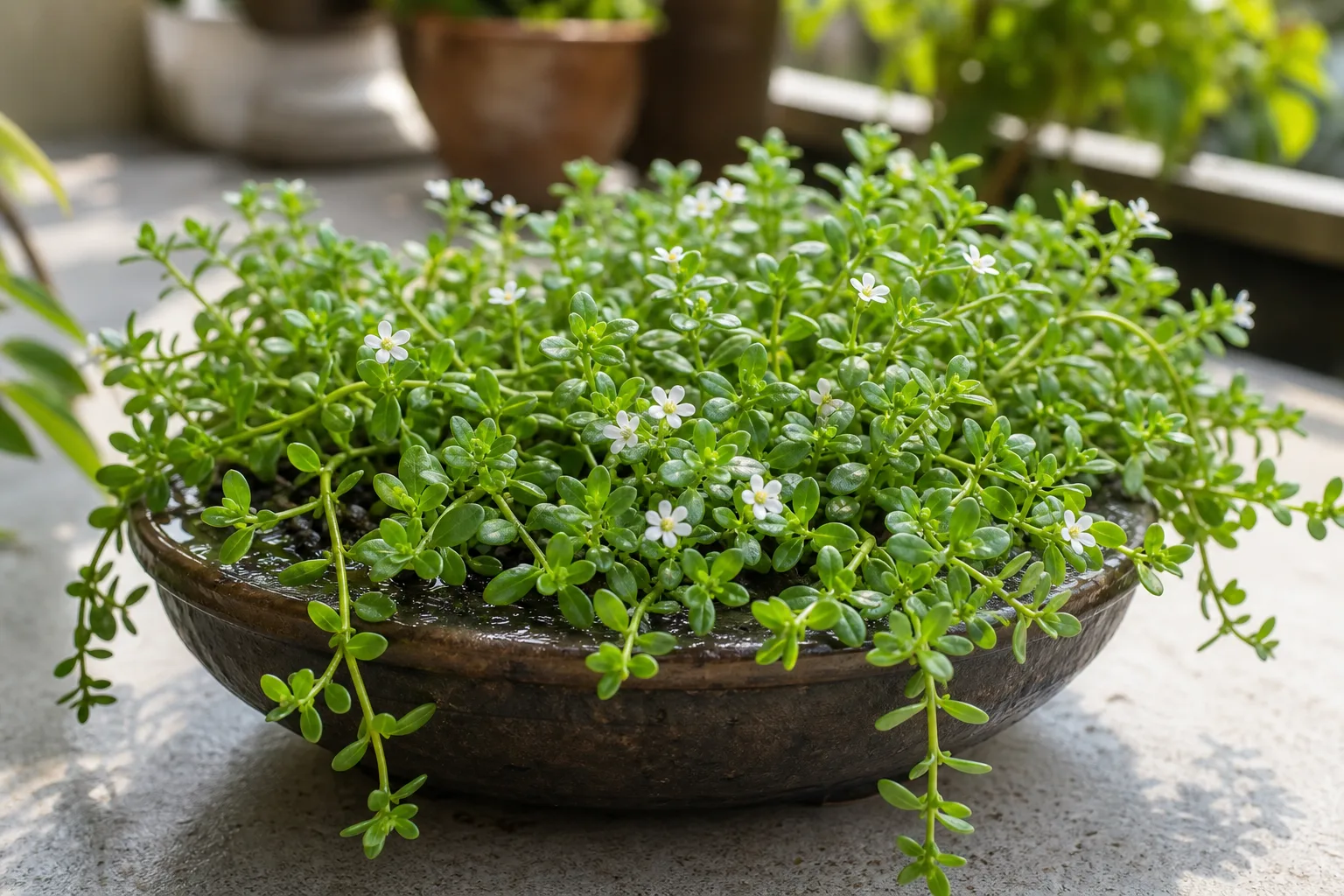
Brahmi forms low, spreading mats of succulent leaves on stems that root at the nodes. In habitat it occupies freshwater tidal marshes, riparian mud, pools, and muddy shores, then spreads rapidly when moisture and warmth stay reliable (NC State Extension Gardener Plant Toolbox). That biology does not translate to “let the pot dry halfway between waterings.” When the root zone swings dry, tips crisp, mats stop spreading, and the plant looks like it needs fertilizer when it actually needs a wetter medium.
The soil you choose decides how hard that rhythm is to keep. A moisture-retentive loam or potting blend buys you hours of buffer in hot weather. A gritty cactus mix empties in a morning on a sunny terrace and forces daily emergency watering that still leaves pockets dry. Aim for a medium that stays moist to wet after watering — the same range NC State lists under soil drainage for this species — not a medium designed to shed water as fast as possible.
Wetland roots vs ordinary houseplant mix
Most indoor mixes are built for plants that want oxygen-rich, free-draining conditions between soaks. Brahmi still needs dissolved oxygen at the roots, but it evolved for occasional flooding and consistently wet soil, not drought cycles. Extension culture notes allow clay, loam, or sand textures as long as moisture stays steady (NC State Bacopa monnieri). Texture is flexible; dryness is not.
That is the opposite of snake plant or ZZ plant logic, and it is also different from free-floating aquatics that never use potting soil at all. Brahmi is a rooted creeping herb: it wants a physical medium that holds water, accepts shallow standing water or a tray underneath, and still lets you refresh stale water so the pot does not turn anaerobic. Missouri Botanical Garden overwatering guidance reminds growers that roots in waterlogged, oxygen-starved soil can die and smell sour — even wetland plants suffer when a sealed container never exchanges air. Wet is correct; stagnant and sealed is not.
Ideal Soil Mix for Brahmi in Pots
For containers, start with a moisture-retentive base, then add just enough coarse particles so water can move through the pot instead of pooling in a dead layer at the bottom. You are building a bog-friendly mix for a shallow-rooted mat, not a chunky orchid bark blend and not a pure clay brick.
A reliable target profile looks like this: organic matter that holds water (compost, coco peat, or a quality peat-based potting mix), a mineral fraction that keeps the blend from collapsing into mud (coarse sand or fine grit), and a light aerator (perlite) so oxygen can return after each soak. NC State’s Extension Gardener Handbook on soils explains why organic matter improves water-holding capacity while structure and pore space still matter for root function — the same balance Brahmi needs in a pot.
A practical DIY moisture-retentive recipe
By volume, mix:
- 40% quality potting mix (peat- or coco-based, without slow-dry “cactus” labels)
- 30% coco peat or finished compost
- 20% perlite
- 10% coarse sand
Moisten the blend before potting so it feels evenly damp, not dusty and not dripping mud. Fill a pot with drainage holes, set the rooted mat so nodes sit just at or slightly below the surface, and firm gently — do not pack it into a dense plug. On hot Indian balconies, this mix still dries faster in hanging baskets than in a deep bowl with a water tray, so expect to water more often in elevated pots even when the recipe is correct.
If you garden in clay-heavy native soil outdoors, you can plant Brahmi into amended loam at a pond margin or permanently moist bed. In-ground success still depends on never letting the root zone bake dry between monsoons and heat waves. Containers give more control for city growers because you can add a saucer or tray of water under the pot.
Store mixes that help — and ones that fail
Useful bagged options include standard indoor potting mix, vegetable or herb mixes with compost, and “moisture control” blends — as long as you verify the texture stays open after wetting. After purchase, fluff in extra coco peat or compost if the bag feels sandy and light, or add a scoop of perlite if it packs into a sticky brick.
Skip cactus, succulent, and bonsai mixes sold for sharp drainage. Skip pure garden soil alone in pots; it compacts, drains poorly in a container, and often goes anaerobic. Skip hydrophobic peat bricks that were allowed to dry completely and then refuse to rewet — Brahmi cannot wait while you struggle to remoisten a crust. If a nursery plant arrives in dry, crusted mix with crispy tips, plan a gentle soil refresh once the plant stabilizes, using the Brahmi repotting guide timing rather than ripping roots on day one.
Soil Texture, Drainage, and Flooding Tolerance
NC State lists clay, loam (silt), and sand as acceptable textures for Bacopa monnieri, with drainage described as moist, occasionally wet, and occasional flooding (Bacopa monnieri cultural conditions). Read that carefully: the plant is not asking for “excellent drainage” in the houseplant-catalog sense. It is asking for a site or container that can stay wet without the grower panicking and switching to arid mix.
In practice, drainage holes still matter in pots. They let excess water escape after a deep soak so you can refresh oxygen. A solid nursery tray or cachepot without holes can work only if you actively manage the water level like a shallow bog — topping up clean water and dumping sour water — not if you forget the plant for a week in a closed plastic bowl. Related wetland Bacopa species such as lemon bacopa (Bacopa caroliniana) are likewise wet-soil plants of shores and marshes (NC State Bacopa caroliniana), which reinforces the family pattern: moisture first, drought never.
Flooding tolerance is an advantage for monsoon balconies and pond edges. It is not permission to leave fertilizer salts and decaying debris trapped in a sealed pot. When trays sit for days in heat, change the water, rinse the saucer, and check that the mix still smells clean and earthy rather than rotten.
Best pH Range for Brahmi Soil
Brahmi is unusually forgiving on pH. NC State records acid (below 6.0), neutral (6.0–8.0), and alkaline (above 8.0) as acceptable for Bacopa monnieri (NC State Extension). For home growers, treat about 6.0–8.0 as the comfortable working range and stop chasing exotic acidifier products unless a soil test shows a true extreme.
What matters more than decimal-point pH is consistency of moisture and light. Extremely alkaline municipal water plus heavy fertilizer can leave a crust on the surface over months; flush the pot occasionally with clean water and refresh the top layer of mix if salts build. Extremely acidic, unbuffered peat that stays bone dry between waterings fails for drought reasons, not because Brahmi “requires” acidic soil.
If you are planting beside a pond or in native soil, a simple pH strip reading is enough for peace of mind. Do not rebuild an entire mix solely to hit 6.5 when the plant is already spreading and flowering.
Containers, Water Trays, and Bog-Style Setups
Soil choice and container choice travel together. Wide, shallow bowls suit creeping mats better than tall, narrow cylinders that dry at the rim while staying stagnant at the base. Always prefer pots with drainage holes, then place them in a deep saucer or tray you can keep filled with a centimeter or two of water during peak heat. That recreates the wetland edge without burying the crown in permanent mud.
NC State notes that Water Hyssop does well in bogs, water gardens, hanging baskets, and draping over pot edges, and that it spreads rapidly in moist soil or shallow water as a ground cover (NC State Bacopa monnieri). On an Indian terrace, that maps cleanly to: bright balcony shelf, moisture-holding mix, and a water tray you refill daily in May–June heat. Indoors, keep the same wet mix but watch airflow — damp foliage in a sealed room can invite soft collapse even when soil moisture is appropriate. Balance wet roots with the Brahmi light needs guidance so growth stays compact rather than thin and weak.
Hanging baskets and shallow pots
Hanging baskets showcase Brahmi’s draping habit, but they expose the mix to wind and sun on all sides. Use the DIY moisture-retentive recipe above, choose a liner that does not shed water instantly, and check the basket daily in hot weather. A solid plastic hanging pot often outperforms a wire basket lined with thin coco that dries in hours.
Shallow nursery trays and rectangular planters also work if you keep them evenly wet. Avoid stuffing every node into deep soil — Brahmi wants surface moisture where stems can root as they creep. When the mat fills the rim and the pot dries within a day despite daily watering, the medium has likely compacted or become root-bound; that is a soil-volume problem solved by refreshing mix and upsizing slightly, covered in Brahmi repotting.
Wrong Soil Warning Signs
Wrong soil usually fails in one of two ways: it dries too fast, or it turns airless and foul while still looking wet.
Drought-style failure from arid mix shows up as wilting in heat, crispy or brown leaf tips, pale thin new growth, and mats that stop creeping even when you water on a calendar. The surface may look dusty or hydrophobic. First action: soak the pot thoroughly, set it in a water tray, and plan a mix upgrade — do not answer dryness with heavy fertilizer.
Anaerobic failure from sealed, compacted, or never-refreshed wet mix shows up as a sour or rotten smell, soft collapsing stems, yellowing with stalled growth, and soil that stays heavy and cold. Missouri Botanical Garden notes that soil left too long without oxygen often smells sour or rotten — use that smell test. First action: empty the tray, improve airflow, trim mushy stems, and repot into fresh moist mix with drainage if the root mass is slimy. Wetland plants still need oxygen; “keep wet” never means “seal forever.”
Surface mold or algae on constantly wet mix is common and usually cosmetic if the plant is spreading and the smell is clean. Scrape the top crust, increase light and air movement, and avoid burying food scraps in the pot. If growth has stalled and the mix is slimy throughout, treat it as a refresh problem, not a spray problem.
Brahmi vs Gotu Kola Soil Needs
In India, “brahmi” is sometimes sold as Centella asiatica (gotu kola / false pennywort) as well as Bacopa monnieri. Confirm the botanical name on the label. Centella is a low, rhizomatous ground cover of moist to wet sites that also wants moisture, but NC State describes it as needing moist to wet yet well-drained soils in partial shade to full sun (Centella asiatica). Bacopa monnieri’s cultural notes emphasize moist to wet conditions with occasional flooding and broader texture tolerance.
For home care, both dislike drought. Bacopa is the better candidate for hanging baskets, shallow water trays, and aquarium margins; Centella behaves more like a dense ground-cover herb of damp beds. If your plant has round, kidney-shaped leaves on longer petioles rather than small opposite succulent leaves on creeping water-hyssop stems, you may be growing Centella — adjust expectations and still keep the medium moist, but do not assume every “brahmi” packet follows the Bacopa flooding profile.
When to Refresh or Repot the Mix
Refresh soil when the mat crowds the pot rim, the container dries within a day in heat despite correct watering, roots pack the drainage holes, or the mix smells sour and will not recover after tray changes. Every 1–2 years is a sensible default; spring to early monsoon is the easiest window in India because warmth and humidity support quick re-rooting.
When you refresh, tease away spent mix gently, keep as many white node roots as you can, and replant into the DIY moist blend above. Water in thoroughly and return the pot to bright light with a tray. Hold fertilizer until new creeping growth appears — see the Brahmi fertilizer guide for light feeding after the mix is stable. Propagation and division often happen naturally during a soil refresh; healthy stem pieces root readily in the same wet medium covered in Brahmi propagation.
When to use this page vs other Brahmi guides
Use this soil page to choose, mix, diagnose, and refresh the growing medium. Switch to Brahmi watering for how often to irrigate, finger-test depth, and seasonal timing once the mix is correct. Use Brahmi light when thin growth or stalled mats track placement more than soil texture. Use Brahmi repotting for pot size, timing, and step-by-step transplant mechanics. Use Brahmi overview when you need the full care snapshot, identity checks, and cluster navigation.
Related Brahmi guides
- Brahmi overview — identity, wetland habit, and full-care summary
- Brahmi watering — moisture checks and schedules that match wet soil
- Brahmi light — sun vs shade that change how fast mix dries
- Brahmi fertilizer — light feeding after moisture is stable
- Brahmi repotting — when crowded mats need fresh mix and space
- Brahmi propagation — stem cuttings and divisions in wet medium
Conclusion
Brahmi soil success is a wetland problem, not a drainage contest. Give Bacopa monnieri a moisture-retentive mix that stays moist to wet, accept clay–loam–sand textures if moisture is steady, keep pH roughly in the 6–8 band, and use trays or bog-style containers to buffer Indian heat. Avoid cactus mixes that bake the mat dry, and avoid sealed anaerobic pots that smell sour even though the species loves wet ground. When the medium holds clean moisture and nodes keep rooting, Brahmi spreads — which is the real proof your soil recipe works.