Root Rot on Brahmi: Stagnant Tray & Node-Mat Rescue
Quick answer
Root rot on Brahmi (Bacopa monnieri) is usually stagnant, oxygen-poor wet mix—not honest wetland moisture. First step: dump sour water from the tray and cachepot, sniff drainage holes, and check whether creeping stems still root at healthy nodes.
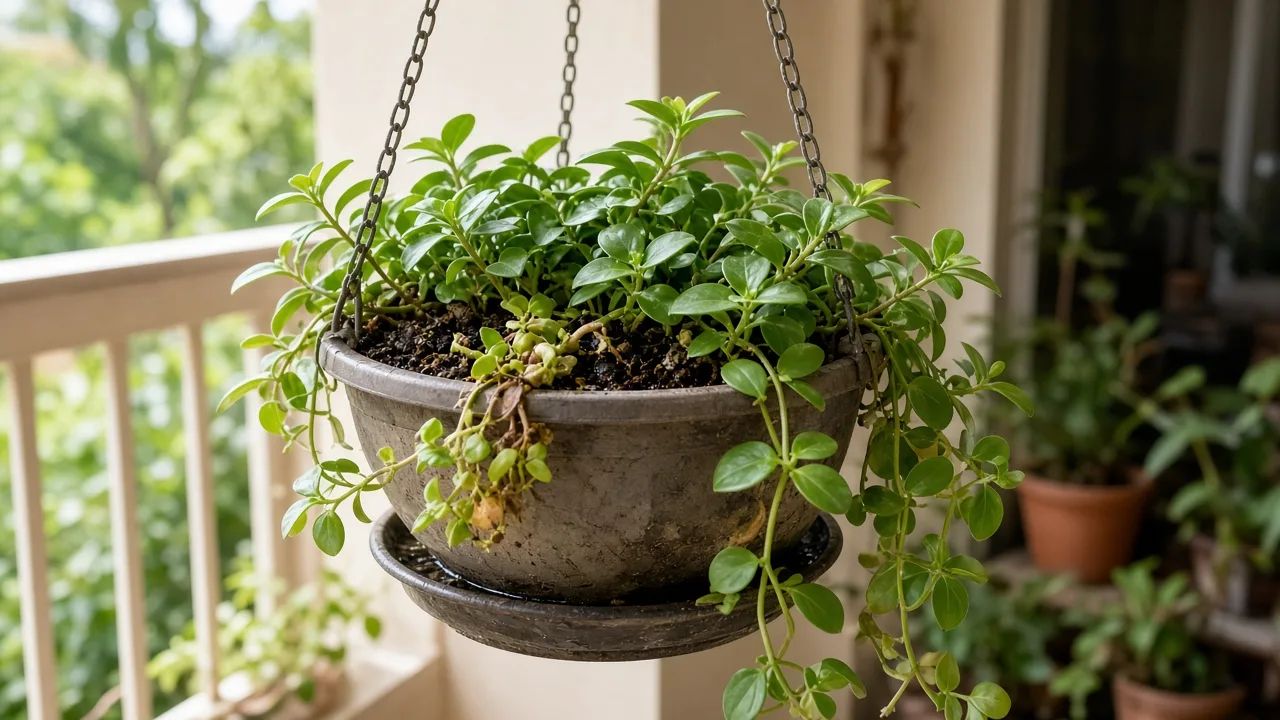
Root Rot on Brahmi: Causes, Checks & Fixes
This guide covers root rot on Brahmi. See also the general Root Rot guide, watering, and light pages for this plant.
Root Rot on Brahmi: Causes, Checks & Fixes
Quick answer
Root rot on Bacopa monnieri (water hyssop, nirbrahmi) is a stagnation problem in a shallow root mat, not proof you watered a wetland plant “too much.” Brahmi is heat tolerant but not drought tolerant at all and belongs in moist to wet soils with occasional flooding in the wild. Indoors, rot appears when that moisture sits airless—sealed cachepots, unchanged tray water, compacted peat, or a cool dim room where the mat never dries even slightly at the surface.
For how saturated soil kills roots in general, see our root rot guide. On Brahmi, the pattern is sour-smelling sludge, soft stems at rooting nodes, yellow stalled mats, and fungus gnats—not a light dry pot.
First step: pour off all standing water, rinse the saucer or bog tray, and lift the pot out of any outer cachepot so air can reach the drainage holes. Sniff the holes before you change anything else. Rot confirmed by smell and mushy nodes needs trimming the same day; crispy leaves on dusty dry mix means jump to underwatering instead.
When to use this page vs other Brahmi guides
| What you notice | Read next |
|---|---|
| Sour tray, soft nodes, mushy shallow roots (this page) | Stay here for oxygen refresh and mat salvage |
| Wet mix but stems still firm; mat just stalled | Overwatering — stagnant vs healthy wet culture |
| Light dry pot, crispy tips, no sour smell | Underwatering |
| Whole mat limp on wet soil | Wilting or drooping leaves — separate drought wilt from rot |
| Yellow leaves without sour odor | Yellow leaves |
| White fuzz on surface only | Mold on soil |
| Small flies when you water | Fungus gnats — shared wet, organic mix |
| Thin mat in deep shade | Not enough light — slow use + chronic wetness |
This page is for confirmed or highly likely root decay on a creeping wetland mat—not for owners who stopped watering because generic rot advice told them to dry out Brahmi completely.
What root rot looks like on Brahmi
Healthy Brahmi forms a low carpet of succulent leaves on creeping stems that root at every node. Rot attacks that shallow mat first while upper stems may still look green for a few days.
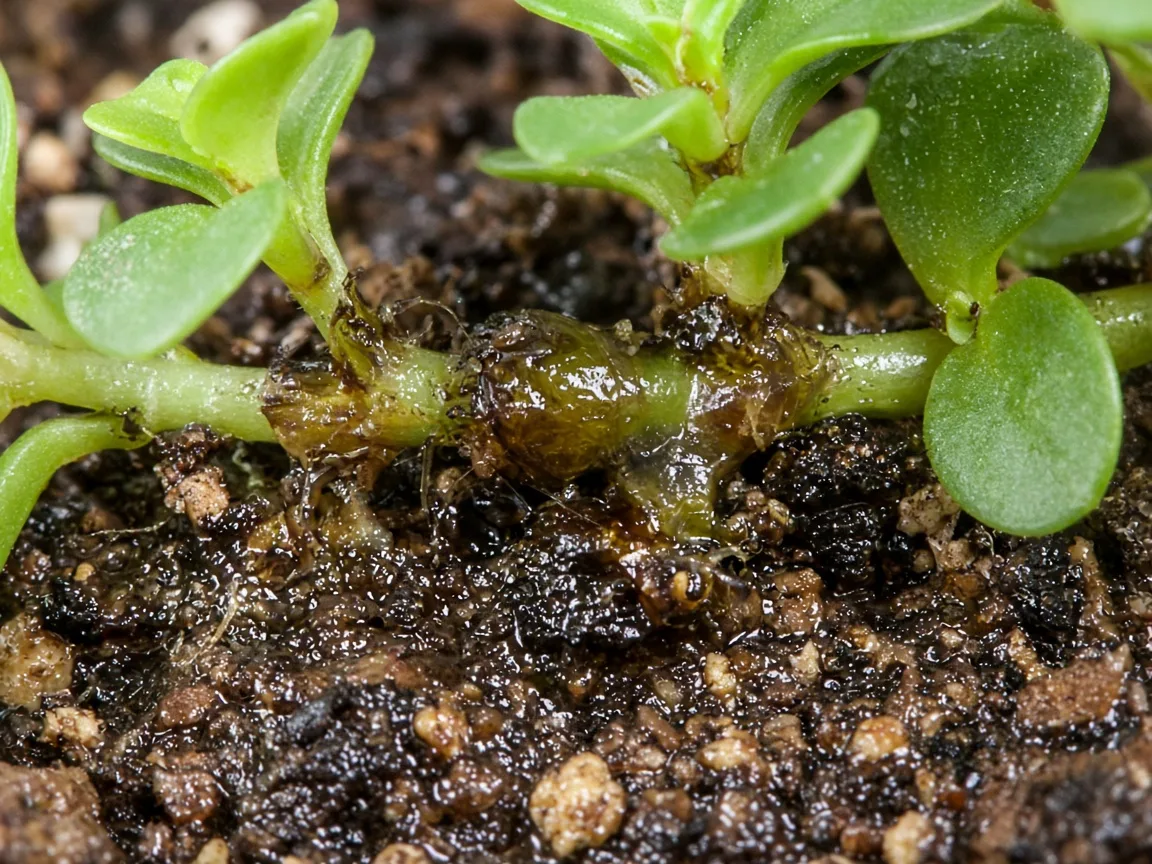
Root rot at Brahmi nodes—stem bases turn translucent and brown where they touch anaerobic sludge while nearby leaves may still look plump.
Early signs (oxygen failing, stems partly firm)
- Sour or rotten smell from drainage holes or tray water, distinct from normal earthy potting mix
- Stems soften at soil-line nodes while tips still feel turgid
- White root initials stop appearing on stems you lay on damp mix
- Mat stops spreading even though the surface stays wet—see slow growth
- Fungus gnats rise when you disturb the pot
- Mix feels sludgy and compacted, not loose and oxygenated like a fresh bog edge
- Unpotting shows brown, mushy roots limited to the bottom inch or two of the mat
Advanced signs (decay through the mat)
- Black, melted stems that pull away from the mix with no resistance
- Yellow leaves across whole sections, not just old outer leaves
- Wilting on wet soil because dead roots cannot move water—see wilting
- Tray water turns cloudy or oily within days of refilling
- No firm tissue left at the crown when you pinch the oldest stems
Plump leaves alone do not rule out rot. Brahmi’s succulent foliage stores water briefly, so stems can collapse before every leaf looks crispy.
Node-mat triage on creeping Brahmi
This check is Brahmi-specific—it does not apply to taprooted herbs or deep-rooted houseplants.
- Lift one trailing stem and trace it back to where it enters the mix. Healthy Brahmi should feel firm with tiny white roots at nodes touching soil.
- Compare nodes above the soil line to those buried. Rot often starts on the lowest nodes in a hanging basket while draping stems still look fine.
- Press the mat center with a gloved finger. A spongy, sinking center on wet mix signals crown breakdown.
- Confirm the label says Bacopa monnieri. In India “brahmi” sometimes means Centella asiatica (gotu kola)—a different root habit and drought response. Wrong-ID care makes rot and drought look interchangeable.
Trust node firmness and smell over leaf color alone.
Sour tray syndrome in balcony pots
Brahmi is widely grown in hanging baskets, terrace trays, and shallow bog dishes where owners keep a water reservoir for heat—exactly the right idea in bright sun. Rot appears when that reservoir becomes a sealed anaerobic soup:
- Outer decorative pot with no air gap at the drainage holes
- Tray water never dumped and rinsed for weeks in humid monsoon weather
- Compacted coco peat that holds water without pore spaces—see soil
- Cool winter rooms (below about 10°C) where wet mix chills and oxygen demand drops while water stays logged
Missouri Botanical Garden notes that roots in waterlogged soil die when they cannot absorb oxygen, and that soil long without oxygen often smells sour or rotten. Brahmi still needs moisture after you fix airflow—do not interpret that as stopping all water.
Why Brahmi gets root rot
Bacopa monnieri is an obligate wetland species that grows submerged or in moist soil along pond edges. Root rot here is almost always anaerobic culture in a container, not “wet feet” in the sense that hurts succulents.
Stagnant tray water. Shallow trays mimic natural habitat in summer sun. In shade or indoors, unchanged water goes sour and coats roots in bacteria—refresh beats drought.
Sealed cachepots and blocked holes. Moisture without drainage air exchange turns peat into sludge. This matches overwatering on Brahmi pages—meaning bad wet, not too much volume.
Winter cool + wet + low light. Growth slows on short days while the mat stays saturated. Uptake drops but water remains; that combination is rot fuel. Pair with not enough light fixes if the plant lived in a dim bathroom all winter.
Dense, airless repotting mix. Fresh repotting into straight cocopeat without perlite can suffocate shallow roots even when you water correctly.
Pathogens in dead tissue. Water molds such as Phytophthora thrive where free moisture persists around damaged roots—usually after oxygen stress already started. Fungicide does not replace oxygen and trimmed tissue.
How to confirm the cause
Work in this order:
- Dump tray and cachepot water — note smell (sour = high rot risk).
- Lift the pot — sludge leaking from holes or a glued-to-saucer base supports anaerobic rot.
- Tug a creeping stem — mushy nodes on wet mix confirm rot; firm nodes on dry mix suggest underwatering.
- Check newest nodes — healthy Brahmi should be forming tiny roots where stems touch damp mix in warm light.
- Unpot if smell or softness is present — healthy roots are white and firm in the shallow mat. Rot is brown, black, or gelatinous.
- Rule out drought wilt — dry mix, light pot, crispy tips without odor means re-wet gently, not surgery.
Confirmed rot = sour anaerobic mix plus mushy nodes. Do not withhold all water as a “test” on this species—that causes a second drought injury.
First fix for Brahmi
Pour off every drop of standing water, scrub the tray, and stand the pot where drainage holes get airflow. If an outer pot trapped water, keep the inner pot elevated on pebbles or remove the cachepot until the mix smells neutral again.
That single oxygen refresh is the first fix—not a full dry-down. After trays are clean:
- If stems are still mostly firm, hold your normal watering rhythm but never let tray water sit more than a few days in cool weather.
- If nodes are soft or roots mushy, move to trimming the same day (below). Do not fertilize a rotting mat.
Step-by-step recovery when nodes are mushy
- Unpot gently and rinse away sludge so you can see the shallow mat—work quickly; Brahmi hates being bare-root dry for hours.
- Trim all brown, black, or gelatinous roots and melted stem sections with clean scissors until tissue is firm and green inside.
- Discard sour mix entirely; do not reuse sludge or top-dress over it.
- Repot into fresh, airy moisture-retentive mix per the soil guide—perlite and sand keep pores open while staying damp.
- Water in lightly to settle mix, then place in bright sun to partial shade so the plant can respire and root again.
- Use a clean tray; refill with fresh water only if you are in active heat growth—otherwise keep humid but not stagnant.
Hold fertilizer until new node roots appear and growth spreads again—usually two to three weeks in warm weather.
Salvage with node cuttings
When the center crown is gone but upper stems are still firm, Brahmi rescue is stem propagation—not saving the old sludge ball. NC State lists stem cuttings and division as the recommended propagation routes.
- Cut 8–12 cm sections from firm stems with at least two healthy nodes.
- Float or lay cuttings on clean damp mix or sit stem bases in shallow fresh water changed every two days.
- Root in bright light; avoid sealed bags that steam and rot cut ends.
- Follow the full propagation guide once roots are 2–3 cm long.
This path is unique to mat-forming wetland herbs and beats trying to “dry out” a dead crown.
Recovery timeline
| Stage | What to expect |
|---|---|
| Days 1–3 | Sour smell fades after tray refresh; trimmed plants may look wilted |
| Week 1–2 | New white bumps at nodes on firm stems in warm light |
| Weeks 3–6 | Fresh creeping growth covers the pot rim in peak season |
| After rot | Lower yellow leaves do not re-green; judge by new nodes only |
Cool winter recovery can take twice as long—keep humidity up without sealing the pot in plastic.
Lookalike symptoms
| Pattern | Likely cause | First action |
|---|---|---|
| Sour smell + soft nodes on sludge | Root rot (this page) | Trim + repot + oxygenated wet culture |
| Dry mix, light pot, crispy tips | Underwatering | Re-wet evenly; tray in heat |
| Wet mix, firm stems, no smell | Healthy wetland watering | Maintain watering rhythm |
| Wet mix, thin pale mat | Not enough light + stagnant air | More sun; refresh tray |
| Surface mold only | Mold on soil | Scrape; fix airflow |
| Insects on damp mix | Fungus gnats | Dry surface slightly; traps |
Mistakes to avoid
- Drying the pot like a succulent because generic rot articles say “stop watering.” Brahmi dies from drought faster than from honest wet mix.
- Leaving sour tray water to “keep humidity.” Refresh water; do not ferment it.
- Repotting into straight cocopeat without perlite or sand—anaerobic again in weeks.
- Fertilizing rotting tissue to “push growth.”
- Misting leaves instead of fixing root oxygen—invites foliar issues without saving nodes.
- Stacking hard prune, repot, and fungicide on the same afternoon—one clear rescue path first.
How to prevent root rot next time
- Refresh saucer or bog-tray water weekly in heat, sooner if it clouds or smells.
- Keep drainage holes open; elevate pots in cachepots.
- Grow in full sun to partial shade per light needs so the mat uses water actively.
- Use open, moisture-retentive mix from the soil guide—not waterlogged mud.
- In cool months, reduce tray depth but do not let roots bone-dry; move plant to brighter warmth if possible.
- Inspect node roots whenever you hang a new tray under the pot.
When to worry
Act the same day when half the mat melts, smell returns within 48 hours after a full repot, or no firm nodes remain at the crown. Salvage cuttings immediately from any firm tips.
Discard the mother mat when every stem pulls away black and waterlogged with no green inside—propagation from clean cuttings is the realistic outcome.
Related Brahmi guides
- Overview — wetland habit and Bacopa vs Centella labels
- Problems hub — full symptom index
- Watering — steady moisture without stagnation
- Soil — airy, wet-tolerant mix
- Overwatering — bad wet vs good wet
- Repotting — refresh compacted mats
- Propagation — node cutting salvage
Conclusion
Root rot on Brahmi is anaerobic failure in a shallow node mat, not a signal to treat water hyssop like a dry houseplant. Refresh oxygen at the drainage zone first, confirm with smell and node firmness, then trim and repot only when tissue is mushy. Recovery shows up as new white roots at creeping nodes and a spreading mat—not perfect old leaves.
Related tool
Use the Root Rot Risk Checker to narrow causes for root rot on this plant before changing multiple variables at once.