Underwatering on Brahmi: Wet-Mat Checks & Soak Recovery
Quick answer
Underwatering on Brahmi shows up as a feather-light pot, dry top 1–2 cm of mix, limp trailing mats, and crispy tips—not a heavy sour pot on constantly wet soil. First step: finger-test 1–2 cm deep and lift the basket; if both read dry, one thorough soak with drainage, then keep the root zone moist to wet again.
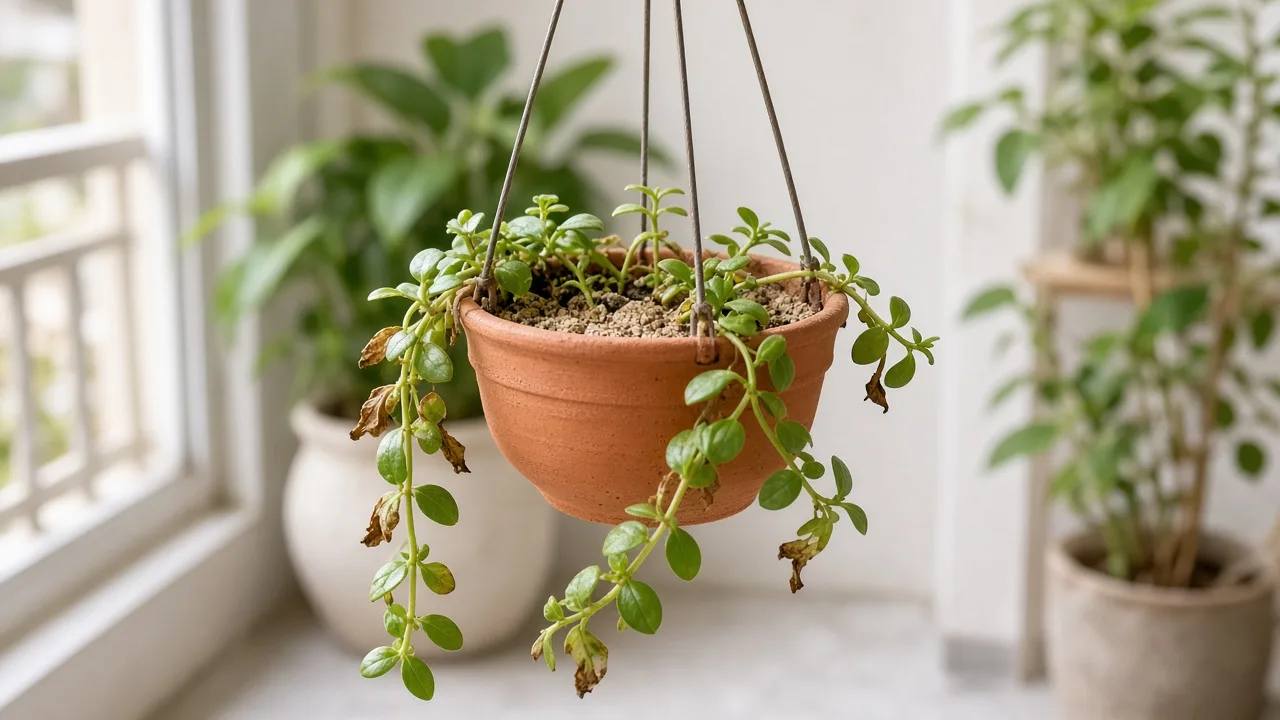
Underwatering on Brahmi: Causes, Checks & Fixes
This guide covers underwatering on Brahmi. See also the general Underwatering guide, watering, and light pages for this plant.
Underwatering on Brahmi: Causes, Checks & Fixes
Quick answer
Underwatering on Bacopa monnieri — Brahmi, Water Hyssop, or Herb of Grace — is a wetland-herb problem, not a “tough love” drought schedule. NC State describes the species as heat tolerant, but not drought tolerant at all, and it grows in moist to wet soils along streams, ponds, and bog edges. When balcony growers treat Brahmi like a succulent and let the mix go bone-dry, shallow mats wilt, tips crisp, and node rooting stops even though the plant still looks mostly green.
For how chronic dryness stresses potted plants in general, see our underwatering guide. On Brahmi, the tell is a light pot or basket, dry top 1–2 cm of mix, limp trailing stems, thin pale new growth, and crispy margins when air is also dry—not soft collapsing stems on heavy sour wet soil.
First step: finger-test 1–2 cm deep and lift the container before you pour. If both read dry, one thorough soak with full drainage is the correct first fix—not fertilizer, repotting, or hard pruning on the same day.
When to use this page vs other Brahmi guides
- Drooping leaves — limp foliage from several causes; this page focuses on confirmed dry root zone and light pot weight
- Wilting — rapid whole-mat collapse after heat shock or chill; use when turgor drops fast
- Overwatering — heavy pot, sour smell, soft stems on saturated anaerobic mix (Brahmi can wilt while wet)
- Root rot — brown mushy roots after sealed stagnant culture
- Brown tips — edge burn when watering rhythm is already adequate
- Low humidity — crispy tips with otherwise firm leaves and moist mix
- Not enough light — pale stretched mats that stay wet too long without spreading
- Watering guide — long-term moist-to-wet rhythm after thirst is corrected
- Overview and problems hub — cluster navigation when symptoms overlap
What underwatering looks like on Brahmi
A healthy Brahmi mat holds small thick succulent leaves along creeping stems that root at nodes as they trail. Underwatering changes gloss, stem turgor, and spread rate before the plant dies outright.
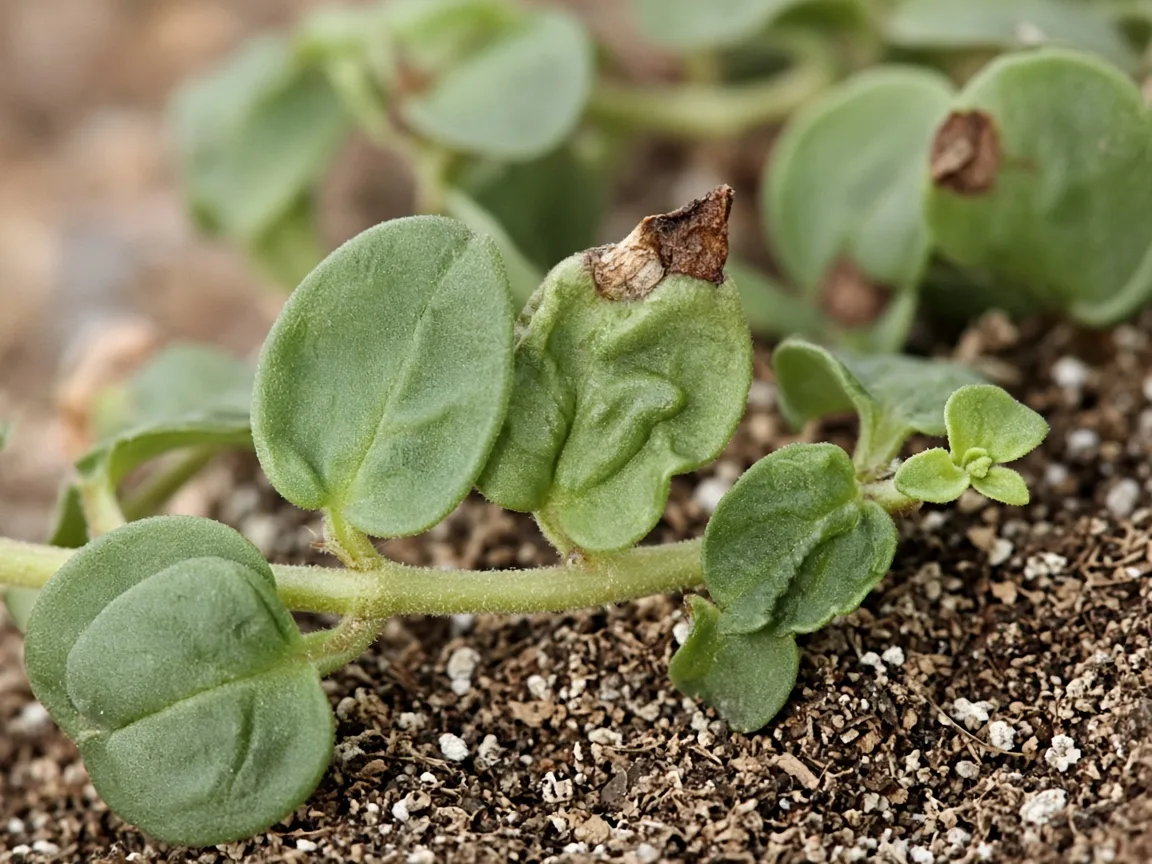
Underwatering on Brahmi—dull slightly shriveled leaves, limp stem angle at a node, and pale dry mix where shallow roots should stay damp.
Early thirst shows subtly dull leaves, stems that hang lower than usual, and mix that looks pale or dusty in the top 1–2 cm while the basket feels lighter than you expect. New tip growth may pause for several days without obvious pest damage.
Established drought brings clearly limp small leaves that feel thin rather than plump, slowed mat spread between nodes, and soil pulling away from the pot edge in fast-drying coco-peat. Shallow node zones where stems should root into mix stay dusty while outer stems still look green.
Advanced dry-down can include papery stems, widespread brown crispy tips when humidity is also low, and a mat that wilts on a feather-light container in afternoon sun. Very dry peat or coir may repel water on the surface even after you pour—see the hydrophobic ring section below.
What underwatering is not: limp stems on a heavy wet pot with a sour smell (overwatering or root rot); stippling with webbing (spider mites); yellowing on constantly dark saturated mix; afternoon softening on wet mix in harsh sun without a light pot (heat wilt—check soil before soaking again).
Why Brahmi dries out faster than soak-and-dry houseplants expect
Bacopa monnieri is an obligate wetland herb in regional floras—the Atlas of Florida Plants lists it as native OBL (obligate wetland), and the Florida Native Plant Society places moisture tolerance from aquatic conditions through usually moist soil with occasional inundation. That biology conflicts with the most common balcony mistake: copying let the top half dry rules from pothos or snake plants.
Brahmi’s shallow, mat-forming habit makes the problem worse in containers. NC State notes the plant spreads rapidly in moist soil or shallow water and is often grown in hanging baskets—formats that evaporate on all sides. A 15–20 cm basket in full sun can go from moist to crisis in a single hot day if you skip a check.
Heat and drought pair badly here. Extension text is explicit: heat tolerance does not include surviving a dry root ball. Full sun on a dry mat looks like “too much light” when the real issue is missing water under the glare—see light guidance after moisture is stable, not instead of watering.
Hanging baskets, trays, and the shallow node zone
Three container setups cause most Brahmi underwatering cases:
Hanging baskets dry fastest because air wraps the root ball and volume is tiny. Expect daily checks in pre-monsoon heat; a basket that felt damp yesterday may be crisis-light today. Moisture-retentive mix from the soil guide helps, but it does not replace frequency.
Tray culture without refills buffers midday drying when you keep 1–2 cm of clean water under a drained pot—exactly the moist-to-wet culture NC State recommends for bogs and water gardens. Trays that evaporate dry for two days while you assume “wet feet” still count as underwatering at the root zone.
Dense mats covering the soil surface hide dry pockets underneath. Peel back a trailing stem at a node: if that 1–2 cm layer is dusty while you have been sprinkling the surface, roots at the nodes are not getting water. That inspection is Brahmi-specific; it fails on upright woody houseplants.
How to confirm underwatering (before you change five variables)
Work through this sequence on the same visit:
- Lift the pot or basket. Compare weight to how it felt right after your last thorough soak. A light container needs water on most species; on Brahmi it often means you already waited too long.
- Finger-test 1–2 cm deep in several spots, including under trailing stems. Water as soon as that layer is barely dry or only faintly cool—not when the whole pot is light and dusty.
- Check newest growth. Thin pale tips and stalled node rooting during warm weather match drought more often than slow growth from nutrition alone.
- Smell and squeeze test for lookalikes. Earthy damp smell with firm stems after a soak points away from rot. Sour swamp smell on a heavy pot means stop—see overwatering before you soak again.
- Evening recheck for heat wilt. Brahmi may look soft in harsh afternoon sun while mix is still moist. If stems firm up by morning on wet mix, adjust placement per the light guide; if they stay limp on a light dry pot, treat thirst.
| Signal | Underwatering (this page) | Overwatering / rot |
|---|---|---|
| Pot weight | Light, lifts easily | Heavy, stays wet days |
| Top 1–2 cm mix | Dry, pale, sometimes pulled from sides | Dark, cold, waterlogged |
| Stem feel | Limp but not mushy; may be wiry | Soft, collapsing, base may be mushy |
| Smell | Dry or neutral | Sour, anaerobic |
| After proper soak | Perks within 24–48 h if roots live | Stays limp, more yellow |
The first fix to try
Give one thorough soak until water runs from drainage holes, then keep the mix moist to wet—not bone-dry again.
Sit the pot in a sink or tray, water slowly until the root ball rewets, and let excess drain for 15–30 minutes. Empty any cachepot so the plant is not standing in stale deep water overnight unless you deliberately use shallow tray culture.
For the next week, treat Brahmi like the wetland herb it is:
- Finger-test daily; water when the top 1–2 cm are barely dry.
- In heat, refill a shallow tray with 1–2 cm of clean water under the drained pot if you cannot check twice a day.
- Refresh tray water every few days so it does not turn foul—stagnant anaerobic trays belong on the overwatering page, not here.
Do not fertilize, repot, or shear the whole mat on day one. Stability first; fertilizer only after new growth looks normal for two weeks.
Hydrophobic dry rings in coco-peat
If water runs down the sides and out the bottom while the core stays dry, the mix has gone too dry to rewet easily. Bottom-water the pot in a sink for 20–30 minutes, or poke several shallow holes with a skewer and soak again. Replace the worst crusted top layer only if repeat soaks fail—full repotting waits until the plant is stable per the repotting guide.
Recovery timeline and what tissue can bounce back
Mild underwatering on Brahmi often shows visible improvement within 24–48 hours after a proper soak and steady moisture—stems lift and leaves regain gloss. Missouri Botanical Garden notes that recovery is judged by new growth, not by older leaves returning to perfect form.
Expect one to two weeks for resumed node rooting and mat spread in warm weather. Crispy brown tips from combined drought and dry air may stay blemished; trim only the worst after new tips look plump.
If stems are brittle and desiccated through much of the mat, salvage healthy tips into fresh moist mix per the propagation guide rather than waiting for dead tissue to revive. If the plant stays limp on a heavy wet pot after your soak, roots may not be taking up water—switch to root rot diagnosis.
Mistakes to avoid on Brahmi
- Waiting for “dry between waterings” copied from drought-tolerant houseplants—Brahmi is not drought tolerant.
- Misting leaves instead of rewetting the root ball when the basket is light and mix is dusty.
- Moving to harsher midday sun to “dry it out” when the mat is already thirsty—pair water with sensible light per the light guide.
- Fertilizing a drought-stressed mat before moisture is stable.
- Panic daily deep soaks after neglect without drainage—alternate drought and anaerobic swings cause mold on soil and root stress.
How to prevent underwatering next time
Adopt the moist-to-wet rhythm from the Brahmi watering guide: top 1–2 cm barely dry at most, then soak; in summer heat, assume hanging baskets need daily or every-other-day checks.
Learn your container’s dry weight after a soak so you notice a light basket before leaves crisp. Group pots or use shallow trays in dry inland balconies. Repot when the mat dries out in under a day after watering—packed roots have little buffer, as covered in repotting.
Pair watering checks with humidity if tips crisp while mix is moist—see low humidity. Review yellow leaves only after you rule out simple thirst on a light pot.
Related Brahmi guides
Use drooping leaves when limp foliage could be wet or dry—start with probe and lift. Use this page when the pot is light and the top 1–2 cm are dry. Use overwatering when mix stays saturated and smells sour. Use wilting for sudden collapse after heat or chill. Use slow growth when spread resumes only after moisture is fixed but light or feed may still limit the mat.
Related tool
Use the Plant Watering Calculator to narrow causes for underwatering on this plant before changing multiple variables at once.