Mold on Soil on Brahmi: Causes, Checks & Fixes
Quick answer
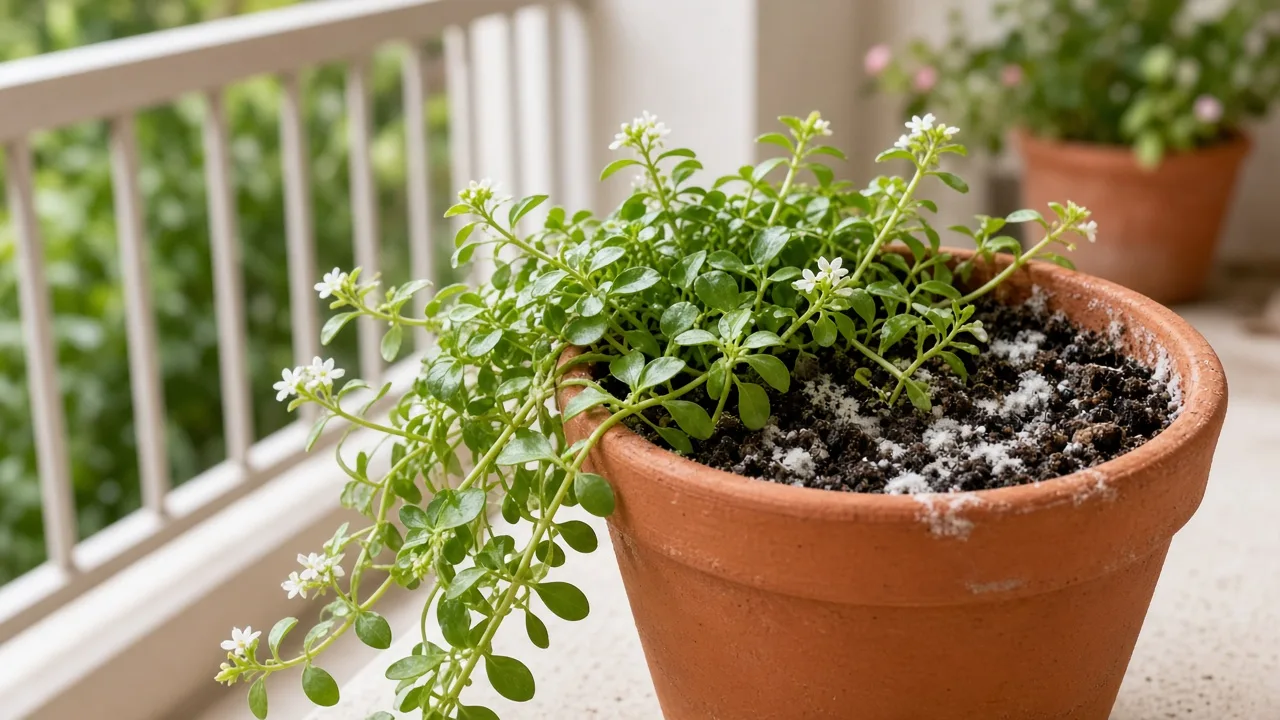
Surface mold on Brahmi (Bacopa monnieri) usually means the top of your moisture-retentive mix stays wet and airless longer than the creeping mat can use—often from sealed cachepots, old tray water, fallen leaves on prostrate stems, or a summer watering rhythm in a dim winter room. First step: scrape the fuzzy top layer, remove debris from the mat, dump sour standing water, and refresh the tray with clean water while keeping the root zone moist.
Mold on Soil on Brahmi: Causes, Checks & Fixes
This guide covers mold on soil on Brahmi. See also the general Mold on Soil guide, watering, and light pages for this plant.
Mold on Soil on Brahmi: Causes, Checks & Fixes
Quick answer
Surface mold on Brahmi (Bacopa monnieri—water hyssop, nirbrahmi) almost always means the top of your organic mix is stagnant and airless, not that you should treat this wetland herb like a snake plant and stop watering. NC State Extension describes water hyssop from moist wet places—marshes, stream margins, and muddy shores—and notes it is heat tolerant but not drought tolerant at all, growing in moist to wet soils and shallow water.
First step: scrape off the fuzzy top inch of mix, pull fallen leaves and debris off the prostrate mat, dump any sour tray or saucer water, and refill with clean water while keeping the root zone moist. Then match ongoing care to the Brahmi watering guide.
For how saprophytic fungi break down organic matter on potting mix in general, see our mold on soil hub. On Brahmi, the useful pattern is white or gray fuzz on a damp crust with firm succulent stems and new node roots still spreading—not drying the mat to crisp, confusing gotu kola (Centella), or ignoring a sour smell from sealed pots.
When to use this page vs other Brahmi guides
This page is the symptom-first entry for fuzzy soil on a water hyssop pot.
- Fungus gnats — go here when small flies hover at the pot rim alongside damp mix; gnats confirm the same wet organic habitat
- Overwatering — go here when soft collapsing stems, sour anaerobic mix, and yellowing appear—not surface fuzz alone on a spreading mat
- Root rot — go here when stems soften at the soil line, growth stalls, and roots smell rotten despite green leaves above
- Underwatering — go here if you dried the pot out chasing mold and now see crispy tips and a stalled mat
- Soil — go here when peat-heavy mix never breathes at the surface even after you refresh tray water
- Problems hub — full symptom index for Bacopa monnieri
What mold on soil looks like on Brahmi
On container Brahmi, mold most often appears as a white, gray, or occasionally greenish fuzzy film across the potting mix. It may cluster where creeping stems root at nodes along the pot rim, under overlapping succulent leaves that shade the surface, or where tray water sits longest after a top-up. You might notice a musty smell when you shift the pot, or fungus gnats sharing the same damp organic layer.
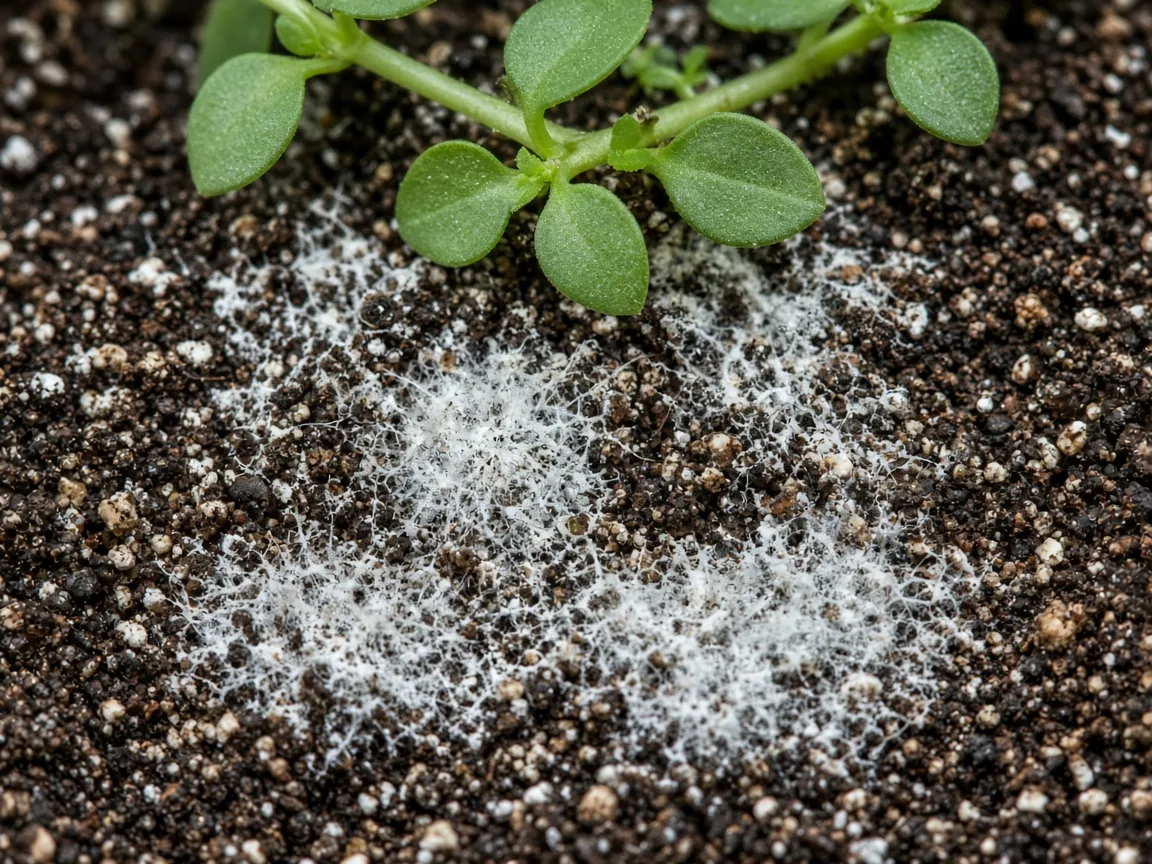
Mold on soil on Brahmi - compare fuzzy surface mix with firm succulent stems and node roots along the mat edge.
Healthy Brahmi keeps firm creeping stems, plump evergreen leaves, and new roots at nodes spreading along the pot edge even when surface mold is present. That contrast matters: fuzzy soil with a spreading mat usually points to a surface stagnation and organic-debris problem, not leaf diseases such as powdery mildew on the blades. If stems soften, several leaves yellow while mix stays wet, or the pot wilts with a sour odor, escalate toward root rot rather than treating mold as cosmetic.
Mold can also line drainage holes or saucers that hold days-old runoff. In a humid bathroom or shaded balcony with 60–80% humidity, the surface may stay damp for a week after one generous watering—exactly the conditions that keep mold returning on Brahmi soil rich in coir and compost.
Why Brahmi gets mold on soil
Brahmi evolved as a mat-forming wetland herb that spreads rapidly in moist soil or shallow water as a ground cover. Indoor growers hear “keep it wet” and assume a permanently fuzzy, airless crust is normal. It is not. Wild plants get moving water, open air at the mud surface, and fresh exchange at the margin. A sealed cachepot with week-old tray water mimics wet feet without oxygen at the top layer—prime habitat for harmless saprophytic fungi and fungus gnat larvae feeding on decaying peat and leaf litter.
Moist roots without a sour carpet
Many houseplant mold guides tell you to let the whole pot dry out. That advice fits drought-adapted succulents, not Brahmi. This species wants steady moisture in the root mat with a breathable, non-sour surface between top-ups—not a desert and not a sealed peat sponge. When only the top centimeter stays chronically damp in stagnant air, fungi colonize compost fines and fallen leaves while deeper mix may still be usable.
Prostrate mats, node roots, and tray water
Brahmi stems creep horizontally and root at nodes. In hanging baskets and shallow pots, several nodes sit against damp mix at the rim. A shallow water tray helps in Indian heat, but water that sits for weeks without refresh turns sour and keeps the surface humid without flow—fine for a day after watering, risky for a month. Soft tissue at buried nodes overlaps waterlogged soils favoring root decay—not the same as scraping white fuzz alone.
Bathroom benches, cachepots, and winter slowdown
On warm balconies, monsoon rain plus hand-watering can leave saucers full for days. Cachepots trap humidity where leaves hang low over the rim. In cool North Indian winters, growth slows while owners keep a summer calendar; mold in a dim room often traces to that mismatch—not to the plant “needing less humidity” on the leaves while roots dry out completely.
Coir-heavy mix and mat debris
A practical container blend is organically rich and moisture-retentive—potting mix, coco peat, and perlite. That fertility supports fast spread, but decaying lower stems and fallen leaves on the prostrate mat give fungi extra food. In a flowing tray setup those materials wash away; when the surface never dries and debris piles up, mold follows within two to four weeks.
Not every “brahmi” pot is Bacopa
In parts of India, “brahmi” labels also sell gotu kola (Centella asiatica), which has different leaf shape and moisture rhythm. Mold on the wrong species after you changed watering is a label problem—confirm Bacopa monnieri on the tag before you dry a true water hyssop to death.
How to confirm the cause
Work through these checks in order before repotting or spraying fungicide:
| What you see | Likely cause | Urgency | First action |
|---|---|---|---|
| White/gray fuzz on soil only; firm stems; spreading node roots | Saprophytic surface mold on stagnant wet crust | Low | Scrape top inch → clear mat debris → refresh tray water |
| Mold + small dark flies when you disturb the pot | Same wet organic layer feeding fungus gnats | Medium | Scrape surface; dry crust 2–3 days while roots stay moist deeper; see gnat guide |
| Mold returns within a week after scraping | Chronic surface stagnation or sealed pot | Medium | Open airflow at rim; stop cachepot trapping; top-dress with thin perlite layer |
| Sour smell, soft stems, yellow leaves on wet mix | Advancing overwatering or root rot in anaerobic mix | High — same day | Unpot, rinse sour media from roots, repot into fresh open mix |
| Crispy tips and thin mat after you “fixed” mold by drying the pot | Underwatering from snake-plant advice | Medium | Resume steady moisture; scrape only if fuzz returns |
Confirmation win: after one care cycle, the surface stays mold-free for two to three weeks, tray water smells clean, and new node roots still appear along the pot edge.
The first fix to try
Scrape the fuzzy top inch of mix, remove fallen leaves and decaying lower stems from the mat, dump sour tray or saucer water, and refill with fresh water at the base—without letting the shallow root zone go bone dry.
That single action addresses the most common Brahmi pattern: organic crust plus stagnant water, not a living leaf infection. Wait 48 hours before adding anything else so you can read the plant’s response.
Step-by-step recovery
- Scrape and discard the visible mold layer into the bin, not the compost pile indoors.
- Comb debris off prostrate stems so leaves are not buried in damp fines.
- Empty and rinse the saucer or tray; refill with clean water to the depth your watering routine uses in current heat—not a full flood that covers the crown for days.
- Improve rim airflow by spacing pots on a ventilated bench or trimming only mushy lower stems—not healthy spreaders.
- Pause top watering until the scraped surface feels barely dry at 1–2 cm, then resume one thorough soak that drains freely. Roots below should still feel cool and moist, not dusty.
- If mold returns quickly, top-dress with a thin layer of coarse perlite or sand and review soil porosity—Brahmi wants moisture, not compaction.
Do not blast the mat with fungicide on day one; saprotrophic fungi on the surface are rarely the tissue-killing problem. Fix the habitat first.
Recovery timeline
Mild surface mold on an otherwise spreading Brahmi mat often clears within one to two weeks after scraping, debris removal, and fresh tray water. Judge progress by new node roots, firm stem tips, and no musty smell when you lift the pot—not by whether old leaves look shinier.
If stems were soft or yellowing before you corrected stagnation, those leaves may not fully recover; wait for clean new growth along the mat edge. Persistent fuzz with gnats after three weeks points to chronic wet organic media—see fungus gnats and consider refreshing the top third of mix without a full repot unless roots smell sour.
Mistakes to avoid
- Drying the whole pot to fix mold—Brahmi is not drought tolerant; you trade surface fuzz for crispy tips and a stalled mat.
- Leaving the same tray water for weeks in peak heat—refresh regularly so roots get moisture without anaerobic sourness.
- Sealing the nursery pot in a decorative cover with no air gap—surface mold often starts at the trapped rim.
- Stacking repot, hard prune, and fungicide on the same day—you will not know which change helped.
- Assuming all “brahmi” pots share the same care—verify Bacopa monnieri before copying gotu kola advice.
How to prevent mold next time
Align surface hygiene with wetland roots: refresh tray water every few days in hot weather, scrape fallen leaves weekly from the creeping mat, and keep the pot on the overview care rhythm—bright light to partial shade with steady root moisture. In winter, ease top watering when growth slows but do not let the mat crisp; mold in a dim cool room usually means too much water on a slow plant, not too little humidity on leaves.
Reduce fungus gnat pressure by avoiding undecomposed compost cakes on the surface and by letting the scraped top 1–2 cm breathe between soaks while deeper mix stays moist—UF/IFAS notes fungus gnats thrive in excess moisture on organic media. If not enough light keeps growth slow while water stays constant, brighten placement or adjust volume before chasing pests.
Related Brahmi guides
- Watering — tray depth, daily heat rhythm, and finger-test depth after mold clears
- Soil — moisture-retentive but open mixes for shallow roots
- Fungus gnats — flies sharing wet surface habitat
- Overwatering — sour anaerobic mix and soft stems
- Root rot — collapse when stagnation has already damaged roots
- Problems hub — full symptom index
Conclusion
Mold on Brahmi soil is a surface stagnation signal in most homes—not a reason to dry out a wetland mat. Scrape the fuzzy layer, refresh tray water, and give the creeping stems airflow at the rim while keeping roots moist. Firm stems and new node roots along the pot edge are the recovery markers; a sour smell and soft collapse mean root problems, not fuzz alone.
Related tool
Use the Plant Problem Diagnosis Tool to narrow causes for mold on soil on this plant before changing multiple variables at once.