Spider Mites on Brahmi: Stippling on Water Hyssop Mats
Quick answer
Spider mites on Brahmi (Bacopa monnieri) show as pale stippling and fine silk on the undersides of small succulent leaves—often in overlapping mat layers on a hanging basket or tray-grown pot where the mix stays wet but balcony air is hot and dry. First step: isolate the plant and blast every leaf underside with a firm stream of lukewarm water, then confirm moving specks with a white-paper shake test before any spray.
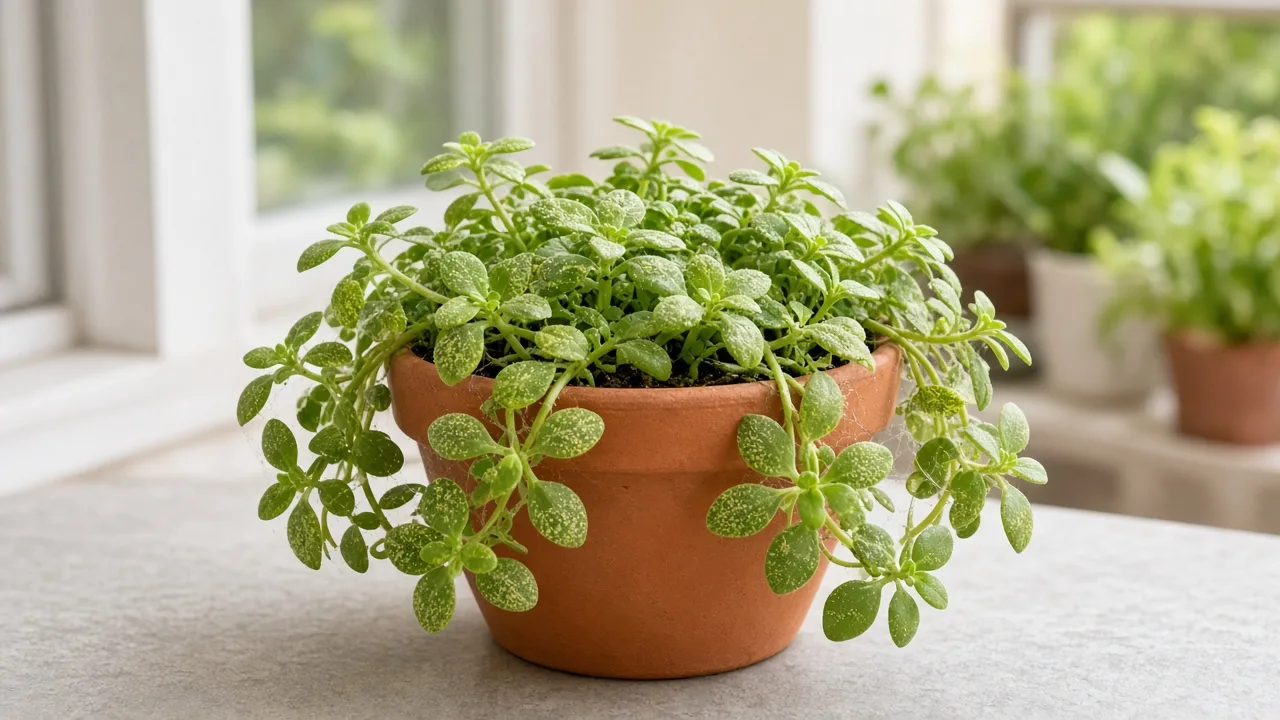
Spider Mites on Brahmi: Causes, Checks & Fixes
This guide covers spider mites on Brahmi. See also the general Spider Mites guide, watering, and light pages for this plant.
Spider Mites on Brahmi: Causes, Checks & Fixes
Quick answer
Spider mites on Bacopa monnieri are tiny arachnids—not insects—that suck sap from leaf cells, leaving pale stippling or a bronze cast on small succulent teardrop leaves and fine silk webbing on undersides when colonies build. They favor hot, dry, still air, which is why Brahmi on a sun-baked terrace, beside a winter heater, or under AC vents can flare up even when the pot sits in a water tray and the mix feels damp.
For how spider mites reproduce, why broad-spectrum insecticides can backfire, and when oils help in general, see our spider mites pest guide. On Brahmi, the tell is stippling plus webbing in overlapping mat layers—not cottony wax in stem joints (mealybugs) or soft pear-shaped insects on fresh tips (aphids).
First step: isolate the mat away from other herbs and baskets, then rinse every leaf underside with a firm stream of lukewarm water—sink sprayer or shower—before you reach for spray bottles. Confirm live mites with a white-paper shake test; if the mix is sour and stems collapse without stippling, see Brahmi overwatering or root rot instead of treating pests.
When to use this page vs other Brahmi guides
This page is the mite-first entry for stippling, bronzing, and fine webbing on water hyssop foliage.
- Low humidity on Brahmi — Use when papery brown tips appear without stippling or webbing.
- Underwatering on Brahmi — Use when the whole mat wilts and the surface dried hard at 1–2 cm with no moving specks on paper.
- Mealybugs on Brahmi — Use for white cottony tufts, not dust-like mites.
- Aphids on Brahmi — Use for colonies on tender new shoot tips.
- Yellow leaves on Brahmi — Use when yellowing is uniform and mites are absent on the shake test.
- Brahmi problems hub — Browse all common issues on this species.
Why Brahmi mats get spider mites in dry canopy pockets
Wet roots do not automatically mean humid leaves. Bacopa monnieri grows in moist to wet places—mud flats, channel margins, and irrigated fields—but container Brahmi on a bright terrace or full-sun balcony transpires heavily through small, fleshy leaves. Spider mites thrive in hot, dusty conditions and reproduce quickly in warm weather. A pot in standing water can still have 30–40% RH at leaf level beside an AC draft.
Overlapping mat layers trap still air. Brahmi spreads as a prostrate mat with nodes rooting where stems touch damp mix. Mites colonize undersides of older leaves stacked two or three deep at the pot rim, under hanging-basket lips, and where stems cross—pockets a quick top mist never reaches.
Shallow roots, fast surface dry-down. Brahmi wants consistent moisture when the top 1–2 cm barely dries, not bone-dry swings. Damage is usually worse when compounded by water stress—stippling looks sharper when foliage cannot keep up with leaf water loss in dry air even if deeper mix is wet.
Wrong pesticides can explode populations. Broad-spectrum sprays such as some pyrethroids or carbaryl can kill predatory mites and lacewings while pest mites rebound faster. If you recently treated another pest on the mat, suspect a mite spike before you blame care alone.
What spider mites look like on Brahmi
- Fine yellow or white stippling on the upper surface of teardrop leaves—feeding often appears as light dots before leaves bronze
- Dull olive or bronze cast on older mat leaves while newer nodes still look plump and green
- Silky webbing between crossing stems, along petioles, or bridging a leaf to the pot rim
- Tiny moving specks on undersides—mites look like dust until you shake them onto white paper
- Thin, pale new growth on heavily infested sections if feeding outpaces the plant’s usual rapid warm-season spread
- Worst on older outer mat leaves; tender inner shoots may stay clean until the colony walks inward
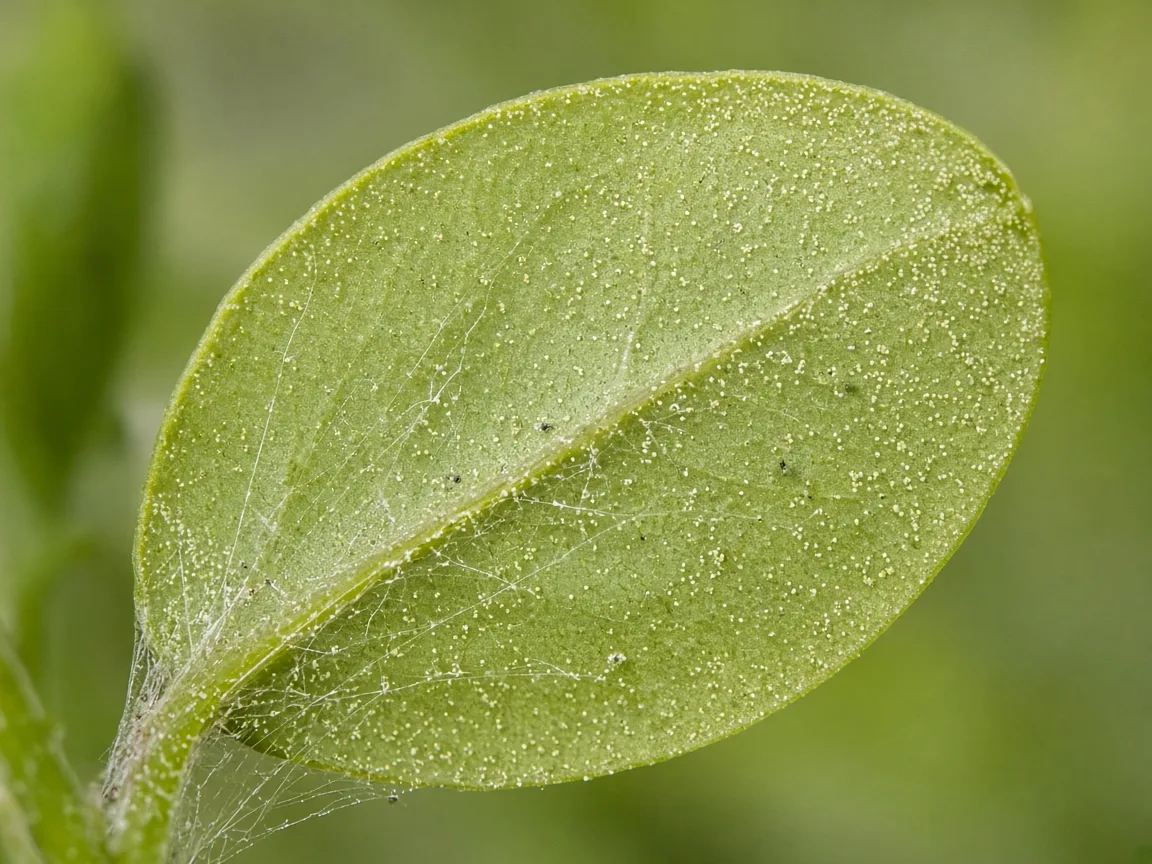
Pale stippling and fine silk on a Brahmi leaf underside—compare with the evenly green blade on the node below.
Because Brahmi leaves are small, damage is easy to miss until webbing shows—run the paper shake test weekly in dry months even when the mat still looks green from above.
Where to inspect along the creeping Brahmi mat
Brahmi is not an upright shrub; mites use the horizontal mat as habitat. Inspect in this order:
- Undersides of the oldest leaves on the outer ring of the pot—first stippling usually appears here.
- Every leaf layer pressed under the hanging-basket rim or tray lip—webbing spans the gap between blade and plastic.
- Nodes where stems overlap and root into damp moisture-retentive mix—still air plus shed leaf dust collect there.
- Leaves facing an AC vent, exhaust fan, or west-facing railing—dry laminar airflow strips humidity from fleshy blades.
- Sections you already rinsed if stippling keeps climbing toward the center of the mat.
- Neighboring pots on the same bench—mites disperse on air currents when foliage quality drops.
This mat-layer inspection path is specific to creeping water hyssop—not a snake plant rosette or rubber tree canopy.
Confirm spider mites vs low humidity, drought, mealybugs, and wet mix
| What you see | Likely cause | Key check |
|---|---|---|
| Stippling + fine webbing on undersides | Spider mites | Paper shake shows moving specks |
| Papery brown tips, no webbing | Low humidity | Hygrometer under 50% RH at canopy |
| Whole mat limp, dry surface at 1–2 cm | Underwatering | Pot light; no mites on paper |
| White cottony wax at nodes | Mealybugs | Alcohol dab smears pink-orange |
| Soft pear-shaped insects on tips | Aphids | Colonies move when disturbed |
| Yellowing with sour wet mix, no stippling | Overwatering / root rot | Collar soft; mites absent |
Confirmed diagnosis — Stippling plus webbing with live mites on the shake test and firm creeping stems at healthy nodes. Suspected — Stippling only may need a hand lens; bright dry placement plus drought can bronze edges without a colony.
First fix: isolate and blast leaf undersides with water
Move the pot or basket away from other plants for at least two weeks while you treat.
Rinse undersides with a firm water stream first. UC IPM recommends regular forceful spraying with water to reduce spider mite numbers, with thorough coverage on leaf undersides. Epic Gardening likewise treats knocking mites off with water as a core first step before oils or soaps. On Brahmi, work stem to tip along each small teardrop leaf, angling the spray up into layers where silk collects between crossing runners.
Why water beats oil on day one
Contact oils and soaps only kill mites they touch; Brahmi hides pests under overlapping succulent leaves. A thorough rinse knocks adults and webbing down, confirms you are fighting mites rather than salt splash or sun scorch, and preserves predatory mites and lacewings already on the plant. Repeat rinses every three to four days for two weeks, shaking a sample leaf onto paper after each session until specks stop moving.
Schedule rinses in early morning so foliage dries before midday heat or enclosed balcony humidity traps water on the mat overnight.
Humidity and watering without drowning roots
Mites love dry air; Brahmi roots hate long dry spells. After rinsing, raise canopy humidity—see low humidity—but keep watering on the 1–2 cm surface check. Adequate irrigation reduces mite damage because water-stressed plants tolerate feeding poorly.
Insecticidal soap and horticultural oil on Bacopa mats
If stippling spreads after two or three weekly rinse cycles, add insecticidal soap or horticultural oil labeled for ornamentals. UC IPM advises covering undersides completely and confirming mites are present before treating; avoid spraying when leaves are water-stressed or in extreme heat.
Rules for water hyssop mats:
- Coat undersides and stem crosses where webbing persists.
- Patch-test one leaf; wait 24 hours before treating the whole mat.
- Do not combine heavy prune, repot, and oil in the same week—read the plant’s response one change at a time.
- Skip pyrethroid “general bug” sprays that trigger mite outbreaks.
Leaves you harvest for kitchen or traditional use should not be sprayed with pesticide products—treat ornamental pots only, or rinse edible blades with plain water until the infestation clears.
Recovery timeline and new mat flush
Active mites should drop within one to two weeks of consistent rinsing. Expect clean plump leaves on the next node flush within two to four weeks during warm growth on a well-watered mat. Bronze-stippled older blades will not re-green; they can stay blemished while the mat spreads outward.
Firm stems at nodes and steady internode extension are good signs. Webbing that coats most of the outer mat after three treatment rounds means escalate—consider predatory mite release in a greenhouse setup or consult local extension before systemic products.
How to prevent spider mites on Brahmi
Quarantine new cuttings and division chunks for two weeks. Hang a hygrometer at canopy height and act when RH stays below about 50% in dry seasons. Monthly underside rinses during AC winter cost less than recovering a stripped hanging mat.
Align light, soil, and fertilizer with steady growth—avoid soft, nitrogen-flush tips that mites colonize quickly, but do not feed a stressed, web-coated mat until new growth looks clean for two weeks.
Tray-grown outdoor mats with moving air often see fewer indoor-style outbreaks than a single dry windowsill pot.
When to escalate
Escalate if most outer leaves bronze and drop, if rinse-resistant webbing returns within 48 hours, or if you must treat Brahmi used for regular leaf harvest—follow local pesticide rules and withhold sprays on leaves you plan to consume.
Spider mites rarely kill a mature Brahmi mat with firm nodes, but they can stall spreading growth for a full warm season if dry air and foliage drought stress continue.
Related Brahmi guides
- Brahmi overview — Species hub and quick care snapshot.
- Brahmi watering — Moist-root rhythm without stagnant anaerobic mix.
- Brahmi light — Full sun to partial shade without scorching dry mats.
- Brahmi soil — Moisture-retentive mix that still breathes at the crown.
- Wilting on Brahmi — When limp foliage is moisture loss, not mites.
- Brahmi problems — Full problem list for this plant.
Related tool
Use the Pest Identifier Tool to narrow causes for spider mites on this plant before changing multiple variables at once.