Mealybugs on Bunny Ear Cactus: Glochid-Safe Dabs & Pad
Quick answer
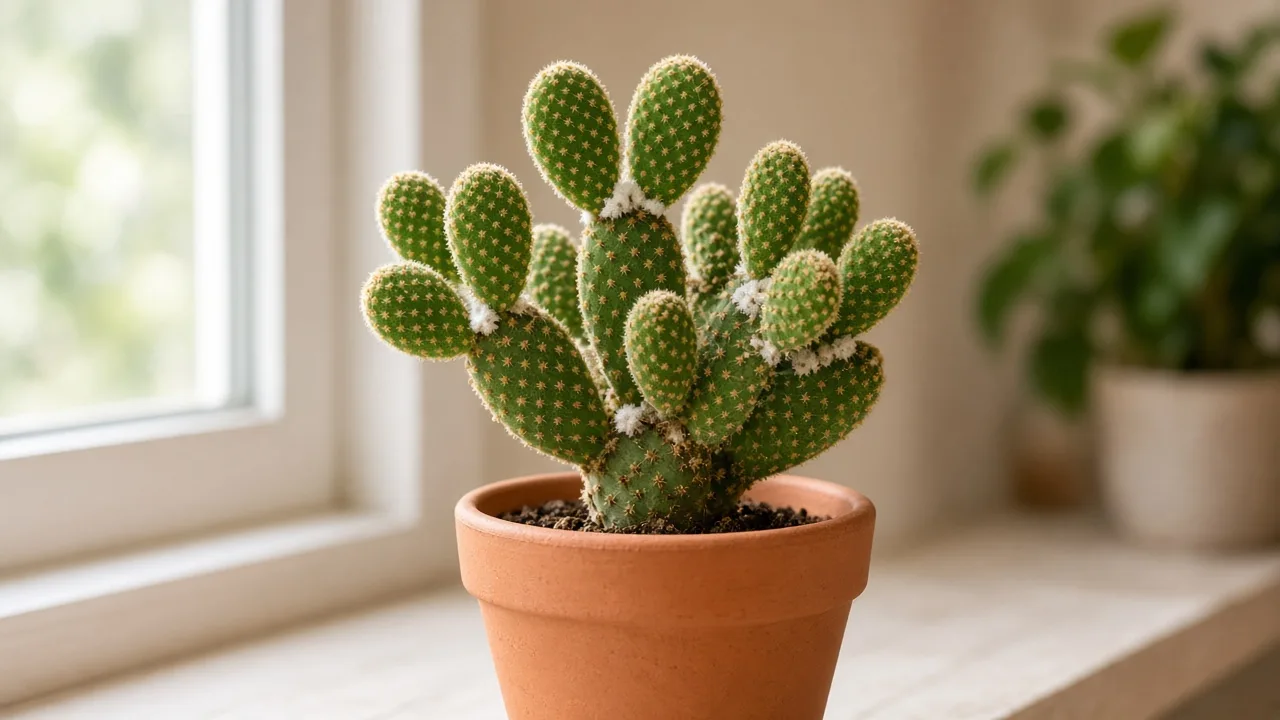
Mealybugs on bunny ear cactus show as white cottony wax in pad areoles, at pad joints, and sometimes at the soil line—not as insects crawling across leaves, because this plant has none. First step: isolate the pot and dab each wax cluster with a cotton swab dipped in 70% isopropyl alcohol before spraying the whole plant.
Mealybugs on Bunny Ear Cactus: Causes, Checks & Fixes
This guide covers mealybugs on Bunny Ear Cactus. See also the general Mealybugs guide, watering, and light pages for this plant.
Mealybugs on Bunny Ear Cactus: Causes, Checks & Fixes
Quick answer
Mealybugs on Opuntia microdasys show up as white, cottony wax masses tucked into pad areoles, at the joints where paired pads meet, and sometimes where the lowest pad meets the soil—not as soft insects crawling across foliage, because bunny ear cactus has none. They suck sap, leave sticky honeydew that can feed sooty mold, and hide behind wax that repels casual rinsing.
For how mealybugs reproduce, why ants protect them, and when water knockdown works in general, see our mealybugs pest guide. On bunny ear cactus, the practical pattern is stationary wax in glochid-lined areoles, honeydew shine on pad edges, and extra caution because glochids injure bare skin and pooled moisture on pads invites rot.
First step: isolate the pot away from other succulents, handle pads only with tongs or folded paper, and dab each visible wax cluster with a cotton swab dipped in 70% isopropyl alcohol—then re-inspect the newest pad pair in three days before coating the whole plant.
Firm pads with wax only at joints is an insect problem. Soft yellow pads on wet mix is a different emergency—see root rot on bunny ear cactus before you treat pests.
When to use this page vs other Bunny Ear Cactus guides
This page is the pest-first entry for white cottony wax feeders on flat pads.
| Pattern | Read next |
|---|---|
| Soft pear-shaped insects on new pad tips | Aphids |
| Fine webbing and pale stippling on pads | Spider mites |
| Small dark flies above damp soil | Fungus gnats |
| Soft yellow pads, black base, wet mix | Overwatering or root rot |
| Slight pad wrinkling, bone-dry pot | Underwatering |
| White powder on soil surface only | Mold on soil |
| Bleached or scorched pad faces | Sunburn |
What mealybugs look like on Bunny Ear Cactus
Mealybugs are small, soft, wax-covered insects that feed in colonies in protected plant areas. On Opuntia microdasys, that means areoles on flat, paired pads—especially where two segments meet and on the youngest “bunny ear” pair at the growing tip:
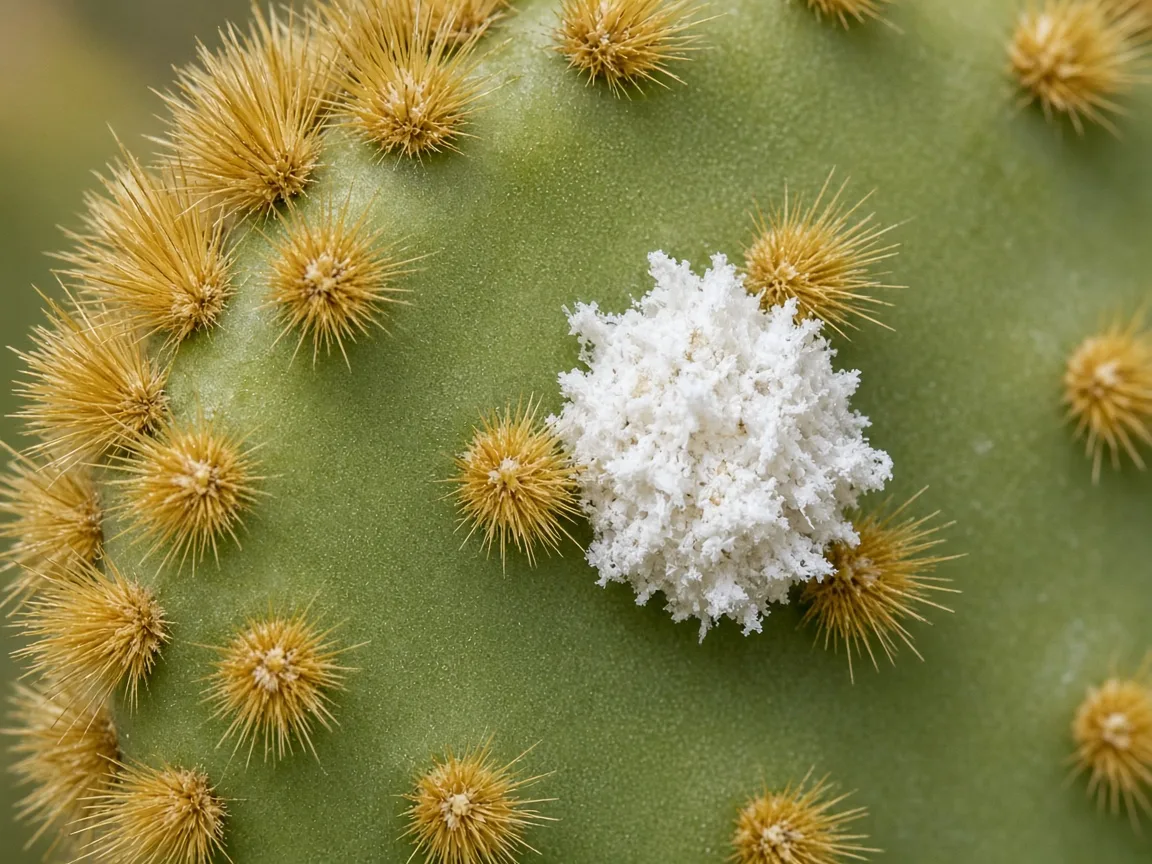
Stationary white wax in a pad areole—dab with alcohol; insects underneath turn orange-gray when killed.
- White cottony clumps in areoles — Wax covering adults and egg sacs; does not wipe away dry like mineral dust
- Honeydew shine on pad margins — Sticky excretion collects along the edge of flat segments
- Black sooty coating on upper pads — Fungus on dried honeydew, not pad rot
- Ant trails on the pot rim — Ants harvest honeydew and protect colonies from predators
- Pale or stunted new pad pairs — Heavy feeding on the only soft tissue this slow grower offers each season
- White fuzz at the soil line — Possible root mealybugs below the visible stack; unpot to confirm during repot season
NC State Extension lists mealybugs and scale among common insect problems on bunny ear cactus and notes that overwatering and poor drainage can cause root or stem rot—a separate issue from crown wax on firm pads. Indoor collections see mealybugs often because year-round mild temperatures favor populations and the waxy coating shields insects from a quick rinse.
Glochid-safe inspection: tell wax from bristles
Bunny ear pads look fuzzy, but the dots are glochids—thin, barbed bristles that detach with the slightest touch. Mealybug cotton can sit in the same areoles and fool a quick glance.
Glochids: fixed in the areole, golden or white, do not melt under alcohol, feel sharp if you brush them.
Mealybugs: cottony clumps that move slightly when you isolate them with a swab; alcohol dissolves wax to orange-gray segmented bodies; often paired with stickiness on the pad face below.
Work with kitchen tongs wrapped in paper towel or thick gloves. Never rub a pad with bare fingers to “feel” the fuzz—you will embed glochids in skin long before you confirm pests.
Scan in this order:
- Newest paired pads at the tip — Softest tissue and tightest joints
- Every pad-to-pad seam — Wax packs into the angle where segments overlap
- Lower areoles on the stack — Older colonies on pads you rarely rotate toward the window
- Soil line and drainage holes — Crawlers and root mealybugs crossing from mix onto the base pad
Photograph the crown with phone zoom if tilting the pot is awkward on a high shelf.
Where mealybugs hide on paired pads and pad joints
Opuntia microdasys grows as flat, segmented pads produced in pairs, giving the bunny-ear silhouette. Mealybugs follow protected crevices, not the open flat faces you see from across the room.
Pad joints and growing tips
New pads emerge in pairs at stem tips. Mealybugs colonize the same soft junction year-round:
- Central growing joint — Where the next pad pair will split
- Lateral seams — Wax tucked where an upper pad overlaps a lower one
- Areoles along the pad rim — Especially the upper edge that catches honeydew runoff
- Base pad where it meets soil — Root mealybugs and crawlers entering from the pot
Root mealybugs at the base
Some mealybug species feed on roots and stay hidden until you unpot. Warning signs on bunny ear cactus include:
- White powdery film on the pot rim or drainage holes without obvious pad wax above
- Ants concentrated at the soil surface while upper pads look clean
- Firm pads above but no new pairs for a full warm season despite good light
Plan inspection during spring repotting—not a mid-winter unpot on a cold windowsill plant.
Why bunny ear cactus gets mealybugs in areoles
Areole pockets beat open pad skin. Unlike a leafy pothos, bunny ear cactus offers few feeding sites—mealybugs pack into joints and areoles where sap flows and glochids create shade. Their waxy coating repels many contact insecticides, which is why dab-and-repeat beats one heavy spray.
Warm windows accelerate reproduction. Indoor plants on south or west sills stay warmer than the room. Mealybugs thrive on indoor plants in mild conditions, and crawlers hitch on tools, pots, or newly purchased cacti.
Soft new pad pairs attract egg laying. Over-application of nitrogen combined with regular irrigation stimulates tender growth where mealybugs prefer to lay eggs. Match feeding to the bunny ear cactus fertilizer guide instead of pushing lush tips during peak heat.
Crowded shelves and damp mix at the base help pests, not the plant. Mealybugs on cactus often follow humid soil at the base while upper pads stay dry—different from the bone-dry mineral mix this desert species needs per the soil guide. Firm pads with localized wax are insects; soft yellow pads on wet mix is overwatering first.
Editorial cactus guides note that mealybug residue may blend visually with glochids on Opuntia microdasys, which is why alcohol testing one cluster matters before you assume every white dot is harmless bristle.
Confirm mealybugs vs aphids, mites, mineral dust, and rot
Work through checks in order so you do not alcohol-treat a rotting base:
- Skewer and base press — Dry skewer through the pot per the watering guide; firm pads and a stable base point to insects. Soft or mushy base on damp mix means rot risk first.
- Newest pad scan — Start at the paired tip before inspecting the lower stack.
- Alcohol probe — Touch wax with a swab; mealybugs dissolve to orange-gray residue. Mineral dust wipes dry; glochids stay fixed.
- Honeydew test — Wipe a pad edge with a tissue; if stickiness returns within a day, sap feeders are still active.
- Soil-line check — White powder only at the rim without pad wax may mean root mealybugs below.
Symptom lookalike comparison
| What you see | Likely cause | Key check |
|---|---|---|
| White cottony masses in pad areoles | Mealybugs | Stationary wax; alcohol reveals orange-gray insects |
| Soft pear-shaped insects on new pads | Aphids | Colonies move when disturbed; less wax filaments |
| Fine webbing and pale stippling | Spider mites | Dry air stress; damage on pad faces, not cotton in areoles |
| Soft yellow pads, dark base, wet mix | Overwatering / rot | No wax clusters; sour soil odor possible |
| Fixed white or gold dots in every areole | Glochids (normal) | Bristles do not melt with alcohol; no honeydew |
| White crust on pads in hard-water areas | Mineral deposits | Wipes off dry; no ants or stickiness |
Confirmed diagnosis — Cottony wax plus honeydew or ants on firm pads. Suspected — One small wax spot may need magnification on the youngest joint before treating the whole stack.
First fix: isolate, alcohol dab, then repeat on a schedule
Isolate the pot away from other succulents until you see no new wax for at least two weeks after treatment.
Dab colonies with 70% isopropyl alcohol on a cotton swab first. UC IPM recommends dabbing mealybugs directly with a 70% or less alcohol solution on houseplants, testing a small area first for phytotoxicity. This is the lowest-risk first fix for glochid-covered pads—no shower that keeps segments wet overnight and no chemical residue across the whole plant. Touch each wax cluster until the swab picks up orange-gray residue. Repeat every two to three days to catch crawlers that hatch between treatments.
Why not shower bunny ear pads first
Leafy-houseplant advice often says “rinse pests off in the sink.” On Opuntia microdasys, water trapped between stacked pads and at the soil line invites rot when drainage is poor. Use targeted swabs instead of soaking the stack unless you can dry pads in bright airflow within a few hours.
If alcohol is not enough: insecticidal soap or horticultural oil
If colonies remain after two or three alcohol cycles, apply insecticidal soap or horticultural oil labeled for ornamentals. Soaps and oils applied directly on mealybugs can suppress younger nymphs with less wax. Coat pad joints until runoff; contact products only kill insects they touch. Rules for bunny ear cactus:
- Spray early morning—do not apply in midday sun on a south-window plant
- Patch-test one small areole on an older pad and wait 24 hours before treating the whole tip
- Avoid stacking repot, pad removal, or fertilizer the same week you start spray
Wipe honeydew from pad edges with a dry cloth. Keep using tongs—glochids are the main handling hazard, not the insects.
What not to do the same day
Do not increase watering because pads look dull—check base firmness and skewer dryness first. Do not ignore ants—they protect colonies from predators. Do not assume one spray fixes root mealybugs at the soil line without unpotting.
Recovery timeline and new pad expectations
Visible wax clusters should shrink within one to two weeks of consistent alcohol dabs. Expect clean new pad pairs within four to eight weeks during active warmth—bunny ear cactus is slow-growing, so patience is normal. Old blemishes on lower pads from past feeding do not vanish; judge success by fewer white patches and firm pads throughout.
Firm pads throughout treatment is a good sign. Softening at the base means rot or overwatering—not mealybugs—and needs a different response immediately.
How to prevent mealybugs on Bunny Ear Cactus
Inspect plants thoroughly before bringing them home and quarantine every new cactus for two weeks. Check pad joints weekly during spring and summer active growth. Keep care aligned with the bunny ear cactus overview—full direct sun per the light guide, mineral fast-draining soil, and dry-down watering so new pads stay firm.
When repotting, rinse the base pad and inspect roots for white film before returning the plant to a shared shelf. Manage ants on bench legs—sticky traps on pot rims break the honeydew partnership that keeps mealybug colonies safe from lady beetles indoors.
When to escalate
Escalate if new pad pairs repeatedly emerge coated in wax after three full treatment cycles, if sooty mold covers most pad faces, or if root mealybugs return after repot and soil replacement. Chronic feeding on a slow-growing Opuntia can weaken the stack even when rot has not started.
For heavy recurring infestations, a local extension office can confirm the species and discuss options. Systemic insecticides are generally a last resort on a single potted bunny ear when contact dabs and soaps have failed.
Glochid injury: If glochids embed in skin, remove visible bristles with tape or tweezers and watch for irritation. Keep pots away from pets and children—glochids can cause painful mechanical injury even though this plant is not a typical “poisonous” houseplant.
Mealybugs alone rarely kill a mature bunny ear cactus with firm pads, but they can ruin a season of new pad growth if you respond with extra water instead of pest removal.
Before you water again
White wax on firm pads means dab mealybugs off the joints first—not another drink. Soft yellow pads on wet mix means rot protocol, not alcohol spray. That single check keeps most bunny ear owners from making the problem worse while they treat the right cause.
Related Bunny Ear Cactus guides
- Bunny Ear Cactus overview
- Bunny Ear Cactus watering
- Bunny Ear Cactus light
- Bunny Ear Cactus soil
- Aphids on Bunny Ear Cactus
- Spider Mites on Bunny Ear Cactus
- Fungus Gnats on Bunny Ear Cactus
- Overwatering on Bunny Ear Cactus
- Bunny Ear Cactus problems
Related tool
Use the Pest Identifier Tool to narrow causes for mealybugs on this plant before changing multiple variables at once.