Bunny Ear Cactus Soil Mix and Drainage Guide
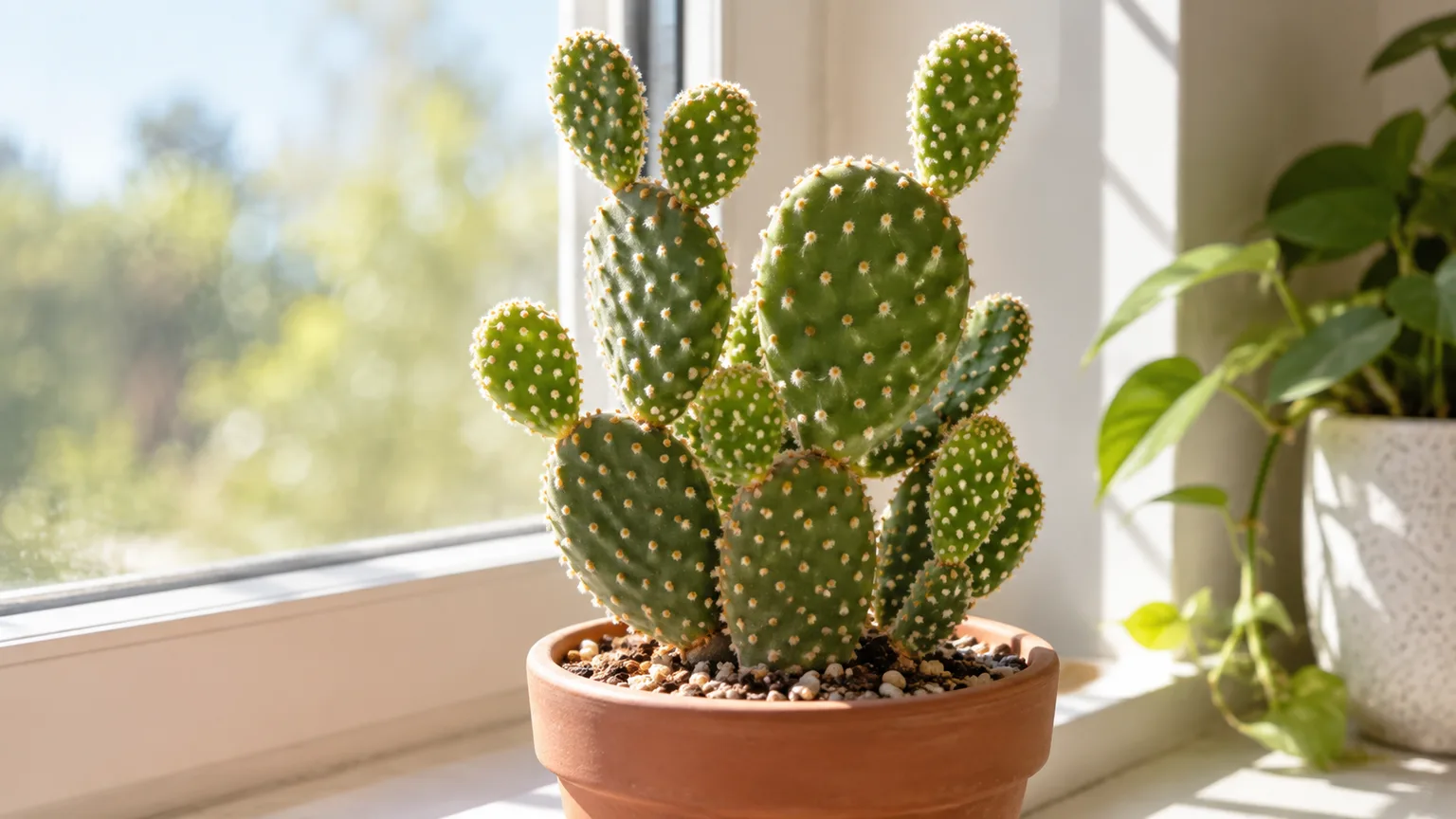
Bunny Ear Cactus Soil Mix and Drainage Guide
Bunny Ear Cactus Soil Mix and Drainage Guide
Bunny Ear Cactus soil baseline: Build a fast-draining Bunny Ear Cactus soil mix with mineral amendments, the right pot, and drainage checks that prevent rot.
The right soil for Bunny Ear Cactus is a drainage system, not just something to hold the plant upright. A mineral-heavy cactus blend copies the dry, airy root zone described by well-drained, dry, sandy soils and prevents the wet pockets that cause rot.
Bunny Ear Cactus belongs in the Cactaceae family and should be grown as a dry-climate succulent, not like a tropical foliage plant. Its native or related habitat record points to dry, open conditions such as desert or dry shrubland biome, and extension guidance for these cacti emphasizes well-drained, dry, sandy soils plus careful water restraint. That is why every care decision should ask the same question: will this help the pot dry, the tissue stay firm, and the plant receive enough light to use water?
The practical soil routine
A practical mix is cactus soil cut heavily with pumice, perlite, coarse sand, grit, or lava rock. Fine sand and peat-heavy mixes are not enough. The pot matters too. A drainage hole is required, and a breathable or heavy pot helps keep Bunny Ear Cactus stable and dry. For a complete care path, start at the Bunny Ear Cactus hub, then compare this page with watering, light, soil, fertilizer, repotting, and propagation guidance.
What makes Bunny Ear Cactus different
Bunny ear cactus is different because its pads carry glochids. They look soft but behave like tiny barbed bristles, so every repotting, pruning, or propagation job needs tools rather than bare hands. NC State describes related barrel or prickly pear cacti as drought-tolerant plants with spines or glochids, while full sun supports the propagation or identity claims used here.
Warning signs to act on first
Act quickly if you see soft yellowing pads, black or brown tissue at the base, soil staying damp for more than a week. Those signs usually mean the root zone is staying wet too long. Increase light only gradually, but correct drainage immediately if the pot lacks a hole or the soil smells sour. If you see slight pad wrinkling, thin pads after a long dry spell, water once thoroughly, then reassess after the plant has had time to rehydrate.
When to use this page vs other Bunny Ear Cactus guides
Use this page for soil-specific decisions. Use watering when the plant is soft or the pot is slow to dry. Use light when growth leans, stretches, or scorches. Use soil before changing the mix. Use repotting before moving into a larger pot, and use propagation before cutting, grafting, or sowing.
Related Bunny Ear Cactus guides
Keep the care system simple: strong light, dry intervals, mineral soil, and low feeding. Next, read Bunny Ear Cactus watering, Bunny Ear Cactus light, Bunny Ear Cactus soil, Bunny Ear Cactus fertilizer, Bunny Ear Cactus repotting, and Bunny Ear Cactus propagation.
Conclusion
Good Bunny Ear Cactus soil care is conservative. Give the plant enough light to stay firm, a gritty mix that dries, and fewer interventions than a leafy houseplant would need. When in doubt, fix light and drainage before adding more water, fertilizer, or pot size.