Brown Tips on Bunny Ear Cactus: Pad Edge Checks
Quick answer
Brown tips on Bunny Ear Cactus are dry tan or russet patches at the outer edges and pointed ends of oval pads—not leaf margins, because Opuntia has no blades. First step: weigh the pot and push a dry skewer to the bottom while checking whether pads feel firm or soft before you change light or water.
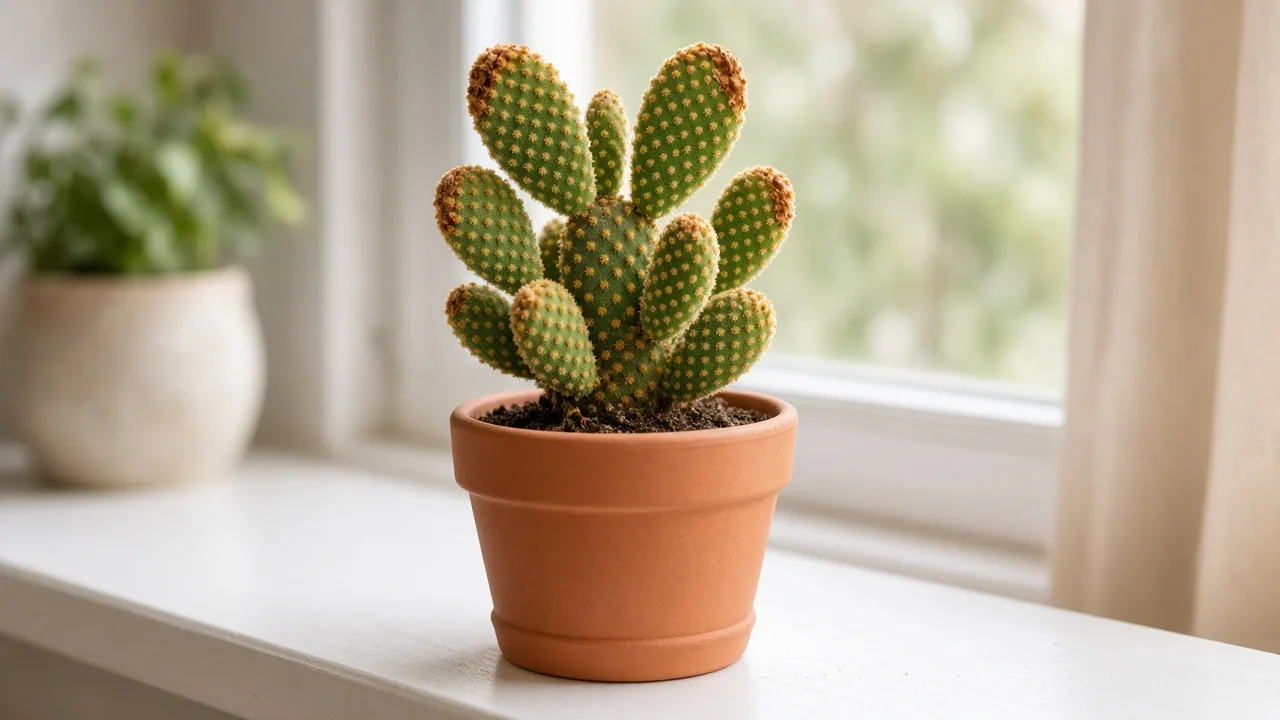
Brown Tips on Bunny Ear Cactus: Causes, Checks & Fixes
This guide covers brown tips on Bunny Ear Cactus. See also the general Brown Tips guide, watering, and light pages for this plant.
Brown Tips on Bunny Ear Cactus: Causes, Checks & Fixes
Quick answer
Brown tips on bunny ear cactus (Opuntia microdasys) mean dry tan or russet patches at the outer edge and pointed end of a flat oval pad while most of the pad stays green—not crispy leaf tips, because this plant has paired pad-like stems instead of blades. For how tip-style browning works on leafy houseplants in general, see our brown tips hub. On bunny ears, the first fork is pad location and pot weight: sun-scorched upper margins, drought-thin pads on a light pot, soft brown from chronic wet mix, or normal aging on the lowest pad pair.
First step: weigh the pot and push a dry skewer to the bottom (use tongs on the plant—glochids detach at the slightest touch). Very light pot + slightly thin pads + dry tan edges = underwatering path. Tan only on the pad pressed against hot glass = pull back per the light guide before soaking. Heavy wet pot + soft pads = stop water; see overwatering.
When to use this page vs other Bunny Ear Cactus guides
| Pattern | Read next |
|---|---|
| Dry tan only at pad edges, firm green centers | This page |
| Large bleached or russet patches after a sunny move | Sunburn scorched leaves |
| Soft yellow pads, wet mix, dark base | Overwatering or root rot |
| Wrinkled thin pads, very light pot | Underwatering |
| Yellow translucent tissue, not just edge tan | Yellow leaves |
| White cotton in pad areoles | Mealybugs |
| Long-term soak rhythm | Watering guide |
What brown tips look like on Bunny Ear Cactus
Unlike dracaena or peace lily, bunny ear cactus shows “tips” on pad margins, not leaf points:
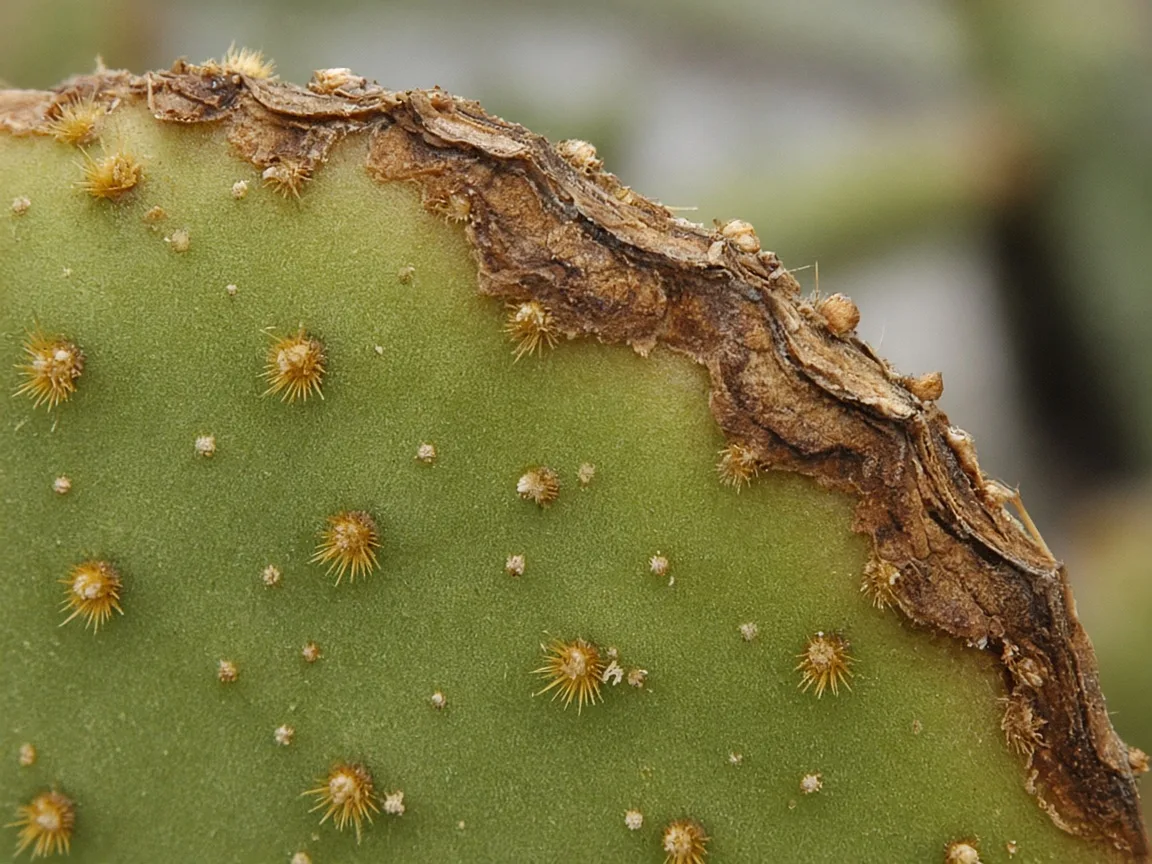
Dry tan necrosis at a pad edge—the dead tissue will not re-green; watch the next paired pads at the stem tip for clean color.
- Dry tan or russet at the outer rim or apex of an upper pad — Sun scorch on tender tissue, drought stress at the pad’s thinnest edge, or cold damage after a drafty window night.
- Brown only on the pad side touching the window — Harsh direct glass; Patch Plants notes that leaning against bright glass can scorch Opuntia pads.
- Soft brown patches on otherwise green pads — Often excess moisture; the same source warns that too much water can cause soft brown patches on stored-water pads.
- Tan lowest pad pair while upper stack stays firm — Often old pads withering and falling off—normal senescence, not a crisis.
- Brown mush spreading inward on a heavy pot — Wet-root injury; see overwatering—not the same as dry tan edge tips.
A firm pad with a small tan rim after one hot afternoon is stressful but recoverable. A soft, sinking pad on damp mix is urgent.
Paired-pad anatomy: why edges brown before the center
This section is Opuntia-specific and does not apply to grass-like or strap-leaf houseplants.
- New pads form in pairs at stem tips, giving the “bunny ears” look—each pad is a flattened stem segment, not a leaf.
- The pad margin and pointed end are the farthest points from the joint, so they desiccate first when the small root zone cannot keep up with transpiration in bright light.
- Glochid clusters sit in areoles across the pad; mechanical bumps can bruise margins without implicating your whole watering routine.
- Lower pad pairs age out and tan before they drop—Gardening Know How describes self-cleaning old pads while the stack above stays green.
Compare upper paired tips to lowest pads. Tan climbing onto newly opening pad pairs is more urgent than one fading base pad on an otherwise firm plant.
Why Bunny Ear Cactus gets brown tips
Bunny ears evolved in northern Mexican desert with full sun and fast drainage. Indoors, brown pad edges usually trace to light, water, or both—not fungal “tip burn” on foliage.
Sunscald after a light jump. Sunscald on cacti shows as scaly, hardened, discolored skin—often tan or russet at the pad edge that faced the window. The species wants full sun to partial shade, but pads touching summer glass can cook faster than the root zone dries. See sunburn scorched leaves when patches are broad and bleached, not just a thin rim.
Underwatering on a calendar. Opuntia cannot stand soggy soil but pads will pucker and can lose tissue when moisture runs too low. Bunny ear stores water in thick pads; edge tan on a very light pot after weeks without a soak fits drought better than disease. Cross-check underwatering and the watering guide.
Overwatering and poor drainage. Overwatering and poor drainage cause root rot or stem rot on this cactus. Soft brown—not dry tan—on pads above wet peat, plus a heavy pot, is a different emergency. Missouri Botanical Garden notes overwatered plants may show generalized decline rather than cosmetic edges alone.
Salt or heavy feed (less common). Occasional tan rims after repeated fertilizer in a small pot can mirror edge burn; pause feeding on stressed pads and review the fertilizer guide before leaching on a drought schedule.
Pests at pad joints. Mealybugs can discolor tissue near areoles—inspect with a loupe before you soak for “dry tips.”
The glochid-safe skewer and pot-weight check
Handle the plant with tongs or folded paper, never bare hands—barbed glochids embed easily. Then:
- Lift the pot — Very light = long dry spell; heavy days after watering = slow dry-down or oversize pot.
- Skewer to the bottom — Should pull out clean and dry before the next soak per mineral cactus mix standards.
- Press an upper pad gently with a stick — Firm and thick = healthy storage tissue; soft or translucent = wet stress or rot.
- Note which margin browned — Window-facing only = light; all upper edges on light pot = drought; mush on wet mix = root rot workup.
This sequence beats repotting or pruning pads on day one.
How to confirm the cause
| Clue | Likely cause | First action |
|---|---|---|
| Tan dry rim, firm pad, light pot | Underwatering | Soak once, drain saucer, reset dry-down |
| Tan on glass-side pad only | Window scorch | Move off glass; filter light |
| Soft brown, heavy wet pot | Overwatering | Stop water; inspect base |
| Tan lowest pad, firm stack above | Old pad senescence | None if dry-down is stable |
| Stippling + webbing at edges | Spider mites | See spider mites |
Separate confirmed diagnosis from guesses: one tan rim after a sunny week is not the same pattern as multiple soft pads on soggy mold-prone surface mix.
First fix for Bunny Ear Cactus
Make one correction first: if the pot is very light and pads are slightly thin with dry tan edges only, water deeply until runoff, empty the saucer, and do not water again until a skewer reads dry through the pot. If the pot is heavy or pads feel soft, do not soak—shift to the overwatering dry-down path instead.
Do not move the plant to a hotter window and soak on the same day. Do not fertilize tan pads. Do not cut pads for cosmetics until you know the pad is firm and the cause is cosmetic scorch or senescence—not spreading rot.
Step-by-step recovery
After the first fix, use this order over the next four to six weeks:
- Light — Bright south or west exposure without pad contact on summer glass; acclimate slowly per light guide if you recently upgraded brightness.
- Water rhythm — Let soil completely dry between waterings; winter means cooler, drier rest with little water.
- Drainage audit — Terracotta, open holes, no standing cachepot water; see soil guide if mix stays damp over a week.
- Pest pass — Alcohol swab on mealy cotton in areoles before you declare “dry tips.”
- Pad removal only when dead — Sterilize a knife and cut at the joint if a pad is fully brown and mushy; leave firm pads with tan rims alone.
Recovery timeline
Tan pad edge tissue does not re-green. Judge recovery by firm pads, stable pot weight through a full dry-down cycle, and new paired pads opening without fresh tan patches. Mild drought edge tan often stabilizes within one to two proper soak cycles once the pot fully rehydrates. Sun-scorched rims may stay visible for months while slow pad growth continues—bunny ears is not a fast foliage plant.
If tan spreads onto newly opening pad pairs despite corrected water and light, unpot and inspect the small root zone for rot before the stack collapses.
Mistakes to avoid
- Soaking because pad edges look dry while the pot is still heavy and mix smells earthy-wet
- Pressing pads against clear summer glass because “cacti love sun”
- Fertilizing brown-edged pads to push growth
- Confusing lowest-pad tan senescence with root rot when only the base pad is soft on wet mix
- Handling pads bare-handed and jerking the plant—glochid injury derails care for days
How to prevent brown tips next time
Match watering to full-pot dry-down, use gritty cactus mix in porous pots, acclimate bright light without glass contact, feed lightly in warm growth only, and keep winter pads away from cold drafts. Review the Bunny Ear Cactus overview and problems hub when symptoms overlap.
Related Bunny Ear Cactus guides
- Bunny Ear Cactus overview
- Watering guide
- Sunburn scorched leaves
- Underwatering
- Overwatering
- Problems hub
Conclusion
Brown tips on bunny ear cactus are margin and apex stress on paired water-storing pads, not leaf-tip burn. Match soak, light acclimation, or pest treatment to pot weight, skewer moisture, and which pad face browned. Dead tan edge tissue will not recover; watch for firm pads and clean new pairs at the stem tips as your success marker.