Mold on Soil on Bunny Ear Cactus: Causes, Checks & Fixes
Quick answer
White or gray mold on Bunny Ear Cactus soil is usually harmless saprophytic fungus on damp organic mix—not a disease on healthy pads. Scrape the top layer, stop watering until the pot dries completely, and fix the sparse watering rhythm this desert cactus needs.
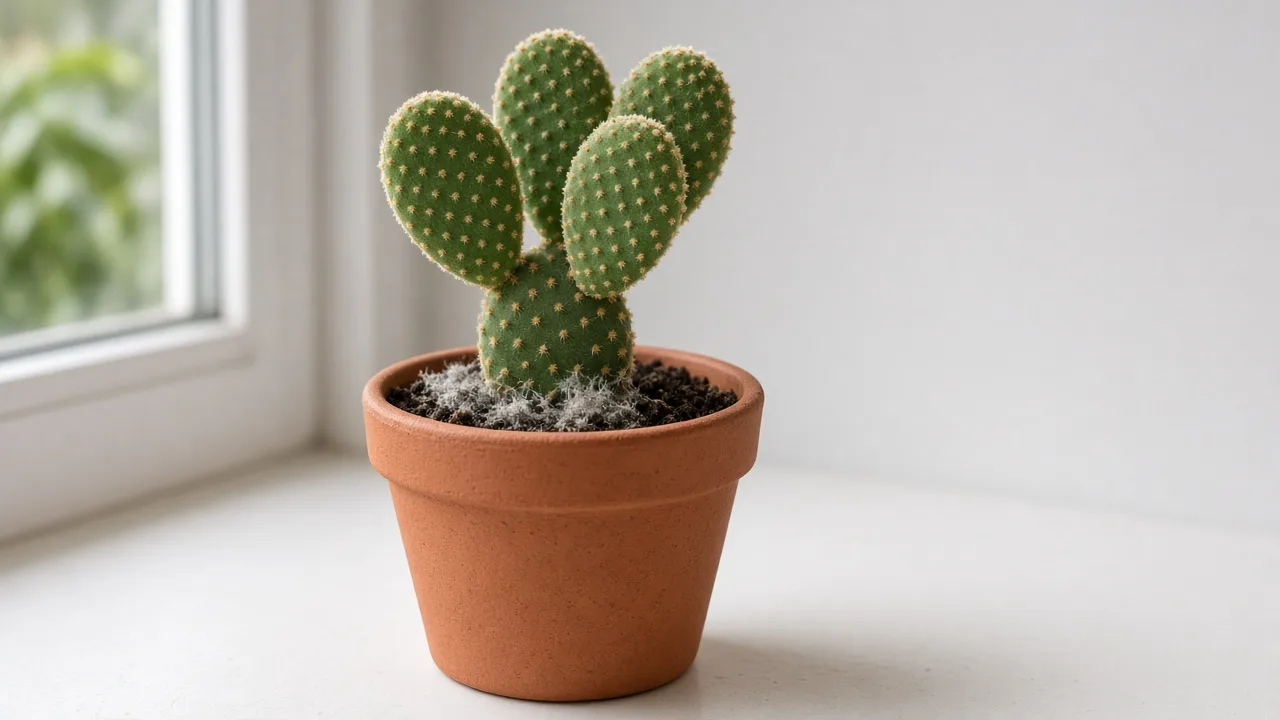
Mold on Soil on Bunny Ear Cactus: Causes, Checks & Fixes
This guide covers mold on soil on Bunny Ear Cactus. See also the general Mold on Soil guide, watering, and light pages for this plant.
Mold on Soil on Bunny Ear Cactus: Causes, Checks & Fixes
Quick answer
Your bunny ear cactus (Opuntia microdasys) has white or gray fuzz on the potting mix and you need to know whether to scrape, repot, or panic. Start with what makes this plant different from leafy houseplants: it evolved in northern Mexican desert with dry, low-humidity conditions and needs a fast-draining cactus mix with the soil completely dry between waterings—not a constantly damp surface around flat pads.
For how saprophytic fungi colonize wet organic mix in general, see our mold on soil guide. On bunny ear cactus, the practical pattern is surface fuzz at the base of paired oval pads, a heavy pot days after watering, and extra caution because barbed glochids—not spines—make any soil work near the plant hazardous.
First step: stop watering and scrape off the top inch of affected soil with a long-handled spoon—use tongs to steady the pot, never bare fingers—then let the entire pot dry before the next drink.
Is this surface mold or pad rot?
Use this table before repotting or spraying anything:
| What you see | Likely cause | Urgency | First action |
|---|---|---|---|
| White/gray fuzz on soil only; firm pads; dry-looking glochids on pads | Saprophytic surface mold on wet mix | Low | Stop water → scrape top inch → full-pot dry-down |
| Mold + small dark flies when you disturb the pot | Same wet soil feeding fungus gnats | Medium | Dry entire pot; see fungus gnat guide for sticky traps |
| Mold returns within a week after scraping | Chronic overwatering or peat-heavy nursery mix | Medium | Replace top inch with dry mineral mix; fix watering rhythm |
| Sour smell, soft yellow pads, black tissue at soil line | Advancing root rot | High — same day | Unpot, trim decay, dry repot in gritty mix |
| Heavy pot days after watering, no sour smell yet | Early overwatering before visible rot | Medium | Full dry-down with skewer-to-bottom test |
Opuntia rot often starts at the soil line on the lowest pad while upper pairs still look perky. Surface mold gives you an early, visible clue that roots may be sitting in conditions this cactus was never built for.
When to use this page vs other Bunny Ear Cactus guides
This page is the symptom-first entry for fuzzy soil on a bunny ear pot. Use it to decide what the surface growth means and which action comes first.
- Overwatering — calendar watering, soft yellow pads, and mix that stays damp more than a week
- Root rot — black mush at the pad base, sour smell, or trim-and-repot surgery steps
- Fungus gnats — small flies swarm after every watering alongside surface mold
- Watering guide — long-term dry-down schedule after mold clears
- Soil guide — mineral pumice-and-grit mix that protects a small root zone
- Yellow leaves — pad yellowing when wet soil stress is already affecting tissue
What mold on soil looks like on Bunny Ear Cactus
Healthy bunny ear pots should have a dusty, dry mineral surface between waterings. Mold shows up differently on pad-forming Opuntia than on a leafy fern:
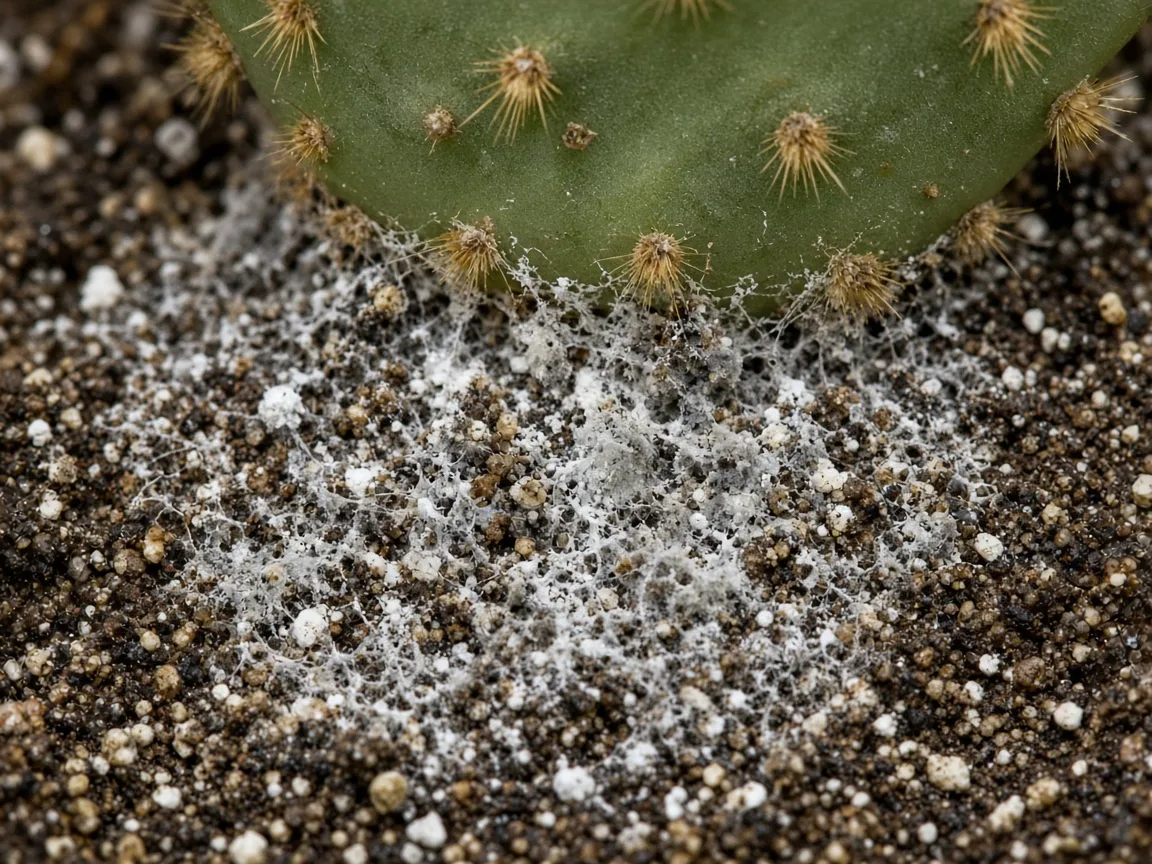
White saprophytic threads on damp gritty mix at the base of a firm Opuntia microdasys pad—compare with the dry surface you should see between sparse waterings.
Typical harmless surface mold:
- White, gray, or occasionally tan fuzzy patches on the top of the mix
- Growth concentrated where organic debris collects—peat fines, fallen pad bits, or decorative moss from gift-shop pots
- Soil surface still damp or cool to the touch days after watering
- Paired oval pads firm when you gently press the lowest segment with tongs or a wooden dowel
Signs the wet conditions behind mold are hurting bunny ear cactus:
- Mold returns within days of scraping
- Small dark flies hover when you water — fungus gnats sharing the same damp habitat
- Pot feels heavy long after the last watering
- Yellowing or soft pads at the base despite moist soil
- Sour or swampy smell from the pot — distinct from normal earthy cactus mix
Because new pads emerge in pairs from stem tips, the plant can still look balanced while the lowest joint at the soil line is already stressed. Do not treat surface mold as purely cosmetic when the pot stays heavy and damp.
Do not confuse glochids with mold
The white or golden polka-dot bristles (glochids) on each pad are normal, permanent plant tissue—not fungus. They sit on the pad surface in neat clusters; mold grows as irregular fuzzy threads on the soil, not as uniform dots on green pad skin.
If you are unsure, look at location and texture:
- Glochids: fixed on the pad, barbed, do not wipe off as cottony threads
- Soil mold: loose fuzz on mix, often in rings around the pad base, moves when scraped
NC State notes that glochids detach with the slightest touch and cause contact irritation. That is why mold fixes on this species always include tongs or folded newspaper—not bare-handed scraping near the soil line.
Why Bunny Ear Cactus gets mold on soil
Bunny ear cactus is native to northern Mexico and desert regions where soils drain fast and humidity stays low. Indoors it wants full sun to partial shade, dry air, and a fast-draining cactus potting mix with soil completely dry between waterings. Overwatering and poor drainage can cause root rot or stem rot on this species.
Mold appears when that dry-down never happens. Common bunny-ear-specific triggers include:
Overwatering on a houseplant schedule. Owners water weekly while Opuntia may need a drink only every three to five weeks in warm bright growth—and far less in winter rest. Excess moisture keeps the surface damp and feeds fungal spores already present in peat-based mix. See the overwatering guide for the full dry-down protocol.
Peat-heavy nursery soil and glass bowls. Many bunny ears arrive in dense organic mix or decorative containers without drainage—conditions that hold moisture against the lowest pad. The soil guide covers mineral blends for repotting after mold clears.
Dim winter windows with unchanged watering. Winter care calls for cooler temperatures, very little water, and partial sun. Continuing summer frequency in a cool room prolongs surface wetness when the plant is barely using water.
Non-porous pots and full saucers. Glazed pots and cachepots trap humidity at the bottom and keep the surface wet. Terracotta helps the small root zone dry evenly—see the overview for placement notes.
Organic surface debris. Fallen pad fragments and top-dressings give saprophytic fungi more food and hold moisture against glochids at the soil line.
The mold itself is usually not pathogenic. The problem is the environment that grows it—the same environment that leads to pad-base rot and fungus gnats.
How to confirm the cause
Work through these checks before repotting or spraying anything. Use tongs or thick gloves throughout—glochids embed in skin easily during soil work.
- Surface moisture test — Press a dry skewer into the top two inches. If it comes out dark and clings to organic matter days after watering, the mix is too wet for Opuntia.
- Pot weight — Lift the container. A heavy pot long after watering confirms saturation throughout, not just surface mold.
- Lowest pad firmness — Gently press the bottom pad segment near the soil line with tongs or a dowel. Firm, plump tissue suggests mold is a moisture warning only. Soft, sunken, or black tissue at the joint means rot may already be underway — follow the root rot guide.
- Smell check — Earthy odor is normal. Sour or rotten smell points to anaerobic decay in wet soil.
- Gnat check — Small flies rising when you disturb the surface mean larvae are feeding in damp organic soil in the same layer as the mold.
- Light context — Mold in a dim corner after unchanged weekly watering is a strong overwatering signal on slow winter growth. Brighter light speeds dry-down when pads are firm.
If pads are firm, color is stable, and no sour smell is present, you are likely dealing with cosmetic surface fungus on wet mix—not an active cactus disease.
Lookalike comparison
| What you see | Likely cause | How to tell apart |
|---|---|---|
| White/gray fuzzy threads on damp soil | Saprophytic surface mold | Scraping reveals wet peat beneath; pads firm |
| Uniform white or gold dots on pad skin | Normal glochids | Fixed on pad; not cottony threads on mix |
| Hard white or tan crust on soil | Mineral salt buildup | Scraping reveals dry soil beneath, not fuzzy threads |
| Smooth green film on soil | Algae on constantly wet surface in low light | Same moisture fix as mold; needs brighter light |
| White cottony patches in pad axils | Mealybugs — not soil mold | Wipes off pads; insects move when disturbed |
First fix for Bunny Ear Cactus
Stop watering immediately and remove the upper layer of growing media along with the moldy surface using a long-handled spoon or fork—steady the pot with tongs, not bare hands.
University of Maryland Extension recommends discarding the upper layer when algae or fungal mats appear on indoor plant soil. Bag the scraped material and trash it—not the compost pile. Leave the plant in place and let the remaining mix dry completely. Do not mist pads or top-dress with moss while correcting moisture.
This single step addresses both the visible mold and the root cause: a surface that never dries. Opuntia tolerates—and prefers—extended dry periods when pads are still firm.
Step-by-step recovery
After the first dry-down, work through these steps in order based on what you find:
If mold was cosmetic and pads are firm:
- Wait until a wooden skewer pushed through the entire pot comes out dry throughout.
- Water deeply once, then empty the saucer immediately.
- Move the plant to a brighter south or west window if it sits in deep shade — faster evaporation helps the surface stay dry per the light guide.
- Resume a dry-down rhythm per the watering guide: water only when the entire pot is light and the skewer test reads dry throughout.
If mold returns within a week:
- Scrape the surface again and replace the top inch with dry mineral mix (cactus blend with pumice and coarse grit per the soil guide).
- Confirm drainage holes are open and the pot is not sitting in a full saucer.
- Downsize if the container is much wider than the root ball—extra soil holds moisture Opuntia never uses.
If fungus gnats appear with mold:
- Let the top layer dry completely between waterings to break the gnat life cycle.
- Add yellow sticky traps to catch adults while soil dries.
- Follow the dedicated fungus gnats guide if flies persist after two weeks of dry-down.
If the lowest pad feels soft or smells sour:
Stop surface fixes and treat this as potential base rot. Unpot with tongs, trim mushy tissue with a sterile knife, air-dry cuts, and repot in fresh mineral mix before watering again. Mold was the visible tip of a deeper moisture failure — see the root rot guide for surgery steps.
Recovery vignette: gift-shop bunny ears in peat
A four-inch bunny ear cactus in a glazed bowl with peat-heavy mix developed white fuzz across the top inch after two weeks of light weekly watering on a north windowsill. Lowest pads probed firm; no sour smell. The grower scraped the top inch with a long spoon while holding the pot with barbecue tongs, trashed the material, and withheld water for twenty-eight days until a skewer through the pot read dry throughout. Mold did not return after one deep soak with the saucer emptied same-day. Total visible clearance: about ten days after the scrape. The fix was dry-down rhythm and a grittier top layer—not fungicide.
Mistakes to avoid
- Scraping mold without changing watering — The fungus returns within days if the surface stays damp.
- Spraying cinnamon, hydrogen peroxide, or fungicide as the first response — Surface treatments do not fix drainage or overwatering. Correct moisture first.
- Misting pads or pebble trays — Bunny ear cactus prefers dry, low-humidity conditions. More moisture feeds mold.
- Watering on a calendar — Opuntia needs water when the pot is dry, not every Saturday.
- Repotting into standard potting soil on day one — Mild mold usually resolves with dry-down and a mineral top layer. Repot only when mix stays soggy, mold recurs rapidly, or the pad base needs inspection.
- Bare-handed soil work — Glochids detach and embed; use tongs and long tools.
- Ignoring gnats — Flies mean the same wet soil that grows mold is also breeding pests that can stress roots.
Recovery timeline
Surface mold often clears within one to two weeks once the top layer dries and stays dry between waterings. You should see:
- No new fuzzy growth on the surface
- Lighter pot weight before the next watering
- Firm lowest pad when you check with tongs
- Stable green color on existing pads (surface mold alone rarely scars pad tissue)
New mold within a week, persistent gnats, or softening at the soil line mean the moisture fix was incomplete — escalate to mix change, pot downsizing, or base inspection.
Seasonal dry-down note: A bright summer bunny ear in a four-inch terracotta pot may need water every three to five weeks. The same plant in a cool winter room may go six to ten weeks between drinks. Always verify with a skewer at depth — not a calendar.
How to prevent mold next time
Build a watering rhythm around Opuntia desert biology:
- Check dryness with a skewer through the entire pot — not just at the surface.
- Let the soil completely dry out between waterings and use well-drained cactus mix with plenty of sunshine.
- Keep drainage holes open and empty saucers after every watering.
- Remove organic debris from the soil surface promptly.
- Reduce watering frequency in winter rest and in low-light placements.
- Avoid decorative moss, heavy top-dressings, and cachepots that trap moisture.
Follow the watering guide and soil guide for long-term prevention after the surface clears.
When to worry
Treat mold as urgent when:
- The lowest pad feels soft, black, or smells bad during a firmness check
- Yellow or translucent tissue spreads from the soil line upward — see wilting if pads collapse
- Mold, gnats, and sour odor appear together
- Scraping and dry-down fail twice in a row
In those cases, the mold is signaling base rot risk — not a harmless surface issue. Unpot and inspect per the root rot guide before the plant collapses with little warning.
Mild mold on firm pads with stable color is low urgency. Fix the watering habit and the problem usually resolves without losing the plant.
Related Bunny Ear Cactus guides
- Bunny Ear Cactus overview — care basics, glochid safety, and placement
- Watering — full-pot dry-down schedule and seasonal adjustments
- Soil — mineral mix for a small desert root zone
- Overwatering — primary cause behind surface mold
- Root rot — pad-base surgery when firmness checks fail
- Fungus gnats — companion pest on wet mix
- All Bunny Ear Cactus problems
Related tool
Use the Plant Problem Diagnosis Tool to narrow causes for mold on soil on this plant before changing multiple variables at once.