Wilting on Bunny Ear Cactus: Wet vs Dry Pad Checks
Quick answer
Wilting on bunny ear cactus is lost turgor in the flat paired pads—not limp leaves, because Opuntia microdasys has no foliage. First step: lift the pot and press the lowest pad above soil with tongs; a heavy wet pot with soft yellow tissue means stop watering immediately, while a feather-light dry pot with firm base pads points to drought.
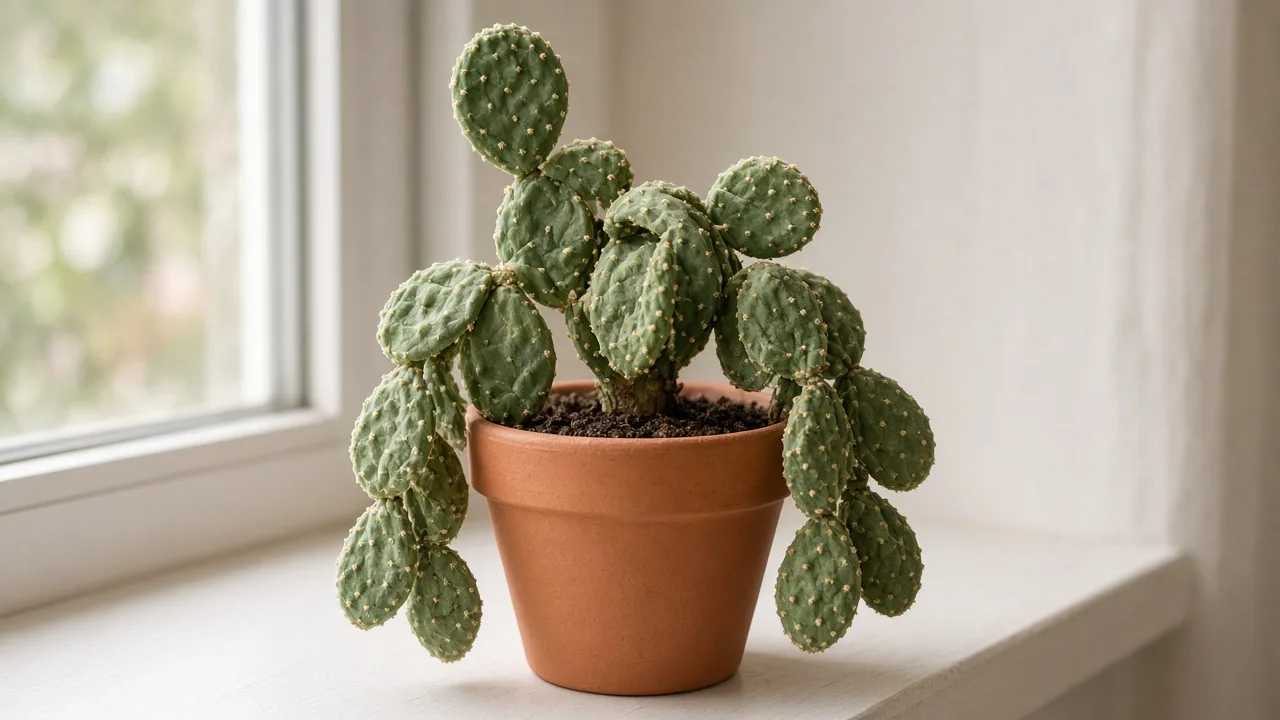
Wilting on Bunny Ear Cactus: Causes, Checks & Fixes
This guide covers wilting on Bunny Ear Cactus. See also the general Wilting guide, watering, and light pages for this plant.
Wilting on Bunny Ear Cactus: Causes, Checks & Fixes
Quick answer
A healthy bunny ear cactus stores water in its flattened paired pads and should feel firm between the glochid clusters. Wilting here means lost turgor—pads look deflated, dull, or the whole stack slumps—even though this plant has no leaves to hang limp.
For how wilting works when roots lose access to water or oxygen in general, see our wilting symptom hub. On Opuntia microdasys, the emergency split is the wilt paradox: deflated-looking pads on heavy wet soil mean failed roots, while deflated pads on a feather-light dry pot mean drought.
First step: lift the pot and press the lowest pad above the soil line with tongs. Do not add water until you know which side of that split you are on.
When to use this page vs other Bunny Ear Cactus guides
Wilting is the deflation and collapse entry—when the pad stack looks shrunken, dull, or structurally defeated.
| Pattern | Read next |
|---|---|
| Deflated pads on heavy wet soil, soft base | Stay here; escalate to overwatering or root rot |
| Deflated pads on light dry pot, firm base | Underwatering after one careful soak |
| Pads hang at joints but stack still upright | Drooping leaves — joint limpness, not full-stack collapse |
| Yellow translucent tissue at soil line only | Overwatering |
| Long stretch toward dim window | Leggy growth or not enough light |
| Black mush climbing multiple pad pairs | Root rot — same-day protocol |
What wilting looks like on Bunny Ear Cactus
Unlike a peace lily, bunny ear cactus does not drop leaf blades. Wilting shows up on the pad stack itself:
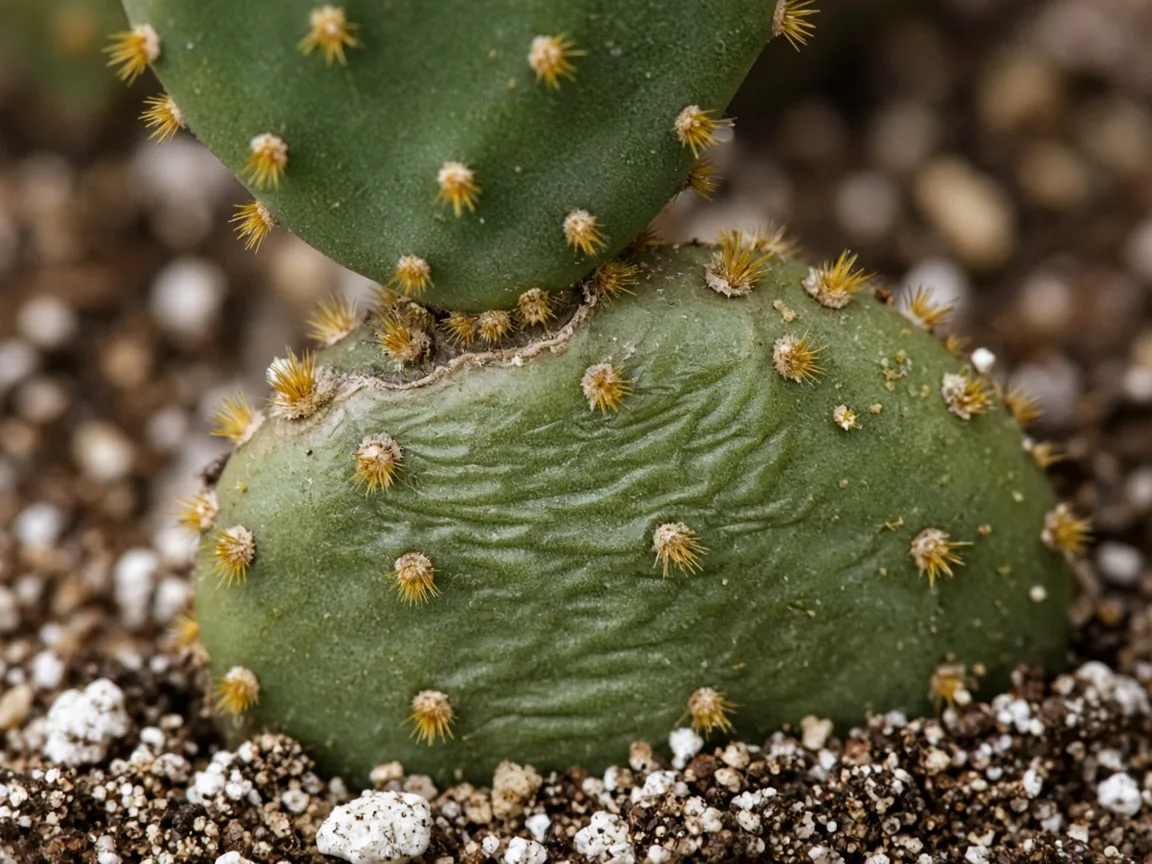
Deflated pad faces and limp attachment at the areole joint—the stem segment stores water internally, so turgor loss reads on the pads, not on leaves.
Early signs
- Pads look flattened or sunken between glochid clusters while upper pairs may still look plump
- Dull, slightly wrinkled pad skin—not the glossy firm look of a hydrated plant
- Pot feels noticeably lighter than usual after weeks without water
- Whole stack tilts slightly when roots are still firm but internal stores are depleted
- Upper pads stay green while lower pairs lose stiffness first
Advanced signs
- Multiple pad pairs collapse downward like ears folded forward
- Soft yellow or translucent tissue at the soil line on damp mix
- Wilting paradox—deflated pads while the skewer says the mix is wet (Missouri Botanical Garden describes wilt when roots cannot function in waterlogged soil)
- Sour smell from the pot—treat as rot, not thirst
- Black tissue climbing from the base—see root rot the same day
Slight wrinkling on a light dry pot with firm base pads is often drought, not the advanced collapse this page targets. Wilting adds structural slump or widespread deflation to that picture.
The wet-soil wilt paradox on pad stacks
This plant-only pattern would mislead you on a fern or pothos. Bunny ear cactus pads can look thirsty and collapsed while the root zone is saturated—because damaged roots cannot refill pad tissue even when water surrounds them.
When you see deflated pads:
- Heavy pot + damp skewer + soft lowest pad — Stop all water. This is uptake failure from overwatering and poor drainage that can cause root or stem rot on this species—not a cue to soak again.
- Light pot + dry skewer + firm base pad — One thorough soak-and-drain after you confirm dry-through profile; see underwatering for timing.
- Heavy pot + firm base + only upper wrinkling — Uncommon; recheck in 48 hours after stopping water rather than adding more.
The paradox is why calendar watering fails indoors: peat-heavy nursery mix and cachepots keep the center damp while pads drain their internal reserves and collapse from the bottom up.
Glochid-safe pad squeeze at the soil line
You cannot pinch pads bare-handed—glochids detach with the slightest touch. Use tongs or thick folded paper on the lowest intact pad just above mix:
- Firm flesh, slight surface wrinkling, light pot — Drought path; skewer must exit dry before one soak.
- Firm flesh, heavy wet pot — Rare early stage; stop water and re-test pad firmness in three days.
- Soft, yielding, or hollow feel on wet mix — Confirmed wet stress; escalate to overwatering and inspect for root rot if tissue yellows.
- Mushy black at the attachment point — Salvage healthy pads above the damage or discard; lower tissue will not re-firm.
Trust base pad firmness over how plump the top bunny-ear pair looks. Opuntia can appear full upstairs while the anchor point is already failing.
How to confirm the cause
Run these checks in order before you change care:
- Lift the pot when you think it is dry versus two days after watering. Learn heavy vs light.
- Push a dry wooden skewer through the entire pot to the drainage hole. Surface dust-dry is not enough—let the soil completely dry out between waterings on this cactus.
- Press the lowest pad with tongs using the squeeze test above.
- Sniff the soil. Sour odor means treat as confirmed rot—unpot the same day.
- Scan for pests on new pad tips and areoles—heavy mealybug or scale drain can mimic wilt; see mealybugs if cottony clusters appear.
Separate confirmed wet-root failure (soft base + damp skewer) from suspected drought (firm base + light pot) before any soak.
The first fix to try
Lift the pot and probe moisture with a dry skewer through the drainage hole—do not water until you know wet from dry.
That single action prevents the most expensive mistake on wilted cacti: soaking a plant whose roots are already drowning. If the skewer emerges damp and the lowest pad feels soft, your first fix is stop watering, not repotting, fertilizer, or misting.
If the skewer exits dusty and the base pad stays firm, wait one full day and re-weigh the pot. When dry-through is confirmed, one deep soak that runs freely from the hole—then empty cachepot runoff—is the drought first fix. Match rhythm to the watering guide, not a peace lily schedule.
Step-by-step recovery
Wet-soil wilt (failed roots)
- Stop all water immediately.
- Move to the brightest safe spot you have—uptake recovers faster with strong light once roots heal.
- If the base is soft or smells sour, unpot, trim black roots, and repot into fresh mineral cactus mix in breathable terracotta—same day.
- If pads above the damage stay firm, consider pad salvage: twist off healthy pairs with tongs, callus cut edges for several days, then root in dry gritty mix per NC State propagation guidance on pad cuttings.
- Do not fertilize until new paired pads look firm for two weeks.
Dry-soil wilt (depleted pads)
- Confirm dry-through with skewer and pot weight.
- Water once until runoff, then discard tray water.
- Wait for the entire profile to dry again before the next soak—Gardenia notes complete dry-down between waterings on bunny ears.
- Judge recovery by new firm pads at the stack top, not by old segments re-plumping perfectly.
Recovery timeline
- Drought wilt: Pads often re-stiffen within 3–7 days after one proper soak if the base stayed firm.
- Early wet stress: 2–4 weeks of dry-down before new growth; lower scar tissue may persist.
- Advanced rot: Recovery is measured in new pad pairs, not saved mush—weeks to months, or salvage-only.
Signs you are winning: firm new pads, stable pot weight between soaks, no spreading yellow at the soil line. Signs you are losing: black climbing tissue, sour smell returns, multiple joints collapse on wet mix.
Lookalike symptoms
| What you see | Likely cause | Page |
|---|---|---|
| Only lower joints hang, stack mostly upright | Joint droop, early water stress | Drooping leaves |
| Yellow pads, firm base, dry mix | Thirst or light | Yellow leaves |
| Brown dry edges on pads | Sun or physical damage | Brown tips |
| Whole stack limp after repot | Loose root ball + wet mix | Overwatering |
| Winter grey-green, little growth, firm pads | RHS winter dormancy with sharply reduced water | Watering |
Mistakes to avoid
- Soaking a wet, wilted pot because the pads “look thirsty”
- Misting pads or raising humidity for a cactus that wants dry low-humidity conditions
- Repotting and soaking the same day on an already saturated root ball
- Pulling pads bare-handed to inspect glochids
- Fertilizing collapsed pads before the wet/dry diagnosis is clear
How to prevent wilting next time
Align care with pad-forming biology: fast-draining mix, terracotta, full sun indoors, and long dry windows between soaks. Epic Gardening lists overwatering first when pads turn soft and droopy, and underwatering when pads wrinkle on a long dry spell—your skewer and pot weight tell which side you are on.
Check weight weekly, rotate for even pad growth, and cut winter watering sharply when growth slows. Browse all bunny ear cactus problems when symptoms overlap—fix wet vs dry first, then open sibling pages if the pattern shifts.
Related Bunny Ear Cactus guides
Use this page when the whole pad stack deflates or collapses and you need the wet-soil paradox split. Jump to overwatering or underwatering once the skewer decides; use drooping leaves when only joints hang limp; keep watering, light, and soil open for prevention after the plant stabilizes.
Related tool
Use the Plant Problem Diagnosis Tool to narrow causes for wilting on this plant before changing multiple variables at once.