Drooping Pads on Bunny Ear Cactus: Wet vs Dry Checks
Quick answer
On bunny ear cactus, drooping almost always means the flat pads lost turgor at the joints—not leaf wilt in the houseplant sense. Lift the pot and push a dry skewer to the bottom before you water: a heavy damp pot with soft yellow pads points to overwatering or rot, while a light pot with wrinkled firm pads points to underwatering.
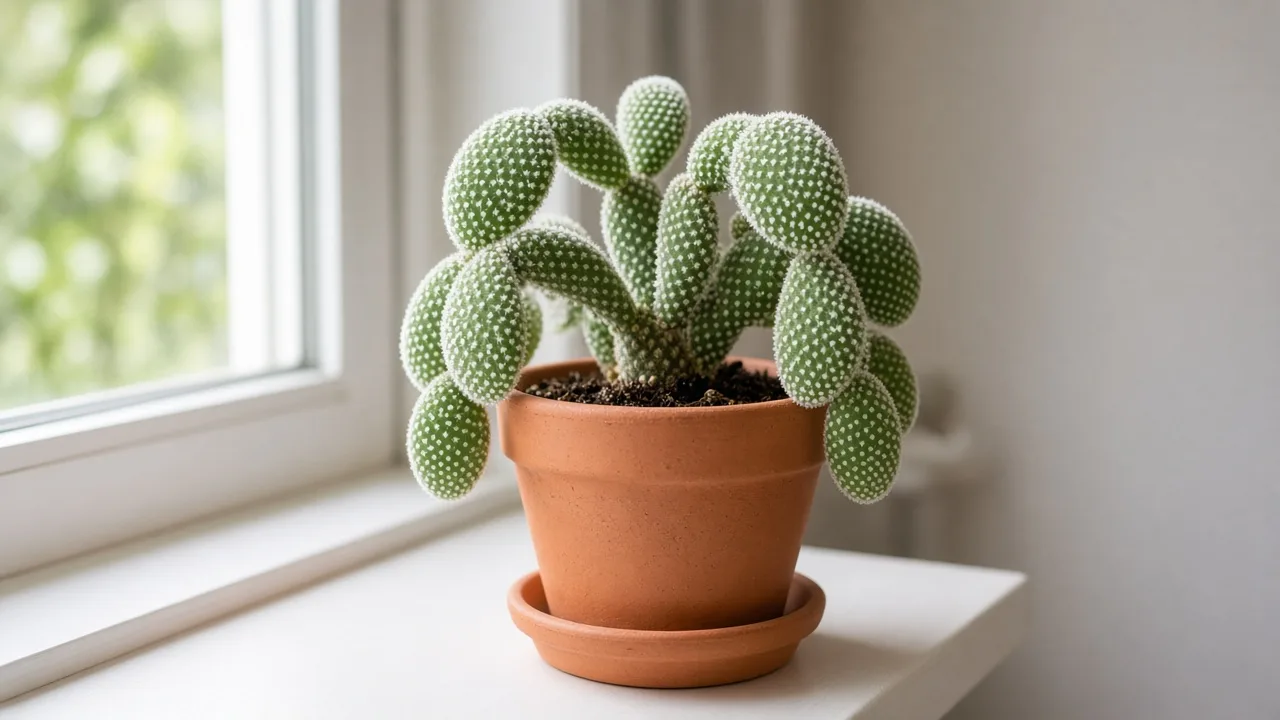
Drooping Leaves on Bunny Ear Cactus: Causes, Checks & Fixes
This guide covers drooping leaves on Bunny Ear Cactus. See also the general Drooping Leaves guide, watering, and light pages for this plant.
Drooping Leaves on Bunny Ear Cactus: Causes, Checks & Fixes
Quick answer
Picture two common windowsill scenes. In the first, the paired pads on your bunny ear cactus still look fuzzy and green, but every oval segment hangs downward like ears flopped forward, the pot feels heavy, and a skewer pushed to the bottom comes out dark and cool—that is wet-soil stress or early rot, not thirst. In the second, the pot is feather-light, the pad faces show fine wrinkling while the tissue stays green, and the skewer exits dusty—that is drought on a desert pad cactus you have been treating like a peace lily.
Opuntia microdasys stores water in its flattened stem pads, not in thin leaves. When uptake fails or reserves drain, stiffness drops at the joints first. For how turgor loss works on houseplants in general, see our drooping leaves guide. On bunny ear cactus, the split is pot weight plus a bottom-to-top skewer check before any water hits the mix.
First step: lift the pot and probe moisture through the drainage hole with a dry skewer. Do not soak, repot, or fertilize until you know whether the root zone is wet or dry.
When to use this page vs other Bunny Ear Cactus guides
This page is for limp or downward-hanging pads while you still decide whether the cause is water, light, or rot.
| Pattern | Read next |
|---|---|
| Whole stack collapses or base turns mushy on wet mix | Wilting or root rot |
| Soft yellow pads, soil damp more than a week | Overwatering |
| Wrinkled firm pads, very light pot | Underwatering |
| Tall lean toward the window, stretched thin pads | Not enough light or leggy growth |
| Yellowing before pads hang | Yellow leaves |
| Care basics and seasonal rhythm | Watering, light, soil |
What drooping leaves look like on Bunny Ear Cactus
Healthy bunny ears hold paired, oval pads at a slight upward angle from the joint below. Trouble shows when multiple segments lose rigidity and the “ears” point toward the floor.
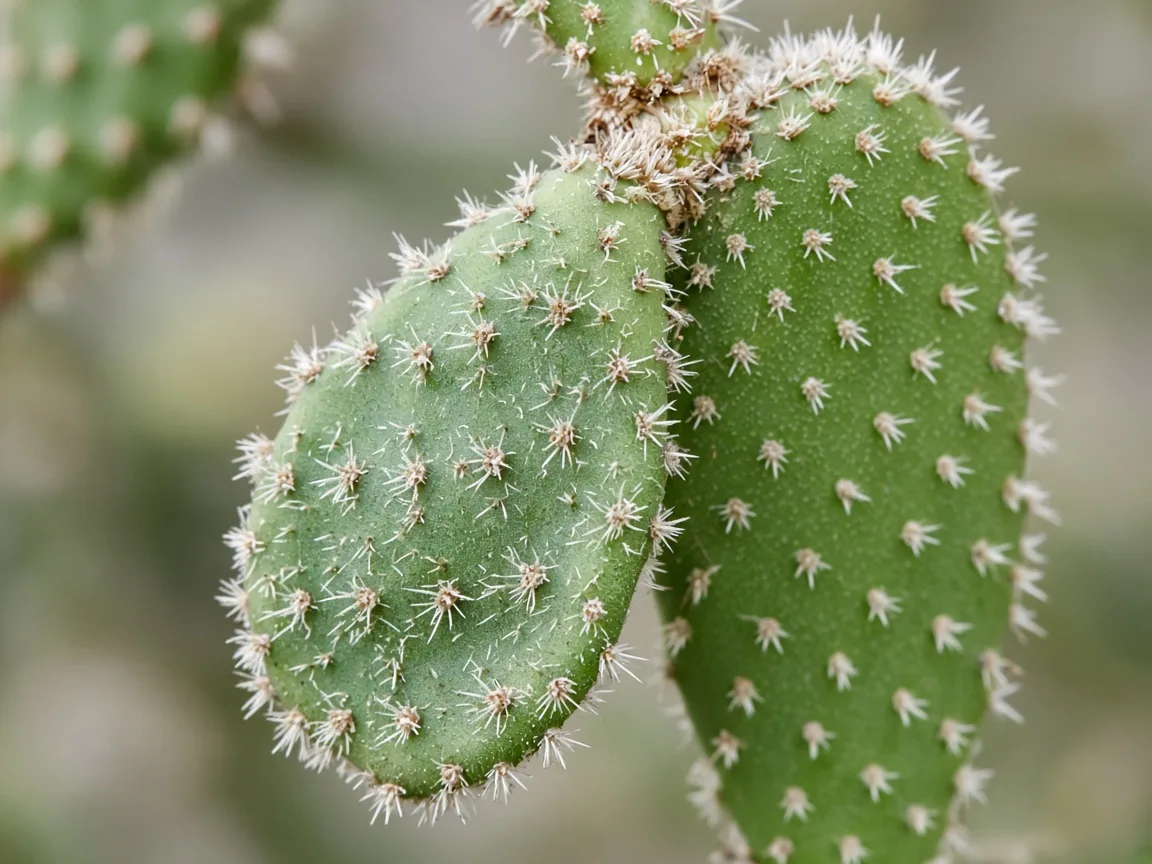
Drooping at the pad joint—the flat segment is the stem, not a leaf; compare firmness with pads still upright on the same plant.
Patterns that narrow the cause:
- Pads hang but stay green and slightly wrinkled; pot is light — typical underwatering after a long dry spell indoors.
- Pads feel soft or waterlogged, soil stays damp, base may yellow — overwatering or rot; damaged roots cannot refill pads even when the mix is wet (Missouri Botanical Garden).
- Lower pad droops first while upper pairs stay firm — often early root stress; the plant sacrifices support at the heaviest segment before the whole stack collapses.
- Pads stretch longer and lean toward glass; droop is gradual — low light etiolation, not sudden wilt (Epic Gardening).
- Winter grey-green pads, little new growth, firm base — can match RHS winter dormancy with sharply reduced water; do not force a summer soak schedule in a cool room.
The soil line matters as much as the pads. Firm green tissue above a firm, dry base behaves differently from the same look above a dark, soft attachment point.
Pad joint droop vs whole-pot lean
Searchers often mix these up because both look like “falling over.”
Joint droop is limpness between paired pads—the segments themselves bend at the areole while the main stack may still be roughly vertical. Causes are usually root-zone water balance or rot undermining turgor.
Whole-pot lean is the entire plant tipping because the stack is top-heavy in lightweight plastic, new pads all face one direction, or the root ball is loose after a recent repot. Fix lean with rotation, a heavier pot, gentle re-settling of roots, or brighter light—not an automatic deep soak if the skewer says the mix is already wet.
If lean comes with soft pads on damp soil, treat water stress first. If lean comes with firm pads and dry mix, stabilize the pot before you water.
Why Bunny Ear Cactus gets drooping leaves
Overwatering and root failure (most common indoors)
Bunny ear cactus wants good drainage and occasionally dry soil in a bright room. Indoors, peat-heavy nursery mix, cachepots, and calendar watering keep the profile damp while pads still look green—then joints go limp as roots decline. RHS notes root rots appear in poorly drained or wet soil, and Epic Gardening lists overwatering first when pads turn soft and droopy.
Common triggers on this species:
- Watering because the surface looks dry while the bottom stays wet
- Glass bowls or pots without drainage sold with the plant
- Winter drinks at summer frequency in a dim room
- Oversized pots that stay moist for weeks after one soak
Underwatering (firm pads, light pot)
Desert pads hold reserves, so droop from drought is often slow—slight wrinkling, then limp joints after a long dry gap. Epic Gardening notes both over- and underwatering can soften paddles; the tell is firm vs mushy tissue and wet vs dusty skewer readings, not pad color alone.
Low light and etiolation
Without enough direct sun, new pads grow thinner and the stack reaches toward the window. Over months the upper pairs may droop from weak structure, not rot. NC State lists full sun to partial shade for this species; indoors that usually means the brightest south or west exposure you can provide, not a distant shelf.
Pests and secondary droop
Scale and mealybugs can weaken pads by draining sap; cottony residue may hide among glochids. Drooping from pests usually follows visible residue or ant activity at the pot rim, not sudden limpness on clean pads with a clear wet/dry story. See mealybugs if that matches.
Glochid-safe inspection without crushing pads
You cannot squeeze bunny ears like a leafy plant—glochids are barbed bristles that detach and irritate skin.
Use this order:
- Pot weight — lift with the main stem visible, not by grabbing pads.
- Skewer or chopstick — insert through the drainage hole; withdraw and feel for damp crumbles vs dry dust through the full depth (same method as the watering guide).
- Pad firmness — press gently with a folded paper towel or tongs on the side of one mid-stack pad, not the glochid face.
- Base check — look for blackening at the soil line without lifting the plant; smell the drainage hole for sour anaerobic mix.
- Light audit — note hours of direct sun on the pad faces and whether new growth leans one way.
If soil is wet and the base softens, stop here and read root rot before adding water.
First fix for Bunny Ear Cactus
If the skewer exits wet and pads feel soft or yellow: stop watering immediately. Move the pot out of any full saucer, give bright air circulation, and let the mix dry completely before the next test—not before the next calendar week. That single pause is the first fix; unpotting comes only if the base keeps softening or smell persists after a full dry cycle.
If the skewer exits dry, pads are wrinkled but firm, and the base is green: place the pot in a sink, water until it runs from the holes, drain fully, and return it to bright light. One thorough soak-and-drain is the first fix—do not repeat daily “sips.”
If pads are firm, mix is appropriately dry, but the stack leans: rotate toward the brightest window and review light placement before changing water habits.
Do not fertilize a drooping bunny ear until new firm pads appear and watering rhythm is stable for two weeks.
Step-by-step recovery
After the first fix above, wait one week in warm bright conditions and re-run the skewer test.
Wet-soil recovery path
- Confirm saucers and cachepots stay empty after any future soak.
- If pads firm up and no base darkening spreads, resume watering only when the skewer reads dry bottom to top.
- If softness climbs the stack, unpot with gloves, inspect roots, and follow root rot salvage—trim mush, callous, repot into mineral soil.
Dry-soil recovery path
- After the corrective soak, let the mix dry fully again before the next drink—prefer underwatering to overwatering on cacti.
- Expect wrinkling to ease within days; old bend angles may remain.
Light-correction path
- Increase direct sun gradually to avoid sunburn on pads accustomed to shade.
- Remove chronically stretched top pads only after the plant is stable if you want a compact shape.
Recovery timeline
Mild drought droop on firm tissue often improves within three to seven days after one proper soak. Overwatering recovery depends on how much root tissue stayed firm—watch for new paired pads emerging stiff at the top over two to six weeks, not for old limp segments to stand perfectly upright again.
Worsening signs: spreading yellow, black at the soil line, sour smell, or the pot staying heavy while pads continue to soften. Those mean escalate to rot protocols, not more patience.
Lookalike symptoms
| What you see | Often confused with | How to tell apart |
|---|---|---|
| Limp pads, wet skewer, heavy pot | Underwatering | Thirst comes with dry deep mix and firm wrinkled pads, not soft yellow tissue |
| Long thin pads leaning to glass | Drooping from rot | Etiolation is gradual in low light; rot adds soft base on damp mix |
| One lower pad shriveled | Whole-plant failure | Single old pad senescence happens on mature stacks; base and skewer still read healthy |
| Grey pads in winter | Emergency drought | Winter rest with little water can dull color; firm base and dry mix mean wait, not panic soak |
Mistakes to avoid
- Misting pads or raising humidity for a cactus that wants dry air and sparse water
- Repotting and soaking the same day “to help” a limp plant on already wet mix
- Pulling pads bare-handed to inspect—use tongs or thick gloves because of glochids
- Assuming droop always means “it needs water” when rotting roots cannot take up moisture
How to prevent drooping next time
Align care with pad-forming biology: well-drained loam or sand mix, terracotta or another breathable pot, full sun indoors, and long dry windows between soaks. Check pot weight weekly, rotate the plant so pads grow evenly, and cut winter watering sharply when growth slows.
Browse all bunny ear cactus problems when symptoms overlap—fix the wet/dry diagnosis first, then open sibling pages if the pattern shifts.
Related Bunny Ear Cactus guides
Use this page when pads hang limp at the joints and you need to separate wet-root failure from drought or low light. Jump to overwatering or underwatering once the skewer tells you which side you are on; use wilting when the whole stack collapses; keep watering, light, and soil open for prevention rhythm after the plant stabilizes.
Related tool
Use the Plant Problem Diagnosis Tool to narrow causes for drooping leaves on this plant before changing multiple variables at once.