Sunburn on Bunny Ear Cactus: Pad Scorch Checks
Quick answer
Sunburn on bunny ear cactus shows as bleached, tan, or russet patches on the pad face that took the strongest light—often within days of moving to hot south or west glass or outdoor sun without hardening. First step: pull the pot back from midday direct rays or off the window pane so scorch stops spreading.
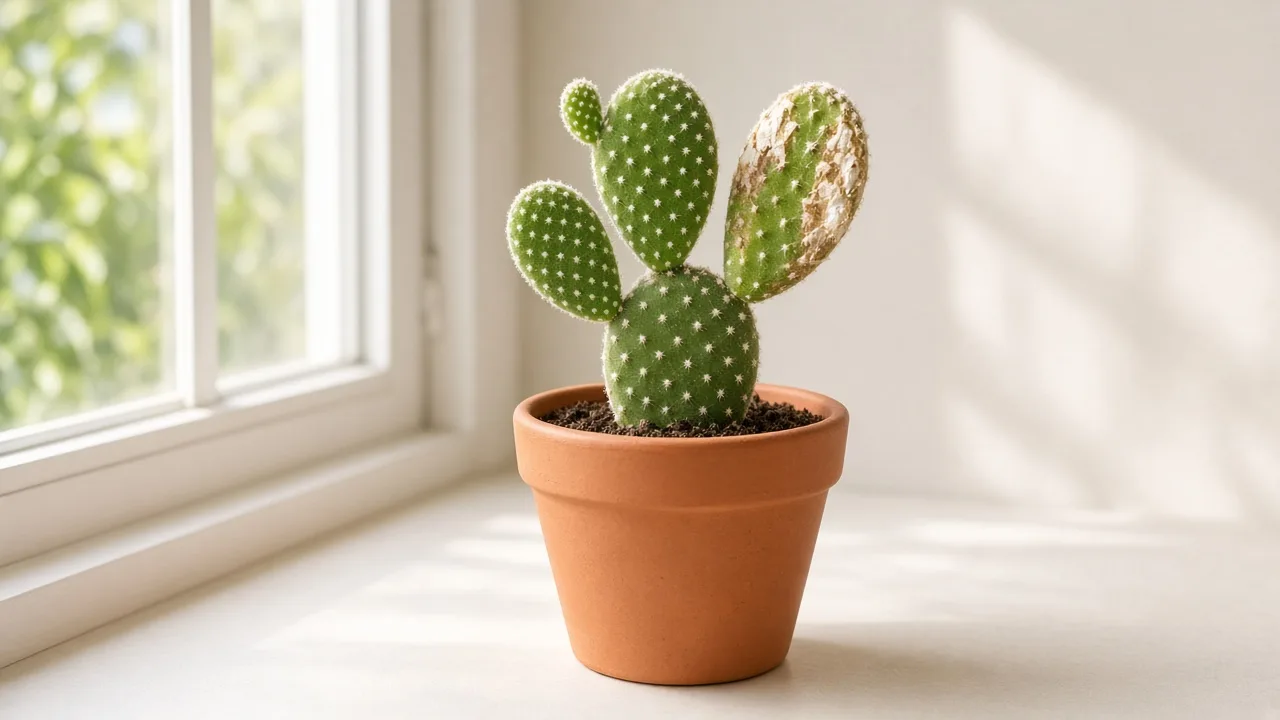
Sunburn & Scorched Pads on Bunny Ear Cactus: Causes, Checks & Fixes
This guide covers sunburn / scorched leaves on Bunny Ear Cactus. See also the general Sunburn / Scorched Leaves guide, watering, and light pages for this plant.
Sunburn & Scorched Pads on Bunny Ear Cactus: Causes, Checks & Fixes
Quick answer
Sunburn on bunny ear cactus (Opuntia microdasys) is directional damage on flat oval pads, not scorched leaves—this species photosynthesizes through paired, segmented pad-like stems covered in glochids. The usual trigger is a sudden jump in UV and heat: nursery shade to south glass, pads leaning on summer window pane, or an outdoor move without hardening.
For how sun scorch works across houseplants in general, see our sunburn and scorched leaves guide. On bunny ears, the tell is a bleached or tan patch on one pad face that appeared fast, feels hard and dry when pressed with tongs, and sits on a light dry pot—not soft yellow tissue at the soil line on wet mix.
First step: pull the pot out of harsh midday direct sun and off the glass—bright filtered light, an east window, or one to two feet back from hot south or west pane behind sheer curtain. Do not soak, repot, or fertilize until bleaching stops for at least a week.
When to use this page vs other Bunny Ear Cactus guides
| Pattern | Read next |
|---|---|
| Large bleached or russet patches after a sunny move (this page) | Stay here |
| Dry tan only at pad edges, firm centers | Brown tips |
| Soft yellow pads, heavy wet pot, dark base | Overwatering or root rot |
| Wrinkled thin pads, very light pot | Underwatering |
| Pads lean and stretch without crisp bleach | Not enough light or leggy growth |
| Yellow translucent tissue, not directional bleach | Yellow leaves |
| Long-term bright placement | Light guide |
| Browse all issues | Problems hub |
What sunburn looks like on Bunny Ear Cactus
Healthy bunny ears show firm, evenly green oval pads in pairs at stem tips. Sun scorch reads on pad epidermis, not separate foliage:
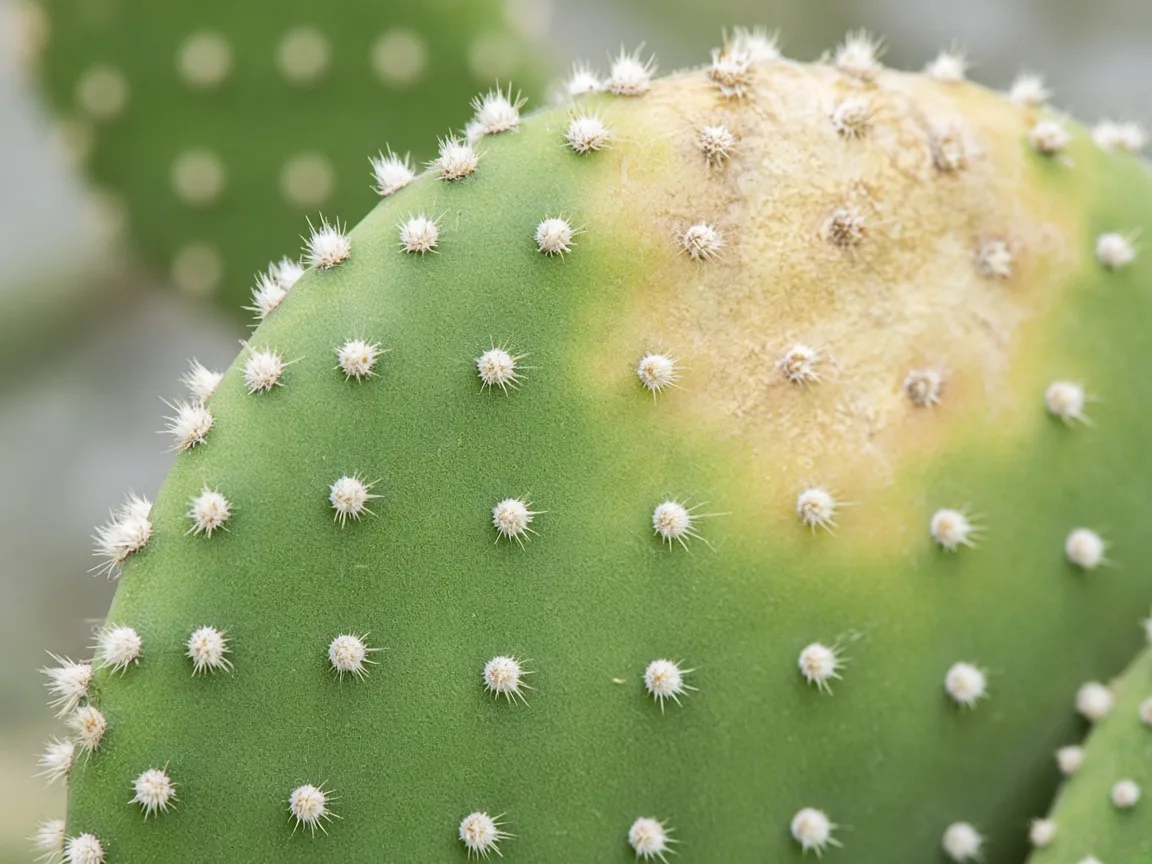
Bleached tan patches on the sun-facing pad face—hard dry scorch tissue; the shaded side of the same pad should still look normal green.
Typical sunburn on pads:
- Bleached white, silvery, pale yellow, or tan patches on the pad half that faces the window or outdoor sun
- Dry, papery, or slightly sunken skin that stays hard when you press with tongs or folded paper—not squishy
- One-sided pattern on upper or outer pads while the opposite face stays green
- Fast onset within hours to a few days after a light increase
- Light pot and dry skewer through the full depth despite ugly color—unlike overwatering on damp heavy mix
Advanced scorch may darken to russet-brown or black as tissue dies but often still feels firm and dry. Over months the patch may cork into a permanent scar.
Not quite sunburn: a reddish or purple flush on pads can be protective pigment under strong light that fades when exposure eases. True burn bleaches or papery-tans tissue and does not revert.
Why bunny ear cactus sunburns despite loving desert sun
Opuntia microdasys is full sun to partial shade tolerant in northern Mexican desert habitat, but indoor and nursery plants build an epidermis for lower UV and filtered glass. When intensity jumps faster than protective waxes and pigments form, UV can overwhelm the outer pad tissue—and thin-skinned Opuntia is listed among cactus types especially prone to burn without acclimation.
Common bunny-ear-specific triggers:
- Pads pressed against clear summer glass—Patch Plants warns bright light through direct glass contact can scorch Opuntia pads
- Nursery-to-sill same-day move from shade cloth to unfiltered south or west window
- Spring outdoor patio move after winter on a dim shelf; sunscald on summer outdoor moves shows as scaly, hardened, discolored skin
- Summer sun-angle shift as a narrow west beam hits one pad stack
- Reflective heat from white walls or metal shelving bouncing extra light onto one pad face
- Light increase plus stress from fresh repot or irregular watering—stressed pads burn faster
Winter dormancy expects partial sun and cooler rooms; blasting the same plant with midsummer glass intensity in early spring is a common mismatch.
Reading scorch pad-by-pad (paired-pad sun map)
This diagnostic only makes sense on stacked Opuntia pads, not on leafy houseplants.
- Identify the sun vector — Which pad face touches glass or points toward outdoor noon sun? Scorch should cluster there.
- Compare paired pads at the tip — New pads form in pairs; often one ear in a pair bleaches while its partner stays greener if partially shaded.
- Check pad height — Upper pads catch window heat first; lowest pads may stay fine unless the whole pot baked.
- Rotate memory — Plants left facing one direction for months can scorch one side while the opposite side looks pale from not enough light.
- Glochid safety — Never rub pads bare-handed; glochids detach at the slightest touch. Use tongs for the touch test.
Your inspection surface is flat pad skin between areoles, not leaf undersides.
Glochid-safe touch test: firm scorch vs soft rot
Before you change water or cut tissue:
- Timeline — Did patches appear within one to three days of a light change? Sunburn timing is fast.
- Press discolored pad skin with tongs — Hard and dry fits scorch. Soft, yielding, or hollow at the soil line on wet mix points to rot or overwatering.
- Skewer the pot — Dry through the full depth matches sunburn. Persistent dampness with yellow soft lower pads does not.
- Smell and weight — Sour odor or a heavy pot weeks after watering suggests wet-root injury, not dry bleach.
- Pattern — Directional pad-face bleach after light jump = scorch. Even darkening around areoles with sticky residue = inspect for mealybugs instead.
If every check matches sunburn and the base is firm, skip fungicide and root surgery. The fix is light management.
The first fix: shade the burned pad immediately
Move the pot to bright light without harsh midday direct sun on the damaged pad—east window, filtered south glass, or dappled porch. Gardeners’ Path recommends moving out of direct sun while keeping bright indirect or morning sun so the plant does not etiolate.
Keep it there at least five to seven days. Watch for:
- No new bleached patches on adjacent pads or the paired “ear”
- Existing tan areas staying firm, not softening
- Crown and lowest pad joint remaining solid when gently pressed with tongs
Do not compensate with extra water. Let soil completely dry between waterings—wet mix on stressed scorched skin invites rot through damaged epidermis. Hold fertilizer until new paired pads look normal.
Re-acclimating bunny ear cactus to strong light
Bunny ears still need bright direct sun for indoor health. After scorch stabilizes, increase exposure gradually over two to three weeks:
- Days 1–5: Morning sun only (roughly two to three hours before noon) or bright filtered light all day—site outdoor summer plants with noonday reprieve
- Days 6–10: Add late-morning sun; total direct exposure about four to six hours if no new bleach appears
- Days 11–14: Extend into early afternoon only when pads stay firm and color-stable
- Week 3+: Return to final bright spot—full sun to partial shade with afternoon relief on the hottest windows
Rotate the pot a quarter turn weekly so both pad faces harden evenly. Keep pads off the glass even after recovery.
Lookalike symptoms on Bunny Ear Cactus
| What you see | Likely cause | Key difference |
|---|---|---|
| Bleached patch on one sun-facing pad after light move | Sunburn | Fast onset, hard dry tissue, dry pot |
| Soft black at soil line with damp pot | Root rot | Mushy base, sour smell |
| Dry tan only at pad apex or rim | Brown tips | Edge-focused, may be drought or rim scorch |
| Soft brown patches on green pads, heavy pot | Overwatering | Too much water can cause soft brown patches |
| Wrinkled pads, light pot | Underwatering | No recent light jump |
| Lean, thin pale new pads | Not enough light | No crisp directional bleach |
Recovery timeline and what improves
Cosmetic: Bleached or tan pad skin will not turn green again. Firm dry scorch can be left in place as a barrier while the plant hardens new tissue.
One to two weeks: Active burning stops—no new bleach on neighboring pads.
Three to six weeks: Next paired pads at the stem tip open with normal green color and firm feel.
Months: Old scars may cork to tan-brown; lowest aging pads may still tan and drop naturally while the stack stays firm.
Escalate if discolored areas turn soft or spread on wet mix—cut to clean firm tissue only when rot is confirmed, then dry-down per root rot protocol.
Mistakes to avoid
- Soaking because pads “look stressed” while the pot is already light and dry
- Moving straight from dim corner to unfiltered south glass the same day
- Pressing pads against window glass because cacti “need sun”
- Fertilizing bleached pads to push recovery
- Stacking repot, propagation, and full-sun move on one weekend
- Handling scorched pads bare-handed and disturbing the plant daily
How to prevent scorch next time
Match watering to full-pot dry-down, use mineral cactus mix in porous pots, and plan light changes through the light guide. Acclimate outdoor summer moves with noonday shade at first. Review the Bunny Ear Cactus overview when symptoms overlap.
Related Bunny Ear Cactus guides
Conclusion
Sunburn on bunny ear cactus is a one-sided, fast, dry patch on pad skin after light intensity outruns acclimation—not root failure on wet mix. Shade first, confirm firm tissue with a glochid-safe touch test, then re-acclimate over weeks while keeping pads off hot glass. Dead bleach will not revert; judge recovery by firm new paired pads at the stem tips.