Yellow Leaves on Bunny Ear Cactus: Pad Zone Diagnosis
Quick answer
Bunny ear cactus has no leaves—yellowing shows on flat pads, usually at the soil line (wet roots), as a dull wash on a dry light pot (thirst), or as bleached patches on the sun-facing side. First step: wear tongs, map where the yellow sits, and press the lowest pad while a dry skewer tests the full pot depth.
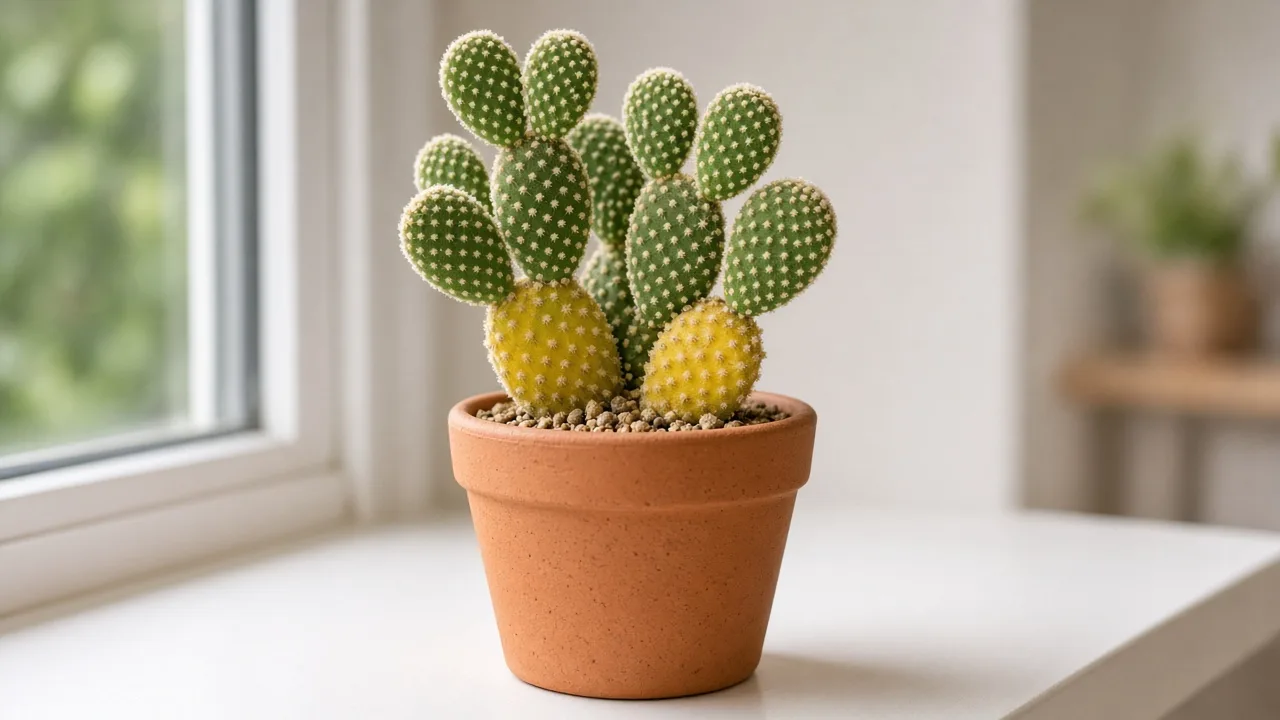
Yellow Leaves on Bunny Ear Cactus: Causes, Checks & Fixes
This guide covers yellow leaves on Bunny Ear Cactus. See also the general Yellow Leaves guide, watering, and light pages for this plant.
Yellow Leaves on Bunny Ear Cactus: Causes, Checks & Fixes
Quick answer
Searchers often say “yellow leaves” on bunny ear cactus, but Opuntia microdasys has no foliage—the green photosynthetic tissue is the flat oval pads stacked in pairs and dotted with glochids. Yellowing is almost always a zone pattern on those pads: at the soil line, on the sun-facing side, or as a dull wash across the whole stack.
For how yellowing works on leafy houseplants in general, see our yellow leaves guide. On bunny ear cactus, the first job is mapping which pad zone changed color—because wet-root yellow at the base needs the opposite fix from sun-bleached patches on the south face or from thirst on a light dry pot.
NC State Extension notes that bunny ears cactus needs full sun to partial shade, fast-draining cactus mix, and soil completely dry between waterings. Overwatering and poor drainage can cause root rot or stem rot on this species; when mix stays wet, roots lose oxygen and die.
First step: wear tongs, locate exactly where the yellow sits, and press the lowest pad above the soil while a dry skewer probes the full pot depth. Do not soak, fertilize, or repot until that zone check points to thirst, burn, rot, or normal base aging.
When to use this page vs other Bunny Ear Cactus guides
| Pattern | Read next |
|---|---|
| Yellow lower pads + heavy wet pot + soft base | Overwatering → root rot if mushy |
| Dull pads + light dry pot + slight pad wrinkling | Underwatering |
| Bleached yellow-tan on sun-facing side only | Sunburn scorched leaves |
| Long thin pads leaning toward window | Not enough light or leggy growth |
| Yellow around areoles + cottony deposits | Mealybugs or spider mites |
| Whole stack limp on wet soil | Wilting or drooping leaves |
| Firm brown band at very base of old plant | Often corking—stay here for the cork vs rot table |
| Routine soak-and-dry rhythm | Watering guide |
| Full symptom index | Problems hub |
What yellowing looks like on bunny ear pads
Unlike pothos or peace lilies, bunny ear cactus will never drop yellow leaves—because it has none. The diagnostic surface is pad flesh between glochid clusters and how color shifts by height and direction on the stack.
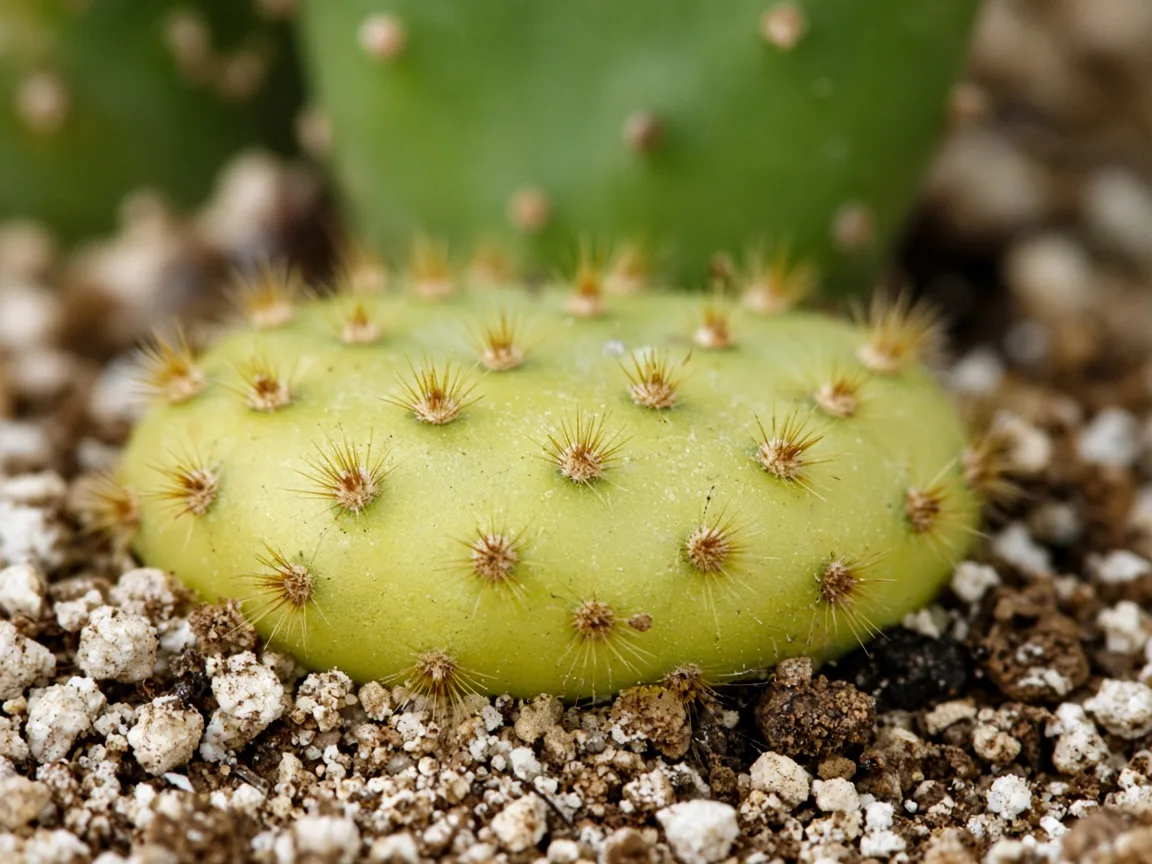
Yellow at the soil line on damp mix—translucent lower pads with firm upper pairs still green; classic early wet-root stress before rot climbs.
Zone A: Soil-line yellow (wet-root pattern)
- Yellow or translucent lower pads right where the pad meets mix
- Upper paired pads still firm and green while the base looks washed out
- Heavy pot days after watering; skewer emerges damp through full depth
- Soft or yielding tissue when you press the lowest pad with tongs
- May pair with fungus gnats or mold on soil on chronically wet mix
This pattern tracks overwatering or poor drainage that causes root rot or stem rot on Opuntia pads. Escalate to root rot if the joint turns black or mushy.
Zone B: Sun-facing bleach (burn pattern)
- Yellow-tan to bleached patches on one side—the brightest window face
- Opposite side stays darker green
- Often follows a sudden move to stronger direct sun or summer glass magnification
- Tissue feels firm, not squishy—different from rot
- Full sun to partial shade is correct long term, but unacclimated pads can bleach before they adjust
Zone C: Dull overall yellow-green (thirst or low-light pattern)
- Whole stack looks dull or yellow-green, not patchy
- Slight pad wrinkling or thinning on a light dry pot
- Skewer clean and dry through the full depth
- Common after an overly cautious winter dry spell or a dim shelf
- May overlap with slow growth if light is the limiting factor
Bunny ears stores water in fleshy pads and tolerates drought—so some profile change is normal. Thirst adds dry skewer + dull color + light pot together, not soft translucent tissue at the base.
Zone D: Corking at the base (aging, not disease)
- Firm brown or tan band at the oldest pad where it meets soil
- No smell, no squish, upper pads green and plump
- Normal on mature stacks that have been in the same pot for years
- Do not confuse with black mushy tissue climbing upward—that is rot
Pad firmness vs pad wrinkling: the tongs squeeze test
This plant-only check would mislead you on a snake plant or fern. On bunny ear cactus, the pad is the diagnostic surface, and glochids mean you never use bare fingers:
- Firm pads + slight wrinkling + light dry pot — Often thirst or winter rest; see underwatering if the skewer is clean and dry.
- Firm upper pads + yellow lower pads + heavy wet pot — Root stress beginning; stop water now and read overwatering.
- Soft base + wet pot — Confirmed wet-root path; inspect roots before rot climbs.
- New paired pads at the top — Recovery signal even if lower tissue stays scarred.
Always trust pad firmness at the soil line over how plump the upper bunny-ear pair looks. An Opuntia can appear full while the base is already failing.
Full-pot skewer dry-down on mineral mix
Bunny ear cactus in gritty indoor mix dries unevenly—the surface can look dusty while the center stays damp. Before you change anything:
- Lift or tilt the pot when you think it is dry versus two days after watering. Learn your dry weight.
- Push a dry wooden skewer through the entire pot to the drainage hole. Surface dust-dry is not enough—let the soil completely dry out between waterings.
- Press the lowest pad above soil with tongs. Firm = follow skewer results. Soft or hollow = stop water and see root rot.
- Sniff the soil. Sour odor means treat as confirmed rot—unpot the same day.
- Check pad planting depth. Pads buried too deep in peat-heavy mix stay wet at the joint even when you water sparingly—see soil for mineral mix targets.
Why bunny ear cactus gets yellow pads
Chronic wet mix at the pad joint
Desert cacti take up water through a small root zone, then store it in pads. When mix stays saturated, roots cannot breathe; waterlogged soil drives root death and shows up as yellowing or soft tissue low on the plant. Bunny ears sold in glass bowls or peat-heavy nursery soil are especially prone— the lowest pad pair yellows first while upper pads still look fine.
Winter overwatering in cool rooms
NC State recommends cooler winter temperatures around 50–65°F, very little water, and partial sun. Evaporation slows in cool dim rooms, so the same summer soak schedule keeps mix wet for weeks. Yellow lower pads in January often trace to one generous winter watering, not disease.
Thirst after an overly long dry spell
Owners afraid of rot sometimes skip water for months. Pads lose internal water, turn dull yellow-green, and may wrinkle slightly while the base stays firm. A deep soak after a confirmed dry skewer usually stabilizes color on new growth—not on already-yellow segments.
Low light and stretched pale pads
Pads grown in a dim corner etiolate—longer, thinner, and pale yellow-green as chlorophyll density drops. This overlaps not enough light and leggy growth. Fixing placement beats feeding pale stacks.
Sap feeders at pad areoles
NC State lists mealybugs and scale insects as common problems on Opuntia microdasys. Cottony deposits or waxy bumps at areoles can yellow localized patches. Check glochid clusters with a magnifier before assuming watering error—see mealybugs and aphids if sticky residue or insects appear.
How to confirm the cause
Work in this order so you do not soak a rotting base or repot a merely thirsty plant:
| Your read | Confirms | First direction |
|---|---|---|
| Soft yellow base + damp skewer + heavy pot | Wet-root stress / early rot | Stop water; overwatering path |
| Firm dull pads + dry skewer + light pot | Thirst or winter drought | One deep soak, then dry-down per watering |
| Bleach on sun face only, firm tissue | Sun stress | Shade slightly; read sunburn |
| Pale thin pads leaning to window | Low light | Move brighter; light guide |
| Cottony areoles, sticky pads | Pests | Isolate; pest page—not fertilizer |
| Firm brown base band, green upper stack | Corking | No emergency treatment |
The first fix to try
Map the yellow zone, then run one matching correction—nothing else the same day.
- Zone A (wet base): Stop all watering. Press the lowest pad with tongs. If firm, wait until a skewer is dry through the full depth before the next soak. If soft or black, open root rot steps immediately.
- Zone C (dry dull pads): If skewer is dry and base is firm, give one deep soak until drainage runs free, empty the saucer, then return to complete dry-down between waterings.
- Zone B (sun bleach): Move slightly back from hot glass or add sheer curtain for two weeks; do not flood the plant to “cool” it.
- Low-light pale stack: Shift to the brightest safe spot or add a grow light—details in light.
Do not fertilize yellow pads, repot into a larger pot, or prune multiple segments until you know which zone you are treating.
Step-by-step recovery
After the first fix, judge weekly by new paired pads, not old yellow tissue.
- Week 1: Re-check pad firmness at soil line and skewer moisture only—no extra interventions.
- Week 2–4: If wet-root was the issue, mix should feel light; upper pads stay firm. New growth may appear as tiny paired pads at tips.
- Month 2–3: If rot was caught early, lower scars remain but spread stops. If base still softens, unpot and salvage firm upper pads via propagation.
- Ongoing: Align soaks with mineral soil dry-down and bright light so photosynthesis matches water uptake.
Recovery timeline
Mild Zone C thirst often shows plumper new pads within one to two weeks after a proper soak. Zone A wet stress may need four to eight weeks of dry-down before new pairs look normal—yellow lower pads will not re-green. Sun bleach stops spreading within days of reduced intensity; bleached tissue stays pale permanently. Active rot that reaches the stack core rarely saves the original root ball; pad cuttings are the realistic salvage path.
Mistakes to avoid
- Deep soaking because pads “look yellow” without checking skewer and base firmness
- Fertilizing stressed pads before roots and light are stable
- Repotting into bigger peat mix while soil is still soggy
- Misting pads repeatedly—extra surface moisture at the joint mimics overwatering
- Trusting plump upper pads without pressing the lowest pair
- Handling with bare hands—glochids embed and derail careful inspection
- Burying pads deeper after repot to stabilize the stack; keep the joint dry and above mix
Hold fertilizer until new pad growth looks normal for several weeks and the base stays firm.
How to prevent yellow pads next time
Match water to this plant’s biology, not a calendar.
Water deeply only after the soil completely dries between waterings, then soak until drainage runs free and empty the saucer. In winter, follow sharp dry-down per the watering guide even if pads look slightly dull—cool rooms need longer intervals.
Use fast-draining mineral cactus mix in a pot only slightly larger than the root ball. Porous containers help indoor pads dry evenly.
Keep the plant in bright direct light so photosynthesis matches your soak schedule and water uptake stays predictable.
Learn dry pot weight by lifting monthly. Scout the soil line whenever you consider watering—especially after repotting when pad depth is easy to get wrong.
When to worry
Mild yellow tissue at the soil line on a firm base after one overwatering event usually responds to a dry-down pause. Escalate same-day when:
- The pad base feels squishy or hollow
- Black tissue climbs above the soil line
- The mix smells sour
- Multiple lower pads soften within a week
- No new paired pads appear after three months of corrected care
If rot has consumed the base, pad salvage through propagation is often more realistic than saving the original root ball.
Related Bunny Ear Cactus guides
- Overview — culture and glochid safety
- Problems hub — full symptom index
- Watering — soak-and-dry rhythm after recovery
- Soil — mineral mix that dries fast
- Root rot — mushy base and unpotting protocol
- Overwatering — soft yellow pads on wet mix
- Underwatering — pad wrinkling on dry mix
Conclusion
Yellow “leaves” on bunny ear cactus are really pad color changes—and the fix depends on which zone failed. Map soil-line wet rot versus sun bleach versus dry thirst with tongs, skewer, and pot weight before you soak, feed, or repot. Firm new paired pads are the recovery signal; scarred lower pads can stay yellow permanently once the root zone is stable.
Related tool
Use the Yellow Leaves Diagnosis Tool to narrow causes for yellow leaves on this plant before changing multiple variables at once.