Slow Growth on Bunny Ear Cactus: Normal Pace vs Stalled
Quick answer
Slow growth on Bunny Ear Cactus is often normal—NC State lists a slow growth rate and new pads arrive in pairs at stem tips, not in weekly jumps. Worry when no paired pad buds appear through two warm seasons, pads lean or stretch, mix stays damp for weeks, or the base softens. First step: run a glochid-safe paired-pad tip audit and full-pot dry-down check before repotting, feeding, or watering more.
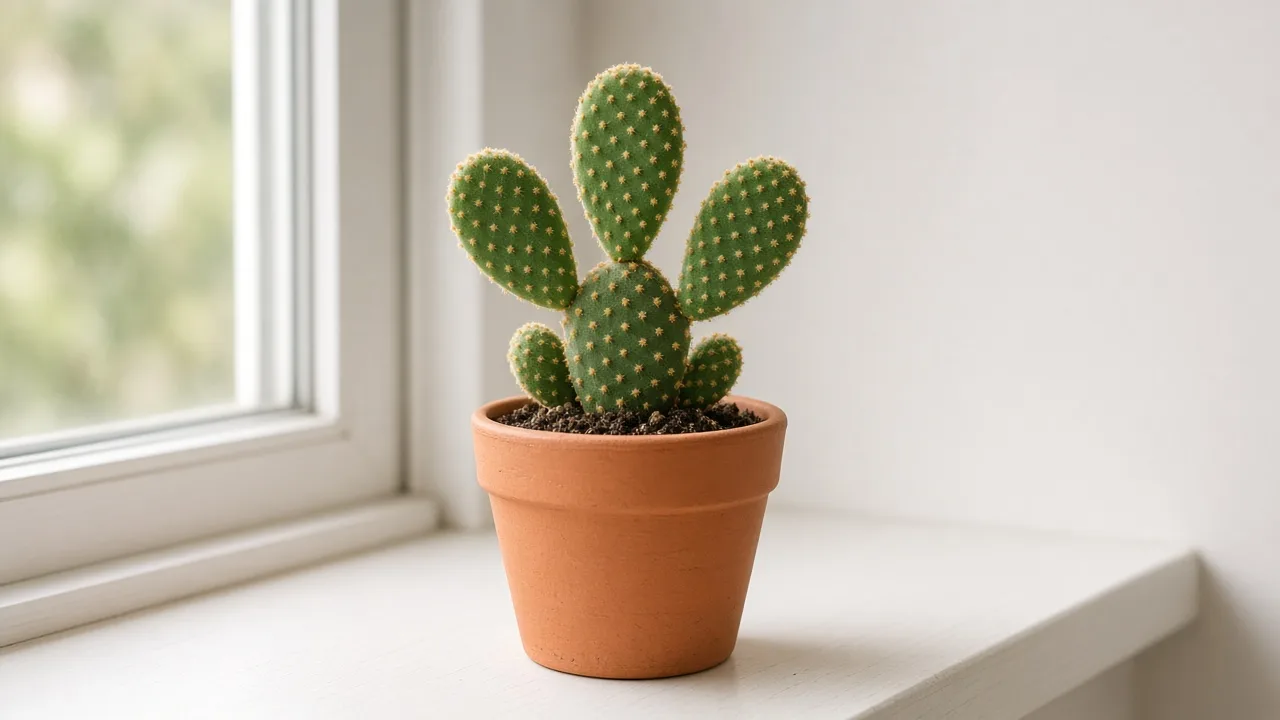
Slow Growth on Bunny Ear Cactus: Causes, Checks & Fixes
This guide covers slow growth on Bunny Ear Cactus. See also the general Slow Growth guide, watering, and light pages for this plant.
Slow Growth on Bunny Ear Cactus: Causes, Checks & Fixes
Quick answer
Opuntia microdasys bunny ear cactus is slow growing by nature—a tabletop pot may look nearly identical twelve months later while still perfectly healthy. NC State Extension lists a slow growth rate for the species, and new pads form in pairs at stem tips, which is why progress shows up as occasional paired clusters, not leafy flushes.
For how chronic stagnation works across houseplants in general, see our slow growth hub. On Bunny Ear Cactus, the decisive question is whether paired pad buds appear through warm months—not whether the pot looks unchanged on a shelf.
First step: run a glochid-safe paired-pad tip audit and full-pot dry-down check before repotting, fertilizing, or watering more. If small pads emerge in pairs each warm season, segments stay firm, and a skewer reads dry throughout between soaks, your plant is likely on normal Opuntia time. If pad tips stay silent through two warm seasons while mix stays damp or segments lean, fix light and watering first per our light guide and watering guide.
When to use this page vs other Bunny Ear Cactus guides
This page is the pace-and-vigor entry for bunny ears—owners who wonder why their cactus “never grows,” whether winter silence is normal, or when slowness signals a real bottleneck.
| Pattern | Read next |
|---|---|
| Pads lean; gaps widen toward a window | Not enough light |
| Long thin segments between pad pairs | Leggy growth |
| Soft yellow pads on a heavy wet pot | Overwatering or root rot |
| Slight pad wrinkling; pot very light after long drought | Underwatering |
| Yellowing pads without dramatic lean | Yellow leaves |
| White fuzz at pad axils sapping vigor | Mealybugs or spider mites |
| Mix damp weeks; fungus gnats | Fungus gnats or mold on soil |
| Placement, acclimation, grow lights | Light guide |
| Full problem index | All Bunny Ear Cactus problems |
What slow growth looks like on Bunny Ear Cactus
Healthy indoor bunny ears hold firm flat pads in paired stacks: oval segments, dense glochids, and an upright or slightly spreading clump. On this pad-forming Opuntia, “slow growth” is often invisible day to day—you measure progress in new paired pads at stem tips, not new leaves.
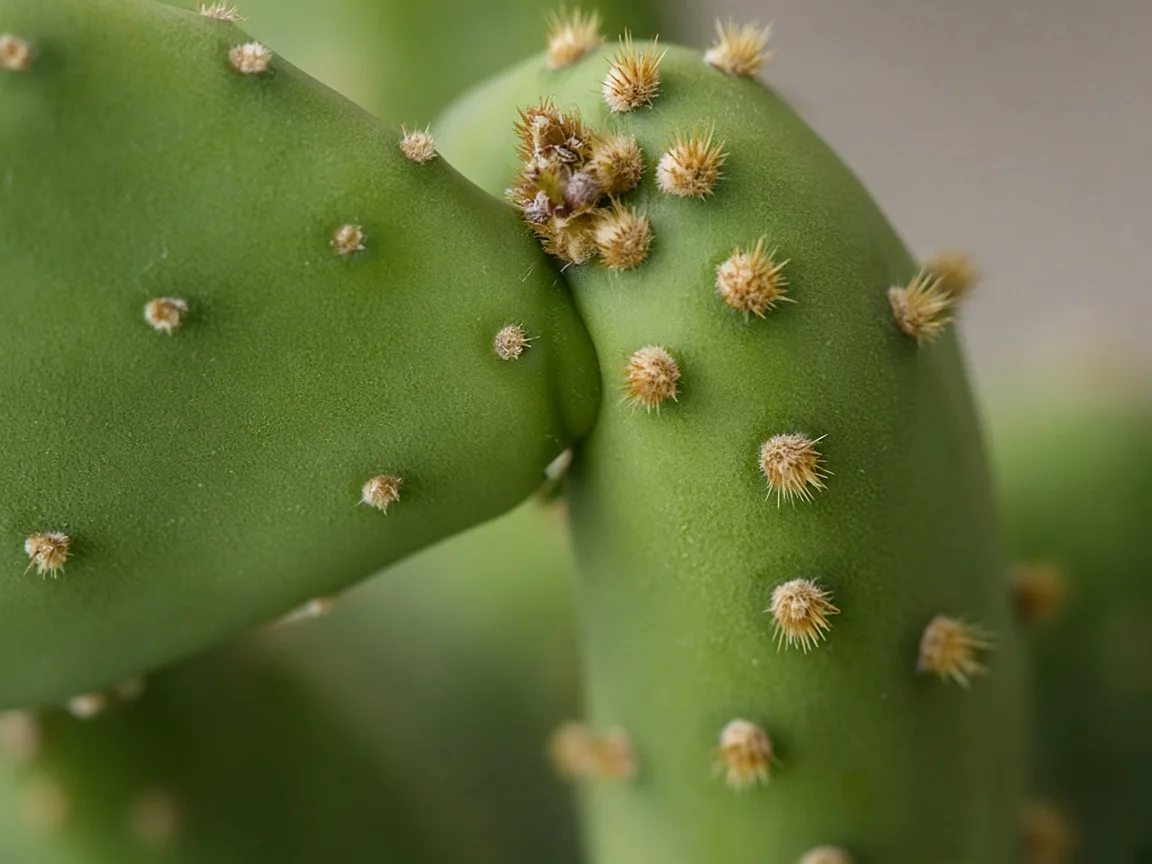
A quiet pad tip with firm tissue—normal winter or low-light pause. Compare paired bud activity warm season to warm season, not week to week.
Normal slowness (usually fine):
- Size barely changes year to year — Mature plants reach about 2–3 feet tall and spread wider outdoors; indoor pots often add only one or two pad pairs per warm season
- Zero pad pairs in cool dry winter — Winter care calls for cooler temperatures (about 50–65°F), very little water, and partial sun; firm pads with no new segments from late fall through early spring is expected
- No flowers indoors for years — This plant rarely blooms indoors; lack of bloom alone does not mean failure if pads and base stay firm
- Pot dries predictably — Skewer reads dry throughout between soaks; weight drops on a desert schedule per our watering guide
Stalled growth (needs action):
- No paired pad buds through two consecutive warm seasons — Stem tips stay flat with old areoles only while lower pads still look healthy
- Pads stretch or lean — Wider spacing or tilt toward glass overlaps not enough light
- Mix stays damp three to four weeks — Dim light or overwatering stalls metabolism; heavy pots in warm rooms signal a light–water trap
- Base softens while tips are quiet — Overwatering and poor drainage can cause root rot or stem rot; slowness here is a symptom, not the root cause
- Pests at pad axils — Monitor for mealybugs and scale; low-level infestations sap vigor before obvious pad damage
Paired-pad tip audit: the Opuntia growth clock
Unlike leafy houseplants where you count new leaves, bunny ears tell time at stem tips. Growth means tiny new pads appearing side by side in pairs—the “bunny ear” look—plus firm, saturated green on the newest segments.
| Pad-tip pattern | Season | What it usually means |
|---|---|---|
| Fresh paired buds each warm season; pads firm | Spring–summer | Healthy slow pace |
| Zero pad pairs, firm body, cool dry winter | Fall–winter | Normal dormancy |
| Zero pad pairs two warm seasons in a row | Spring–summer | Light, roots, or nutrition bottleneck |
| Lean increases; tips show old areoles only | Any warm month | Not enough light |
| Soft base, sour mix | Any | Root rot—not a growth-rate issue alone |
Inspect with tongs or folded newspaper—never bare hands. Glochids detach with the slightest touch and are painful to remove. Photograph stem tips in June and again in August. If the second image shows no paired bud activity and the pot sits in direct sun with proper dry-down, move to substrate and root checks—not more water.
Glochid-safe handling while you diagnose
Slow-growth fixes fail when owners avoid close inspection because of glochids. Rotate the pot under bright light and use magnification on pad axils for mealybugs or scale without brushing pads.
If you must unpot, wear thick gloves plus a long sleeve, work over newspaper, and wash tools afterward. Diagnosis beats guesswork: a firm root ball in gritty mix with dry skewer readings points to light, not emergency repotting.
Pad count and realistic indoor expectations
Bunny ears do not unfurl foliage—they add segmented pads. Indoor owners often expect pothos-like jumps; Opuntia works on a different clock.
Mark the highest pad pair with a small dot of painter’s tape on the pot (not on the plant). At the end of one warm season, count pad pairs above the mark. On a young plant in a south window with good dry-down, one to three new pad pairs per year is realistic; an older clump in the same pot may show zero measurable height gain while tips still flush lightly.
Container growth can be controlled while the species spreads quickly in ground—indoor slowness in a small terracotta pot is often biology plus light, not neglect.
| Pad-pair gain in one warm season | Light and care context | Likely read |
|---|---|---|
| 2–3 pairs on young plant in direct sun | Good dry-down; firm base | Healthy Opuntia pace |
| 0 pairs but tips look plump; crown firm | Adequate sun; mature or root-bound | Often normal |
| 0 pairs two seasons; mix damp 3+ weeks | Dim room or heavy peat mix | Fix light and soil |
| 0 pairs; lean + pale new pads | Stretch toward window | Not enough light |
| 0 pairs; soft yellow base | Wet mix | Overwatering |
Why Bunny Ear Cactus stalls (plant-specific causes)
Insufficient direct light is the most common indoor bottleneck. Full sun to partial shade is recommended, but partial shade in a dim living room is not the same as partial shade outdoors. Pads photosynthesize through their skin; weak light limits the energy budget for new paired segments. Direct sun is preferred; indoors supplement with a grow light when winter sun is short.
Chronic damp mix is the second trap. Let soil completely dry between waterings in fast-draining cactus mix. Peat-heavy store soil in a cachepot keeps roots cool and wet; metabolism slows even without full rot. That pattern overlaps mold on soil and fungus gnats.
Skipped winter rest confuses owners. Warm, bright, wet winter rooms prevent the dry pause NC State describes for winter months. The plant may sit visually frozen—not because it is dying, but because it never received seasonal rhythm. Resume sparse watering only when spring warmth and longer days return.
Root zone decline without obvious rot—compacted mix, years in the same peat, or a pot too large—limits oxygen. Repot in early spring every two to three years into mineral mix per our repotting guide after light and watering are corrected.
Pest drain at pad axils reduces vigor before pads scar. Treat spider mites or mealybugs before chasing fertilizer.
How to confirm the cause
Work in order so you change one variable at a time:
- Season check — Are you in cool dry winter? Firm pads and zero pairs may be normal dormancy.
- Paired-pad tip audit — Any side-by-side buds since last spring?
- Light honesty — Direct sun on pad surfaces for most of the day, or filtered across the room? Compare with light guide.
- Dry-down test — Dry skewer top to bottom; note days since last soak and pot weight.
- Base and lowest pads — Firm or soft? Darkening at soil line?
- Pest scan — Mealy cotton, scale shells, mite stippling at axils (with glochid-safe tools).
Confirmed diagnosis before treatment: if two warm seasons pass with no pairs and skewer stays wet for weeks, light and substrate are the lead suspects—not immediate feed.
The first fix to try
Move the plant to the brightest direct-sun exposure you can provide safely, then freeze watering until the mix is dry throughout.
Acclimate over seven to ten days if it lived in deep shade—sudden harsh sun can scorch pads (sunburn). Place terracotta on the window lip or under a grow lamp so pads receive direct rays. Do not repot, fertilize, or increase watering on the same week.
After dry-down returns to a predictable rhythm (often two to four weeks), reassess pad tips. If pairs still fail in the next warm season, then audit mix and roots per soil guide—not before.
Step-by-step recovery (after the first fix)
Weeks 1–2: Track skewer dryness and pad firmness only. No feed.
Weeks 3–8: If light improved, watch for slight plumping at stem tips. Continue soak-when-dry per watering guide—about once soil is completely dry in active months, less in winter.
Warm season only: If pad pairs appeared and roots are healthy, one quarter-strength cactus fertilizer application every four to six weeks may support the next flush—never on a stressed or dormant plant.
If base softens: Stop all soaks and pivot to root rot protocol.
Recovery vignette: two-year “frozen” bunny ears
A six-inch bunny ear sat on a dining table six feet from a east window. The owner saw no new pads in two years and planned a larger pot and monthly feed. Tip audit showed zero paired buds for two summers, lowest pads slightly pale on the window side, and mix damp eighteen days after a modest drink. Base remained firm. The grower moved terracotta to the sill for direct morning sun, acclimated over ten days, and waited for full dry-down before the next soak. A single paired pad cluster appeared the following July—modest by pothos standards, healthy for Opuntia microdasys.
Mistakes to avoid
- Repotting or feeding because the plant “looks small” — Oversized pots stay wet; fertilizer on a stressed pad burns tissue.
- Watering more to “wake it up” — Damp peat in dim light worsens stagnation; dry intervals match desert biology.
- Judging progress weekly — Bunny ears improve across seasons; tip photos each June beat daily worry.
- Skipping winter rest — Warm wet winter rooms prevent the dry cool pause roots expect.
- Touching pads bare-handed — Glochid injury derails care; use tools.
Recovery timeline
Bunny ear recovery is measured in warm seasons, not days:
- Two to four weeks after light correction: Pot dry-down returns to schedule; lean stops worsening
- One warm season: New paired pad cluster or visibly plumper tip areoles
- Two to three warm seasons: Consistent paired-pad rhythm established
Judge success by paired tips and firm segments, not by forcing rapid height. Old stretched pad spacing from prior shade rarely returns to nursery tightness.
How to prevent it next time
Match Opuntia biology on the overview hub: direct sun, mineral mix, full dry-down between soaks, and a cool dry winter rest. Repot on a two-to-three-year rhythm before peat compacts. Supplement with grow lights when winter sun is short.
Track pad-tip photos each June—not pot diameter alone—so normal slowness never gets mistaken for neglect. Align feed with warm months only via the fertilizer guide.
Related Bunny Ear Cactus guides
Desert pads reward patience: bright sun, dry roots, rare feed, cool winter.
- Light guide — direct sun and grow-lamp placement
- Watering guide — skewer dry-down through active and dormant months
- Not enough light — when lean and pad stretch dominate
- Soil guide — mineral mix and repot timing
- Overview — glochid safety, species pace, winter rest
Related tool
Use the Why Is My Plant Dying Tool to narrow causes for slow growth on this plant before changing multiple variables at once.