Bunny Ear Cactus Care: Light, Water, Soil & Realistic Growth
Opuntia microdasys
Bunny ear cactus care with direct light, sparse watering, mineral soil, glochid safety, repotting, and pad propagation tips.
Bunny Ear Cactus Care: Light, Water, Soil & Realistic Growth
Start with wateringThe most common care mistake for Bunny Ear CactusWatering guide →Bunny Ear Cactus care essentials
About Bunny Ear Cactus
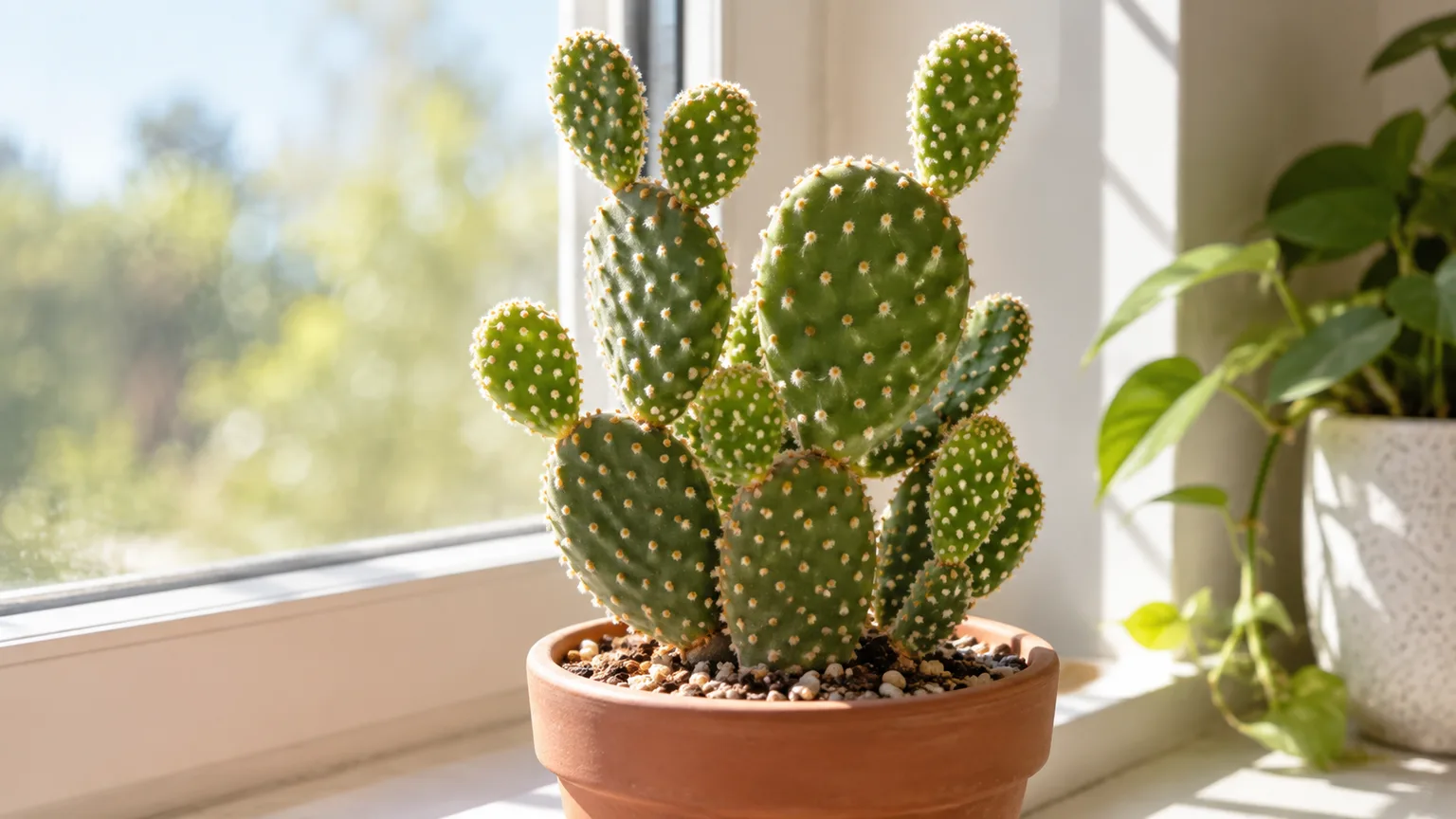
Bunny Ear Cactus is native to Northern Mexico, typically reaches 12-24 in tall indoors; paired oval pads with dense glochids indoors, with slow to moderate growth. Bunny Ear Cactus has a pad forming growth habit and part of the Cactaceae family. It is also known as Polka-Dot Cactus and Angel's Wings.
| Detail | Information |
|---|---|
| Also known as | Polka-Dot Cactus, Angel's Wings |
| Native region | Northern Mexico |
| Mature size | 12-24 in tall indoors; paired oval pads with dense glochids |
| Growth rate | Slow to moderate |
| Growth habit | Pad Forming |
| Scientific name | Opuntia microdasys |
| Family | Cactaceae |
Bunny Ear Cactus Care: Light, Water, Soil & Realistic Growth
Bunny Ear Cactus overview baseline: Bunny Ear Cactus care guide covering light, watering, soil, fertilizer, repotting, propagation, and the mistakes that matter most indoors.
Bunny Ear Cactus is a cactus first and a decor object second. Its care makes sense when you start with its dryland biology: Cactaceae family, water-storing stems or pads, and a root system that expects air after rain. Indoors, that means strong light, a gritty potting mix, and long dry gaps rather than small weekly sips.
Bunny Ear Cactus belongs in the Cactaceae family and should be grown as a dry-climate succulent, not like a tropical foliage plant. Its native or related habitat record points to dry, open conditions such as desert or dry shrubland biome, and extension guidance for these cacti emphasizes well-drained, dry, sandy soils plus careful water restraint. That is why every care decision should ask the same question: will this help the pot dry, the tissue stay firm, and the plant receive enough light to use water?
The practical overview routine
Use every 3-5 weeks in warm bright growth; every 6-10 weeks in winter as a rough rhythm, but always confirm with dry skewer to the bottom plus firm, not soft, pads. A good overview routine links all the basics: read the light guide before increasing water, use the soil guide before repotting, and treat the watering guide as the main rot-prevention page. For a complete care path, start at the Bunny Ear Cactus hub, then compare this page with watering, light, soil, fertilizer, repotting, and propagation guidance.
What makes Bunny Ear Cactus different
Bunny ear cactus is different because its pads carry glochids. They look soft but behave like tiny barbed bristles, so every repotting, pruning, or propagation job needs tools rather than bare hands. NC State describes related barrel or prickly pear cacti as drought-tolerant plants with spines or glochids, while full sun supports the propagation or identity claims used here.
Warning signs to act on first
Act quickly if you see soft yellowing pads, black or brown tissue at the base, soil staying damp for more than a week. Those signs usually mean the root zone is staying wet too long. Increase light only gradually, but correct drainage immediately if the pot lacks a hole or the soil smells sour. If you see slight pad wrinkling, thin pads after a long dry spell, water once thoroughly, then reassess after the plant has had time to rehydrate.
When to use this page vs other Bunny Ear Cactus guides
Use this page for overview-specific decisions. Use watering when the plant is soft or the pot is slow to dry. Use light when growth leans, stretches, or scorches. Use soil before changing the mix. Use repotting before moving into a larger pot, and use propagation before cutting, grafting, or sowing.
Related Bunny Ear Cactus guides
Keep the care system simple: strong light, dry intervals, mineral soil, and low feeding. Next, read Bunny Ear Cactus watering, Bunny Ear Cactus light, Bunny Ear Cactus soil, Bunny Ear Cactus fertilizer, Bunny Ear Cactus repotting, and Bunny Ear Cactus propagation.
Conclusion
Good Bunny Ear Cactus overview care is conservative. Give the plant enough light to stay firm, a gritty mix that dries, and fewer interventions than a leafy houseplant would need. When in doubt, fix light and drainage before adding more water, fertilizer, or pot size.
How to care for Bunny Ear Cactus?
When should you water Bunny Ear Cactus?
Water only after the mix is dry through the pot; expect long dry gaps indoors.
- Dry skewer to the bottom plus firm, not soft, pads - Water only after the mix is dry through the pot; expect long dry gaps indoors.
- Drain excess water - Water only after the mix is dry through the pot; expect long dry gaps indoors.
What soil works best for Bunny Ear Cactus?
Mineral cactus mix with pumice, grit, coarse sand, and limited organic matter.
- cactus mix - Mineral cactus mix with pumice, grit, coarse sand, and limited organic matter.
- pumice or perlite - Mineral cactus mix with pumice, grit, coarse sand, and limited organic matter.
- coarse grit - Mineral cactus mix with pumice, grit, coarse sand, and limited organic matter.
Grower notes for Bunny Ear Cactus
What matters most with Bunny Ear Cactus
The fuzzy dots are glochids, not harmless fuzz. Give full sun, mineral soil, and long dry intervals, and handle pads only with tongs or folded paper.
Best placement in a real home
Use the brightest south or west window you have, or a strong grow light. Rotate occasionally so new pads do not lean toward one side.
Before you buy this plant
Choose firm upright pads with no black base spots. Avoid plants sold in glass bowls, peat-heavy soil, or decorative pots without drainage.
First month after bringing it home
Do not repot and water on the same day unless the old soil is failing. Let it acclimate bright and dry, then move into a gritty mix if needed.
Safety note for Bunny Ear Cactus
The main safety issue is mechanical injury from glochids. Keep it away from pets, children, sleeves, and high-traffic shelves.
How to tell Bunny Ear Cactus is settling in
Firm pads, slow new pad growth, and no darkening at the soil line mean the light and drying rhythm are working.
Is it pet safe?
Bunny ear cactus is best treated as not pet safe because glochids can injure mouths, paws, and skin.
Not managed as an edible houseplant; glochids and spines can cause painful mechanical irritation.
Watering Bunny Ear Cactus
For Bunny Ear Cactus, dry skewer to the bottom plus firm, not soft, pads and water every 3-5 weeks in warm bright growth; every 6-10 weeks in winter. Cool bright winter rest with little water.
| Detail | Information |
|---|---|
| How often | Every 3-5 weeks in warm bright growth; every 6-10 weeks in winter |
| How to check | Dry skewer to the bottom plus firm, not soft, pads |
| Seasonal changes | Cool bright winter rest with little water |
Signs of overwatering
- Soft yellowing pads
- Black or brown tissue at the base
- Soil staying damp for more than a week
Signs of underwatering
- Slight pad wrinkling
- Thin pads after a long dry spell
Soil & potting for Bunny Ear Cactus
Use a mix of cactus mix, pumice or perlite, coarse grit for Bunny Ear Cactus. Excellent drainage; terracotta helps the small root zone dry evenly. Target soil pH around 6.0-7.5. Repot every 2-3 years or when the plant is unstable, ideally in spring.
| Detail | Information |
|---|---|
| Recommended mix | cactus mix, pumice or perlite, coarse grit |
| Drainage | Excellent drainage; terracotta helps the small root zone dry evenly |
| Soil pH | 6.0-7.5 |
| Repotting frequency | Every 2-3 years or when the plant is unstable |
| Best season to repot | Spring |
Signs it needs repotting
- Plant tips from pad weight
- Roots fill drainage holes
- Mix has compacted
Humidity & temperature for Bunny Ear Cactus
Fertilizer & pruning for Bunny Ear Cactus
Common problems on Bunny Ear Cactus
Yellow Leaves
MediumLikely cause: Common on this plant type; confirm with recent watering, light, and root checks.
Quick fix: Inspect the plant and correct the most likely care stressor before stacking treatments.
Full fix guide →Brown Tips
MediumLikely cause: Common on this plant type; confirm with recent watering, light, and root checks.
Quick fix: Inspect the plant and correct the most likely care stressor before stacking treatments.
Full fix guide →Root Rot
MediumLikely cause: Common on this plant type; confirm with recent watering, light, and root checks.
Quick fix: Inspect the plant and correct the most likely care stressor before stacking treatments.
Full fix guide →Overwatering
MediumLikely cause: Common on this plant type; confirm with recent watering, light, and root checks.
Quick fix: Inspect the plant and correct the most likely care stressor before stacking treatments.
Full fix guide →Underwatering
MediumLikely cause: Common on this plant type; confirm with recent watering, light, and root checks.
Quick fix: Inspect the plant and correct the most likely care stressor before stacking treatments.
Full fix guide →Spider Mites
MediumLikely cause: Common on this plant type; confirm with recent watering, light, and root checks.
Quick fix: Inspect the plant and correct the most likely care stressor before stacking treatments.
Full fix guide →Mealybugs
MediumLikely cause: Common on this plant type; confirm with recent watering, light, and root checks.
Quick fix: Inspect the plant and correct the most likely care stressor before stacking treatments.
Full fix guide →Aphids
MediumLikely cause: Common on this plant type; confirm with recent watering, light, and root checks.
Quick fix: Inspect the plant and correct the most likely care stressor before stacking treatments.
Full fix guide →Leggy Growth
MediumLikely cause: Common on this plant type; confirm with recent watering, light, and root checks.
Quick fix: Inspect the plant and correct the most likely care stressor before stacking treatments.
Full fix guide →Slow Growth
MediumLikely cause: Common on this plant type; confirm with recent watering, light, and root checks.
Quick fix: Inspect the plant and correct the most likely care stressor before stacking treatments.
Full fix guide →Wilting
MediumLikely cause: Common on this plant type; confirm with recent watering, light, and root checks.
Quick fix: Inspect the plant and correct the most likely care stressor before stacking treatments.
Full fix guide →Drooping Leaves
MediumLikely cause: Common on this plant type; confirm with recent watering, light, and root checks.
Quick fix: Inspect the plant and correct the most likely care stressor before stacking treatments.
Full fix guide →Low Humidity
MediumLikely cause: Common on this plant type; confirm with recent watering, light, and root checks.
Quick fix: Inspect the plant and correct the most likely care stressor before stacking treatments.
Full fix guide →Not Enough Light
MediumLikely cause: Common on this plant type; confirm with recent watering, light, and root checks.
Quick fix: Inspect the plant and correct the most likely care stressor before stacking treatments.
Full fix guide →Fungus Gnats
MediumLikely cause: Common on this plant type; confirm with recent watering, light, and root checks.
Quick fix: Inspect the plant and correct the most likely care stressor before stacking treatments.
Full fix guide →Mold on Soil
MediumLikely cause: Common on this plant type; confirm with recent watering, light, and root checks.
Quick fix: Inspect the plant and correct the most likely care stressor before stacking treatments.
Full fix guide →Likely cause: Common on this plant type; confirm with recent watering, light, and root checks.
Quick fix: Inspect the plant and correct the most likely care stressor before stacking treatments.
Full fix guide →