Underwatering on Bunny Ear Cactus: Dry Pot & Pad Wrinkle
Quick answer
Underwatered bunny ear cactus shows slight pad wrinkling, a dull matte pad surface, and a feather-light pot with dusty dry mineral mix on a clean skewer—not soft yellow tissue on wet soil. First step: confirm the full pot is dry, then water deeply once until drainage runs free and empty the saucer.
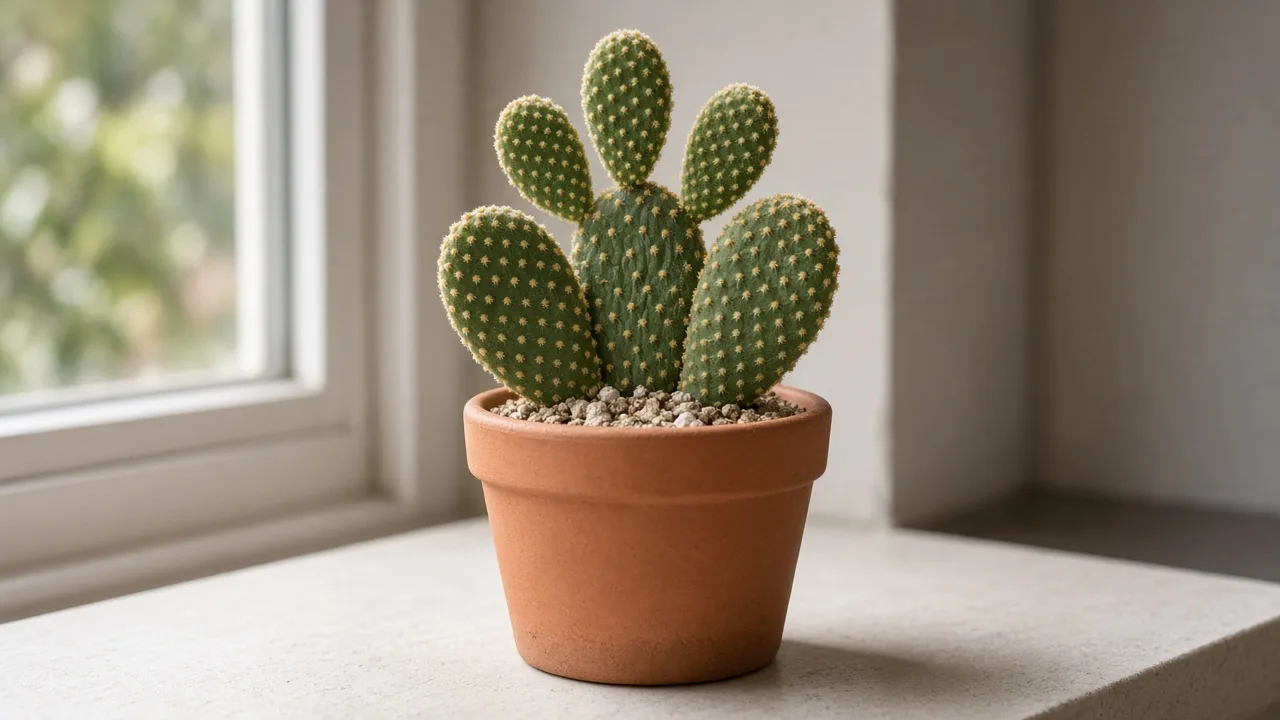
Underwatering on Bunny Ear Cactus: Causes, Checks & Fixes
This guide covers underwatering on Bunny Ear Cactus. See also the general Underwatering guide, watering, and light pages for this plant.
Underwatering on Bunny Ear Cactus: Causes, Checks & Fixes
Quick answer
Bunny ear cactus (Opuntia microdasys) stores water in flat paired pads, not leaves—so thirst shows up as slight pad wrinkling, a dull matte pad surface, and a light dry pot long before the plant collapses. This desert cactus wants full sun to partial shade in fast-draining mix with soil completely dry between waterings. When dry spells run too long—especially in bright summer windows or after an overcautious winter pause—pads use stored moisture and shrink visibly.
For how chronic dry mix limits uptake in general, see our underwatering guide and MOBG’s drought-stress overview. On bunny ear cactus, the pattern is a feather-light pot, dusty dry skewer through the full depth, firm (not mushy) pad bases, and wrinkling that affects several pads—not soft yellow lower tissue on damp mix for weeks.
First step: confirm the entire pot is dry on a full-depth skewer test and the pot feels light, then water deeply once until water runs freely from the drainage holes and you empty the saucer. One bottom soak beats misting pads or dribbling a few tablespoons on the surface. After that, return to the soak-and-dry rhythm—do not repot, fertilize, or move into harsh new sun on the same day.
When to use this page vs other Bunny Ear Cactus guides
| Pattern | Read next |
|---|---|
| Light pot, dry skewer, slight pad wrinkling (this page) | Stay here |
| Heavy wet pot, soft yellow pads at soil line | Overwatering |
| Mushy black base on wet or dry mix | Root rot |
| Yellow pads, firm base, mix slightly cool | Yellow leaves — often light or nutrient stress |
| Tan patches on sun-facing pad only | Sunburn |
| Deflated pads on wet heavy soil | Wilting or drooping leaves — rot paradox, not thirst |
| Pads stretch toward window, firm but pale | Not enough light |
| Firm pads, no new pairs for months | Slow growth |
What underwatering looks like on Bunny Ear Cactus
Unlike leafy houseplants, bunny ear cactus does not wilt floppy leaves—it shrinks the pad flesh it already has. Gardenia notes the species is highly drought-tolerant and stores water in fleshy pads, which is why mild thirst can look subtle until you compare pad texture and pot weight.
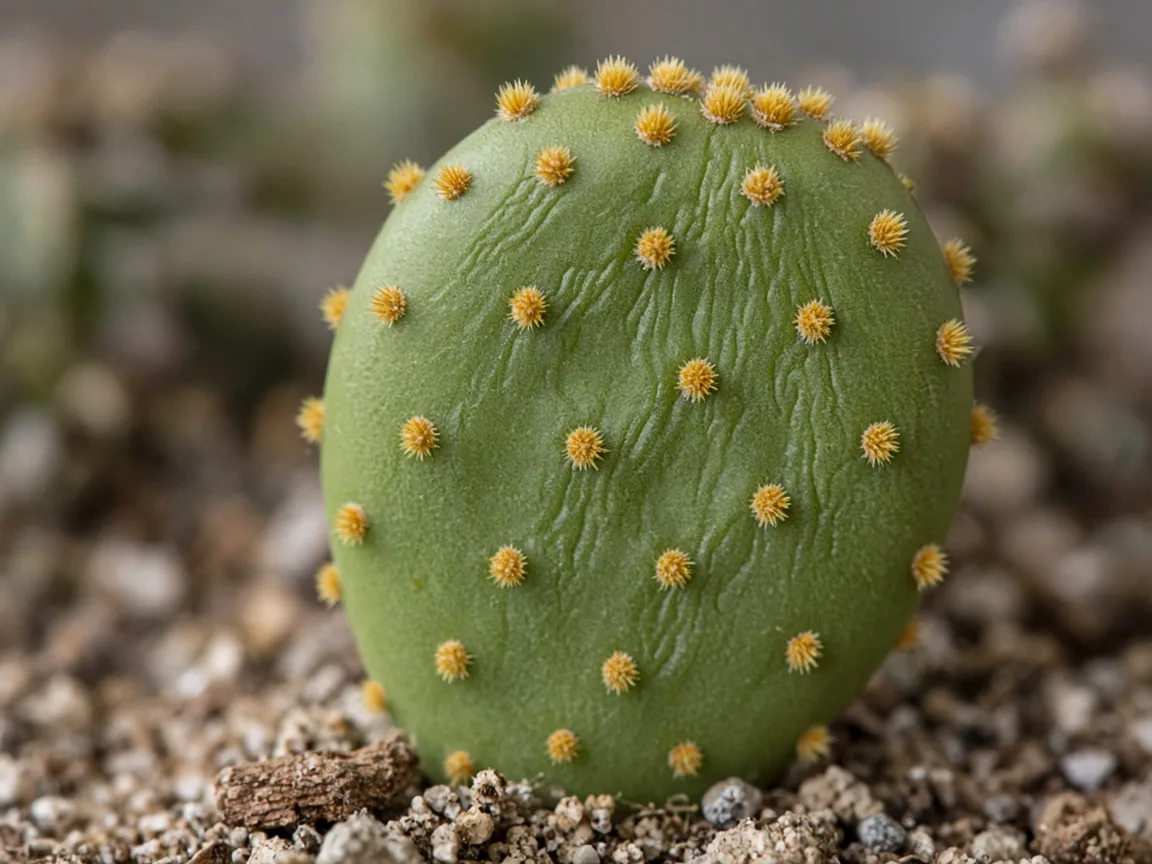
Light vertical wrinkling on a firm Opuntia pad with dusty dry mineral mix—old scarred tissue may stay dull; watch the next paired pad for a plump feel after one deep soak.
Early signs
- Slight vertical wrinkling or dullness on one or more paired pads while the base still feels firm with tongs
- Feather-light pot days or weeks after the last soak, with dusty dry mix on a skewer through the full depth
- Thin-looking pad profile compared with photos from the same season last year—not necessarily collapsed
- Slowed new paired pad growth after a long dry gap in a bright window
- Mix pulled slightly away from the pot wall in peat-heavy store soil after prolonged drought
- Water running straight through without wetting the center—hydrophobic dry mix after fear-of-watering
Advanced signs
- Pronounced shriveling across most pads, with leathery texture and gray-green dull color
- Old lower pads looking thin or bent while the stack still stands upright
- No new pad pairs for many weeks in warm bright growth season
- Pad edges turning tan and crisp from extreme desiccation—may overlap brown tips but dry skewer confirms thirst
- Root dieback only after months of neglect; rare indoors but possible if a novelty bowl never drains and old mix turned brick-dry
Soft yellow translucent pads on a heavy wet pot is not this page—see overwatering. Bunny ears can look plump on top and thirsty at the edges; always check pot weight and skewer moisture together.
Pad wrinkling vs soft rot: the tongs squeeze test
This check is Opuntia-specific—it would mislead on a fern or peace lily.
- Firm pads + light wrinkling + dry skewer — Underwatering likely; one deep soak after confirmation.
- Firm pads + no wrinkling + dry skewer — Normal rest or winter pause; may not need water yet if the base looks healthy.
- Soft yielding pads + wet heavy pot — Overwatering or advancing root rot, not thirst.
- Firm new paired pads at the top after a soak — Recovery signal even if older pads stay slightly scarred.
Wear tongs or folded paper—glochids are the handling hazard on this plant. Never interpret pad dullness alone without pot weight.
Full-pot skewer and dry pot weight on mineral mix
Bunny ear cactus in gritty indoor mix can look dust-dry on top while the center still holds a little moisture—or stay bone dry through the whole column for weeks in terracotta. Surface color is unreliable.
- Lift the pot when you think it is dry versus two days after a soak. Learn your plant’s light and heavy weights.
- Push a dry wooden skewer through the entire pot to the drainage hole. Let soil completely dry between waterings before the next soak—on underwatering recovery, that rule applies after you fix the current dry spell, not while pads are shriveled.
- Press the lowest pad with tongs. Firm + wrinkled + clean dry skewer = thirst path. Soft on any mix = stop and read overwatering.
- Check season and window. A plant in bright direct light in a small pot dries faster than the same cultivar in a dim corner—underwatering often follows calendar fear (“cacti need almost no water”) in summer.
Winter rest and the “never water my cactus” trap
Another bunny-ear-only rhythm: owners who read “very little water in winter” and then skip every drink while the plant still sits in a warm bright south window.
NC State recommends cooler winter temperatures of 50–65°F, very little water, and partial sun during dormancy. That means longer gaps, not zero moisture for months if the room is heated and sunny. A cool dim guest room may need almost nothing; a 72°F windowsill can still desiccate pads over six to ten weeks.
If pads wrinkle in January but the skewer is clean and dry and the base is firm, one moderate soak at the pot edge is appropriate—then wait for full dry-down again per the watering guide. If wrinkling appears on damp mix, you are on the wrong page.
Why Bunny Ear Cactus gets underwatering
Opuntia microdasys is built for dry low-humidity conditions and occasional deep rain in habitat. Indoor underwatering is usually habit or setup—not a mysterious disease.
Fear after overwatering. One rotted pad sends owners toward months without soaking. Thirst pads stay firm at the base; rot pads go soft on wet mix.
Calendar extremes. “Water every four weeks” ignores a July south window versus a November cool room. Terracotta in full sun may need a deep soak every two to three weeks in growth season; Gardenia suggests every two to three weeks in spring and summer with complete dry-down between.
Small root zone in oversized dry mix. A tiny root ball in a huge pot can stay dry at the center even when you sprinkle the surface—hydrophobic peat pulls away from the rim.
Misting instead of soaking. Wet glochids on the surface do not rehydrate roots. Pads need bottom moisture through mineral cactus mix.
Low light reducing uptake signals. A plant that is not growing still loses some water to the air; paired with skipped drinks, pads dull slowly—cross-check light and slow growth.
Travel and cachepots. Decorative outer pots without drainage make owners avoid real soaks; the inner mix dries to brick while pads wrinkle.
How to confirm the cause
Work through this list in order. Two or more dry-pot matches confirm underwatering before you soak.
- Pot weight — Noticeably lighter than post-watering reference weight.
- Skewer full depth — Clean, dusty, dry; no cool damp stain mid-shaft.
- Lowest pad firmness — Firm with tongs; wrinkled or dull is OK; soft is not.
- Mix at soil line — Dusty, not clinging wet; no sour smell.
- Recent care — Long gap since last deep soak, especially in bright heat.
- Sibling check — No fungus gnats, mold, or black climbing tissue (mold on soil and overwatering use wet mix).
First fix for Bunny Ear Cactus
After the skewer is dry through the full pot and the base pads feel firm, water deeply once at the soil line until water runs freely from the drainage holes, then empty any saucer or cachepot immediately.
Use lukewarm water and soak the entire root zone, not a few spoonfuls on top. Move the pot to its normal bright spot—do not jump from a dim shelf to blasting new direct sun the same hour.
That single rehydration lets you read the plant for one to two weeks. If pads still shrivel while the skewer emerges damp, stop—see overwatering.
Step-by-step recovery
Mild cases (slight wrinkling, firm base)
- Deep soak once as above; confirm drainage is open.
- Wait until the skewer is clean and dry again before the next drink—often two to four weeks indoors depending on pot and season.
- Watch for slightly plumper pad skin within three to seven days and new paired pads within four to eight weeks on a slow Opuntia.
- Resume rhythm from the watering guide.
Moderate cases (widespread dull pads, long dry spell)
- Soak once, then lift daily for a week to relearn wet versus dry weight.
- If water runs through without wetting the center, bottom-water for twenty to thirty minutes in a basin, then drain fully—once only, not daily.
- Avoid repotting until pads stabilize unless mix is truly hydrophobic brick; if you must repot, use dry gritty mix per repotting and wait a week before the next light edge soak.
- Do not fertilize until new pad growth looks normal for several weeks.
Severe cases (thin leathery pads, months dry)
- Deep soak once; if pads remain severely shriveled after seven days with a dry skewer, soak a second time only after confirming drainage—not daily dribbles.
- Inspect for firm green upper pads you could salvage via propagation if the base has gone woody but dead—rare on underwatering alone.
- If the base turns soft after soaking, roots may have failed from prior rot or extreme desiccation—escalate to root rot the same day.
Recovery timeline
| Severity | What to expect |
|---|---|
| Mild (slight wrinkle) | Pad skin plumps in 3–7 days; dullness fades on living tissue |
| Moderate (long dry gap) | 2–4 weeks to stable weight rhythm; new pairs in 1–3 months |
| Severe (months neglect) | Multiple soak cycles spaced by full dry-down; old thin pads may stay scarred |
Judge success by firm new paired pads and a predictable wet-to-dry pot weight cycle—not by every old wrinkle disappearing. Crisp tan pad edges from extreme drought often stay marked permanently.
Lookalike symptoms
| What you see | Likely cause |
|---|---|
| Slight wrinkling, light pot, dry skewer | Underwatering (this page) |
| Soft yellow pads, heavy wet pot | Overwatering |
| Limp deflated pads on wet soil | Root rot |
| Tan sun-facing patch only | Sunburn |
| Woody corky band at old base | Harmless aging—brown tips |
| Stretching toward glass | Not enough light |
| Firm pads, no growth, dry mix | Slow growth from season or light |
Mistakes to avoid
- Misting pads instead of soaking roots through the mix
- Daily tiny splashes that never rewet the center after hydrophobic dry spell
- Soaking without checking base firmness when rot could be present
- Fertilizing shriveled pads before one proper rehydration cycle
- Repotting into a much larger pot the same week you fix thirst—extra dry volume delays the next reliable skewer reading
- Moving immediately to harsh new direct sun on stressed pads
- Assuming all cacti need zero winter water in a heated bright room
- Handling with bare hands during inspection—glochids embed and derail your diagnosis
How to prevent underwatering next time
Match drinks to dry-down, not guilt or calendar fear.
Water deeply only after soil completely dries between waterings, then soak until drainage runs free and empty standing water. In growth season with strong light, accept shorter gaps; in cool winter rest, stretch intervals without abandoning the plant entirely.
Use fast-draining mineral cactus mix in a pot sized to the root ball. Porous terracotta helps you feel dry weight change.
Lift the pot monthly and log skewer results when you consider watering—especially after repotting when pad depth is easy to mis-set.
Scout the problems hub when pad texture changes; catching a light dry pot early is one soak, not a rescue propagation project.
When to worry
Mild wrinkling on a firm base after a missed week in summer usually fixes with one deep soak. Escalate when:
- Pads stay severely shriveled seven days after a confirmed deep soak on dry mix
- The base turns soft or black after watering—switch to root rot
- Every pad is thin and leathery after months in a blasting window with no drinks
- You cannot tell wet from dry because mix is compacted or the pot has no drainage—fix setup before repeating soaks
Related Bunny Ear Cactus guides
- Overview — culture and glochid safety
- Problems hub — full symptom index
- Watering — soak-and-dry rhythm after recovery
- Soil — mineral mix that rewets reliably
- Overwatering — soft pads on wet mix
- Root rot — mushy base after wet or dry stress
- Light — dry-down speed in bright windows
Conclusion
Underwatering on bunny ear cactus is a pad texture and pot-weight problem, not leaf wilt. Confirm a light pot and clean dry skewer, press the base with tongs to rule out soft rot, then one deep soak before you change mix, food, or sun. Firm new paired pads are the recovery signal; light wrinkling on old pads may linger, and that is normal once the root zone is wet–dry balanced again.
Related tool
Use the Plant Watering Calculator to narrow causes for underwatering on this plant before changing multiple variables at once.